Deferred Compensation Plan Login In Virginia
Description

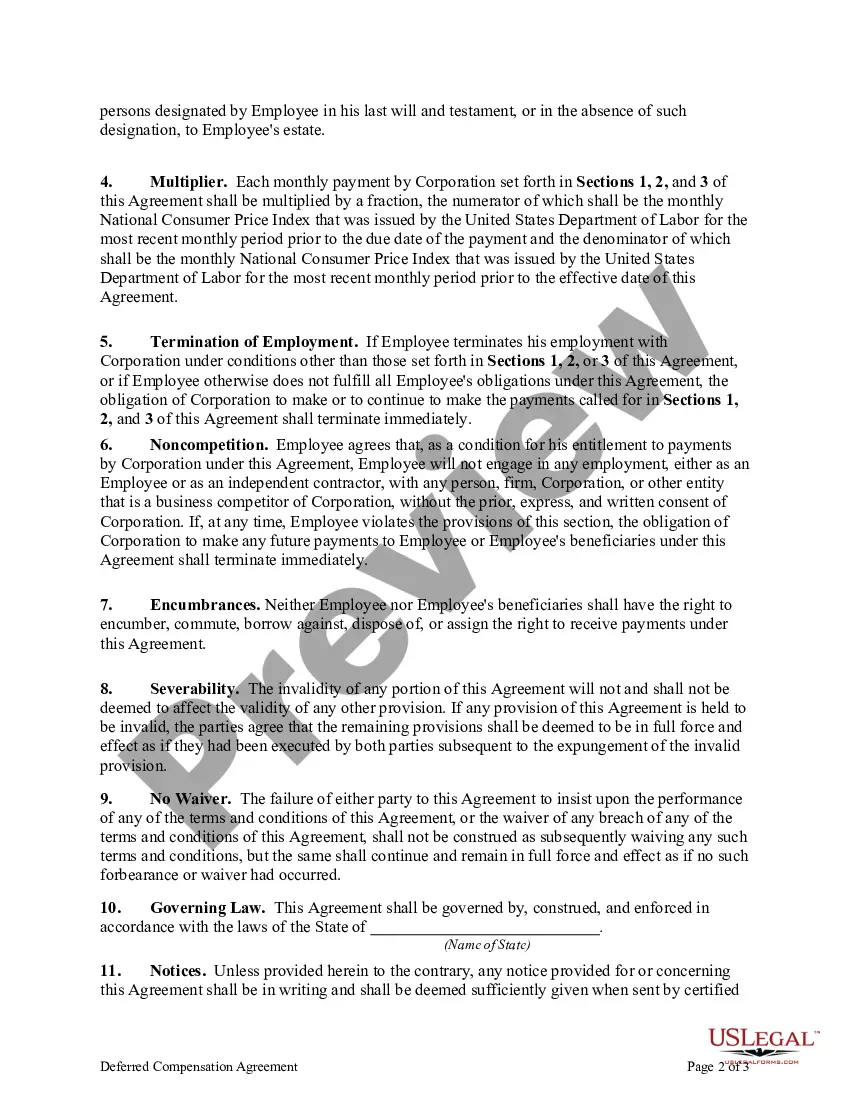
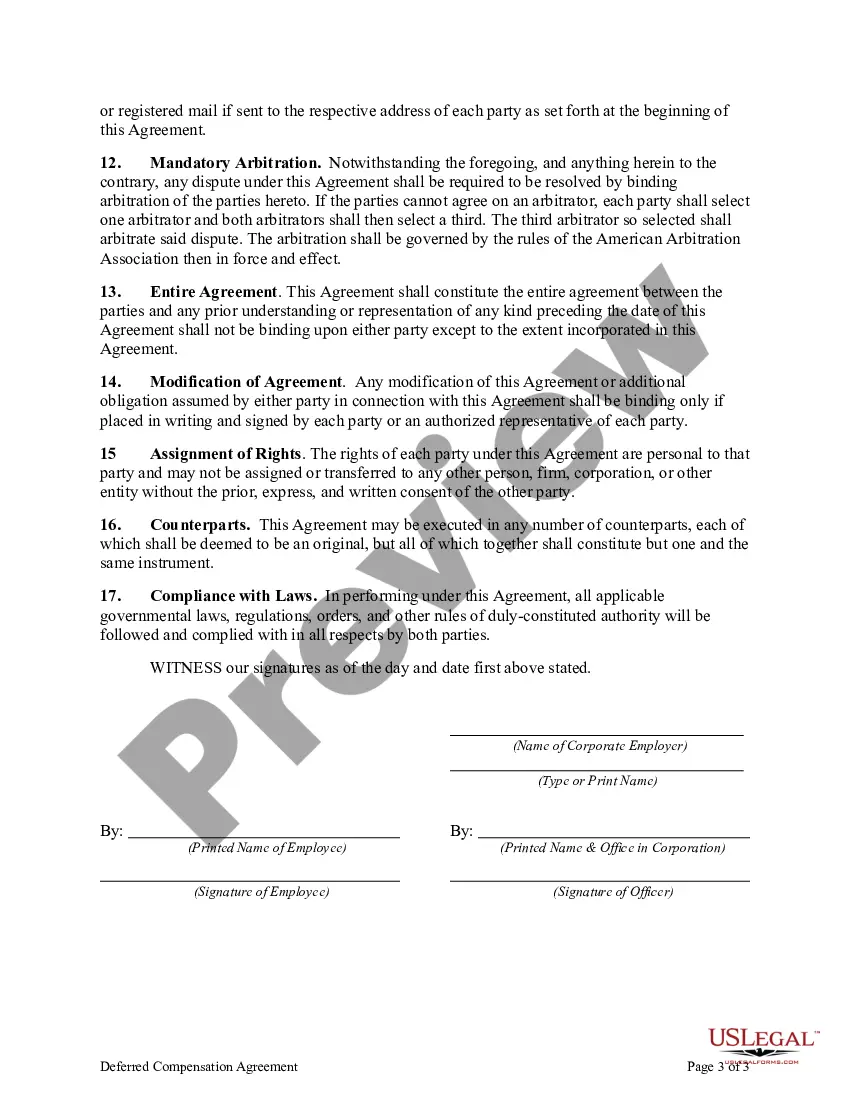

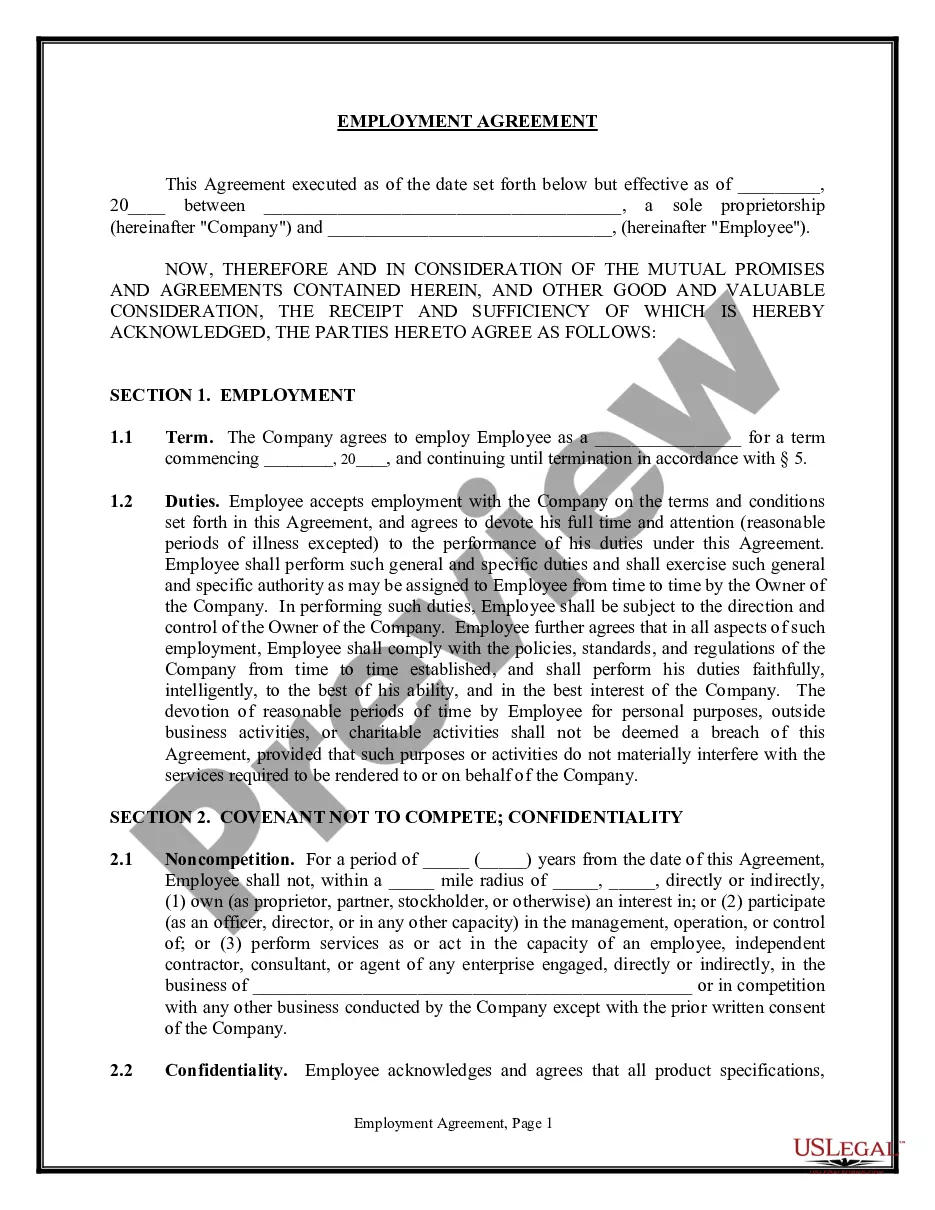
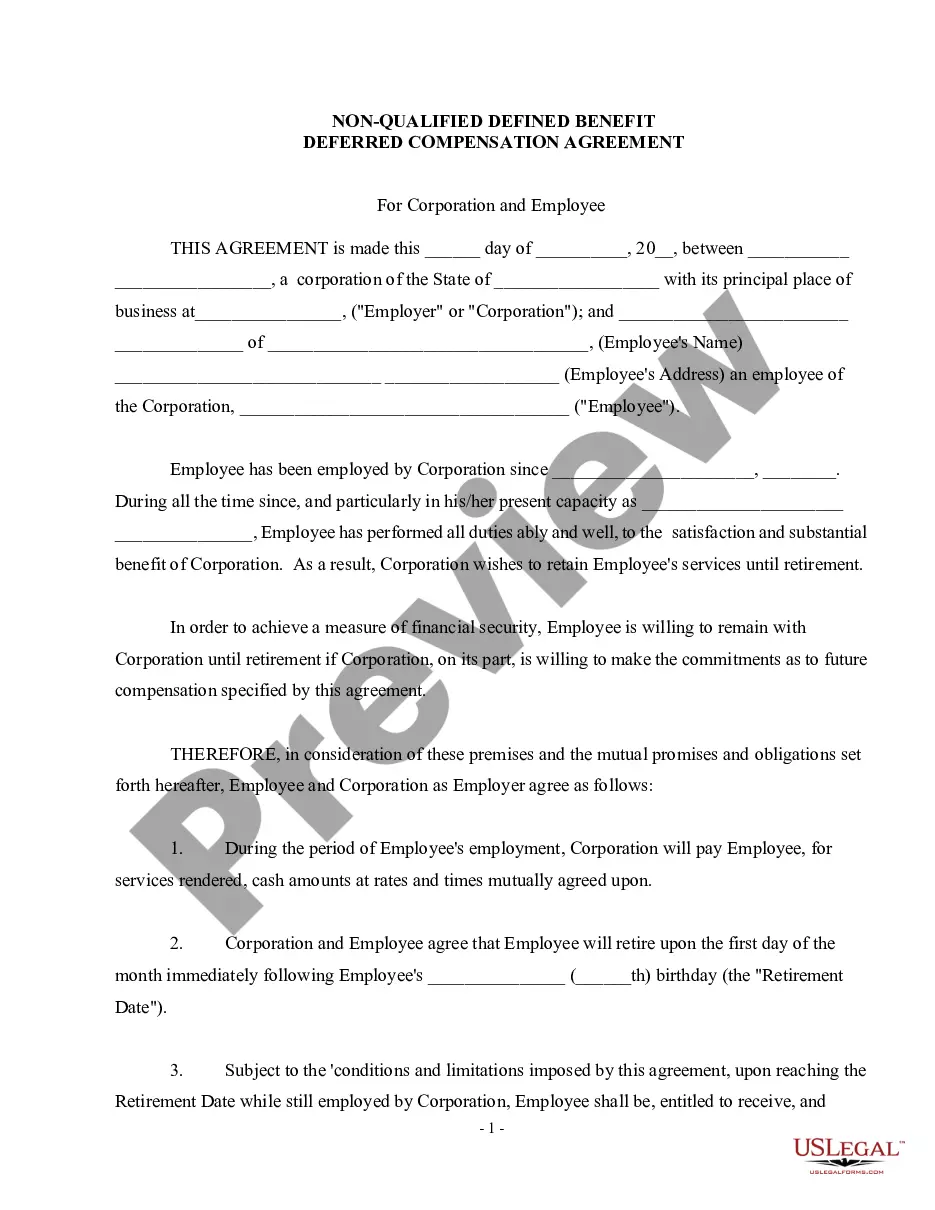
Get your form ready online
Our built-in tools help you complete, sign, share, and store your documents in one place.
Make edits, fill in missing information, and update formatting in US Legal Forms—just like you would in MS Word.
Download a copy, print it, send it by email, or mail it via USPS—whatever works best for your next step.
Sign and collect signatures with our SignNow integration. Send to multiple recipients, set reminders, and more. Go Premium to unlock E-Sign.
If this form requires notarization, complete it online through a secure video call—no need to meet a notary in person or wait for an appointment.
We protect your documents and personal data by following strict security and privacy standards.

Make edits, fill in missing information, and update formatting in US Legal Forms—just like you would in MS Word.

Download a copy, print it, send it by email, or mail it via USPS—whatever works best for your next step.

Sign and collect signatures with our SignNow integration. Send to multiple recipients, set reminders, and more. Go Premium to unlock E-Sign.

If this form requires notarization, complete it online through a secure video call—no need to meet a notary in person or wait for an appointment.

We protect your documents and personal data by following strict security and privacy standards.
Looking for another form?









Form popularity
FAQ
Age 65 at least five year of service credit or age 50 with at least 30 years of service credit. SHO & EMS: Age 60 with at least five years of service credit or age 50 with at least 25 years of service credit. For additional information, please visit the Virginia Retirement System website.
The VRS Plan 1 is a defined benefit plan that provides a lifetime monthly benefit during retirement based on your age, total service credit and average final compensation. Average final compensation is the average of your 36 consecutive months of highest creditable compensation as a covered employee.
The VRS Plan 1 is a defined benefit plan that provides a lifetime monthly benefit during retirement based on your age, total service credit and average final compensation. Average final compensation is the average of your 36 consecutive months of highest creditable compensation as a covered employee.
Most people live another 10 to 20 years after retirement, so it's important to think about the long term when planning how much to save. To reach the 80% goal, experts suggest setting aside at least 15% of your annual pre-tax income for retirement.
To be eligible to retire with VRS you must be vested with at least 5 years of service with the program, and meet the minimum age requirement. Age 65 at least five year of service credit or age 50 with at least 30 years of service credit.
100% of the participant's includible compensation, or. the elective deferral limit ($23,000 in 2024; $22,500 in 2023; $20,500 in 2022; $19,500 in 2020 and in 2021).
The Commonwealth of Virginia 457 Deferred Compensation Plan (COV 457) offers you the opportunity to save for retirement through pre-tax payroll deductions. The plan offers a broad range of investment options, from conservative to aggressive, in order to uniquely meet your needs.
As a VA employee, you are part of the Federal Employees Retirement System (FERS). Under FERS, you are eligible for monthly retirement benefits after just 10 years of Federal service. This retirement system is portable. If you leave Federal employment, the Social Security component carries over to your new employment.