Deferred Compensation Plan For Self Employed In Illinois
Description


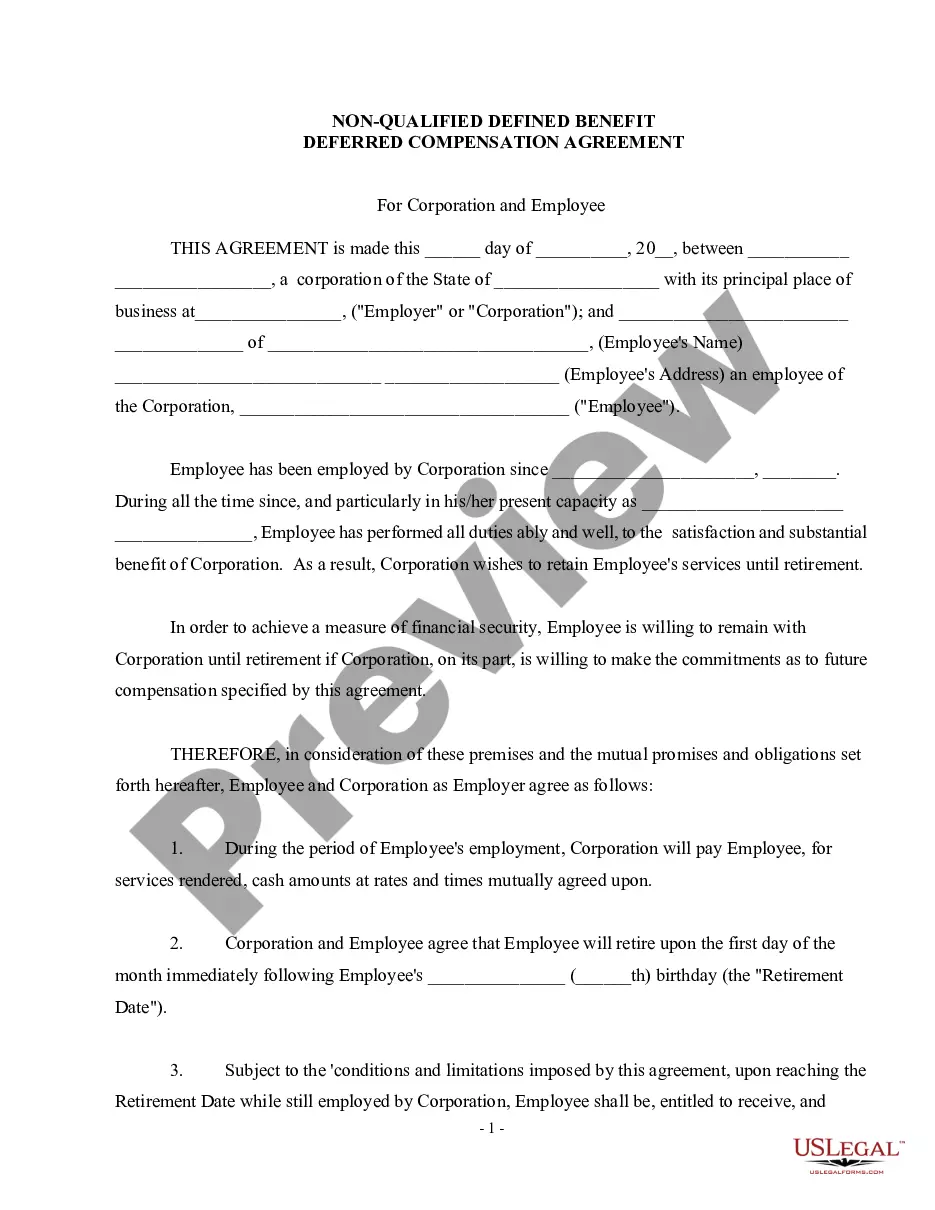
Get your form ready online
Our built-in tools help you complete, sign, share, and store your documents in one place.
Make edits, fill in missing information, and update formatting in US Legal Forms—just like you would in MS Word.
Download a copy, print it, send it by email, or mail it via USPS—whatever works best for your next step.
Sign and collect signatures with our SignNow integration. Send to multiple recipients, set reminders, and more. Go Premium to unlock E-Sign.
If this form requires notarization, complete it online through a secure video call—no need to meet a notary in person or wait for an appointment.
We protect your documents and personal data by following strict security and privacy standards.

Make edits, fill in missing information, and update formatting in US Legal Forms—just like you would in MS Word.

Download a copy, print it, send it by email, or mail it via USPS—whatever works best for your next step.

Sign and collect signatures with our SignNow integration. Send to multiple recipients, set reminders, and more. Go Premium to unlock E-Sign.

If this form requires notarization, complete it online through a secure video call—no need to meet a notary in person or wait for an appointment.

We protect your documents and personal data by following strict security and privacy standards.
Looking for another form?








Form popularity
FAQ
Retirement withdrawals from pre-tax contributions and earnings are subject to federal income tax. The State of Illinois does not tax retirement income from the Deferred Compensation Plan if taken in ance with plan provisions, at full retirement age, as a legal resident of Illinois.
The normal contribution limit for elective deferrals to a 457 deferred compensation plan is $23,500. The annual elective deferral limit for 401(k) plan employee contributions is $23,500. The annual elective deferral limit for 403(b) plan employee contributions is $23,500.
The Deferred Retirement Option Plan, commonly known as DROP, is a retirement benefit that allows Tier 1 public safety members who are already eligible for retirement to continue working while collecting a salary and accumulating monthly pension benefits that will become available upon retirement.
Once distributions begin, the distributed monies are fully taxable as ordinary income for federal tax purposes. The funds are never taxed by the State of Illinois.
Retirement withdrawals from pre-tax contributions and earnings are subject to federal income tax. The State of Illinois does not tax retirement income from the Deferred Compensation Plan if taken in ance with plan provisions, at full retirement age, as a legal resident of Illinois.
Once distributions begin, the distributed monies are fully taxable as ordinary income for federal tax purposes. The funds are never taxed by the State of Illinois.