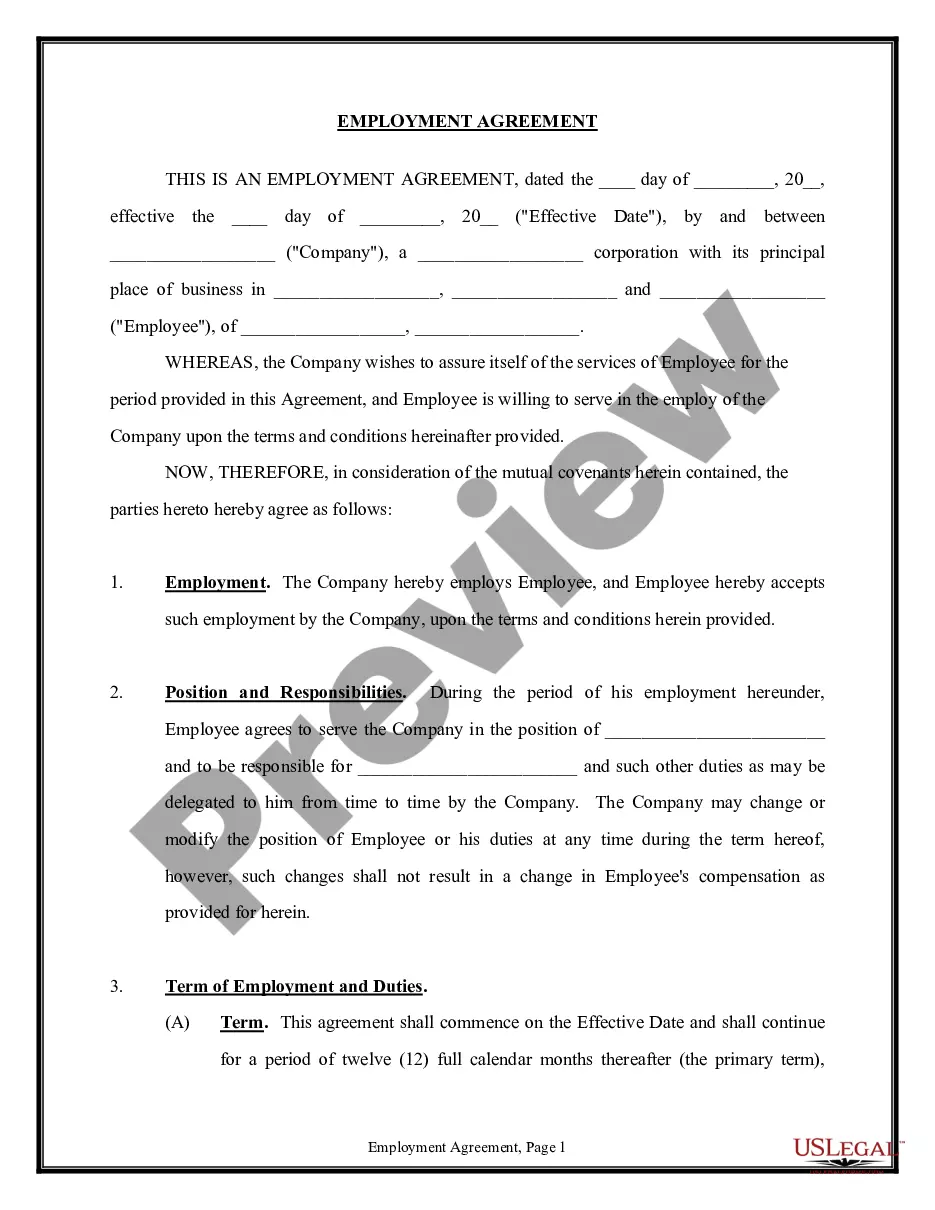
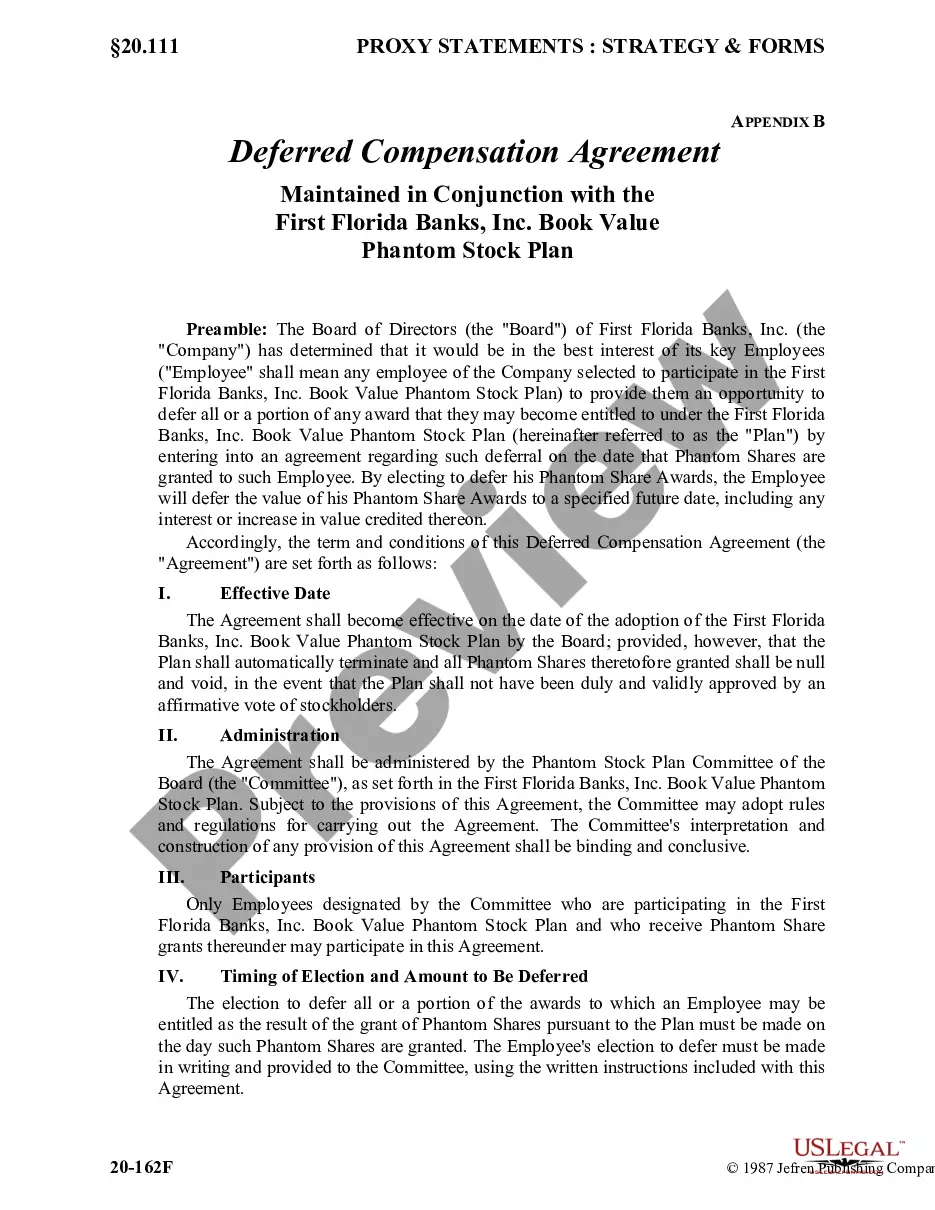
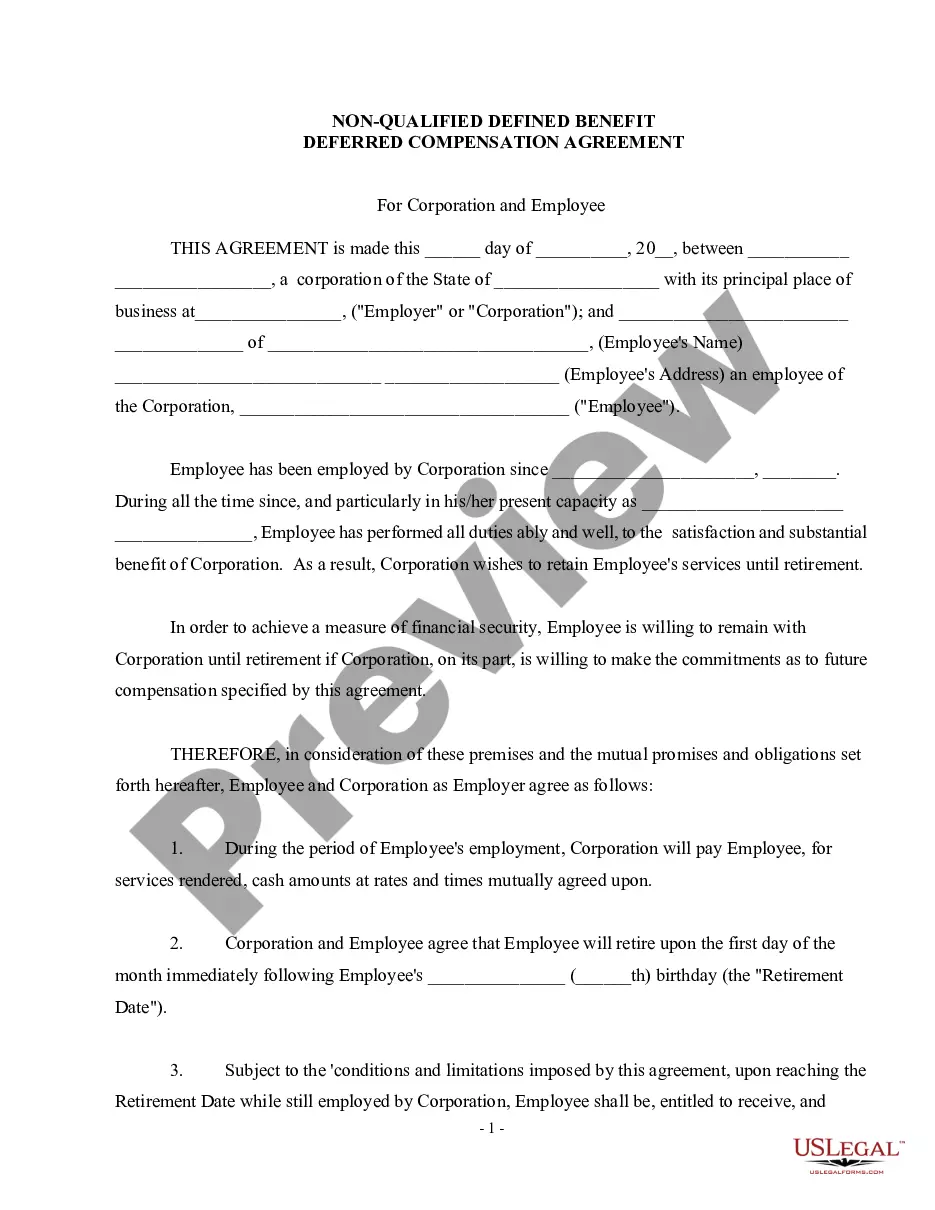
Deferred Agreement Sample For Business In Fulton
Description



Get your form ready online
Our built-in tools help you complete, sign, share, and store your documents in one place.
Make edits, fill in missing information, and update formatting in US Legal Forms—just like you would in MS Word.
Download a copy, print it, send it by email, or mail it via USPS—whatever works best for your next step.
Sign and collect signatures with our SignNow integration. Send to multiple recipients, set reminders, and more. Go Premium to unlock E-Sign.
If this form requires notarization, complete it online through a secure video call—no need to meet a notary in person or wait for an appointment.
We protect your documents and personal data by following strict security and privacy standards.

Make edits, fill in missing information, and update formatting in US Legal Forms—just like you would in MS Word.

Download a copy, print it, send it by email, or mail it via USPS—whatever works best for your next step.

Sign and collect signatures with our SignNow integration. Send to multiple recipients, set reminders, and more. Go Premium to unlock E-Sign.

If this form requires notarization, complete it online through a secure video call—no need to meet a notary in person or wait for an appointment.

We protect your documents and personal data by following strict security and privacy standards.
Looking for another form?








Form popularity
FAQ
The key elements of a franchise agreement generally include: Territory rights. Minimum performance standards. Franchisors services requirements. Franchisee payments. Trademark use. Advertising standards. Exclusivity clause. Insurance requirements.
Essentially, franchise agreements work by one party (the franchisor) granting another party (the franchisee) the right to operate a business under certain conditions and typically using the franchisor's branding and intellectual property.
How to Write a Business Contract Step 1 – Determine Why You Need a Contract. Step 2 – Define All Relevant Parties. Step 3 – Include the Essential Elements of a Contract. Step 4 – Name the Appropriate Governing Law and Jurisdiction. Step 5 – Explain All Details in Plain Language. Step 6 – Use Repeatable Language.
A franchise agreement is a contract under which the franchisor grants the franchisee the right to operate a business , or offer, sell, or distribute goods or services identified or associated with the franchisor's trademark .
How to create a franchise agreement The names of the parties: List out the full legal names of the parties to the franchise agreement. Use of IP: Establish your ownership of the brand IP and list out all of the IP you're granting to the franchisee, such as manuals, trademarks, patents, and trade secrets.
The franchise agreement is a legal contract. It establishes an individual or a business entity as a franchisee. Once signed, there may be legal consequences if you or the franchisee fail to comply with its terms. These documents are usually lengthy as they contain a lot of information.
With a proper grasp of the three conditions of a franchise agreement – terms, rights and obligations, and termination – parties can confidently enter into a full franchising agreement or partnership, knowing their individual and collective interests are protected by a legally binding contract.
