Joint Tenancy Definition With Real Estate
Description

Get your form ready online
Our built-in tools help you complete, sign, share, and store your documents in one place.
Make edits, fill in missing information, and update formatting in US Legal Forms—just like you would in MS Word.
Download a copy, print it, send it by email, or mail it via USPS—whatever works best for your next step.
Sign and collect signatures with our SignNow integration. Send to multiple recipients, set reminders, and more. Go Premium to unlock E-Sign.
If this form requires notarization, complete it online through a secure video call—no need to meet a notary in person or wait for an appointment.
We protect your documents and personal data by following strict security and privacy standards.

Make edits, fill in missing information, and update formatting in US Legal Forms—just like you would in MS Word.

Download a copy, print it, send it by email, or mail it via USPS—whatever works best for your next step.

Sign and collect signatures with our SignNow integration. Send to multiple recipients, set reminders, and more. Go Premium to unlock E-Sign.

If this form requires notarization, complete it online through a secure video call—no need to meet a notary in person or wait for an appointment.

We protect your documents and personal data by following strict security and privacy standards.
Looking for another form?








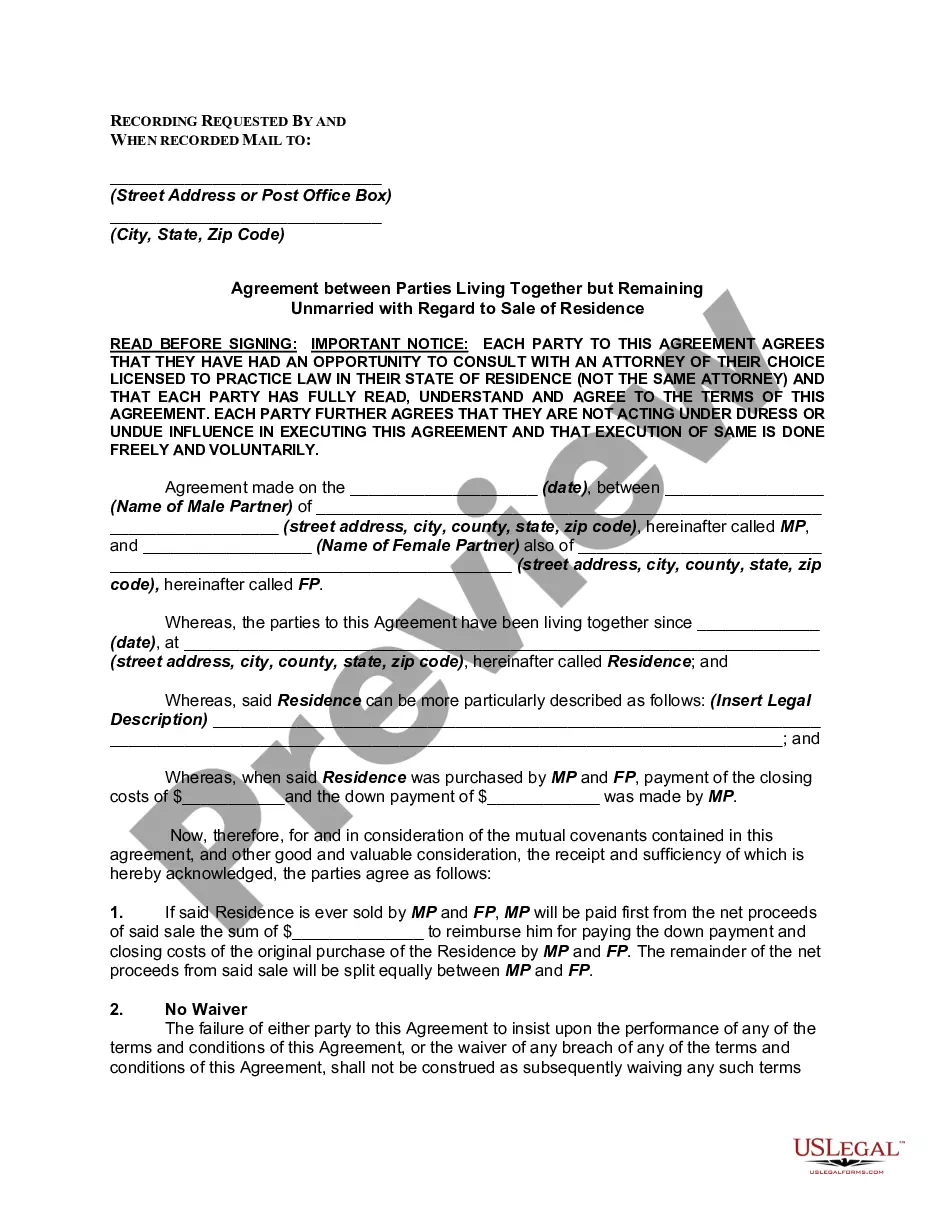
How to fill out Agreement By Unmarried Individuals To Purchase And Hold Residence As Joint Tenants?
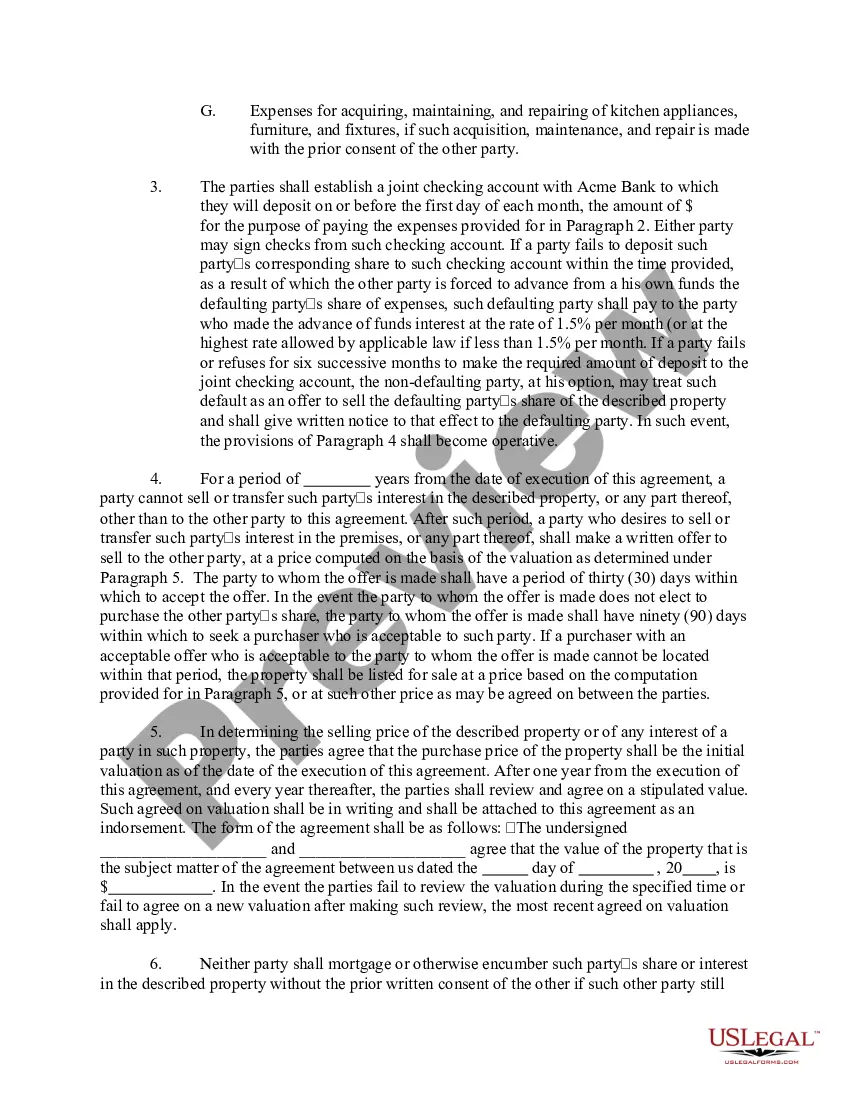
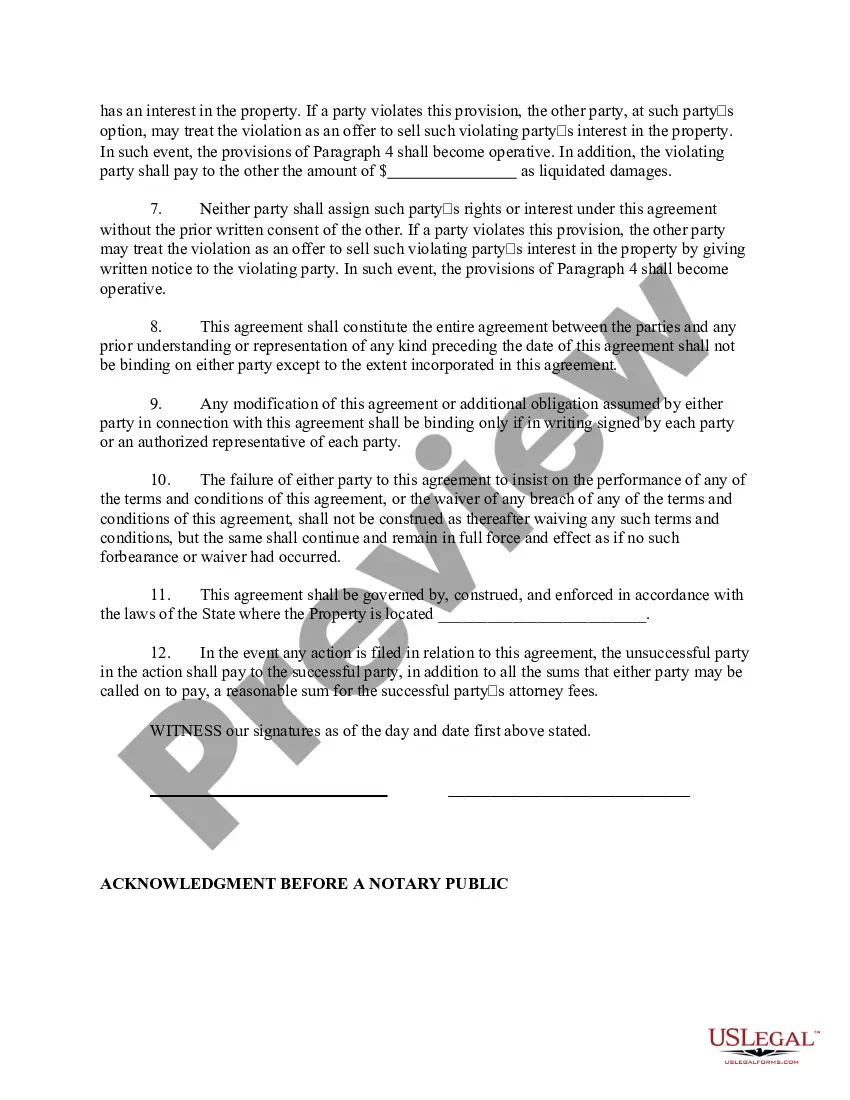
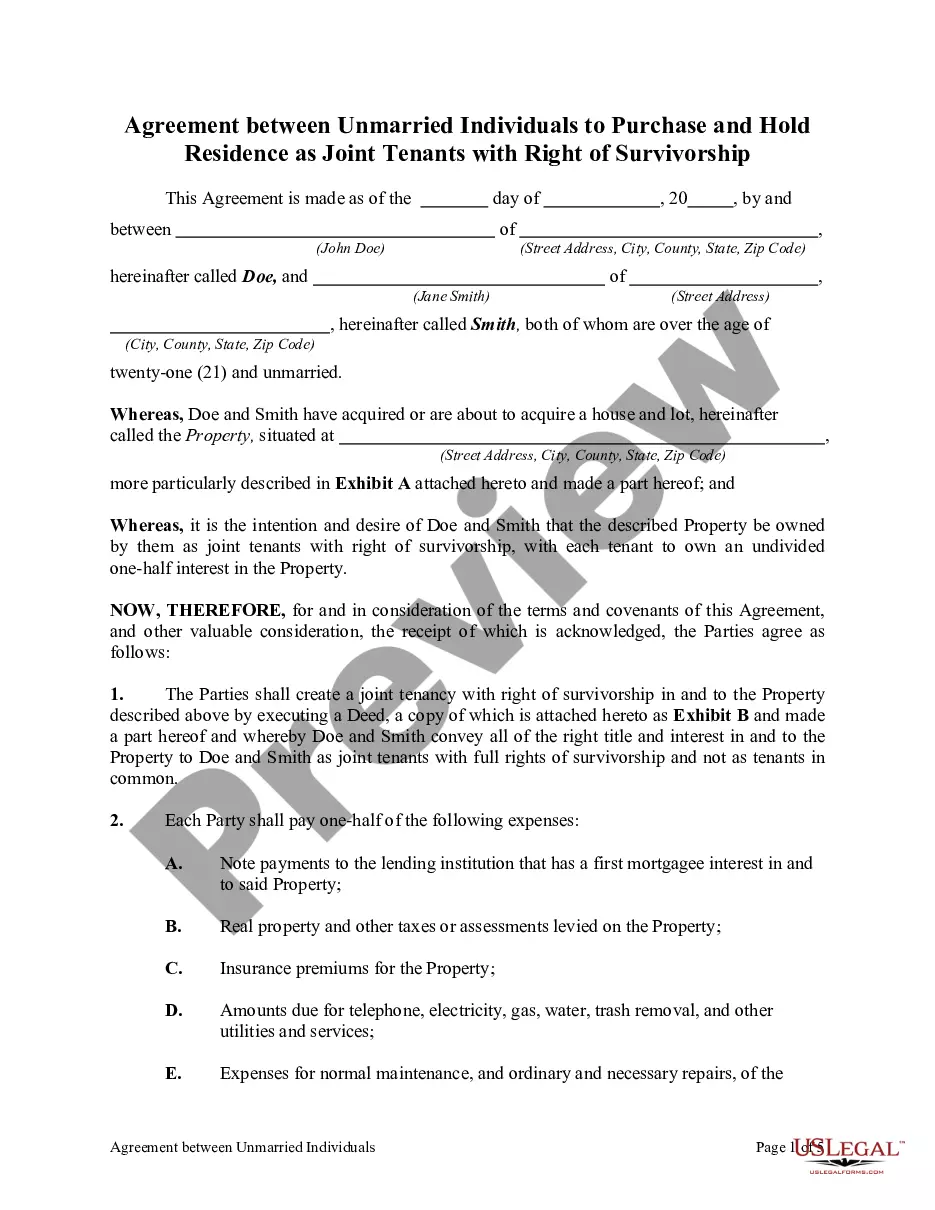
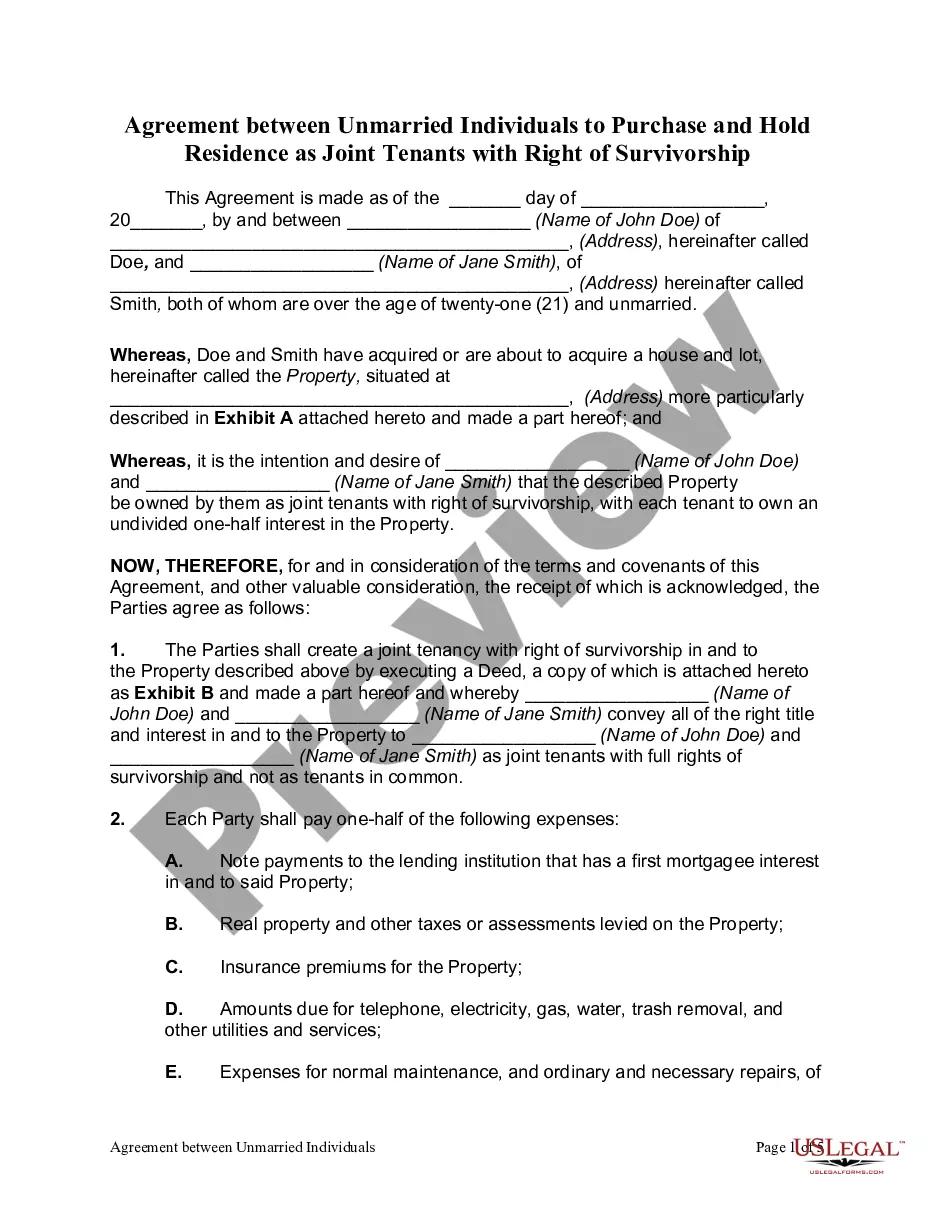
The Joint Tenancy Explanation With Real Property displayed on this page is a reusable formal framework crafted by experienced attorneys in accordance with federal and state laws.
For over 25 years, US Legal Forms has delivered individuals, enterprises, and legal professionals with more than 85,000 authenticated, state-specific documents for any business and personal event. It’s the quickest, easiest, and most reliable method to acquire the papers you need, as the service ensures the utmost level of data security and anti-malware measures.
Fill out and sign the documents. Print the template to complete it manually. Alternatively, use an online multi-functional PDF editor to swiftly and accurately fill out and sign your form with an electronic signature. Download your documents again at any time. Access the My documents tab in your profile to redownload any previously purchased documents. Register with US Legal Forms to have authenticated legal templates for every aspect of life readily available.
- Search for the document you require and review it.
- Browse through the file you searched and preview it or review the form description to confirm it meets your needs. If it doesn’t, utilize the search function to find the appropriate one. Click Buy Now when you have located the template you require.
- Register and Log Into your account.
- Choose the pricing plan that fits you and set up an account. Use PayPal or a credit card for a swift payment. If you already have an account, Log In and verify your subscription to continue.
- Obtain the fillable document.
- Select the format you prefer for your Joint Tenancy Definition With Real Estate (PDF, DOCX, RTF) and save the sample to your device.
Form popularity
FAQ
Joint tenancy is a legal term for an arrangement that defines the ownership interests and rights among two or more co-owners of real property. In a joint tenancy, two or more people own property together, each with equal rights and responsibilities.
The four unities can be thought of as four requirements that need to exist simultaneously for a true joint tenancy estate to be created. Those four requirements are interest, time, title, and possession.
Generally, to establish a joint tenancy a fourfold unity must exist: interest, title, time, and possession. Joint tenants have the same interest, acquired by the same conveyance, commencing at the same time, and held by the same possession.
Depending on the jurisdiction, the following phrases will create a joint tenancy: "As joint tenants" "As joint tenants with rights of survivorship" "As joint tenants with rights of survivorship and not as tenants in common" "As husband and wife" (unless otherwise stated).
All joint tenants must derive their interest from the same document or via the same act. Each joint tenant has legal possession over the whole of the land. One of the co-owners is not entitled to exclusive possession of any part of the land. Each co-owner has the same interest in the land (an undivided equal interest).