Printable Free Equipment Rental Agreement Form Template In Montgomery
Description
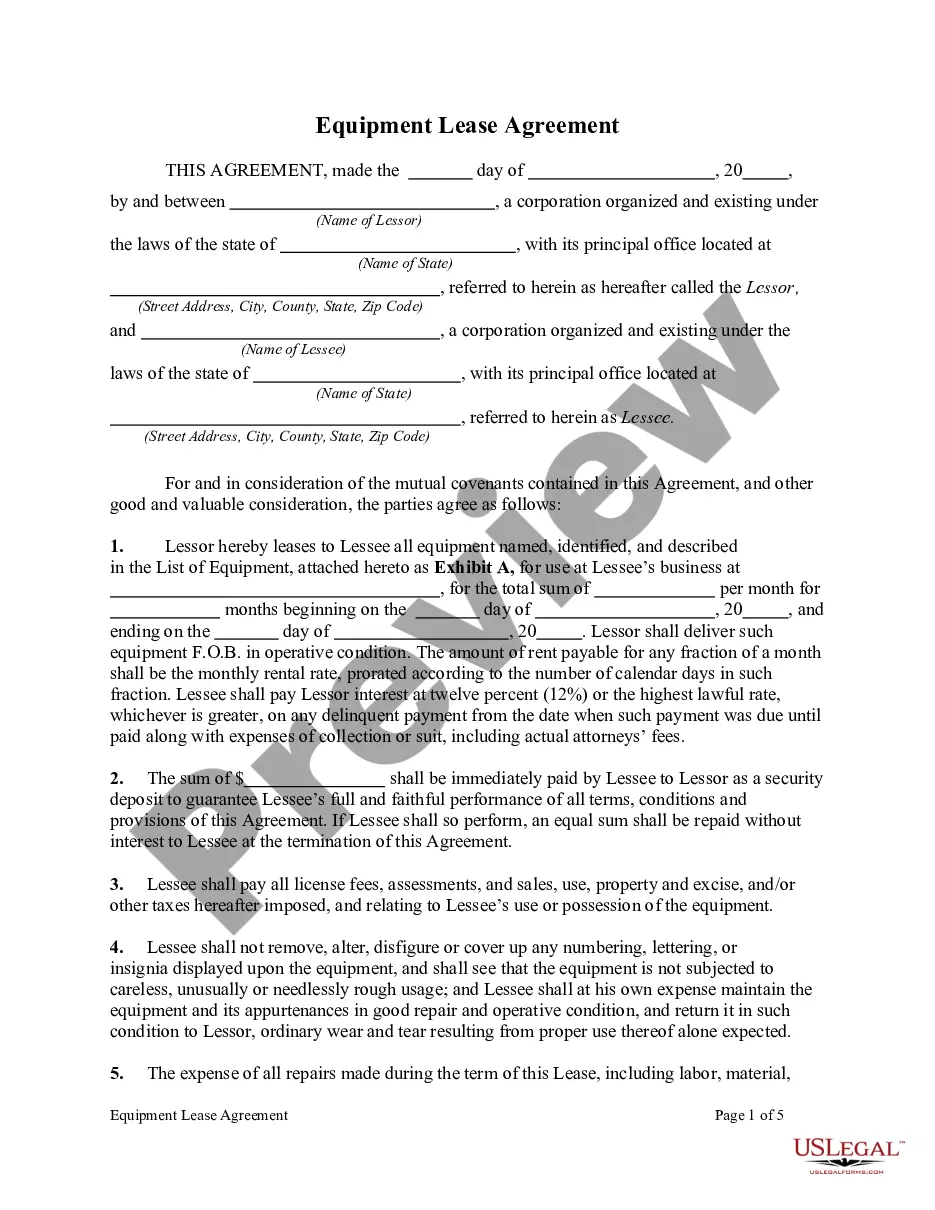
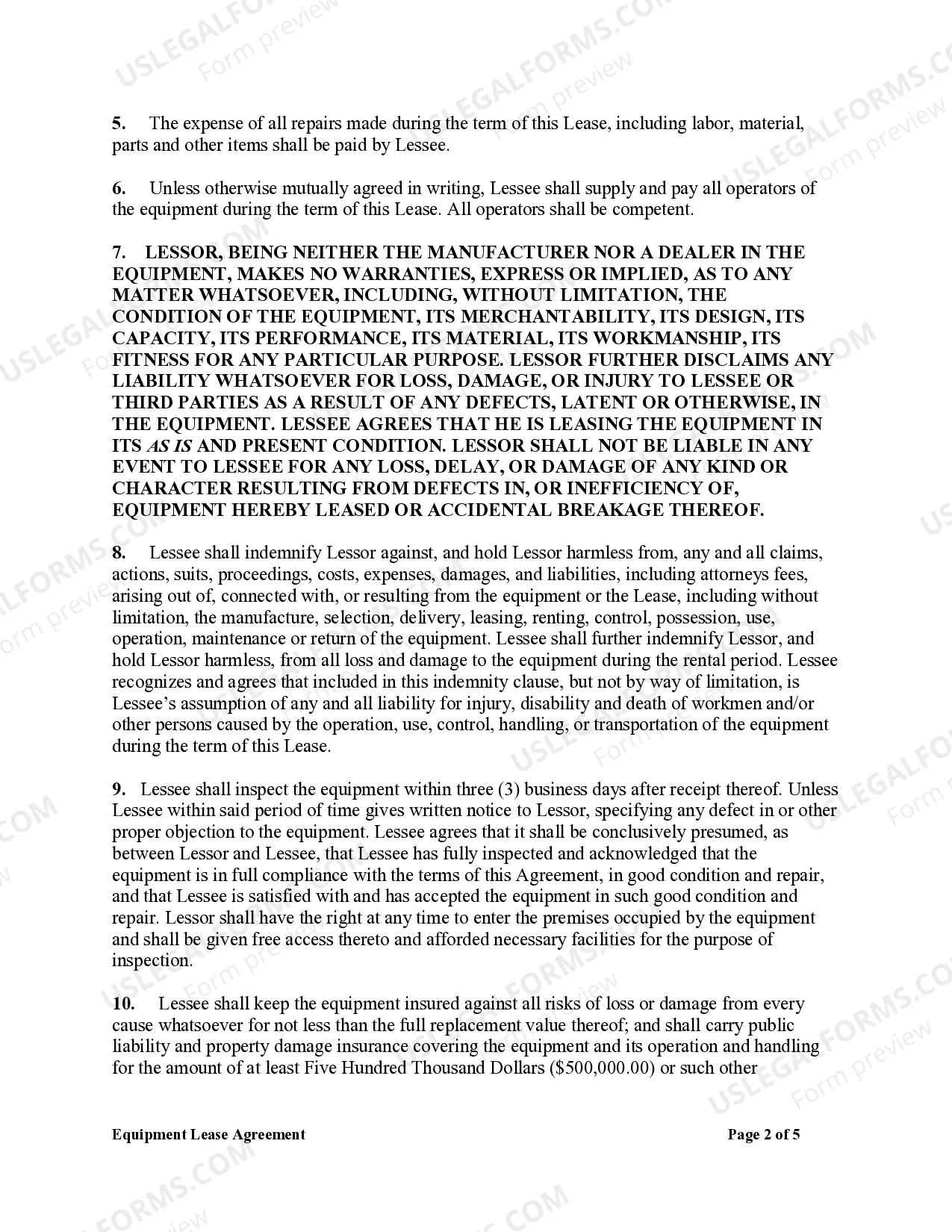
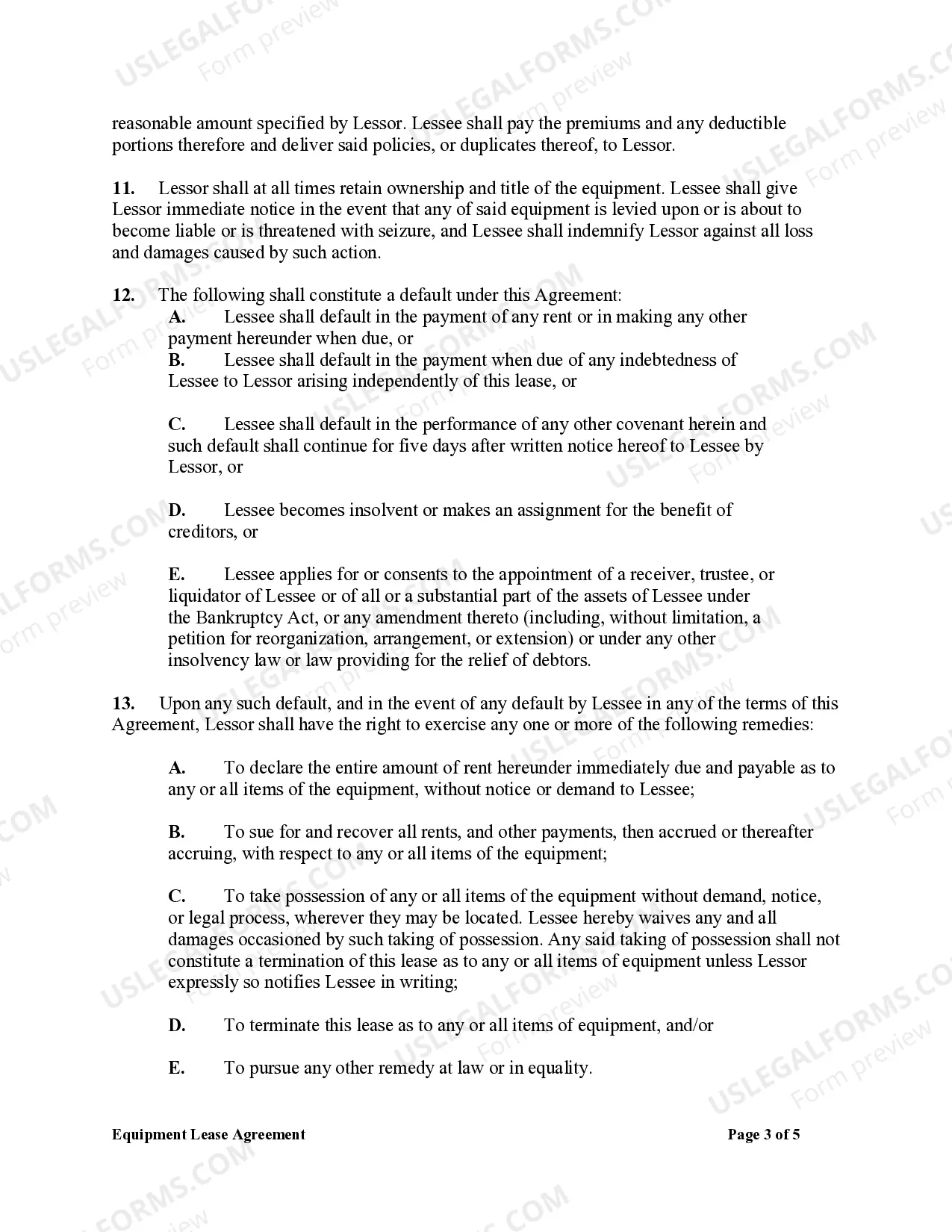
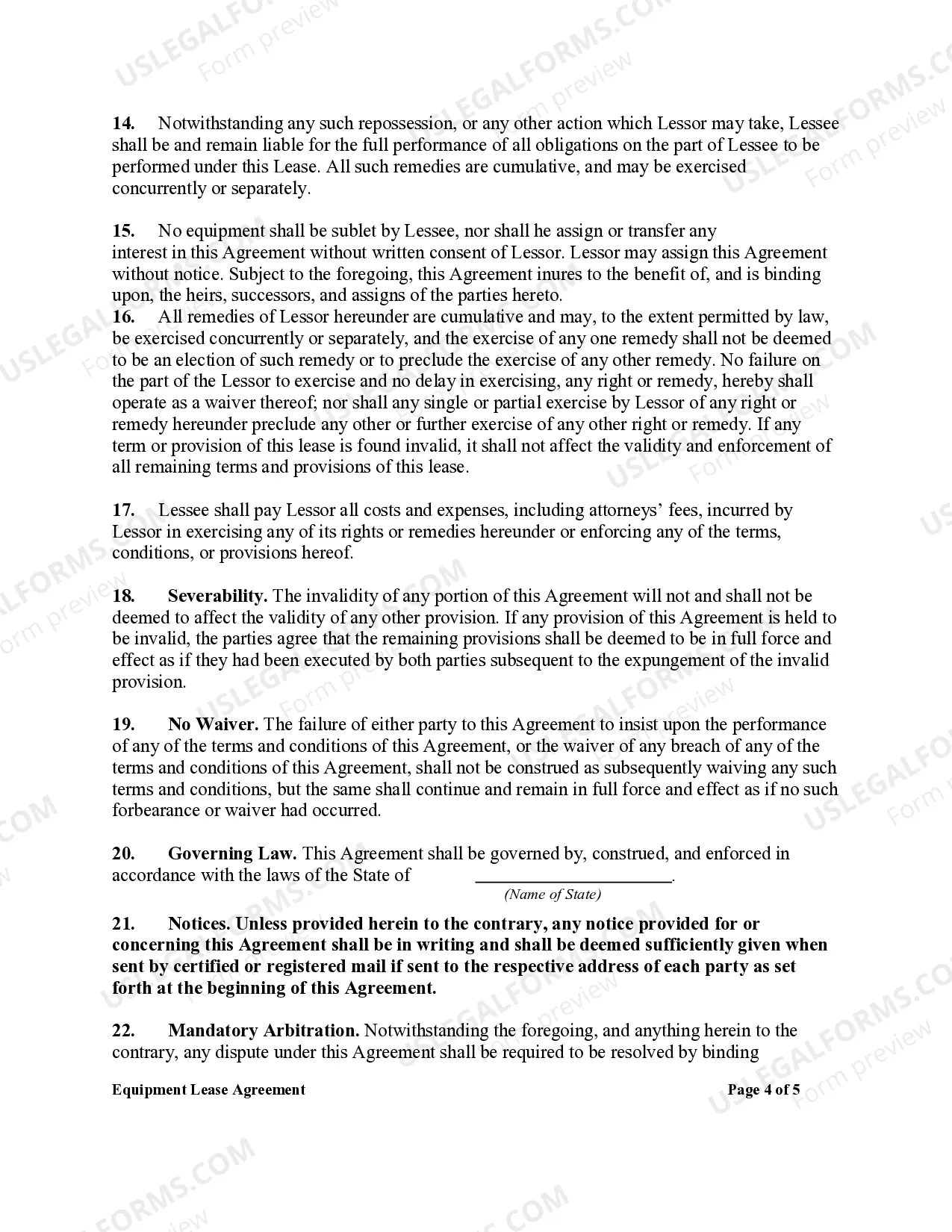
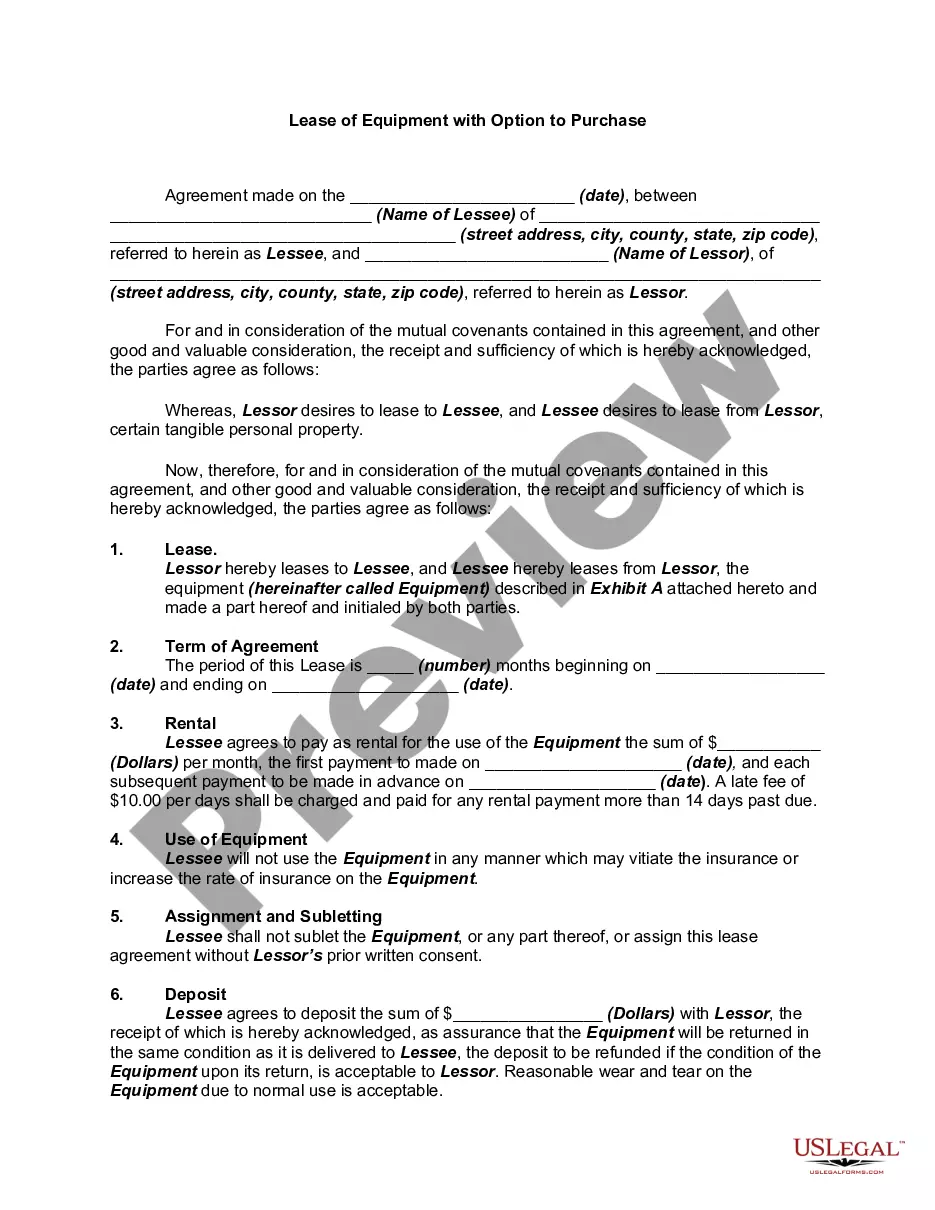
Get your form ready online
Our built-in tools help you complete, sign, share, and store your documents in one place.
Make edits, fill in missing information, and update formatting in US Legal Forms—just like you would in MS Word.
Download a copy, print it, send it by email, or mail it via USPS—whatever works best for your next step.
Sign and collect signatures with our SignNow integration. Send to multiple recipients, set reminders, and more. Go Premium to unlock E-Sign.
If this form requires notarization, complete it online through a secure video call—no need to meet a notary in person or wait for an appointment.
We protect your documents and personal data by following strict security and privacy standards.

Make edits, fill in missing information, and update formatting in US Legal Forms—just like you would in MS Word.

Download a copy, print it, send it by email, or mail it via USPS—whatever works best for your next step.

Sign and collect signatures with our SignNow integration. Send to multiple recipients, set reminders, and more. Go Premium to unlock E-Sign.

If this form requires notarization, complete it online through a secure video call—no need to meet a notary in person or wait for an appointment.

We protect your documents and personal data by following strict security and privacy standards.
Looking for another form?



Form popularity
FAQ
Meaning of equipment leasing in English a system in which equipment is lent to a company for a particular period of time in return for regular payments: Equipment leasing can be successfully included in micro-finance.
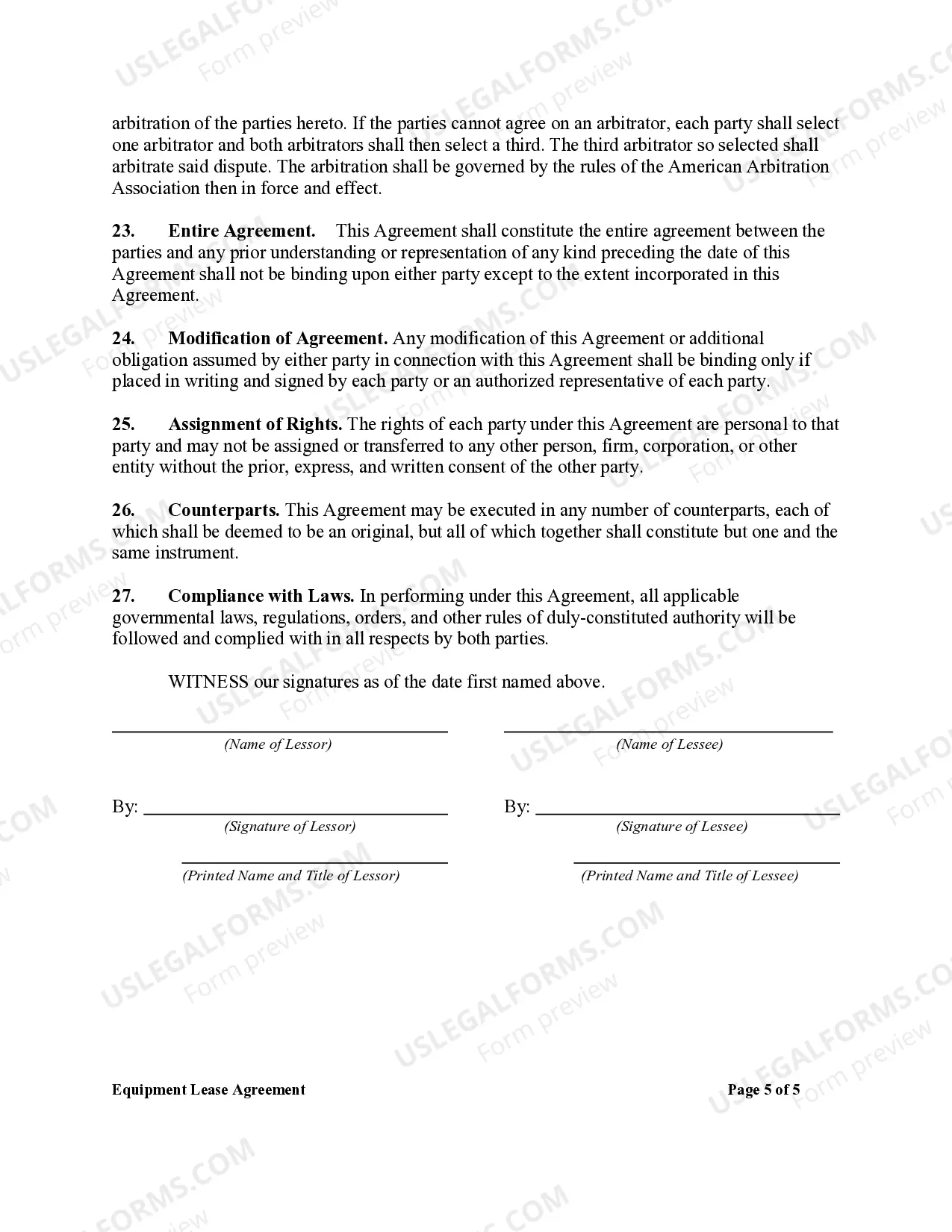
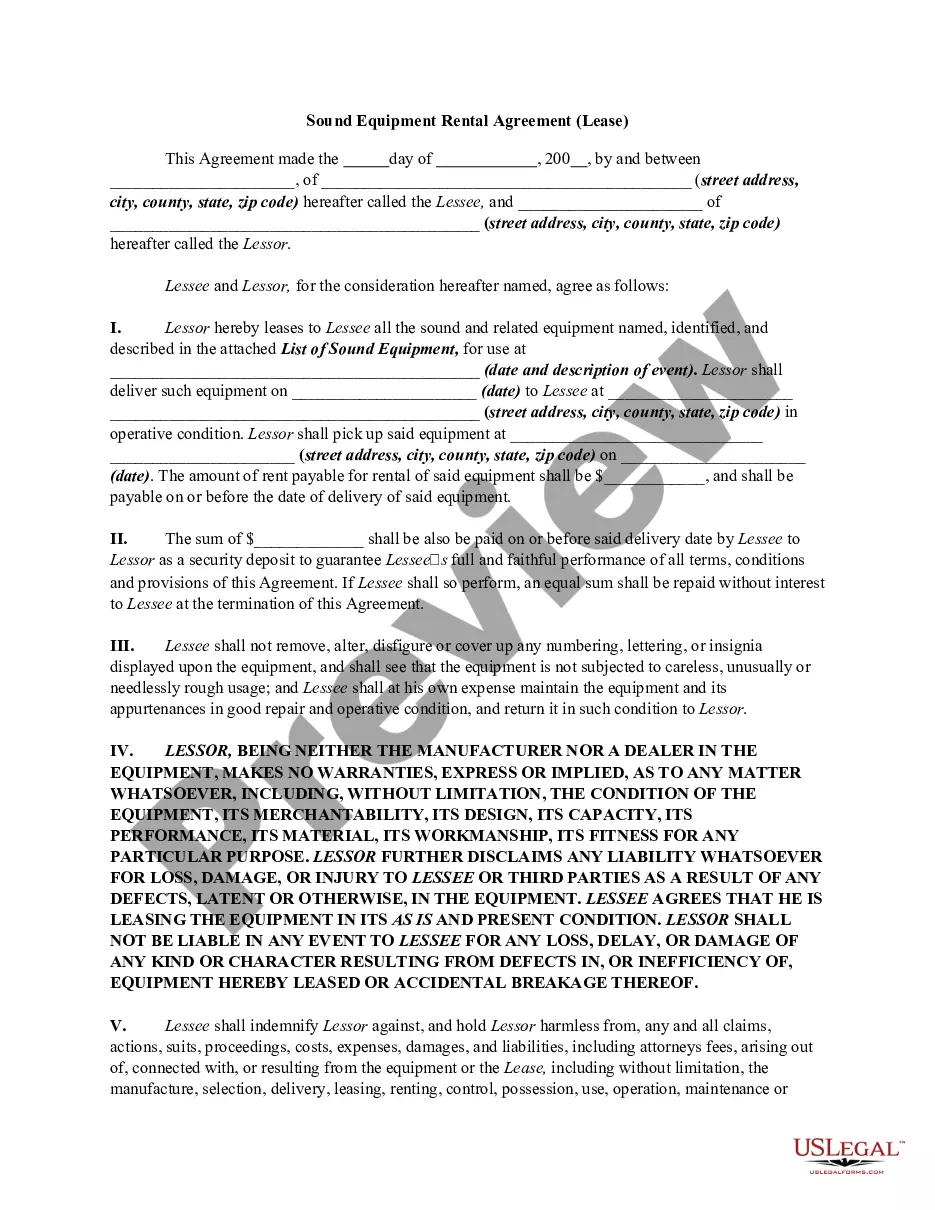
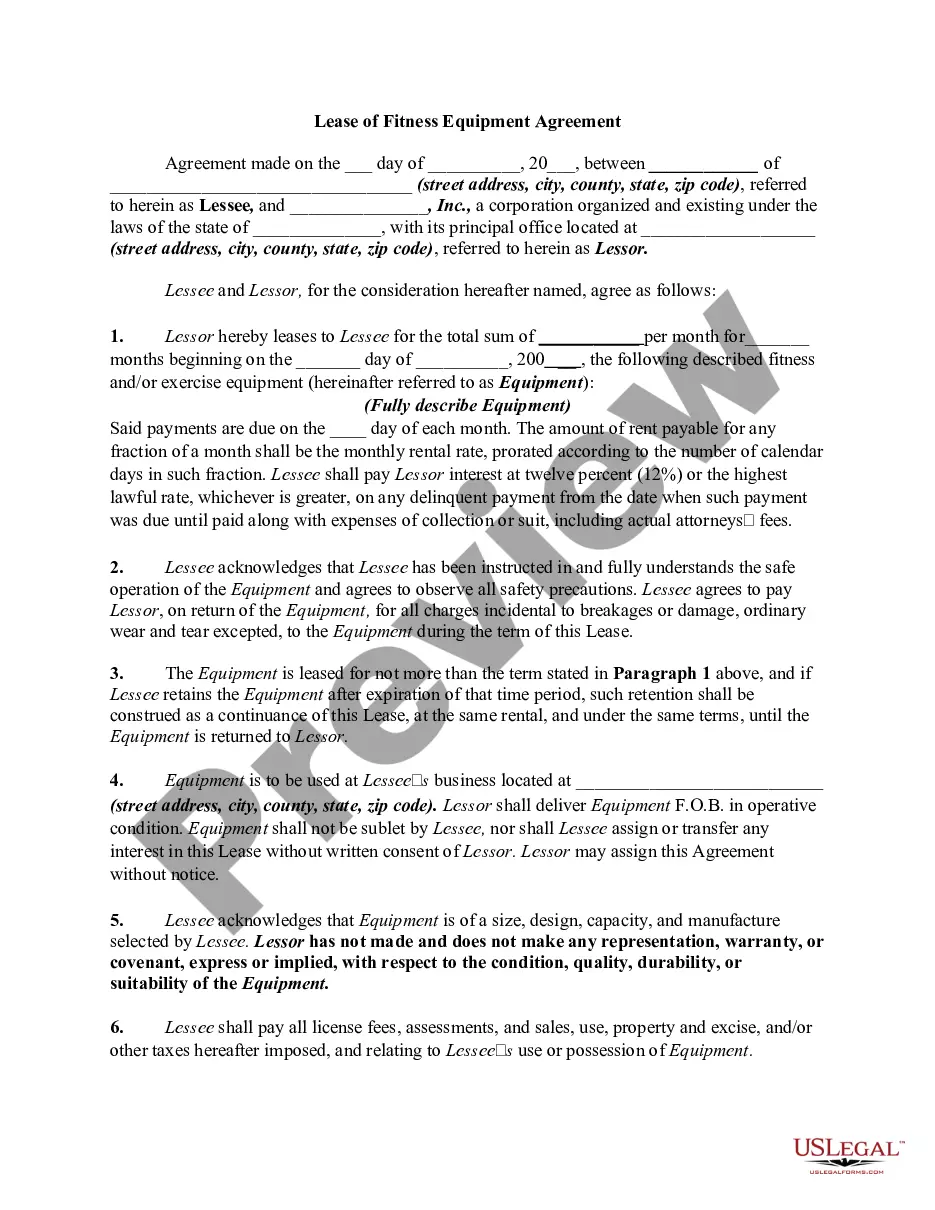
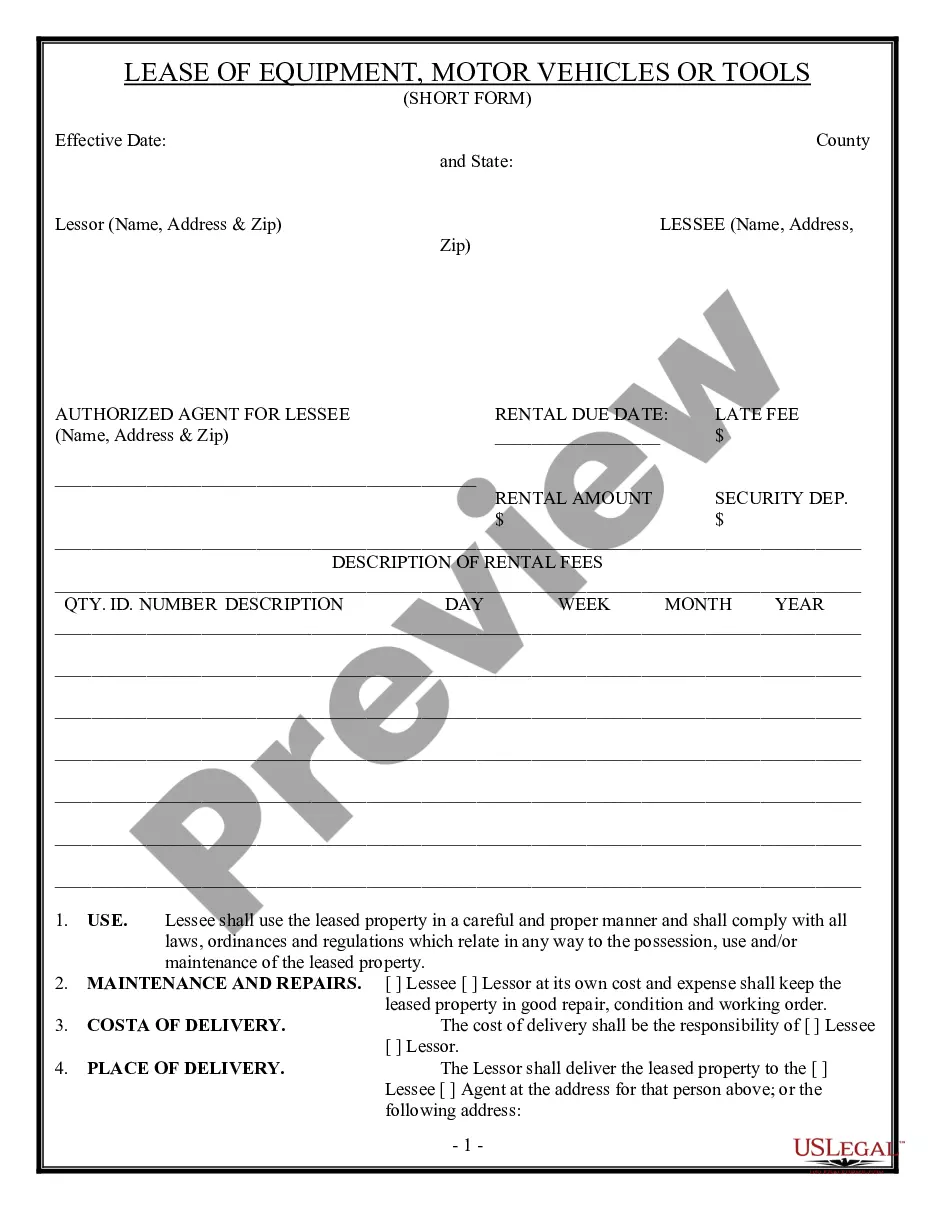
What to include in an equipment rental agreement Full and correct names. Your company should be listed as the lessor and your customer as the lessee. List the rented-out equipment. Rental duration terms. Rental rate. Late charges. Security deposit. Equipment usage guidelines. Repair and replacement.
Handwritten contracts are legally binding if they meet the necessary conditions that apply to all contracts: mutual agreement, capacity, consideration, and legal validity. There are no legal differences between typed and handwritten agreements when it comes to enforceability.
The lessee is the party who gets the right to use an asset for a specific period and makes periodic payments to the lessor based on their initial agreement. The length of the lease period often depends at least partially on the type of asset or property.
At its simplest, a lease is a deal made between two parties, the lessee and lessor, over the use of an asset. Instead of buying the asset upfront, the lessee pays a set amount for the right to use it, usually in instalments over the life of the lease agreement.
An equipment lease agreement is a contractual agreement where the lessor, who is the owner of the equipment, allows the lessee to use the equipment for a specified period in exchange for periodic payments. The subject of the lease may be vehicles, factory machines, or any other equipment.
An Employee Equipment Agreement is a formal document that establishes clear expectations for both the company and its employees regarding company-issued equipment. This agreement serves a critical purpose in safeguarding the company's assets while ensuring IT compliance throughout the employee's employment.
