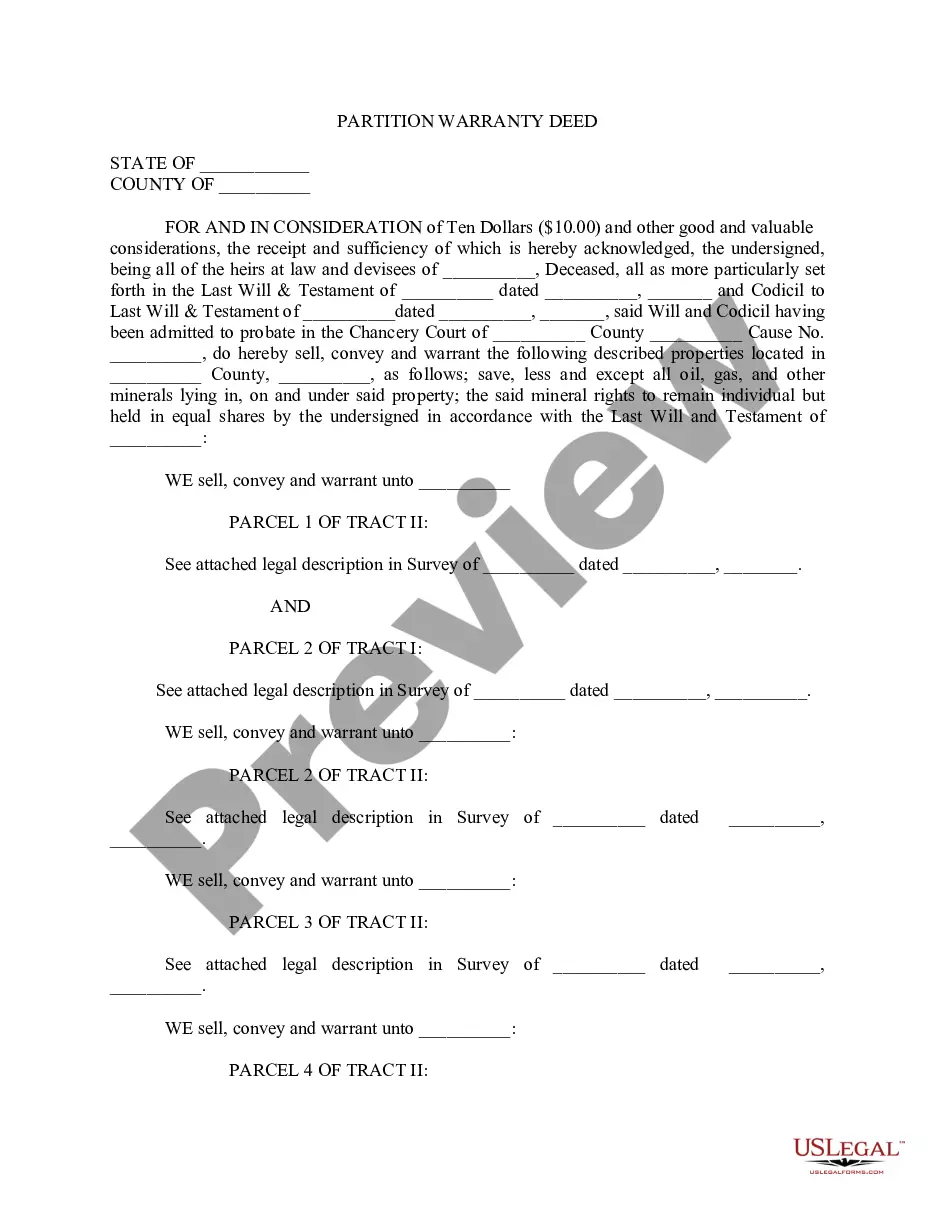
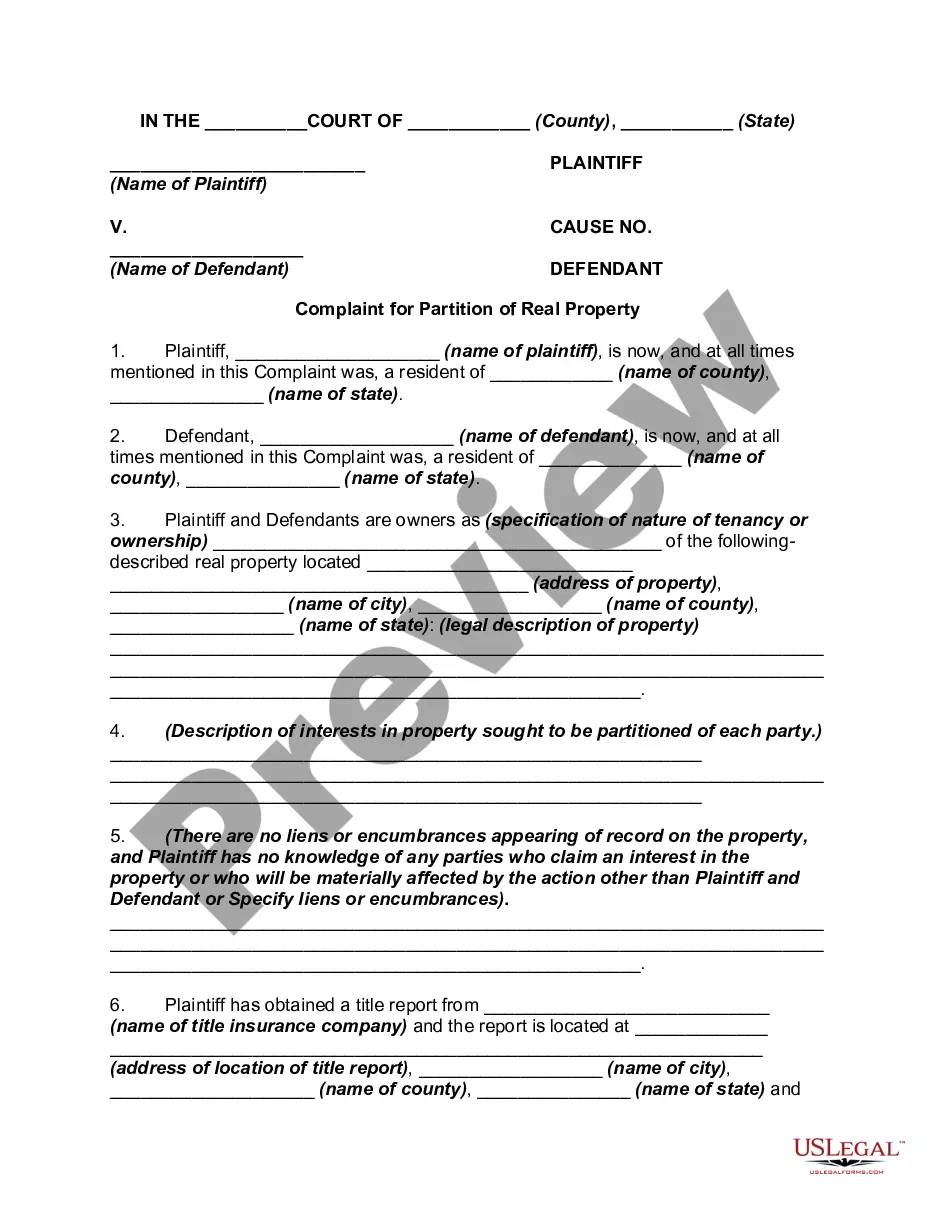
Texas Partition Agreement With Spouse In Georgia
Description


Get your form ready online
Our built-in tools help you complete, sign, share, and store your documents in one place.
Make edits, fill in missing information, and update formatting in US Legal Forms—just like you would in MS Word.
Download a copy, print it, send it by email, or mail it via USPS—whatever works best for your next step.
Sign and collect signatures with our SignNow integration. Send to multiple recipients, set reminders, and more. Go Premium to unlock E-Sign.
If this form requires notarization, complete it online through a secure video call—no need to meet a notary in person or wait for an appointment.
We protect your documents and personal data by following strict security and privacy standards.

Make edits, fill in missing information, and update formatting in US Legal Forms—just like you would in MS Word.

Download a copy, print it, send it by email, or mail it via USPS—whatever works best for your next step.

Sign and collect signatures with our SignNow integration. Send to multiple recipients, set reminders, and more. Go Premium to unlock E-Sign.

If this form requires notarization, complete it online through a secure video call—no need to meet a notary in person or wait for an appointment.

We protect your documents and personal data by following strict security and privacy standards.
Looking for another form?
Form popularity
FAQ
In Georgia, when an unmarried couple who own property together breaks up, the division of property is not automatically determined by law. Instead, the couple will need to come to an agreement on how to divide their assets and debts.
In short, yes, you should have an attorney to represent you in a postnuptial agreement for several reasons: To be sure you are treated fairly in the agreement. To have the agreement upheld, as a court is much more likely to say it is a valid contract if both parties were represented by counsel when they entered into it.
No, you can't be forced to sign divorce papers. However, refusing to sign doesn't stop the divorce from moving forward. The court can still finalize the process without your signature.
Under the same full faith and credit requirements, Texas will enforce the collection of an out-of-state order, even if the type and amount of support ordered are greater than the amount that would be provided by a Texas court. However, the method of collection can be difficult.
Georgia is an “equitable division” state. This means that spouses will be granted an approximately equal share of marital assets in the divorce, but it does not need to be an exact 50/50 split of everything.
To file for a divorce in Texas, at the time the divorce is filed, either spouse must: have been living in Texas for the preceding six-month period; and. be a resident of the county in which the suit is filed for the preceding 90-day period.
If you're living in Texas and your spouse resides in another state, you might be wondering if you can still file for divorce in Texas. The answer is yes, but there are certain conditions and requirements that need to be met.
Equitable Partition Under Georgia Law If equitable partition is permitted, the court will determine how to divide the property. If a physical separation is not practicable, the court can order the parties to sell the property and divide the proceeds.
Even if only one spouse's name is on the deed, any property bought during the marriage is presumed to be community property, unless it was bought with separate property funds. The spouse claiming it as separate property must prove it in court.
