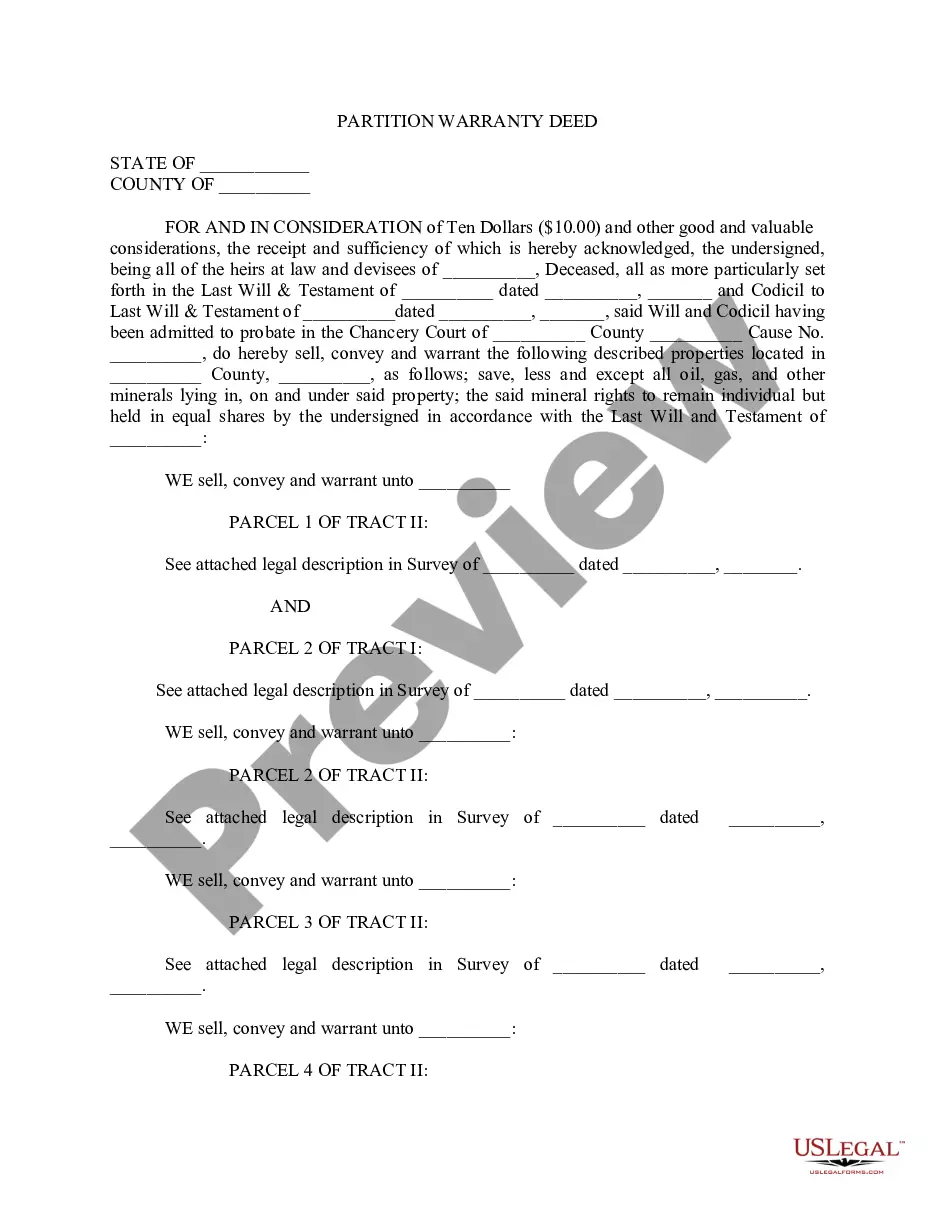
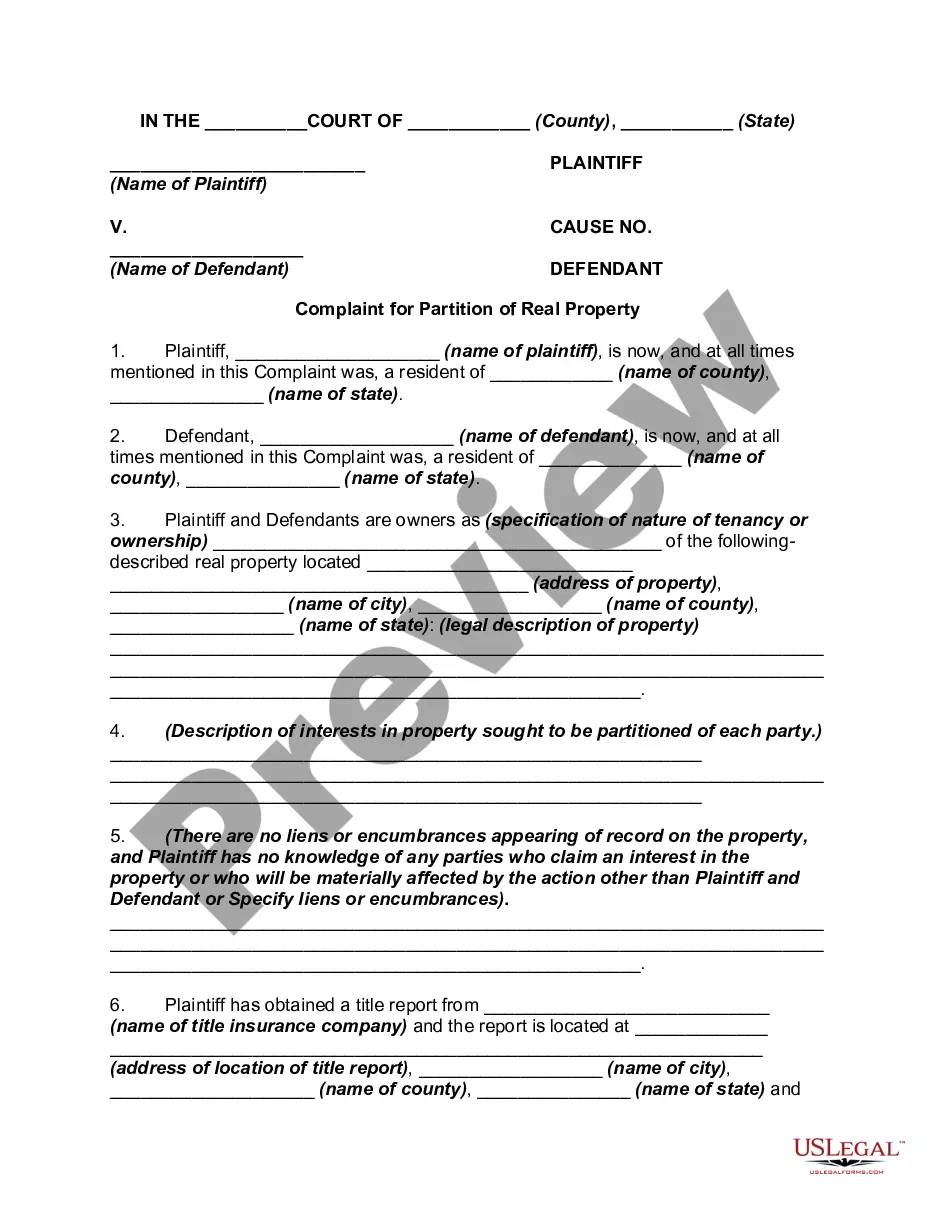
Partition Agreement Of Property In Fulton
Description


Get your form ready online
Our built-in tools help you complete, sign, share, and store your documents in one place.
Make edits, fill in missing information, and update formatting in US Legal Forms—just like you would in MS Word.
Download a copy, print it, send it by email, or mail it via USPS—whatever works best for your next step.
Sign and collect signatures with our SignNow integration. Send to multiple recipients, set reminders, and more. Go Premium to unlock E-Sign.
If this form requires notarization, complete it online through a secure video call—no need to meet a notary in person or wait for an appointment.
We protect your documents and personal data by following strict security and privacy standards.

Make edits, fill in missing information, and update formatting in US Legal Forms—just like you would in MS Word.

Download a copy, print it, send it by email, or mail it via USPS—whatever works best for your next step.

Sign and collect signatures with our SignNow integration. Send to multiple recipients, set reminders, and more. Go Premium to unlock E-Sign.

If this form requires notarization, complete it online through a secure video call—no need to meet a notary in person or wait for an appointment.

We protect your documents and personal data by following strict security and privacy standards.
Looking for another form?








Form popularity
FAQ
To demand a partition or division of the common property is in with Article 494 of the Civil Code, that is, no co-owner shall be obliged to remain in the co-ownership and that each co-owner may demand at any time partition of the thing owned in common insofar as his or her share is concerned.
To that end, Georgia law provides three legal vehicles for those with an ownership interest to initiate a partition action: (1) statutory partition; (2) equitable partition; and, (3) heirs partition. Statutory partition actions are the most common and may be filed by any owner of the real property.
Court Fees (if Judicial Partition is Necessary) Filing fees depend on the property value and may range from PHP 10,000 to PHP 50,000 or higher. Additional costs for attorney's fees, publication (if required), and other incidental expenses.
Upon the dissolution and liquidation of the community, the net assets shall be divided equally between the husband and the wife or their heirs. In case of legal separation or annulment of marriage, the provisions of articles 176 and 177 shall apply to the net profits acquired during the marriage.
If the co-owners cannot agree on partition, a judicial partition may be sought. This process involves filing a case in court to order the division of the property. Once the court issues a decision, the property will be physically divided, and each co-owner will have their individual portions.
To divide a property in the Philippines: Verify ownership through land titles, tax declarations, and other documents. Determine the legal context (inheritance, co-ownership, etc.). Pursue an extrajudicial settlement if all parties agree. If disputes arise, seek judicial partition or mediation.
The Fulton County Clerk of Superior and Magistrate Courts Deeds and Records' Room conveniently serves as the home of real estate, military discharge, trade names and other recorded instruments dating back to the early 1800's.
A partition action usually takes between six to nine months depending on the circumstances and the complexity of each case. The most significant factor is whether the partition is being handled by an attorney who practices only in partition law.
The actual time it takes from when a partition case is filed to when the land is partitioned physically, by sale, or by set-off varies from case to case. In general, partition cases can take several months or even years to resolve.
