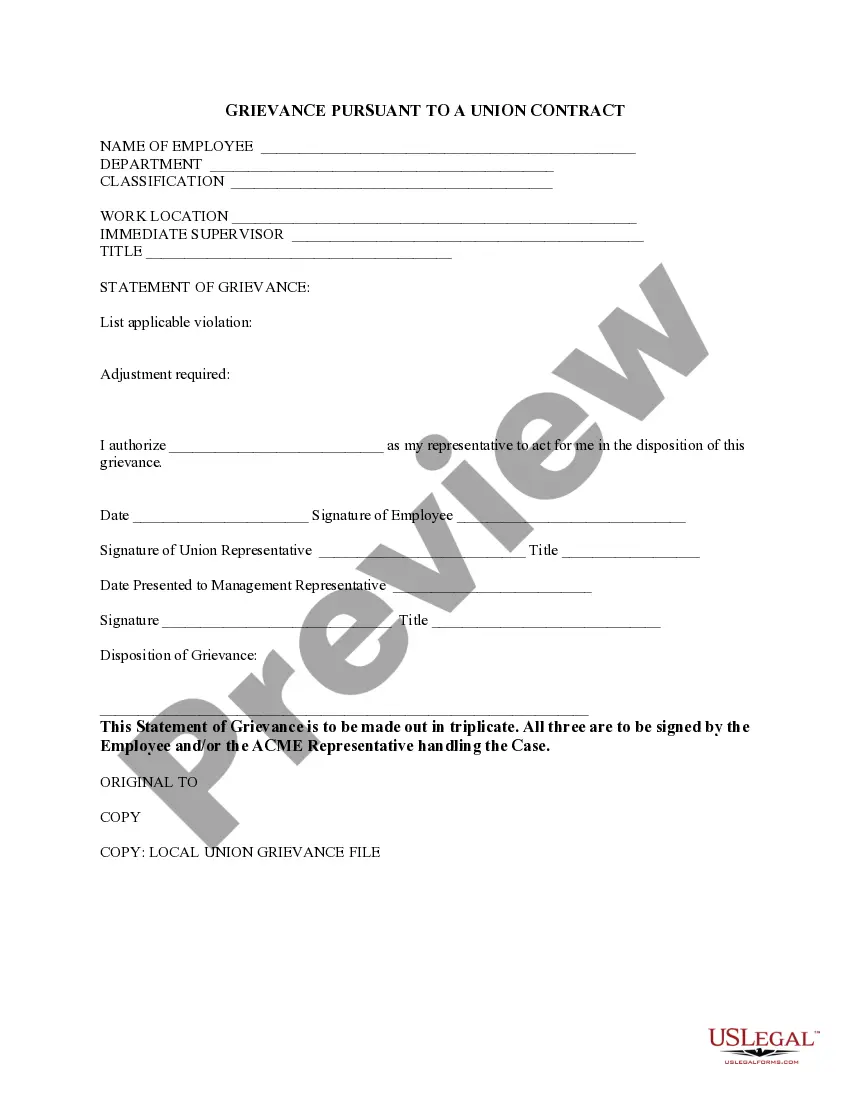
Grievance With Employer In Houston
Description
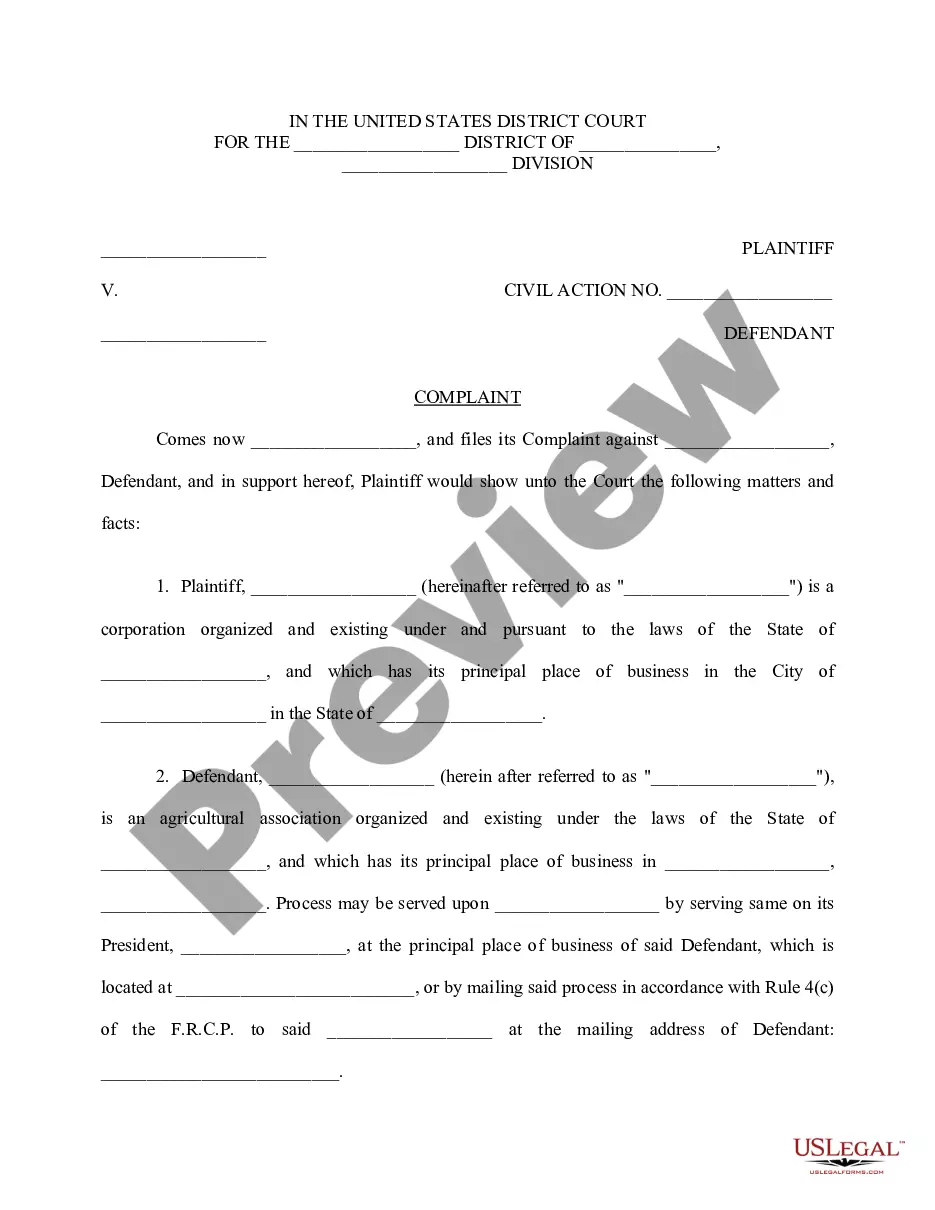
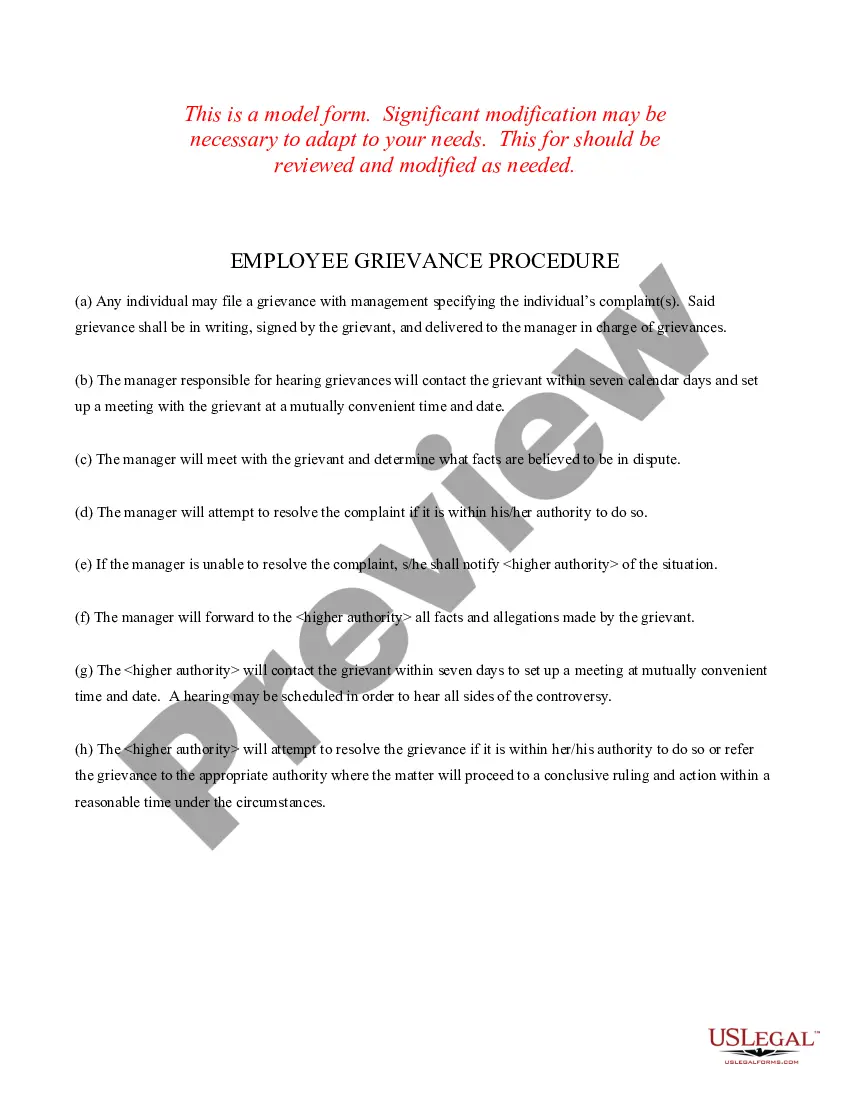
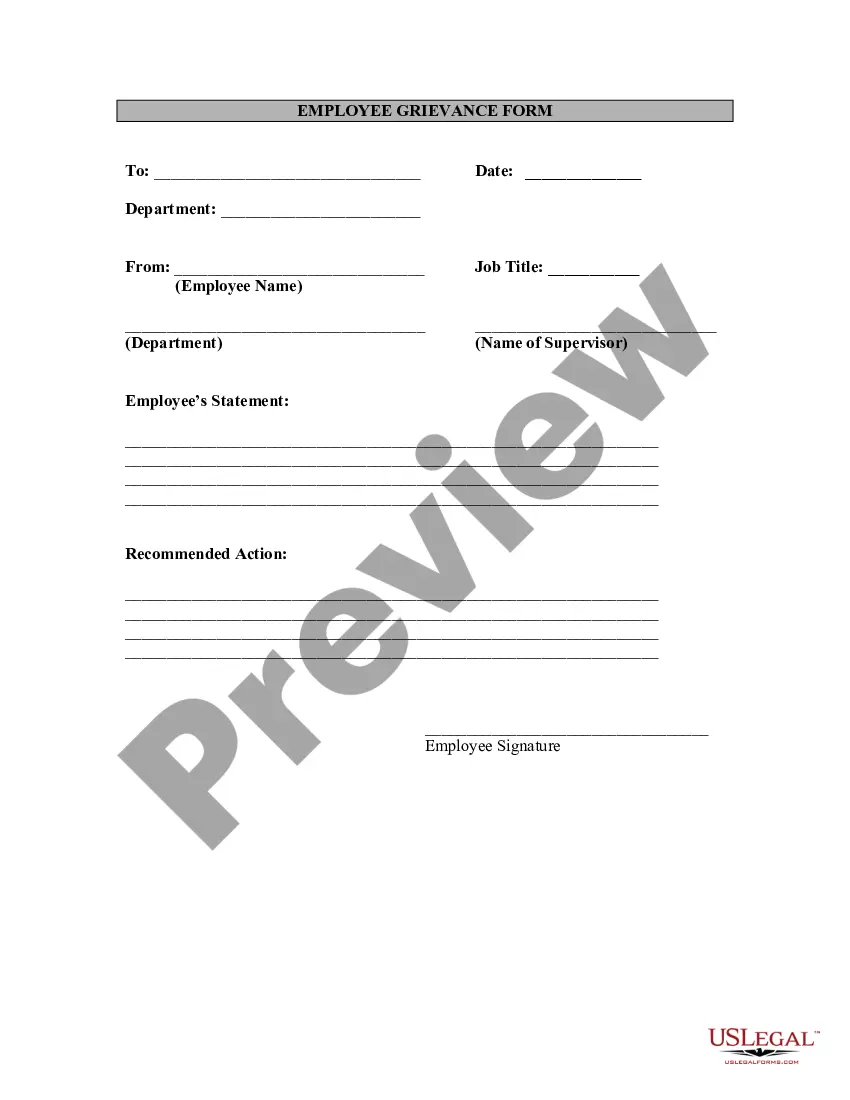
Get your form ready online
Our built-in tools help you complete, sign, share, and store your documents in one place.
Make edits, fill in missing information, and update formatting in US Legal Forms—just like you would in MS Word.
Download a copy, print it, send it by email, or mail it via USPS—whatever works best for your next step.
Sign and collect signatures with our SignNow integration. Send to multiple recipients, set reminders, and more. Go Premium to unlock E-Sign.
If this form requires notarization, complete it online through a secure video call—no need to meet a notary in person or wait for an appointment.
We protect your documents and personal data by following strict security and privacy standards.

Make edits, fill in missing information, and update formatting in US Legal Forms—just like you would in MS Word.

Download a copy, print it, send it by email, or mail it via USPS—whatever works best for your next step.

Sign and collect signatures with our SignNow integration. Send to multiple recipients, set reminders, and more. Go Premium to unlock E-Sign.

If this form requires notarization, complete it online through a secure video call—no need to meet a notary in person or wait for an appointment.

We protect your documents and personal data by following strict security and privacy standards.
Looking for another form?









Form popularity
FAQ
The 5-Step Workplace Grievance Process Step 1: Informal meeting. Step 2: Supervisor meeting and documentation. Step 3: Escalation to management. Step 4: Escalation to top company representatives. Step 5: Referral to arbitration.
Formal complaints may be presented to any of the following: the Office of Inspector General (OIG) - (832) 394-5100, located on the fourth floor of 900 Bagby Street, Houston, Texas; or. the Employee's Designated Departmental Representative (DDR), or.
The complainant (person making the complaint) must, in good faith, make full, fair, and honest disclosure of all facts and circumstances known to him/her at the time the complaint is made. The facts, as presented, must be in the form of an affidavit and signed under oath.
You can also file a complaint with the Department of Labor The DOL Wage & Hour Division can provide you with information as to what sorts of claims or complaints they accept and how their process works. They can be contacted at 866-487-9243. They also have a webpage with information that might be helpful.
Section C: Grievance Procedure Steps to Follow Raise the Issue Informally. Submit a Grievance Letter. Employer Investigates the Grievance. Grievance Hearing. Decision and Action. Employee Makes an Appeal (if necessary) ... Appeal Hearing. Appeal Decision.
These laws can provide you with additional recourse if you're facing hostility at work. You can report the behavior to your employer, file a complaint with the Equal Employment Opportunity Commission or even file a lawsuit.
(a) "Misconduct" means mismanagement of a position of employment by action or inaction, neglect that jeopardizes the life or property of another, intentional wrongdoing or malfeasance, intentional violation of a law, or violation of a policy or rule adopted to ensure the orderly work and the safety of employees.
If you have a concern, problem or complaint at work, you might want to take this up with your employer. This is called 'raising a grievance'.
An individual grievance is a complaint that an action by management has violated the rights of an individual as set out in the collective agreement or law, or by some unfair practice. Examples of this type of grievance include: discipline, demotion, classification disputes, denial of benefits, etc.
Not offering employees benefits that they're entitled to is grounds for a grievance. For example, staff members who work 40+ hours are entitled to employer-funded health care. This means that a full-time employee can file a grievance to get those benefits.