Subletting Apartment Rental Without Permission In Montgomery
Description


Get your form ready online
Our built-in tools help you complete, sign, share, and store your documents in one place.
Make edits, fill in missing information, and update formatting in US Legal Forms—just like you would in MS Word.
Download a copy, print it, send it by email, or mail it via USPS—whatever works best for your next step.
Sign and collect signatures with our SignNow integration. Send to multiple recipients, set reminders, and more. Go Premium to unlock E-Sign.
If this form requires notarization, complete it online through a secure video call—no need to meet a notary in person or wait for an appointment.
We protect your documents and personal data by following strict security and privacy standards.

Make edits, fill in missing information, and update formatting in US Legal Forms—just like you would in MS Word.

Download a copy, print it, send it by email, or mail it via USPS—whatever works best for your next step.

Sign and collect signatures with our SignNow integration. Send to multiple recipients, set reminders, and more. Go Premium to unlock E-Sign.

If this form requires notarization, complete it online through a secure video call—no need to meet a notary in person or wait for an appointment.

We protect your documents and personal data by following strict security and privacy standards.
Looking for another form?







Form popularity
FAQ
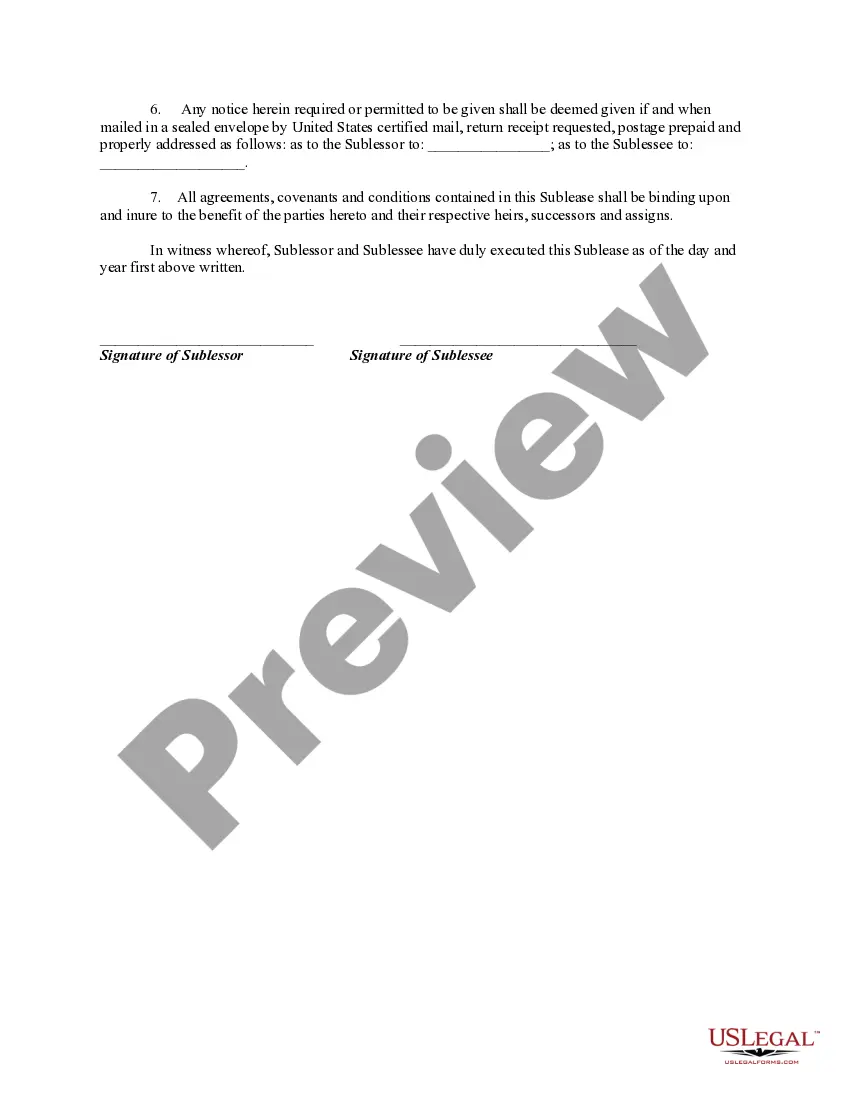
In Maryland, a tenant can sublease their rental property, but it requires written permission from the landlord. This consent may be included as part of the original lease or through a new agreement. Without proper consent, the tenant risks eviction. The subleasing process should be clearly documented to avoid disputes.
As of 2023, Maryland has no statewide rent control laws, so there's no cap on the amount landlords can increase rent. As such, it is considered a landlord-friendly state. However, some cities, like Takoma Park, do have rent control policies in place.
Since Maryland has no explicit regulations governing subletting, the landlord will need to approve the new tenant.
If you have a lease for a set term, like one year, you can sublet with or without your landlord's permission, unless they prohibit this in the written lease.
If your agreement doesn't say anything about subletting You don't need your landlord's permission but it's usually best to let them know. If they don't want you to sublet your home, your landlord can get a court order to end your tenancy, evict your subtenant and stop you from moving back in.
Section 29-27(w) of the Montgomery County Code requires that all licensed landlords attach the Lease Summary to each new lease.
