A Protective Covenant With Israel In Washington
Description

Get your form ready online
Our built-in tools help you complete, sign, share, and store your documents in one place.
Make edits, fill in missing information, and update formatting in US Legal Forms—just like you would in MS Word.
Download a copy, print it, send it by email, or mail it via USPS—whatever works best for your next step.
Sign and collect signatures with our SignNow integration. Send to multiple recipients, set reminders, and more. Go Premium to unlock E-Sign.
If this form requires notarization, complete it online through a secure video call—no need to meet a notary in person or wait for an appointment.
We protect your documents and personal data by following strict security and privacy standards.

Make edits, fill in missing information, and update formatting in US Legal Forms—just like you would in MS Word.

Download a copy, print it, send it by email, or mail it via USPS—whatever works best for your next step.

Sign and collect signatures with our SignNow integration. Send to multiple recipients, set reminders, and more. Go Premium to unlock E-Sign.

If this form requires notarization, complete it online through a secure video call—no need to meet a notary in person or wait for an appointment.

We protect your documents and personal data by following strict security and privacy standards.
Looking for another form?









Form popularity
FAQ
Protection order cases are civil, not criminal, so the burden of proof is a "preponderance of the evidence." This means the petitioner must prove the allegations are more likely true than not true Include definitions/what petitioners must prove either here, or when you call each case if it's a combined docket.
(g) "Harasses" means a knowing and willful course of conduct directed at a specific person which seriously alarms, annoys, torments, or is detrimental to such person, and which serves no legitimate or lawful purpose.
Protection order cases are civil, not criminal, so the burden of proof is a "preponderance of the evidence." This means the petitioner must prove the allegations are more likely true than not true Include definitions/what petitioners must prove either here, or when you call each case if it's a combined docket.
The Covenant Homeownership Act is a state law passed in the spring of 2023 to support homeownership for those affected by generations of systematic discriminatory housing policies and practices by Washington State.
Grounds for civil anti-harassment in Washington Washington State law defines “harassment” as a set of willful actions over a period of time that: Annoys, alarms, or harasses you and serves no “lawful or legitimate” purpose. Causes a reasonable person to suffer substantial emotional distress.
There are several covenants in the Bible, but five covenants are crucial for understanding the story of the Bible and God's redemptive plan: the Noahic Covenant, the Abrahamic Covenant, The Mosaic Covenant, the Davidic Covenant and the New Covenant.
Protective Covenants: Safeguarding Your Secret Sauce In general, it is a legal provision in an agreement or legal instrument where one party promises to take or is restricted from taking certain actions or otherwise has certain obligations to protect an interest of another party.
Positive covenants, also known as affirmative covenants, require a business to adhere to certain terms. They might require that the company maintains a certain type of insurance or delivers audited financial statements to the lending institution.
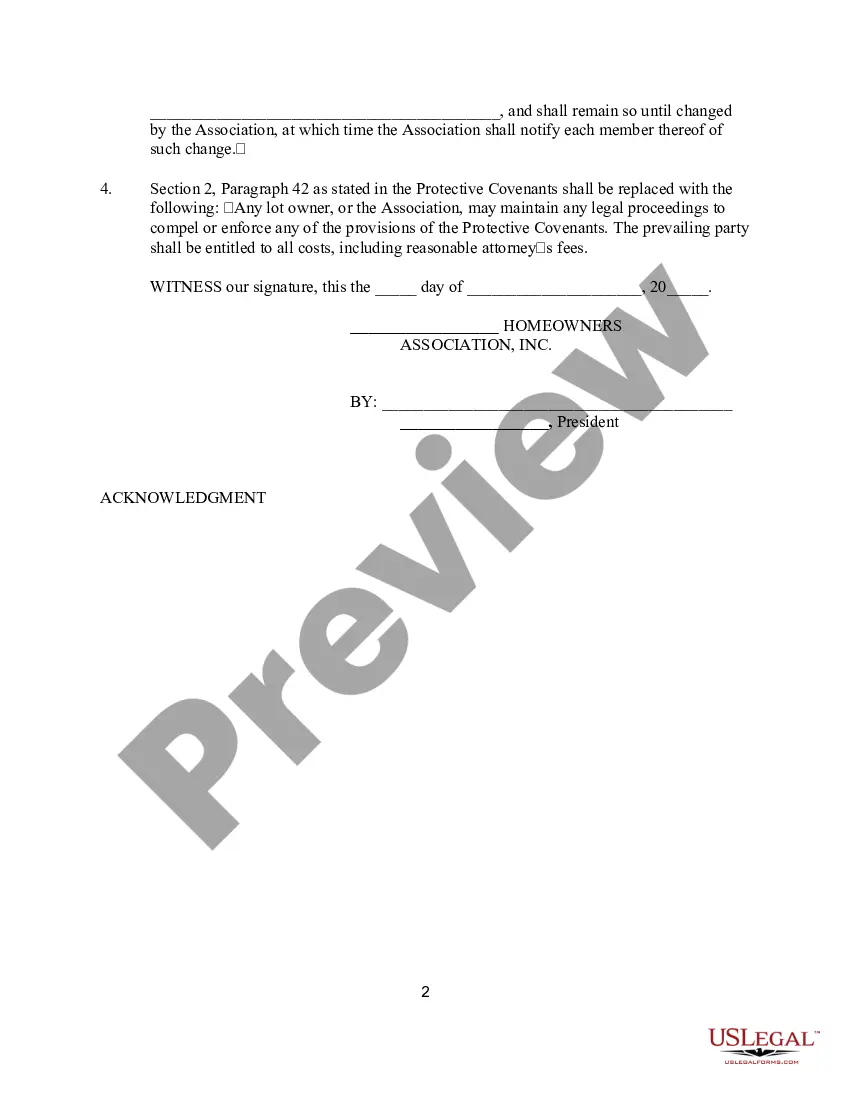
For example, a protective covenant may restrict the type of buildings that can be constructed on a property, dictate architectural styles, or set standards for landscaping.
