A Protective Covenant With Abraham In Mecklenburg
Description
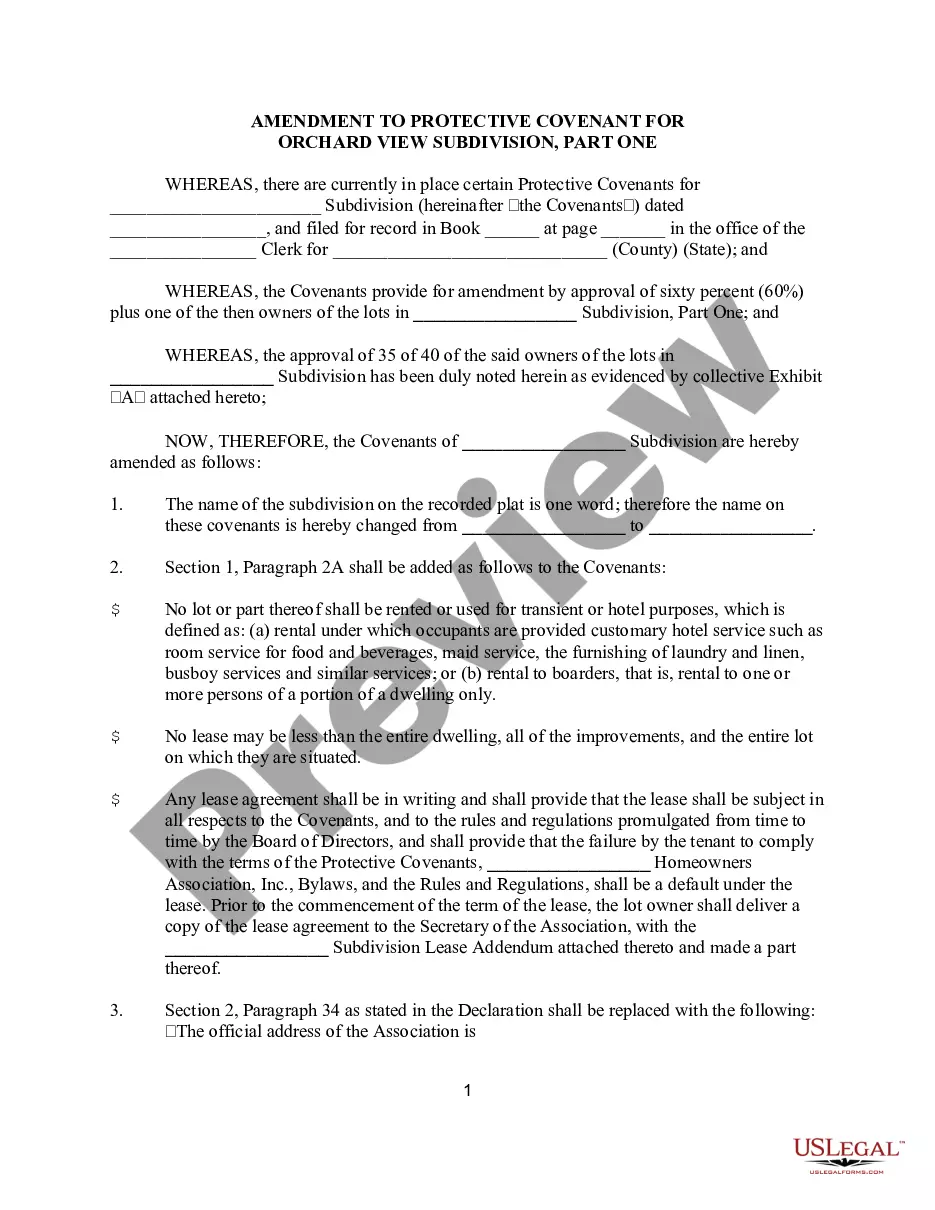
Get your form ready online
Our built-in tools help you complete, sign, share, and store your documents in one place.
Make edits, fill in missing information, and update formatting in US Legal Forms—just like you would in MS Word.
Download a copy, print it, send it by email, or mail it via USPS—whatever works best for your next step.
Sign and collect signatures with our SignNow integration. Send to multiple recipients, set reminders, and more. Go Premium to unlock E-Sign.
If this form requires notarization, complete it online through a secure video call—no need to meet a notary in person or wait for an appointment.
We protect your documents and personal data by following strict security and privacy standards.

Make edits, fill in missing information, and update formatting in US Legal Forms—just like you would in MS Word.

Download a copy, print it, send it by email, or mail it via USPS—whatever works best for your next step.

Sign and collect signatures with our SignNow integration. Send to multiple recipients, set reminders, and more. Go Premium to unlock E-Sign.

If this form requires notarization, complete it online through a secure video call—no need to meet a notary in person or wait for an appointment.

We protect your documents and personal data by following strict security and privacy standards.
Looking for another form?





Form popularity
FAQ
And when Paul picks that up, he sees that fulfilled in Jesus Christ. So, is the Abrahamic covenant still in operation? It is still in operation in the sense that it has been fulfilled. The promise has been realized, and God has kept the promise that He gave to Abraham.
A covenant is defined as “an unbreakable agreement between two parties that have joined together as one to support, provide, protect and defend each other.” Psalm 1 (KJV) says, “He hath remembered His covenant for ever, the word which He commanded to a thousand generations.”
Ing to the covenant, God would offer protection and land to Abraham and his descendants, but they must follow the path of God. God then commanded Abraham and his future generations to perform the ritual of circumcision (brit milah) as a symbol of the covenant.
His promises included that God would bless Abraham, that God would make a great nation out of Abraham, but also that God, through Abraham, would bring blessing to all the nations of the earth. As we read from Genesis 12 onward, we begin to see that God starts to fulfill those covenant promises.
A covenant is simply a promise, a promise made between two or more people in the form of sort of a partnership, where one party is saying, I'm going to do this, and then the other is promising, I'm going to do this. It's a promise is really what it is.
Giving the Covenant Promise: the Call of Abram (Genesis 12) Making the Covenant: the Promise of Descendants and Land (Genesis 15) Affirming the Covenant: the Sign of Circumcision (Genesis 17) Confirming the Covenant: Abraham's Obedience and Confirmation of the Promises by Oath (Genesis 22)
The covenant between Abraham and God consisted of three separate parts: the promised land. the promise of the descendants. the promise of blessing and redemption.
The elements of the covenant are threefold: making Abraham into a great nation, blessing Abraham personally, and blessing all nations in Abraham. The promises of the covenant are unconditional.
The covenant between God and Jews is the basis for the idea of the Jews as the chosen people. The Jewish covenant continues to be an important part of the Jewish religion today.
The Ark of the Covenant was lost after the Jerusalem Temple was destroyed in 586 BCE. Some claim that it was stolen while others claim it is on Mount Nebo, from where Moses saw the Promised Land. Most popularly, the Ethiopian Orthodox Church claims that they have it in their Church of Our Lady Mary of Zion.
