Restrictive Covenants In Real Estate In North Carolina
Description

Get your form ready online
Our built-in tools help you complete, sign, share, and store your documents in one place.
Make edits, fill in missing information, and update formatting in US Legal Forms—just like you would in MS Word.
Download a copy, print it, send it by email, or mail it via USPS—whatever works best for your next step.
Sign and collect signatures with our SignNow integration. Send to multiple recipients, set reminders, and more. Go Premium to unlock E-Sign.
If this form requires notarization, complete it online through a secure video call—no need to meet a notary in person or wait for an appointment.
We protect your documents and personal data by following strict security and privacy standards.

Make edits, fill in missing information, and update formatting in US Legal Forms—just like you would in MS Word.

Download a copy, print it, send it by email, or mail it via USPS—whatever works best for your next step.

Sign and collect signatures with our SignNow integration. Send to multiple recipients, set reminders, and more. Go Premium to unlock E-Sign.

If this form requires notarization, complete it online through a secure video call—no need to meet a notary in person or wait for an appointment.

We protect your documents and personal data by following strict security and privacy standards.
Looking for another form?
Form popularity
FAQ
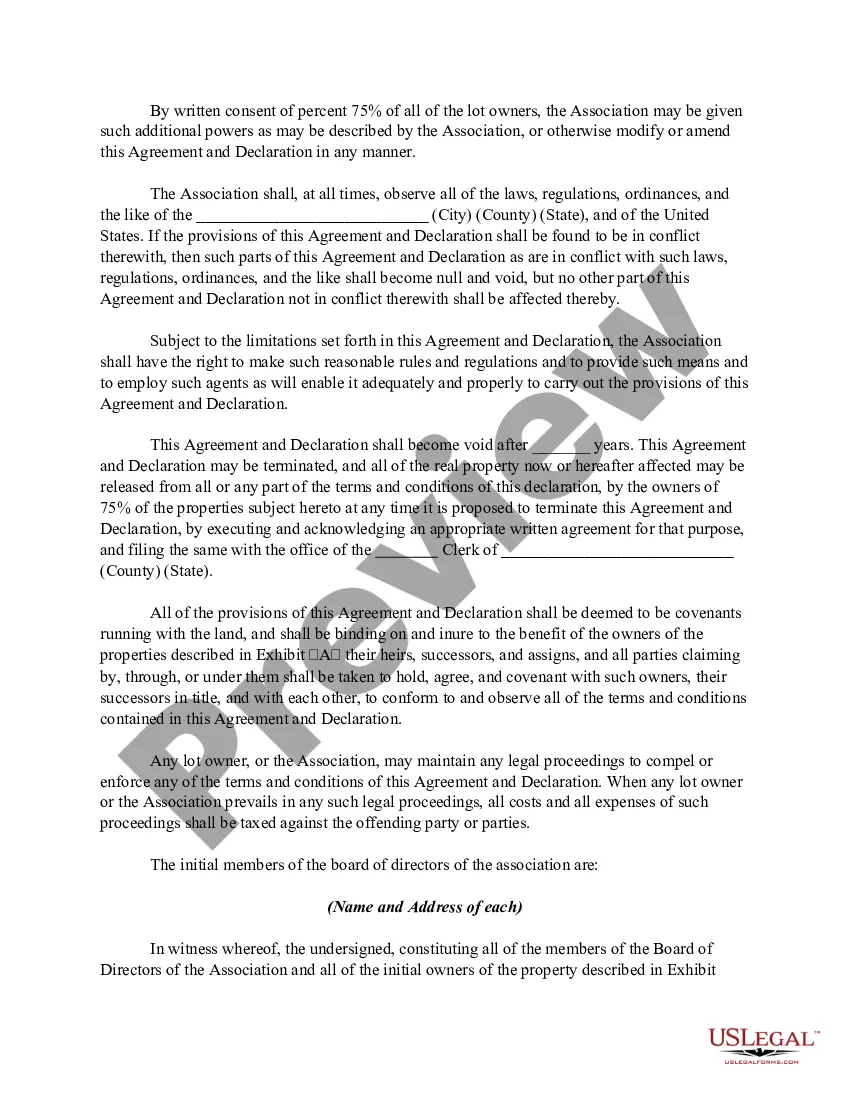
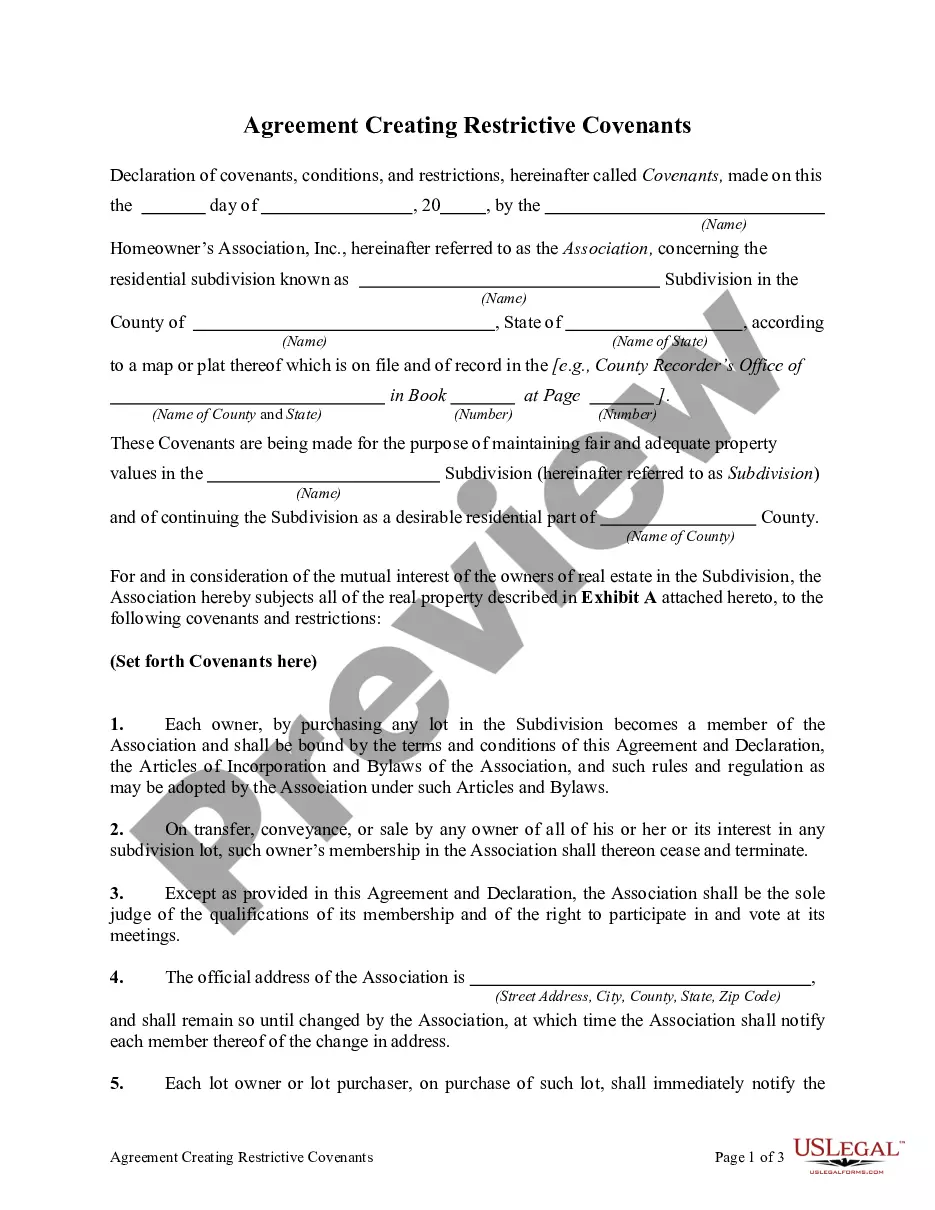
Deed restrictions, also called restrictive covenants, are legally binding clauses tied to property deeds that dictate how a property can be used or modified. They can significantly impact real estate transactions and often last indefinitely unless removed by the original grantor or a court.
In many states, covenants only last 30 years, becoming unenforceable after they expire. However, North Carolina isn't one of these states.
Where can I learn more about HOA law in NC? The HOA or planned community law is in Chapter 47F of the General Statutes. of the General Statutes. You can also learn more about HOAs at the NC Attorney General's website at .
Some of the most common restrictive covenants include: Alterations and extensions to the building. Changes to the use of a property, for example, converting a building into flats or turning a house into business premises. Rent and lease restrictions. Limitations on pets. Limitations on home colour.
What Is the Statute of Limitations for HOA and COA Liens in North Carolina? A lien for unpaid assessments is extinguished (eliminated) unless proceedings to enforce the lien are begun within three years after the claim of lien is filed. (N.C. Gen. Stat.
In North Carolina, HOA bylaws do not need to be recorded with the state. However, certain documents, like the declaration of covenants, conditions, and restrictions (CC&Rs), typically must be filed with the relevant county's Register of Deeds.
The covenant agreement is recorded at the county Register of Deeds and runs in perpetuity with the deed to the property, thus protecting the historic resource for future generations.
The most typical purpose of a deed restriction is to limit the use of the property. This can include things like the type of structure that can be built, the size of the structure, or the appearance of the structure.
In North Carolina, there's a noteworthy aspect of restrictive covenants to consider; most covenants automatically expire after 30 years unless they are specifically for residential purposes only. This statutory limitation is a safeguard against outdated or unreasonable restrictions binding properties in perpetuity.
A judge can rule to void the restriction from your deed, or from the common CC&Rs of the association. This is usually very difficult. In most cases, you will have to prove that the HOA does not have the right to enforce the restriction, or that they have not exercised the right.