Restrictive Covenant For Physician In Montgomery
Description


Get your form ready online
Our built-in tools help you complete, sign, share, and store your documents in one place.
Make edits, fill in missing information, and update formatting in US Legal Forms—just like you would in MS Word.
Download a copy, print it, send it by email, or mail it via USPS—whatever works best for your next step.
Sign and collect signatures with our SignNow integration. Send to multiple recipients, set reminders, and more. Go Premium to unlock E-Sign.
If this form requires notarization, complete it online through a secure video call—no need to meet a notary in person or wait for an appointment.
We protect your documents and personal data by following strict security and privacy standards.

Make edits, fill in missing information, and update formatting in US Legal Forms—just like you would in MS Word.

Download a copy, print it, send it by email, or mail it via USPS—whatever works best for your next step.

Sign and collect signatures with our SignNow integration. Send to multiple recipients, set reminders, and more. Go Premium to unlock E-Sign.

If this form requires notarization, complete it online through a secure video call—no need to meet a notary in person or wait for an appointment.

We protect your documents and personal data by following strict security and privacy standards.
Looking for another form?








Form popularity
FAQ
The following are common types of restrictive covenants between companies and their employees: Non-compete agreement. Non-solicitation agreement. Non-disclosure agreement.
This covenant obliges physicians to be competent and to use their competence in the patient's best interests. Physicians, therefore, are both intellectually and morally obliged to act as advocates for the sick wherever their welfare is threatened and for their health at all times.
Employers often include in employment contracts what are referred to as “restrictive covenants.” This term is generally used to describe two main types of contractual clause: the non-solicitation clause and the non-compete clause.
Most of you probably know what a restrictive covenant provision is. They restrict post-employment—place restrictions on where you can practice medicine and for how long you can practice medicine.
One of the most common restrictive covenants is not to do or keep anything on the property that could be a nuisance to the neighbouring properties. This is general covenant that could cover a wide variety of actions, to try to keep the area a pleasant place to live.
Restrictive Covenants, Explained This restricts how homeowners can manage and modify their land. Examples include restrictions on fence options, the type of animals allowed and the use of outbuildings, such as sheds.
What does Restrictive covenants mean? A covenant requiring the covenantor not to do the thing specified. In order to be enforceable, such provisions should be reasonable and necessary for the protection of the target company's/target business' legitimate business interests.
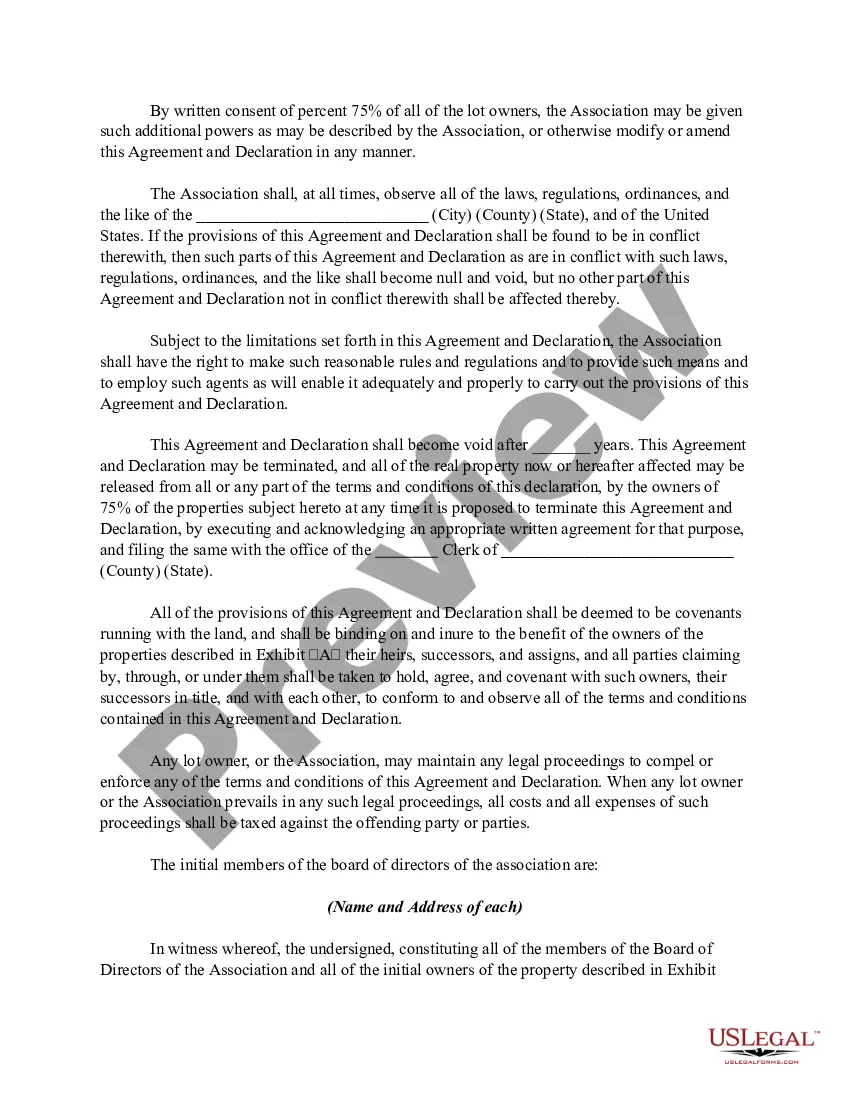
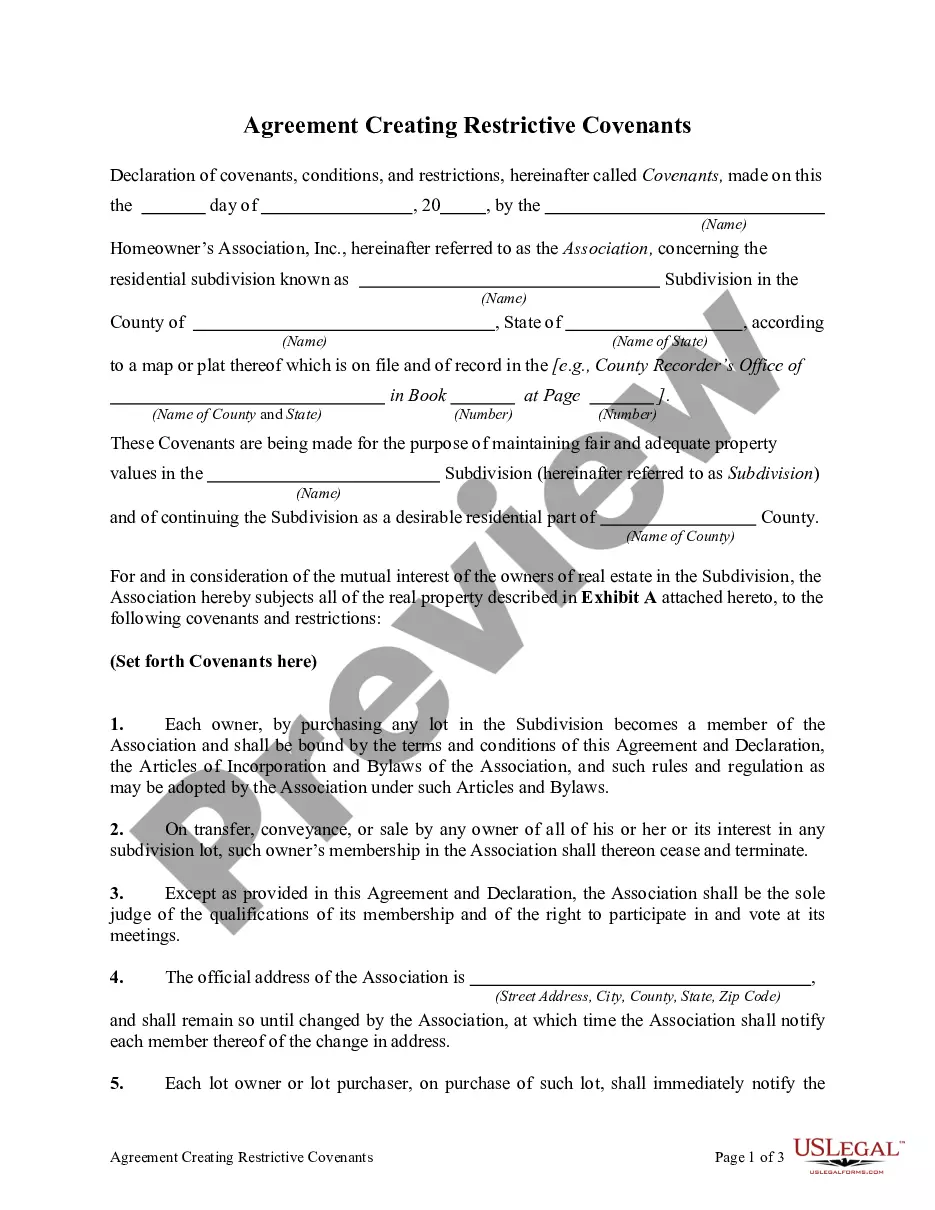
A restrictive covenant is a contract between 2 landowners. One landowner promises the other landowner not to carry out certain acts on their own land. Restrictive covenants usually happen when somebody selling land wishes to restrict what the buyer can do with it.
Some of the most common restrictive covenants include: Alterations and extensions to the building. Changes to the use of a property, for example, converting a building into flats or turning a house into business premises. Rent and lease restrictions. Limitations on pets. Limitations on home colour.
Restrictive covenants may contain 4 different types of promises: (1) a promise not to compete with one's former employer; (2) a promise not to solicit or accept business from customers of the former employer; (3) a promise not to recruit or hire away employees of the former employer; and (4) the promise not to use or ...
