Restrictive Covenants In Commercial Contracts In Florida
Description

Get your form ready online
Our built-in tools help you complete, sign, share, and store your documents in one place.
Make edits, fill in missing information, and update formatting in US Legal Forms—just like you would in MS Word.
Download a copy, print it, send it by email, or mail it via USPS—whatever works best for your next step.
Sign and collect signatures with our SignNow integration. Send to multiple recipients, set reminders, and more. Go Premium to unlock E-Sign.
If this form requires notarization, complete it online through a secure video call—no need to meet a notary in person or wait for an appointment.
We protect your documents and personal data by following strict security and privacy standards.

Make edits, fill in missing information, and update formatting in US Legal Forms—just like you would in MS Word.

Download a copy, print it, send it by email, or mail it via USPS—whatever works best for your next step.

Sign and collect signatures with our SignNow integration. Send to multiple recipients, set reminders, and more. Go Premium to unlock E-Sign.

If this form requires notarization, complete it online through a secure video call—no need to meet a notary in person or wait for an appointment.

We protect your documents and personal data by following strict security and privacy standards.
Looking for another form?









Form popularity
FAQ
Broadly speaking, 'covenants' are the contractual devices ensuring that a party receives the benefits that it negotiated for in the business deal. In other words, covenants support the achievement of the purpose implied by the key provisions characterising the transaction.
(1) Notwithstanding s. 542.18 and subsection (2), enforcement of contracts that restrict or prohibit competition during or after the term of restrictive covenants, so long as such contracts are reasonable in time, area, and line of business, is not prohibited.
(b) “Covenant or restriction” means any agreement or limitation imposed by a private party and not required by a governmental agency as a condition of a development permit, as defined in s.
The primary remedy for breach of a Restrictive Covenant is a permanent injunction to restrain the breach. However, the courts have jurisdiction to award damages instead of an injunction.
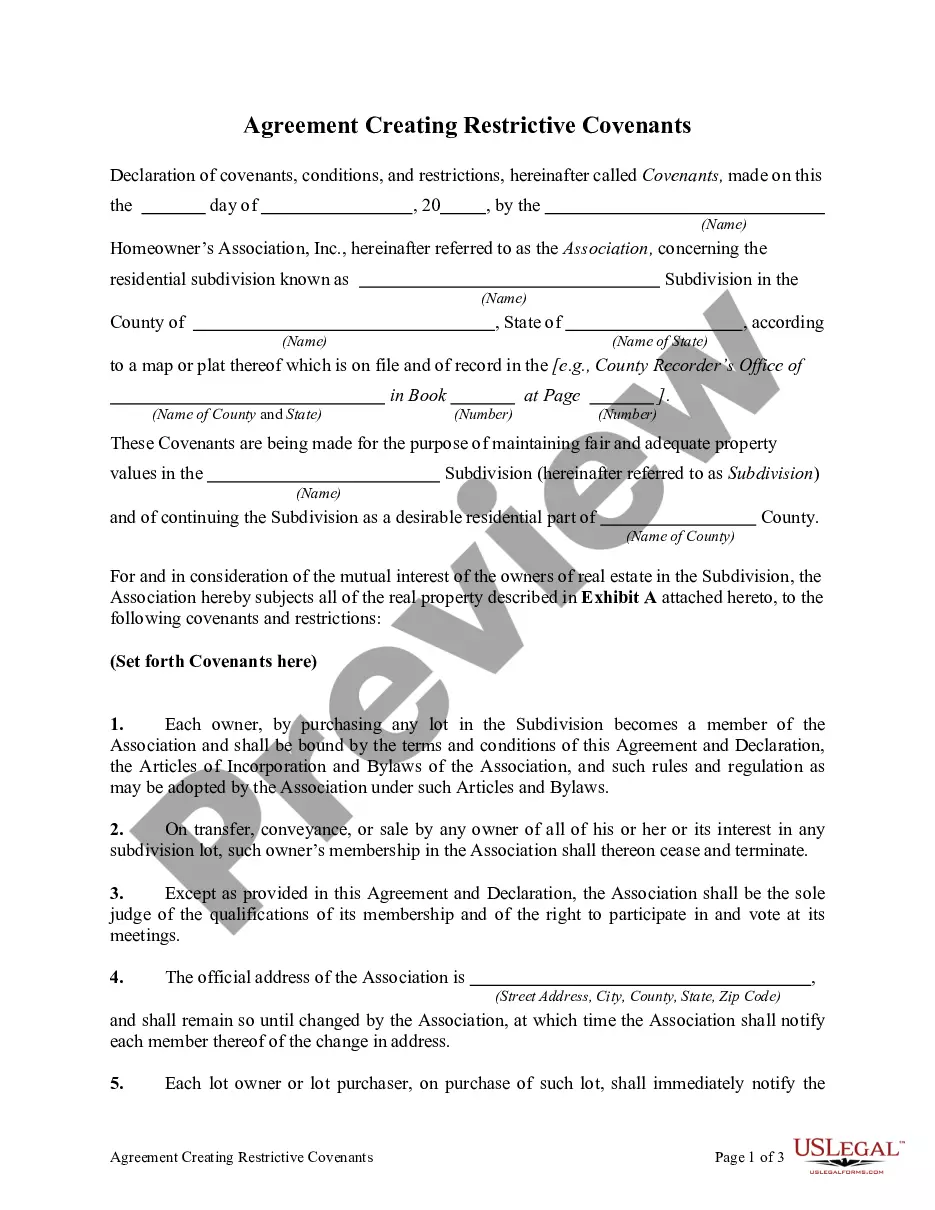
Restrictive covenants are clauses in commercial contracts that limit what a party can do, to protect your business interests. The primary purpose of a restrictive covenant in a commercial contract is to restrict the other party from engaging in certain commercial activities.
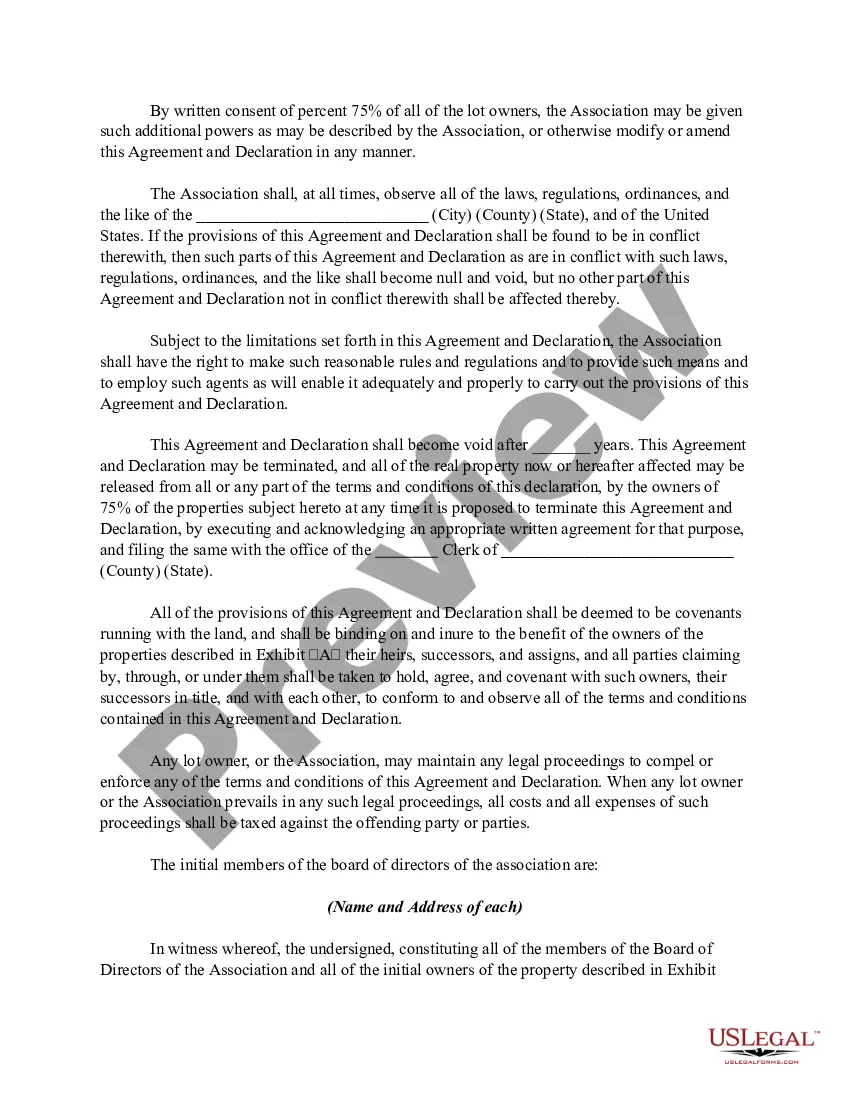
Restrictive covenants are clauses that prevent, prohibit, restrict, or limit the actions of a person or entity named in a contract. Restrictive covenants are common in real estate transactions and apply to everything from the colors you can paint your house to how many tenants can live in a building.
Restrictive Covenants, Explained Examples include restrictions on fence options, the type of animals allowed and the use of outbuildings, such as sheds. This defines how you can alter the property's features, including colors, and may affect what you can do to a home's exterior.
