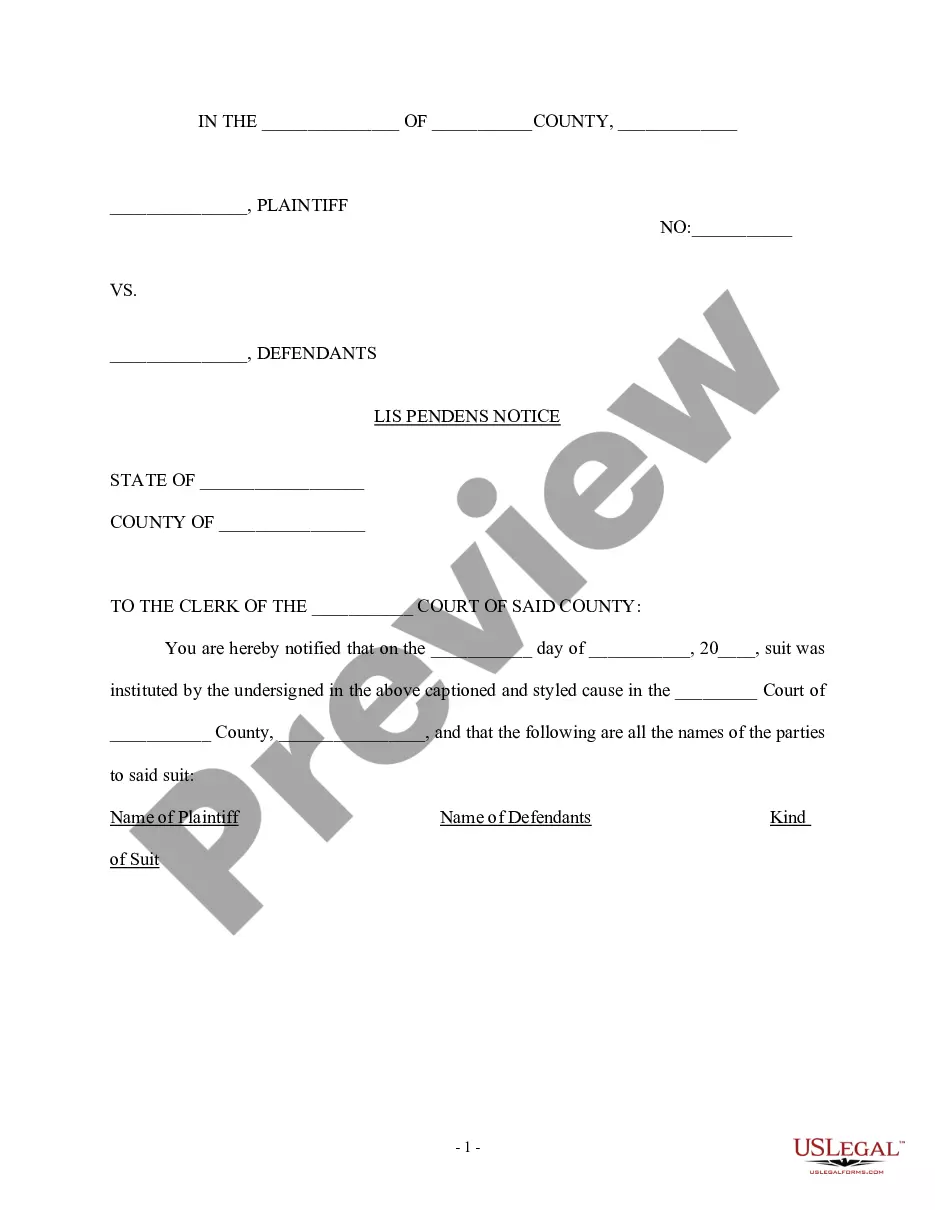
Lis Pendens In Missouri In Washington
Description

Get your form ready online
Our built-in tools help you complete, sign, share, and store your documents in one place.
Make edits, fill in missing information, and update formatting in US Legal Forms—just like you would in MS Word.
Download a copy, print it, send it by email, or mail it via USPS—whatever works best for your next step.
Sign and collect signatures with our SignNow integration. Send to multiple recipients, set reminders, and more. Go Premium to unlock E-Sign.
If this form requires notarization, complete it online through a secure video call—no need to meet a notary in person or wait for an appointment.
We protect your documents and personal data by following strict security and privacy standards.

Make edits, fill in missing information, and update formatting in US Legal Forms—just like you would in MS Word.

Download a copy, print it, send it by email, or mail it via USPS—whatever works best for your next step.

Sign and collect signatures with our SignNow integration. Send to multiple recipients, set reminders, and more. Go Premium to unlock E-Sign.

If this form requires notarization, complete it online through a secure video call—no need to meet a notary in person or wait for an appointment.

We protect your documents and personal data by following strict security and privacy standards.
Looking for another form?





Form popularity
FAQ
Under Washington's civil statute of limitation laws, personal injury claims have a three-year limit for filing, as do fraud, injury to property, and trespassing. Debt collection has a six-year limit. Statutes of limitations aren't suggestions. They are mandatory time limits that the state imposes on most lawsuits.
At any time after an action affecting title to real property has been commenced, or after a writ of attachment with respect to real property has been issued in an action, or after a receiver has been appointed with respect to any real property, the plaintiff, the defendant, or such a receiver may file with the auditor ...
A judgment lien in Washington will remain attached to the debtor's property (even if the property changes hands) for ten years.
A judgment lien in Washington will remain attached to the debtor's property (even if the property changes hands) for ten years.
Lis pendens means “pending lawsuit.” Under common law, filing a complaint “concerning real property” was constructive notice to buyers that they would take subject to the suit. Oregon now requires plaintiffs to record a separate Notice of Lis Pendens to secure their interest in the property.
The lien must be filed and recorded with the county recorder or auditor in the county in which the work was performed or the materials provided. If you do not file the lien within this timeframe, you lose your lien rights.
Lis Pendens means: Pending lawsuit affecting title to real property. Washington law provides that a Lis Pendens may only be recorded where there is an “action affecting title to real property.” RCW 4.28.
Work with an attorney to negotiate with the party that filed the lis pendens notice to have the lawsuit dismissed, reach a settlement agreement or obtain a final judgment from the courts. Once the litigation has ended, you can file a release of lis pendens with the county recorder along with proof of the resolution.
File a request with the court to remove the lis pendens. Provide the legal reasons the lis pendens is improper, offering proof, for example, that the lis pendens affects real estate that is not connected to the litigation. If the lawsuit is frivolous and merely intended to harass the property owner, offer proof.

