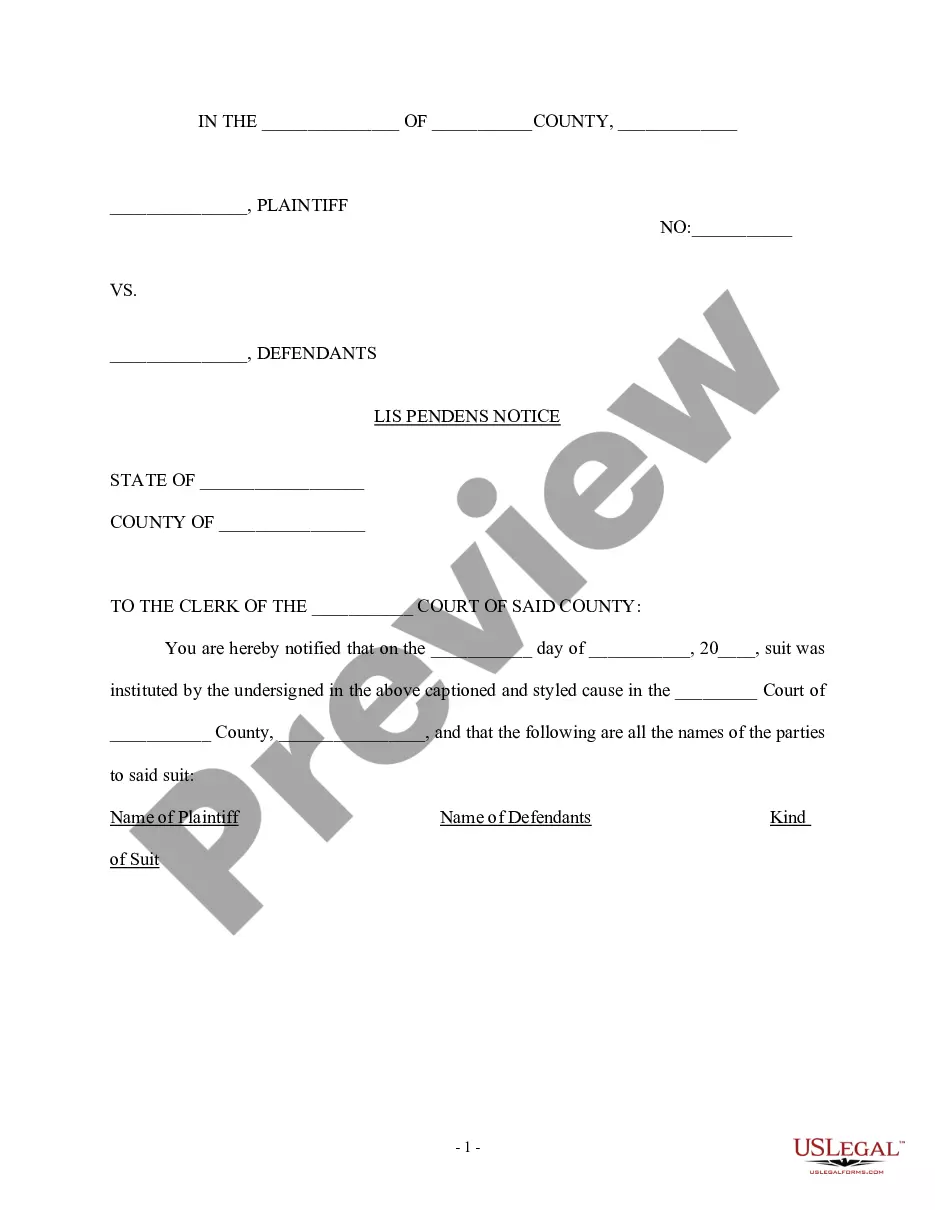
Form Lis Pendens Forum Non Conveniens In Washington
Description

Get your form ready online
Our built-in tools help you complete, sign, share, and store your documents in one place.
Make edits, fill in missing information, and update formatting in US Legal Forms—just like you would in MS Word.
Download a copy, print it, send it by email, or mail it via USPS—whatever works best for your next step.
Sign and collect signatures with our SignNow integration. Send to multiple recipients, set reminders, and more. Go Premium to unlock E-Sign.
If this form requires notarization, complete it online through a secure video call—no need to meet a notary in person or wait for an appointment.
We protect your documents and personal data by following strict security and privacy standards.

Make edits, fill in missing information, and update formatting in US Legal Forms—just like you would in MS Word.

Download a copy, print it, send it by email, or mail it via USPS—whatever works best for your next step.

Sign and collect signatures with our SignNow integration. Send to multiple recipients, set reminders, and more. Go Premium to unlock E-Sign.

If this form requires notarization, complete it online through a secure video call—no need to meet a notary in person or wait for an appointment.

We protect your documents and personal data by following strict security and privacy standards.
Looking for another form?









Form popularity
FAQ
"The doctrine of forum non conveniens permits a US court to decline to exercise its judicial jurisdiction if the court would be a seriously inconvenient forum and if an adequate alternative forum exists."1 In all cases in which the doctrine ...
Forum non conveniens, ing to U.S. courts, is an “ancient” doctrine1 with a “long history”2 and “deep roots in the common law.”3 It permits judges to refuse to hear a case, otherwise properly before the court, when there is another forum where trial will best serve “the convenience of the parties and the ends of ...
Under the doctrine of forum non conveniens, a court, in conflicts-of-laws cases, may refuse impositions on its jurisdiction where it is not the most “convenient” or available forum and the parties are not precluded from seeking remedies elsewhere.
At any time after an action affecting title to real property has been commenced, or after a writ of attachment with respect to real property has been issued in an action, or after a receiver has been appointed with respect to any real property, the plaintiff, the defendant, or such a receiver may file with the auditor ...
The right of foreign nationals to sue in the United States is a well-established legal principle, though it comes with certain nuances and limitations. The U.S. Constitution does not explicitly limit the right to sue based on nationality.
14 Notice of lis pendens - In an action affecting the title or the right of possession of real property, the plaintiff and the defendant, when affirmative relief is claimed in his answer, may record in the office of the registry of deeds of the province in which the property is situated a notice of the pendency of the ...
We follow the lex loci contractus principle, which means that the law of the place where the contract is executed governs the contract.
The Doctrine of Non-Interference or Judicial Stability essentially states that the judgment or order of a court of competent jurisdiction may not be interfered with by any court of concurrent jurisdiction for the simple reason that the power to open, modify or vacate the said judgment or order is not only possessed but ...

