Lis Pendens In Missouri In San Diego
Description
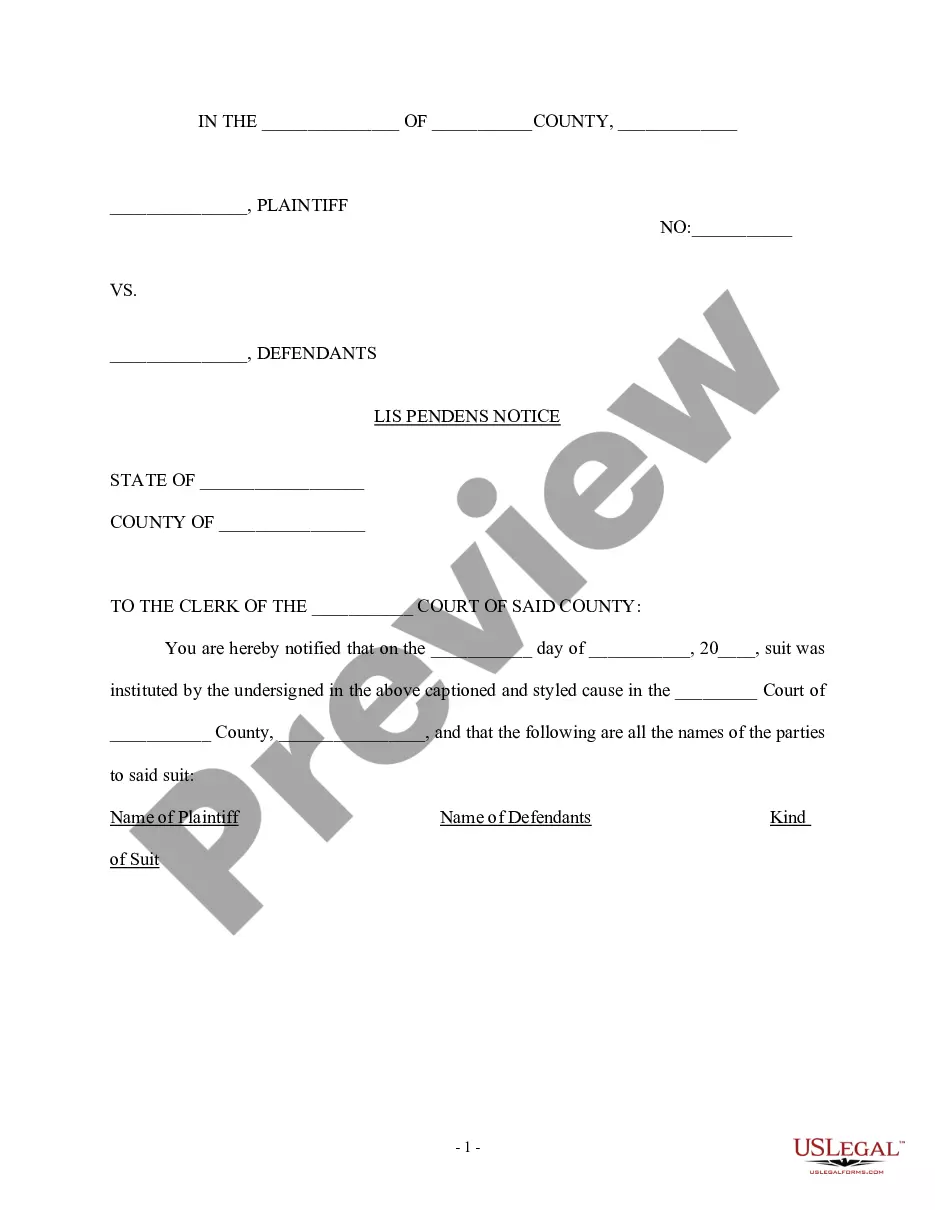

Get your form ready online
Our built-in tools help you complete, sign, share, and store your documents in one place.
Make edits, fill in missing information, and update formatting in US Legal Forms—just like you would in MS Word.
Download a copy, print it, send it by email, or mail it via USPS—whatever works best for your next step.
Sign and collect signatures with our SignNow integration. Send to multiple recipients, set reminders, and more. Go Premium to unlock E-Sign.
If this form requires notarization, complete it online through a secure video call—no need to meet a notary in person or wait for an appointment.
We protect your documents and personal data by following strict security and privacy standards.

Make edits, fill in missing information, and update formatting in US Legal Forms—just like you would in MS Word.

Download a copy, print it, send it by email, or mail it via USPS—whatever works best for your next step.

Sign and collect signatures with our SignNow integration. Send to multiple recipients, set reminders, and more. Go Premium to unlock E-Sign.

If this form requires notarization, complete it online through a secure video call—no need to meet a notary in person or wait for an appointment.

We protect your documents and personal data by following strict security and privacy standards.
Looking for another form?







Form popularity
FAQ
A notice of pendency (also known as a lis pendens ) is a written notice of a judicial proceeding that affects the ownership of property.
File a request with the court to remove the lis pendens. Provide the legal reasons the lis pendens is improper, offering proof, for example, that the lis pendens affects real estate that is not connected to the litigation. If the lawsuit is frivolous and merely intended to harass the property owner, offer proof.
A notice of pendency shall be effective for a period of three years from the date of filing. Before expiration of a period or extended period, the court, upon motion of the plaintiff and upon such notice as it may require, for good cause shown, may grant an extension for a like additional period.
The suit or proceeding must be pending before a competent court of jurisdiction. A right to immovable property is directly or specifically involved in the suit. The suit or proceeding must not be collusive. The property in dispute must be transferred or otherwise dealt with by any party to suit.
Sign the lis pendens document in the presence of a notary. File the lis pendens with the courthouse in the county where the property is located. Serve a notice of the lis pendens on involved parties, such as the property owner, if required.
To file a lien claim, you will need: Property owner's name (or company name) and mailing address. Project address and the county where it is located. The amount owed for each month you performed the work that remains unpaid. A brief description of the work you performed.
Work with an attorney to negotiate with the party that filed the lis pendens notice to have the lawsuit dismissed, reach a settlement agreement or obtain a final judgment from the courts. Once the litigation has ended, you can file a release of lis pendens with the county recorder along with proof of the resolution.
(b) The party filing a lis pendens or the party's agent or attorney shall sign the lis pendens, which must state: (1) the style and number, if any, of the proceeding; (2) the court in which the proceeding is pending; (3) the names of the parties; (4) the kind of proceeding; and (5) a description of the property ...
Section 12.002 - Liability (a) A person may not make, present, or use a document or other record with: (1) knowledge that the document or other record is a fraudulent court record or a fraudulent lien or claim against real or personal property or an interest in real or personal property; (2) intent that the document or ...

