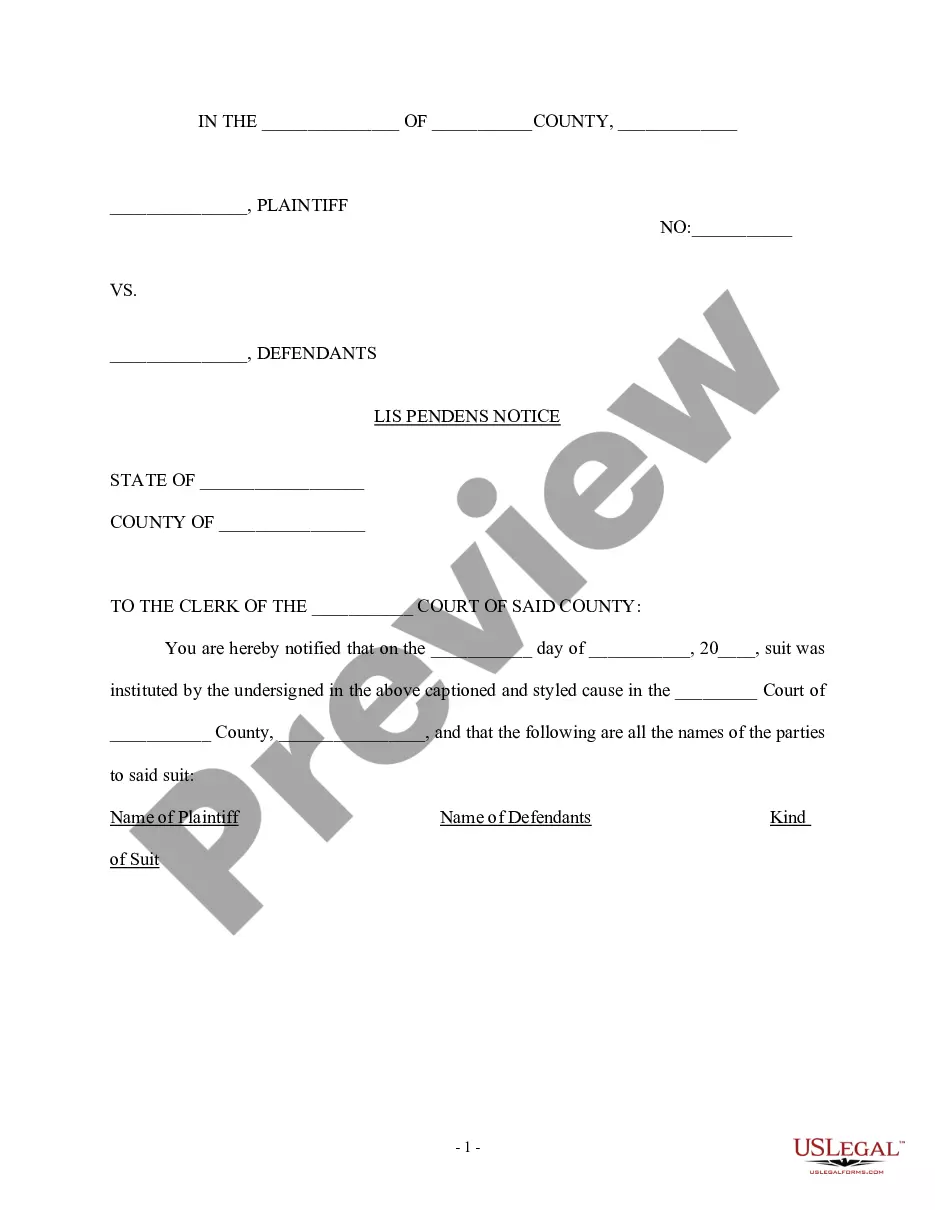
Lis Pendens Release Form For Texas In Phoenix
Description
Get your form ready online
Our built-in tools help you complete, sign, share, and store your documents in one place.
Make edits, fill in missing information, and update formatting in US Legal Forms—just like you would in MS Word.
Download a copy, print it, send it by email, or mail it via USPS—whatever works best for your next step.
Sign and collect signatures with our SignNow integration. Send to multiple recipients, set reminders, and more. Go Premium to unlock E-Sign.
If this form requires notarization, complete it online through a secure video call—no need to meet a notary in person or wait for an appointment.
We protect your documents and personal data by following strict security and privacy standards.

Make edits, fill in missing information, and update formatting in US Legal Forms—just like you would in MS Word.

Download a copy, print it, send it by email, or mail it via USPS—whatever works best for your next step.

Sign and collect signatures with our SignNow integration. Send to multiple recipients, set reminders, and more. Go Premium to unlock E-Sign.

If this form requires notarization, complete it online through a secure video call—no need to meet a notary in person or wait for an appointment.

We protect your documents and personal data by following strict security and privacy standards.
Looking for another form?







Form popularity
FAQ
If someone has filed a Lis Pendens notice (which alerts others that there is a pending lawsuit involving a property), any party involved in the lawsuit can: Ask the court to remove the notice (e.g. Motion to Expunge). Notify all affected parties at least 20 days before the court hearing.
If an annotation has been wrongfully placed or needs to be lifted (e.g., after paying off a mortgage or resolving a legal dispute), the property owner must file the appropriate documents with the Registry of Deeds to clear the title. This may require a court order or formal release from the concerned party.
The Court of Appeals stated that based on existing jurisprudence, a certificate of title may be annulled or cancelled by the court under the following grounds: (1) when the title is void because (a) it was procured through fraud, (b) it was issued for a land already covered by a prior Torrens title, (c) it covers land ...
Basically, a Lis Pendens is written notice that's recorded in the county recorder's records where the real estate is located and that gives notice than an action, a lawsuit involving title to the real estate is pending.
Other than resolution of the pending lawsuit, the only way to remove a lis pendens is by expungement, which requires a court order from a circuit judge. If you refuse service or the action is otherwise delayed, the lis pendens remains intact, making it difficult to sell or otherwise transfer a property.
A lis pendens has no life of its own apart from the lawsuit that underlies it. If there is no lawsuit, there can be no valid lis pendens. “A lis pendens operates only during the pendency of the underlying suit, and only as to those matters that are involved in the suit.
To annotate a notice of lis pendens, the following elements must be present: (a) the property must be of such character as to be subject to the rule; (b) the court must have jurisdiction both over the person and the res; and (c) the property or res involved must be sufficiently described in the pleadings.
Cancellation of lis pendens. Before final judgment, a notice of lis pendens may be cancelled upon order of the court, after proper showing that the notice is for the purpose of molesting the adverse party, or that it is not necessary to protect the rights of the party who caused it to be registered.

