Pennsylvania Lis Pendens Form Withdrawal In Pennsylvania
Description

Get your form ready online
Our built-in tools help you complete, sign, share, and store your documents in one place.
Make edits, fill in missing information, and update formatting in US Legal Forms—just like you would in MS Word.
Download a copy, print it, send it by email, or mail it via USPS—whatever works best for your next step.
Sign and collect signatures with our SignNow integration. Send to multiple recipients, set reminders, and more. Go Premium to unlock E-Sign.
If this form requires notarization, complete it online through a secure video call—no need to meet a notary in person or wait for an appointment.
We protect your documents and personal data by following strict security and privacy standards.

Make edits, fill in missing information, and update formatting in US Legal Forms—just like you would in MS Word.

Download a copy, print it, send it by email, or mail it via USPS—whatever works best for your next step.

Sign and collect signatures with our SignNow integration. Send to multiple recipients, set reminders, and more. Go Premium to unlock E-Sign.

If this form requires notarization, complete it online through a secure video call—no need to meet a notary in person or wait for an appointment.

We protect your documents and personal data by following strict security and privacy standards.
Looking for another form?






Form popularity
FAQ
A small claims case starts by filing a claim with the Pennsylvania Magisterial District Court. You'll serve a copy of the claim and court date on the "defendant," the person or company you're suing. At the trial, you'll present evidence supporting your case.
After the action is resolved, the attorney for the plaintiff should file a praecipe to remove the lis pendens and resulting cloud on title. Note that if a defendant believes a lis pendens has been filed improperly, it may make a motion with the court to have it stricken.
The Superior Court handles appeals in criminal and civil cases from the Courts of Common Pleas. The Commonwealth Court handles original civil actions brought by and against the Commonwealth and appeals from state agency decisions.
The Superior Court handles appeals in criminal and civil cases from the Courts of Common Pleas. The Commonwealth Court handles original civil actions brought by and against the Commonwealth and appeals from state agency decisions.
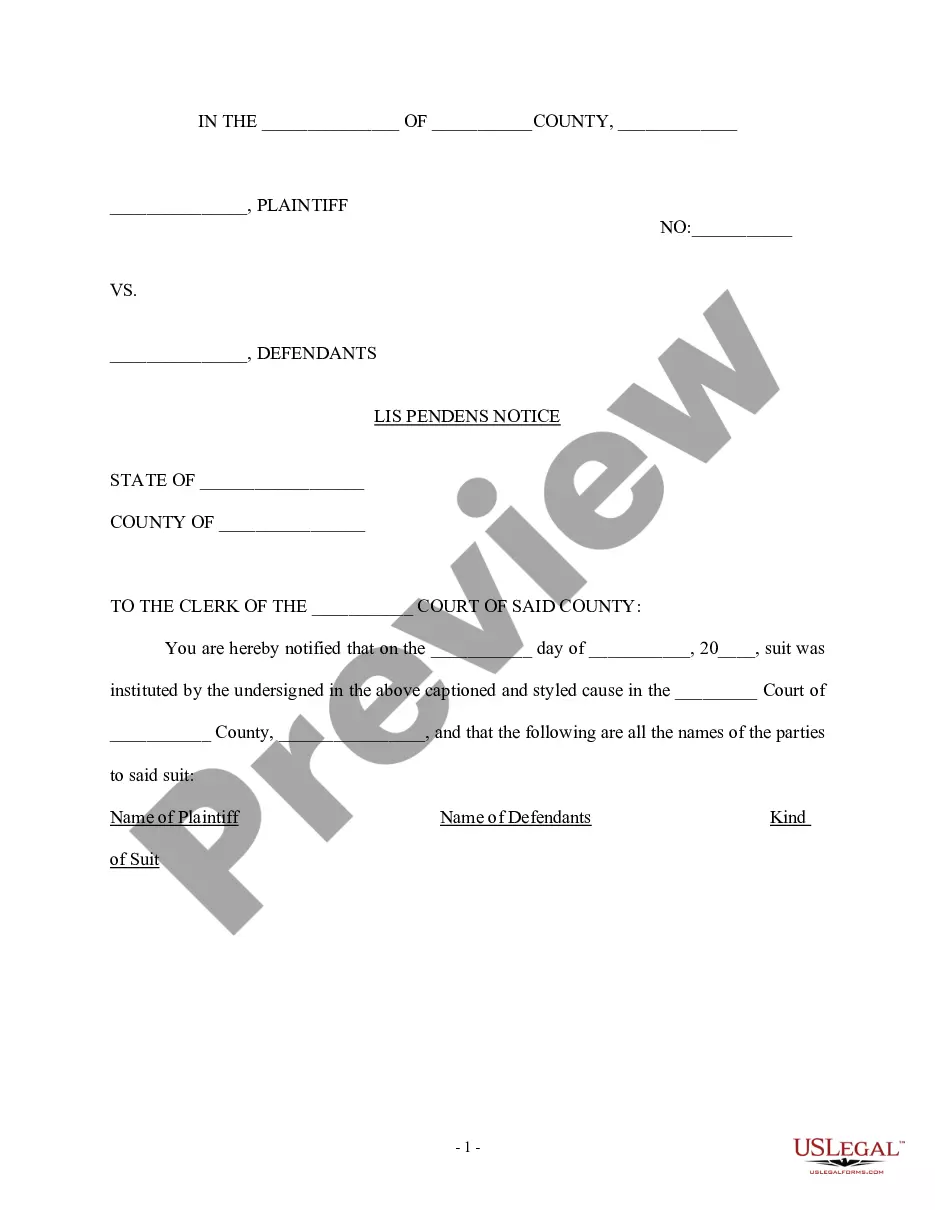
In Pennsylvania, a Lis Pendens notice is a formal announcement that a pending lawsuit exists that may affect the title or claim to a piece of real estate. This notice of a pending legal action is filed in the public records, warning potential buyers that the property is involved in pending litigation.
The Superior Court was established in 1895. It is one of Pennsylvania's two statewide intermediate appellate courts. The Superior Court is often the final arbiter of legal disputes.
The Supreme Court of Pennsylvania is the highest court in the Commonwealth and the oldest appellate court in the nation.
Jurisdiction. The Superior Court hears appeals in criminal and most civil cases from the Courts of Common Pleas and on matters involving children and families. Most appeals are decided on the submission of briefs only.
To file a lis pendens, the party filing must have or show one of two things: That there is a recorded instrument, usually some mortgage or encumbrance, or perhaps something related to a construction mechanics lien—that potentially provides the filer the right to the property on or in the document.
Other than resolution of the pending lawsuit, the only way to remove a lis pendens is by expungement, which requires a court order from a circuit judge. If you refuse service or the action is otherwise delayed, the lis pendens remains intact, making it difficult to sell or otherwise transfer a property.

