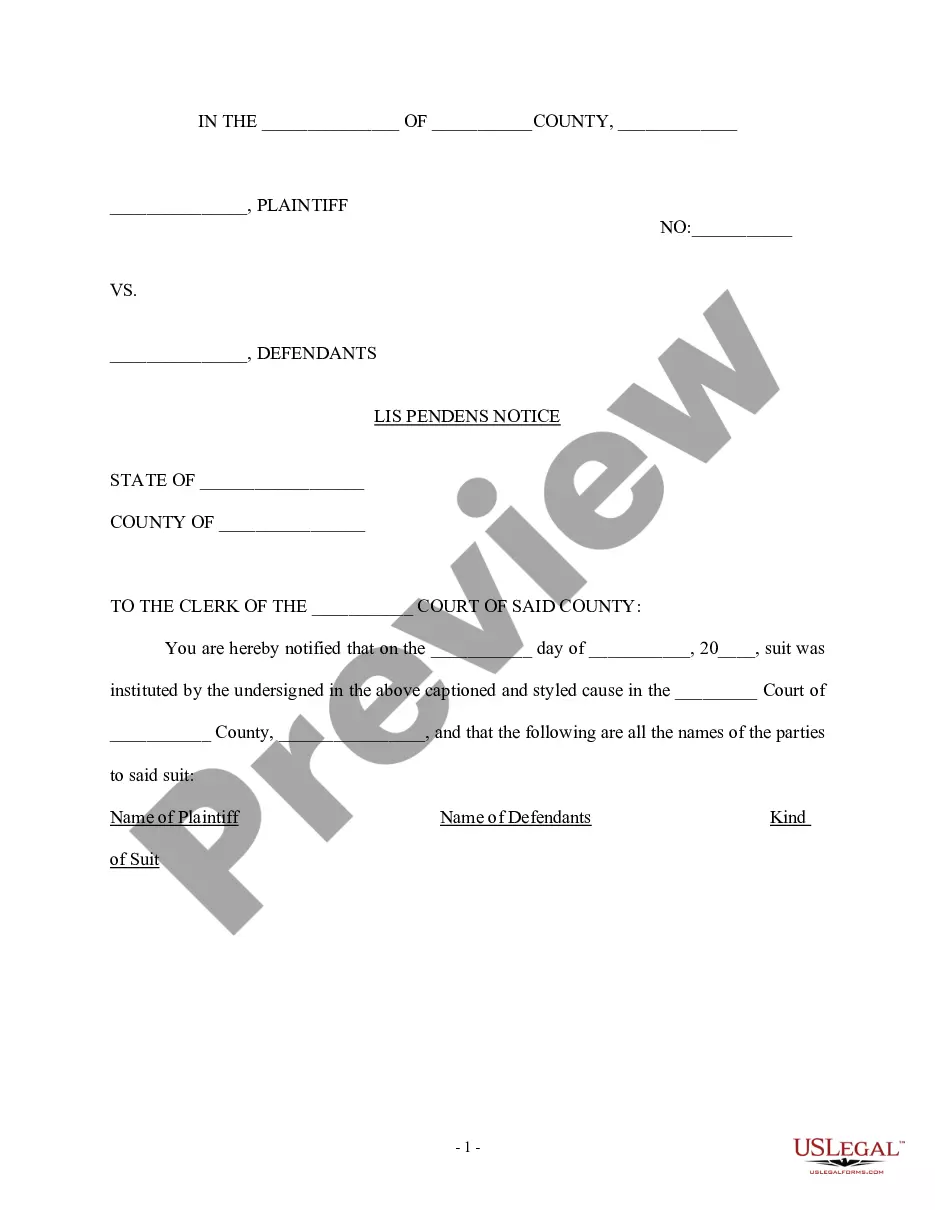
File Notice Lis Pendens Foreclosed In Nevada
Description

Get your form ready online
Our built-in tools help you complete, sign, share, and store your documents in one place.
Make edits, fill in missing information, and update formatting in US Legal Forms—just like you would in MS Word.
Download a copy, print it, send it by email, or mail it via USPS—whatever works best for your next step.
Sign and collect signatures with our SignNow integration. Send to multiple recipients, set reminders, and more. Go Premium to unlock E-Sign.
If this form requires notarization, complete it online through a secure video call—no need to meet a notary in person or wait for an appointment.
We protect your documents and personal data by following strict security and privacy standards.

Make edits, fill in missing information, and update formatting in US Legal Forms—just like you would in MS Word.

Download a copy, print it, send it by email, or mail it via USPS—whatever works best for your next step.

Sign and collect signatures with our SignNow integration. Send to multiple recipients, set reminders, and more. Go Premium to unlock E-Sign.

If this form requires notarization, complete it online through a secure video call—no need to meet a notary in person or wait for an appointment.

We protect your documents and personal data by following strict security and privacy standards.
Looking for another form?









Form popularity
FAQ
Does Nevada Law Allow for a Redemption Period After a Foreclosure? Nevada law allows for both judicial and non judicial foreclosures. If a lender pursues a foreclosure through the judicial system then the owner has a 1 year right of redemption following the foreclosure sale.
In general, mortgage companies start foreclosure processes about 3-6 months after the first missed mortgage payment. Late fees are charged after 10-15 days, however, most mortgage companies recognize that homeowners may be facing short-term financial hardships.
This process is called mortgage foreclosure. Trust deed foreclosures comprise the majority of foreclosures in Nevada. A trust deed foreclosure is non-judicial, meaning your bank, lender, or mortgage servicer does not need to go to court to foreclose and sell your home.
One way to temporarily halt the foreclosure proceedings is to request mediation through Nevada's Foreclosure Mediation program. You can also file a Chapter 13 bankruptcy if you have the ability to enter into a payment plan to cure default. The Bankruptcy Court also has a mediation program for homeowners.
Like homeowners in other states, a Nevada homeowner usually gets plenty of time to find a way to work out a way to keep the home before the bank can sell it at a foreclosure sale. Under federal law, in most cases, the bank must wait at least 120 days before starting a foreclosure.
LIS PENDENS – A notice recorded in the official records of a county to indicate that an action affecting a particular property has been filed in either a state or a federal court.
One way to temporarily halt the foreclosure proceedings is to request mediation through Nevada's Foreclosure Mediation program. You can also file a Chapter 13 bankruptcy if you have the ability to enter into a payment plan to cure default. The Bankruptcy Court also has a mediation program for homeowners.
Typical Nevada Foreclosure Time Frame: Approximately 120 days. Judicial Foreclosure Available? : Yes. Non-Judicial Foreclosure Available? : Yes. Types of Security Instruments Utilized: Mortgage and Deed of Trust.

