File Notice Lis Pendens Foreclosure In Miami-Dade
Description
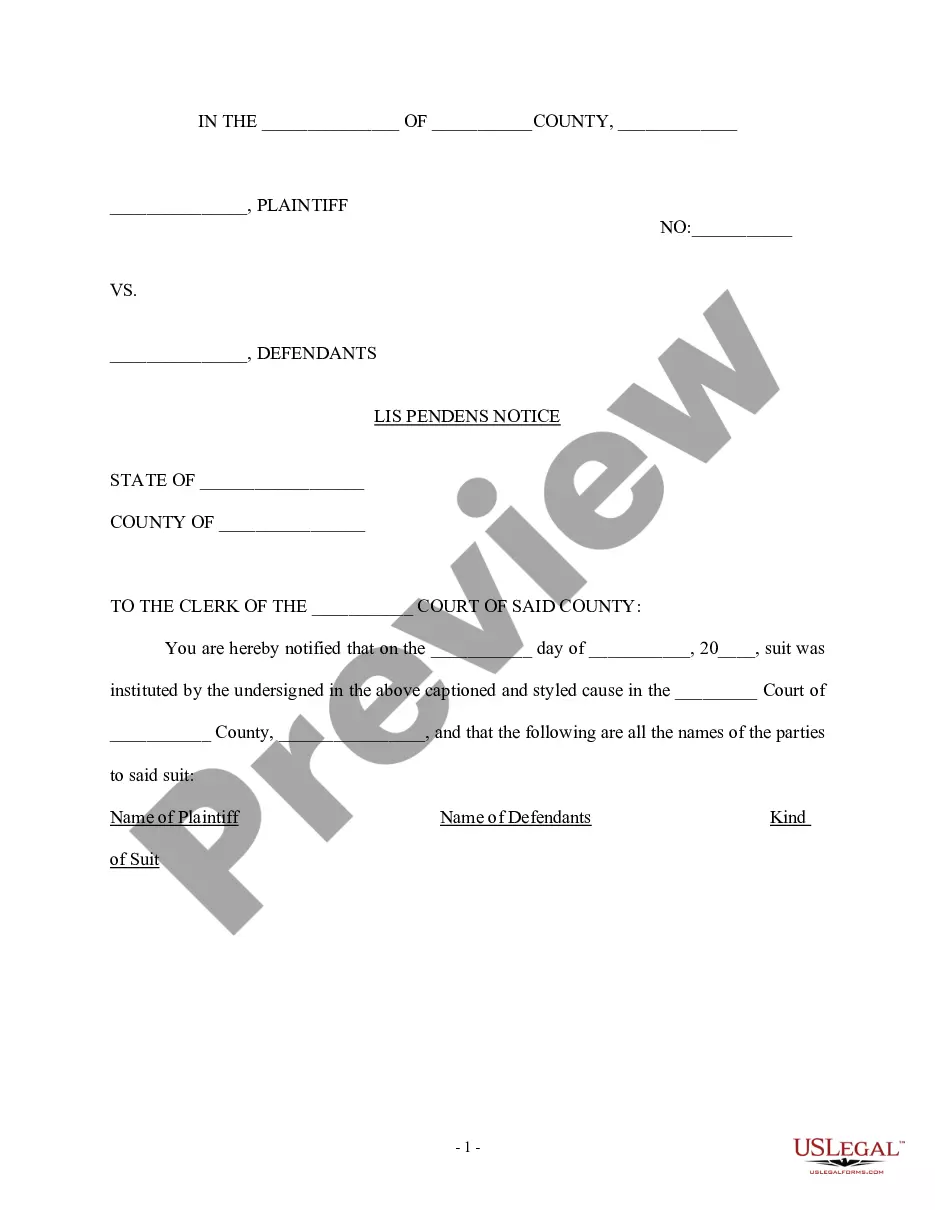

Get your form ready online
Our built-in tools help you complete, sign, share, and store your documents in one place.
Make edits, fill in missing information, and update formatting in US Legal Forms—just like you would in MS Word.
Download a copy, print it, send it by email, or mail it via USPS—whatever works best for your next step.
Sign and collect signatures with our SignNow integration. Send to multiple recipients, set reminders, and more. Go Premium to unlock E-Sign.
If this form requires notarization, complete it online through a secure video call—no need to meet a notary in person or wait for an appointment.
We protect your documents and personal data by following strict security and privacy standards.

Make edits, fill in missing information, and update formatting in US Legal Forms—just like you would in MS Word.

Download a copy, print it, send it by email, or mail it via USPS—whatever works best for your next step.

Sign and collect signatures with our SignNow integration. Send to multiple recipients, set reminders, and more. Go Premium to unlock E-Sign.

If this form requires notarization, complete it online through a secure video call—no need to meet a notary in person or wait for an appointment.

We protect your documents and personal data by following strict security and privacy standards.
Looking for another form?










Form popularity
FAQ
Homeowners Rights to Surplus Foreclosure Sale Proceeds You, as the former homeowner, may be eligible to file a claim for any surplus funds. Please contact the Clerk of the Court's Foreclosure Unit to find out if there are surplus funds from the foreclosure sale and, for assistance in filing your claim for those funds.
Online Records Search: Many county clerk's offices in Florida offer online access to public records, including foreclosure documents. You can visit the official website of the county clerk's office where your property is located and look for a section dedicated to public records search.
Even after the bank has filed a foreclosure lawsuit against you, you have a right of redemption which allows you to cure the mortgage by catching up the missed payments and any fees assessed by the bank. By exercising your right of redemption, you can stop the foreclosure before it happens.
Tenants require at least 90-days' notice for eviction. If the tenant does not vacate the property within 90 days, or the previous homeowner does not vacate the property after the foreclosure sale is confirmed, the purchaser can file a motion for writ of possession with the court.
The original final judgment is filed and recorded with the Clerk's Office. In ance with Florida Statute 45.031 (2), the Notice of Sale shall be published once a week for 2 consecutive weeks in a newspaper of general circulation, as defined in Chapter 50, published in the county where the sale is to be held.
In Florida, lenders may foreclose on a mortgage in default by using the judicial foreclosure process. This is commenced by filing a lawsuit in the Circuit Court in the county where the property being foreclosed is located.
Depending on the court schedule and load, it normally takes from 180 to 200 days to complete the foreclosure process in Florida. If contested by the borrower or if the borrower files for bankruptcy, this process may be delayed further.
Current Foreclosure Rates & Trends In August, 422 homes in Miami-Dade County were listed as being in the foreclosure process. This represents one out of every 2,604 units in the county, an increase of 23.28% from July and 8.4% year-over-year. In total, 312 of 2,270 units were in foreclosure in Palm Beach County.
The lender must publish a notice of the foreclosure sale on a publicly accessible website for at least two consecutive weeks before the sale or in a newspaper once a week for two consecutive weeks, with the second publication at least five days before the sale. (Fla. Stat. § 45.031 (2025).)

