Lis Pendens Release Form With Notice In Maryland
Description
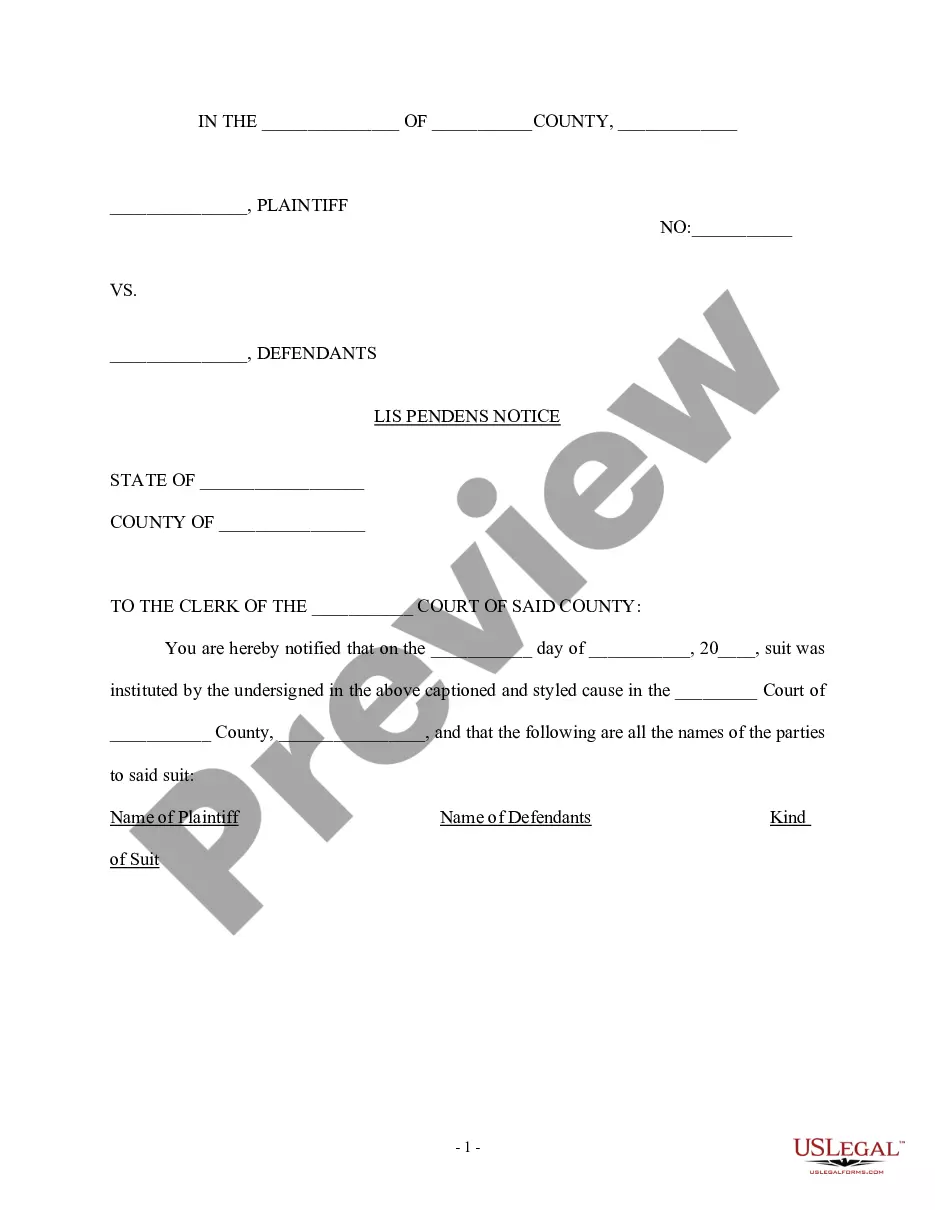

Get your form ready online
Our built-in tools help you complete, sign, share, and store your documents in one place.
Make edits, fill in missing information, and update formatting in US Legal Forms—just like you would in MS Word.
Download a copy, print it, send it by email, or mail it via USPS—whatever works best for your next step.
Sign and collect signatures with our SignNow integration. Send to multiple recipients, set reminders, and more. Go Premium to unlock E-Sign.
If this form requires notarization, complete it online through a secure video call—no need to meet a notary in person or wait for an appointment.
We protect your documents and personal data by following strict security and privacy standards.

Make edits, fill in missing information, and update formatting in US Legal Forms—just like you would in MS Word.

Download a copy, print it, send it by email, or mail it via USPS—whatever works best for your next step.

Sign and collect signatures with our SignNow integration. Send to multiple recipients, set reminders, and more. Go Premium to unlock E-Sign.

If this form requires notarization, complete it online through a secure video call—no need to meet a notary in person or wait for an appointment.

We protect your documents and personal data by following strict security and privacy standards.
Looking for another form?
Form popularity
FAQ
In Maryland, to have lis pendens apply to a property, no further pleading or document needs to be filed (other than the action itself) because “the filing of the complaint is constructive notice of the lis pendens as to real property in the county in which the complaint is filed.
A Notice of Lien shall contain: (A) the names of the parties, designating each judgment creditor as a plaintiff and each judgment debtor as a defendant; (B) the name of the court and assigned docket reference; (C) the date of the judgment; and (D) the amount of the judgment.
RECOVERY OF PROPERTY OR VALUE AFTER JUDGMENT--DETINUE. (a) Action. (1) A person claiming the right to possession of personal property may file an action under this Rule.
Rule 12-102 - Lis Pendens (a) Scope. This Rule applies to an action filed in a circuit court or in the United States District Court for the District of Maryland that affects title to or a leasehold interest in real property located in this State. (b)Creation--Constructive Notice.
To establish a lien, a contractor or subcontractor must file a petition in the circuit court for the county where the property is located within 180 days after completing work on the property or providing materials.
In an action to which the doctrine of lis pendens applies, the filing in the land records of a county in which real property that is the subject of the action is located of either (1) a certified copy of the complaint giving rise to the lis pendens or (2) a Notice of Lis Pendens, substantially in the form approved by ...
To establish a lien, a contractor or subcontractor must file a petition in the circuit court for the county where the property is located within 180 days after completing work on the property or providing materials.
RULE 2-612. CONSENT JUDGMENT The court may enter a judgment at any time by consent of the parties.
(a) General Rule. A party shall file an answer to an original complaint, counterclaim, cross-claim, or third-party claim within 30 days after being served, except as provided by sections (b) and (c) of this Rule.
Rule 2-602(b) permits a circuit court to direct the entry of a final judgment if its order disposes of “one or more but fewer than all of the claims or parties.” To direct the entry of a final judgment, however, the circuit court must “expressly determine in a written order that there is no just reason for delay. ...

