Forms For Patent Filing In India In Virginia
Description




Get your form ready online
Our built-in tools help you complete, sign, share, and store your documents in one place.
Make edits, fill in missing information, and update formatting in US Legal Forms—just like you would in MS Word.
Download a copy, print it, send it by email, or mail it via USPS—whatever works best for your next step.
Sign and collect signatures with our SignNow integration. Send to multiple recipients, set reminders, and more. Go Premium to unlock E-Sign.
If this form requires notarization, complete it online through a secure video call—no need to meet a notary in person or wait for an appointment.
We protect your documents and personal data by following strict security and privacy standards.

Make edits, fill in missing information, and update formatting in US Legal Forms—just like you would in MS Word.

Download a copy, print it, send it by email, or mail it via USPS—whatever works best for your next step.

Sign and collect signatures with our SignNow integration. Send to multiple recipients, set reminders, and more. Go Premium to unlock E-Sign.

If this form requires notarization, complete it online through a secure video call—no need to meet a notary in person or wait for an appointment.

We protect your documents and personal data by following strict security and privacy standards.
Looking for another form?





Form popularity
FAQ
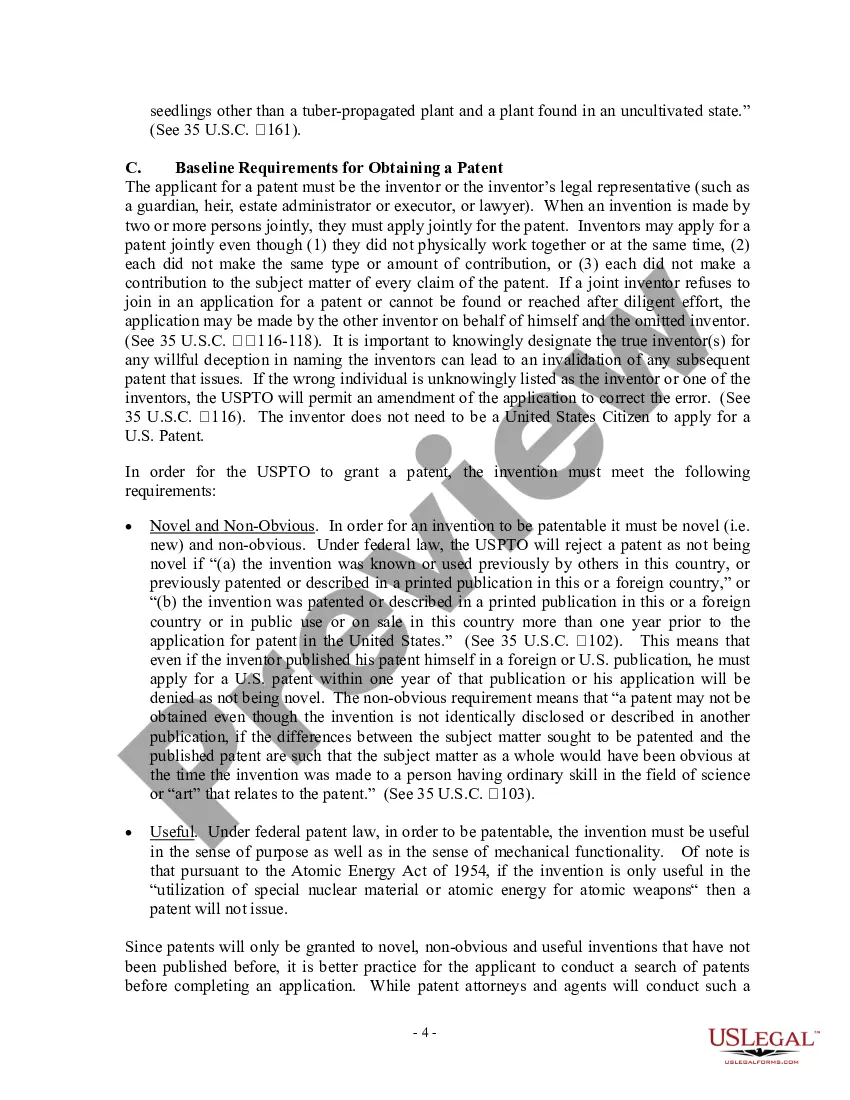
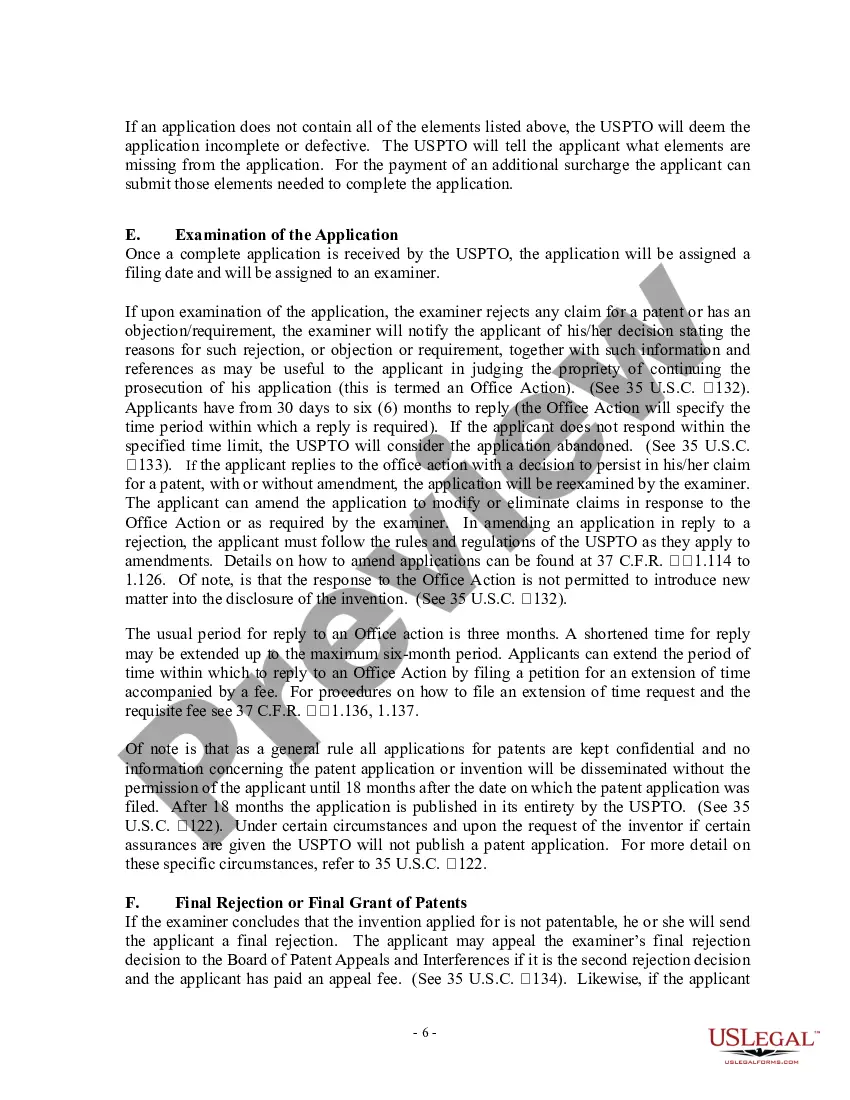
The patent application must contain the following: Request for the grant of a patent; Description of the invention; Drawings necessary for the understanding of the invention (if any);
Some of the main forms patent applicants will have to submit include: Provisional Application for Patent Cover Sheet. Declaration for Utility of Design Application Using an Application Data Sheet. Information Disclosure Statement by Applicant. Certification of Micro Entity Status.
Patent applications: the three criteria Novelty. This means that your invention must not have been made public – not even by yourself – before the date of the application. Inventive step. This means that your product or process must be an inventive solution. Industrial applicability.
In this form, you will have to furnish information, such as, name and address of the inventor(s), name and address of the applicant(s), information corresponding to prior patent applications relating to the current invention, which you or any authorized entity has filed, and some declarations, among other information.
Patent Requirements The invention must be statutory (subject matter eligible) The invention must be new. The invention must be useful. The invention must be non-obvious.
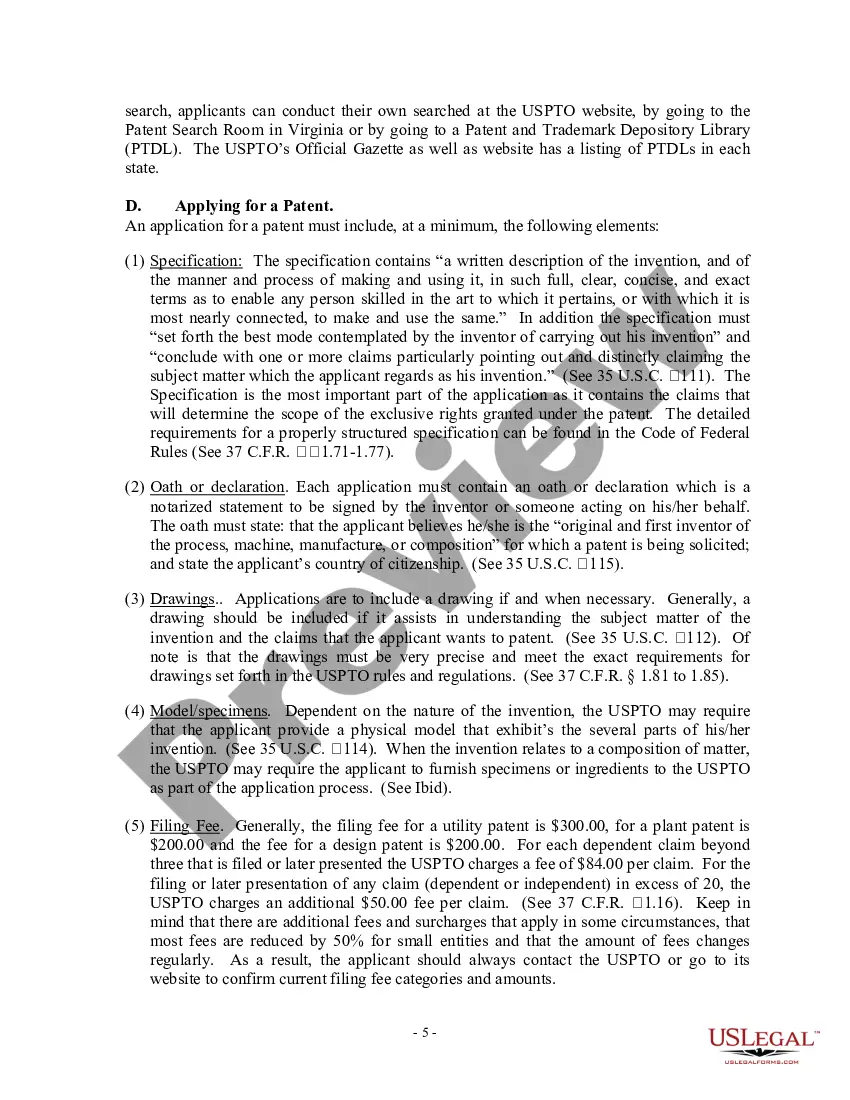
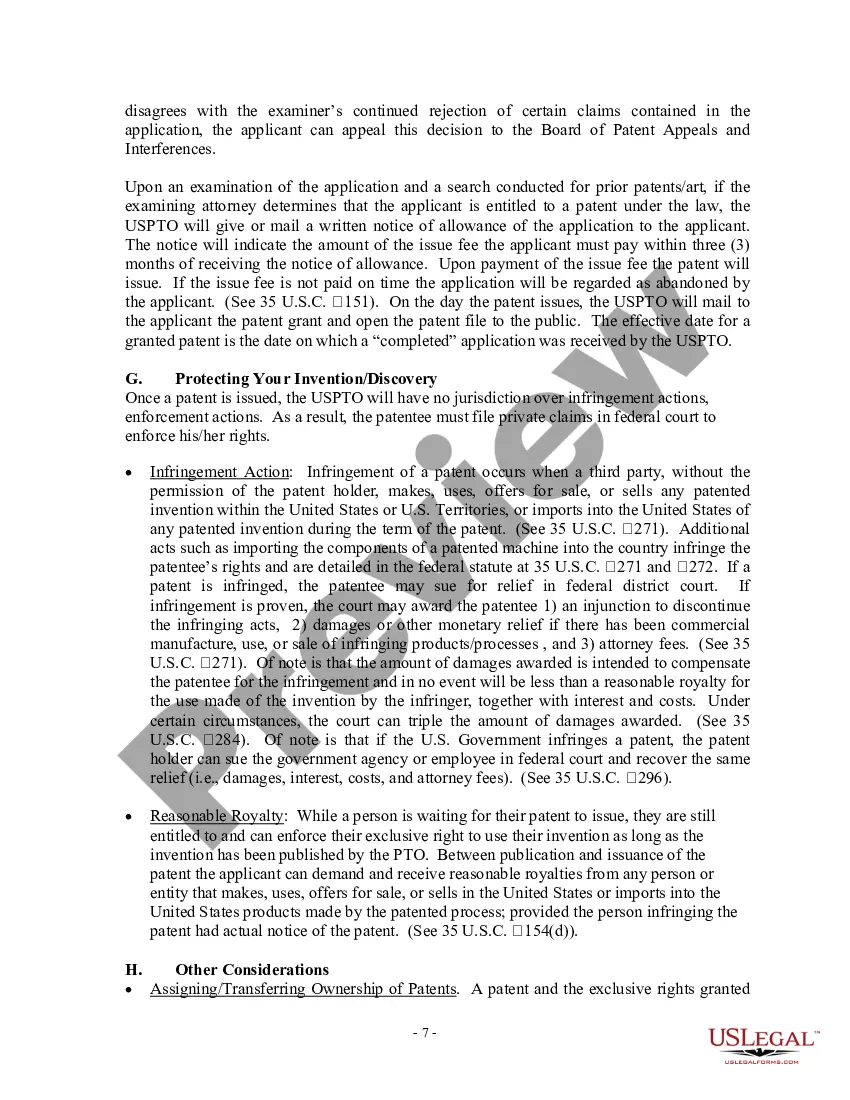
The steps to file a patent includes prior art search; filing of the application; publication of application; request for examination; response to objections and subsequently grant of patent.
A patent application can be filed either by true and first inventor or his assignee, either alone or jointly with any other person. However, legal representative of any deceased person can also make an application for patent.
Patent protection is territorial right and therefore it is effective only within the territory of India. However, filing an application in India enables the applicant to file a corresponding application for same invention in convention countries, within or before expiry of twelve months from the filing date in India.
