Patent Application For Software In Santa Clara
Description

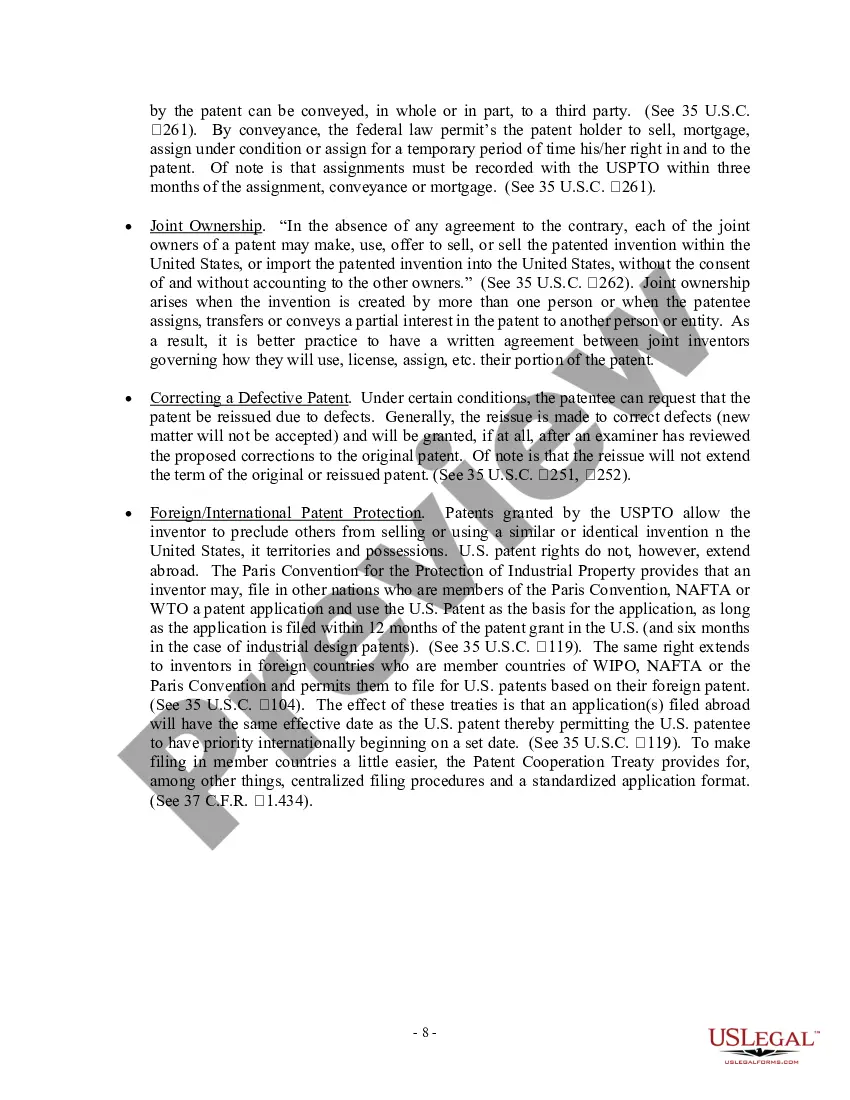


Get your form ready online
Our built-in tools help you complete, sign, share, and store your documents in one place.
Make edits, fill in missing information, and update formatting in US Legal Forms—just like you would in MS Word.
Download a copy, print it, send it by email, or mail it via USPS—whatever works best for your next step.
Sign and collect signatures with our SignNow integration. Send to multiple recipients, set reminders, and more. Go Premium to unlock E-Sign.
If this form requires notarization, complete it online through a secure video call—no need to meet a notary in person or wait for an appointment.
We protect your documents and personal data by following strict security and privacy standards.

Make edits, fill in missing information, and update formatting in US Legal Forms—just like you would in MS Word.

Download a copy, print it, send it by email, or mail it via USPS—whatever works best for your next step.

Sign and collect signatures with our SignNow integration. Send to multiple recipients, set reminders, and more. Go Premium to unlock E-Sign.

If this form requires notarization, complete it online through a secure video call—no need to meet a notary in person or wait for an appointment.

We protect your documents and personal data by following strict security and privacy standards.
Looking for another form?





Form popularity
FAQ
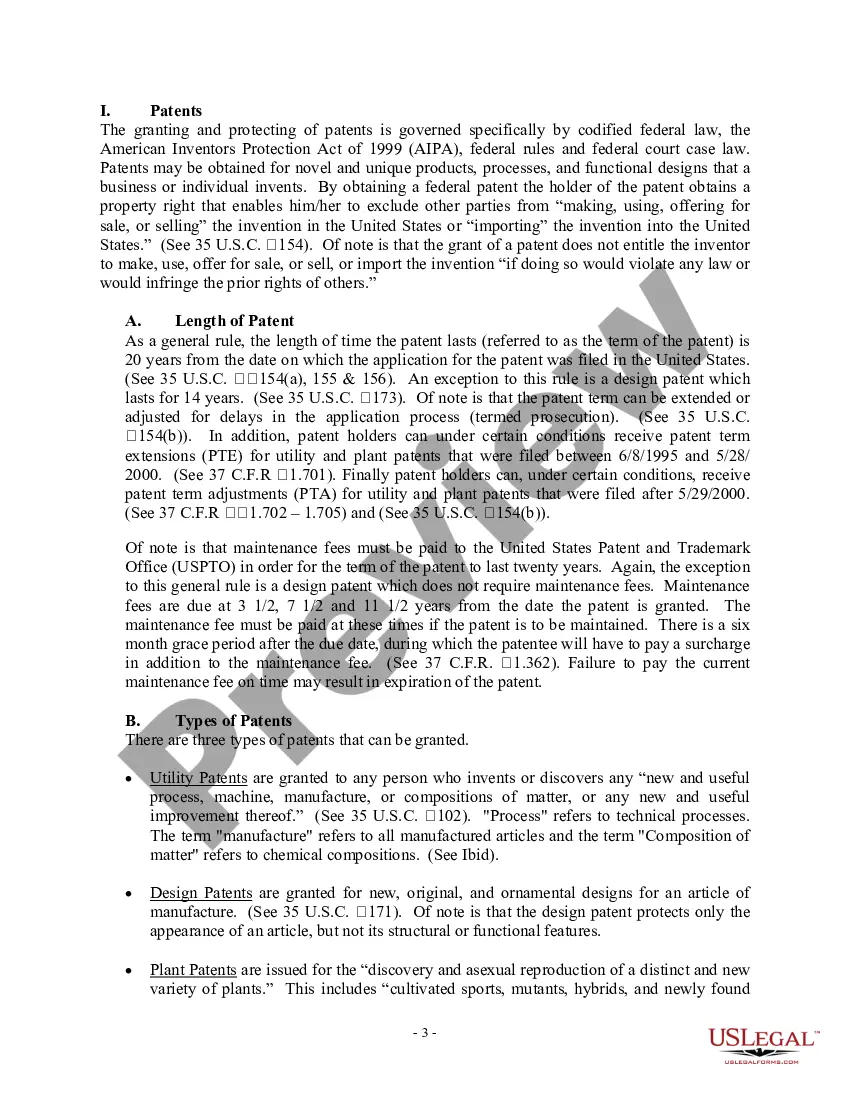
Patent application forms can be found on the USPTO website. All of the forms related to patent applications can be found on the link here, or by navigating to the USPTO website and clicking on the “Forms” link under the “Apply for a Patent” section on the “Patents” page.
The Patent Process Determine the type of intellectual property you need. Determine if your invention is patentable. Determine what kind of patent you need. Get ready to apply. Submit your application. Work with your examiner. Receive your approval. Maintain your patent.
For example, it might be a smartphone app, a website, or a device or system that uses software to perform various functions. The real question is whether software-related inventions can be patented. The answer to this question is YES!
Real-World Software Patent Examples Computer speed. Computer security. Word processing. Spreadsheets. Business management systems. Data compression. Graphics. Operating systems.
Breaking Down the Basics The Heart of Your Application: The Claim(s) ... Understand What Makes Your Software Unique. Speak Their Language. The Supporting Cast: Drawings and Descriptions. Understand the Examiner's Perspective. Leveraging Provisional Applications. The Importance of Broad yet Specific Claims.
A patent application often includes the following primary sections: Invention Title. The title's objective is to provide a clear understanding of the invention or idea. Prior Art: Context and Novelty. Invention Summary. Drawings and Descriptions. Detailed Description. Claims. Scope. Characteristics.
Ingly, while software itself is not literally patentable, software is effectively patentable by drafting a patent application in the right way. This illustrates one of the many reasons why working with a patent attorney is so important, especially for software-related inventions.
In this form, you will have to furnish information, such as, name and address of the inventor(s), name and address of the applicant(s), information corresponding to prior patent applications relating to the current invention, which you or any authorized entity has filed, and some declarations, among other information.
In order for software to be patentable, it must meet the same requirements of any other type of invention. In particular, a software invention must be new, useful, and non-obvious. A fourth requirement is that the invention be of a type that is eligible for patent protection.
