Patent In Trademark In Riverside
Description

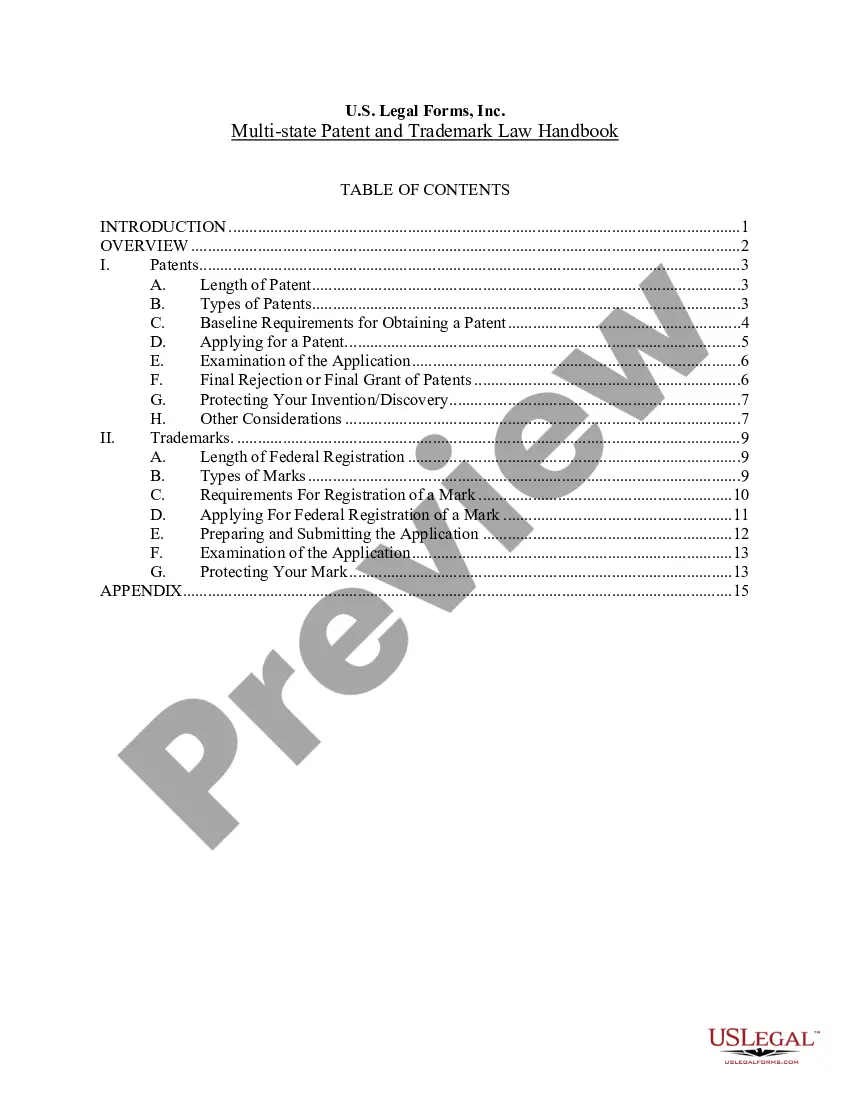


Get your form ready online
Our built-in tools help you complete, sign, share, and store your documents in one place.
Make edits, fill in missing information, and update formatting in US Legal Forms—just like you would in MS Word.
Download a copy, print it, send it by email, or mail it via USPS—whatever works best for your next step.
Sign and collect signatures with our SignNow integration. Send to multiple recipients, set reminders, and more. Go Premium to unlock E-Sign.
If this form requires notarization, complete it online through a secure video call—no need to meet a notary in person or wait for an appointment.
We protect your documents and personal data by following strict security and privacy standards.

Make edits, fill in missing information, and update formatting in US Legal Forms—just like you would in MS Word.

Download a copy, print it, send it by email, or mail it via USPS—whatever works best for your next step.

Sign and collect signatures with our SignNow integration. Send to multiple recipients, set reminders, and more. Go Premium to unlock E-Sign.

If this form requires notarization, complete it online through a secure video call—no need to meet a notary in person or wait for an appointment.

We protect your documents and personal data by following strict security and privacy standards.
Looking for another form?






Form popularity
FAQ
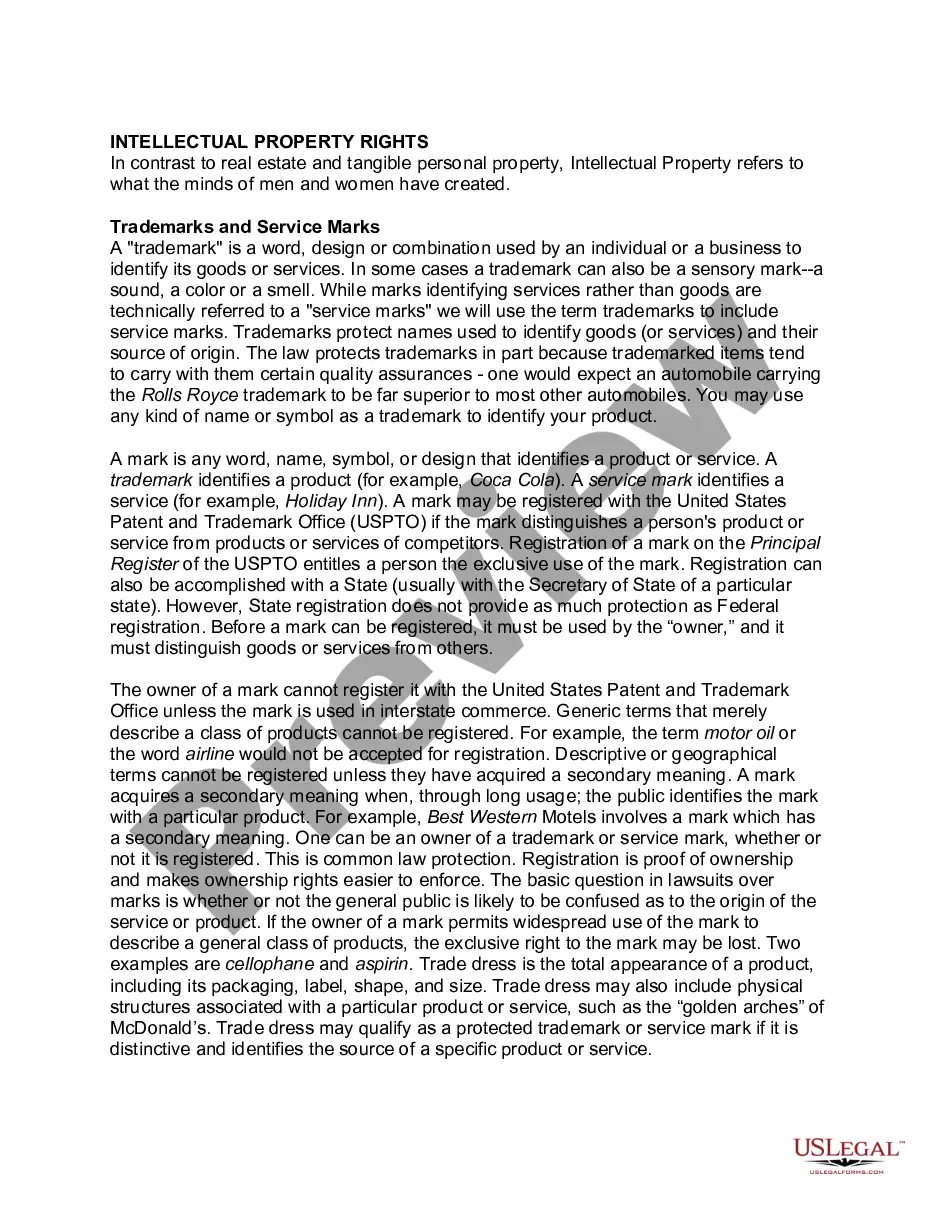
Trademarks Online: Applications to file a Trademark or Service Mark registration can be submitted online through the California Secretary of State's bizfile California portal, in person at the Sacramento office, or through the mail.
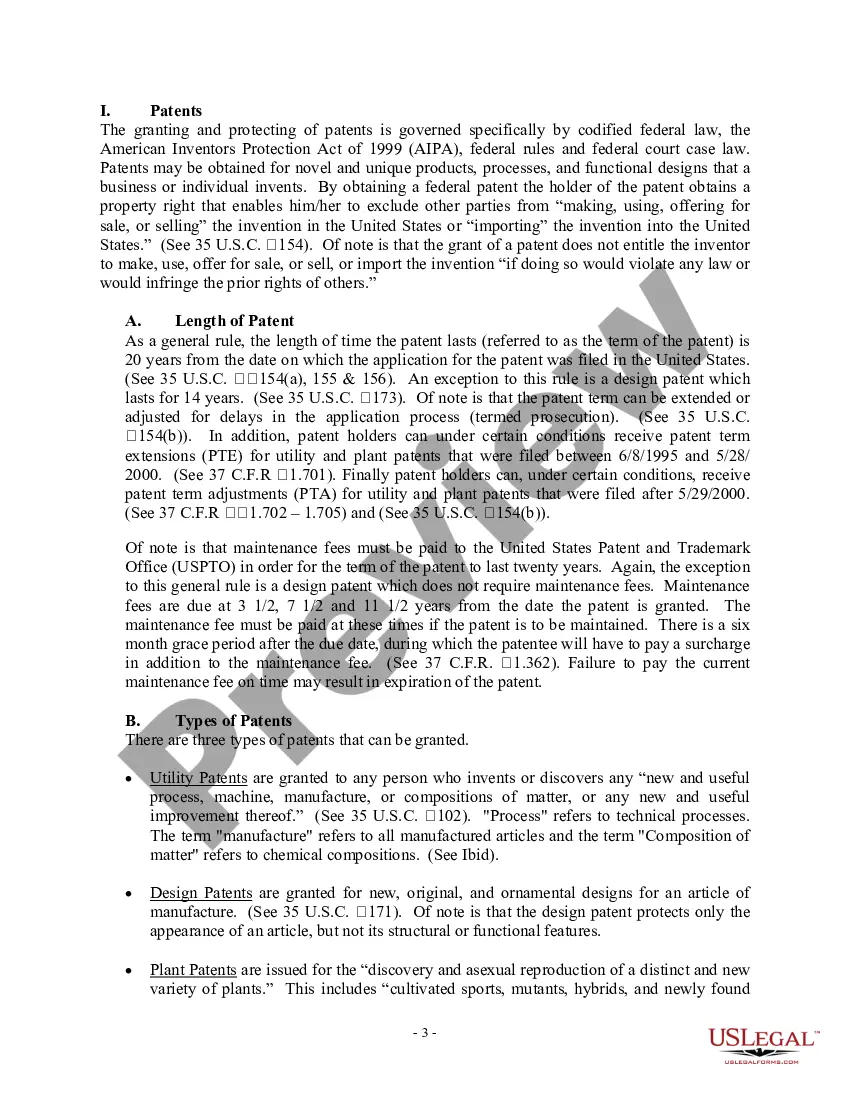
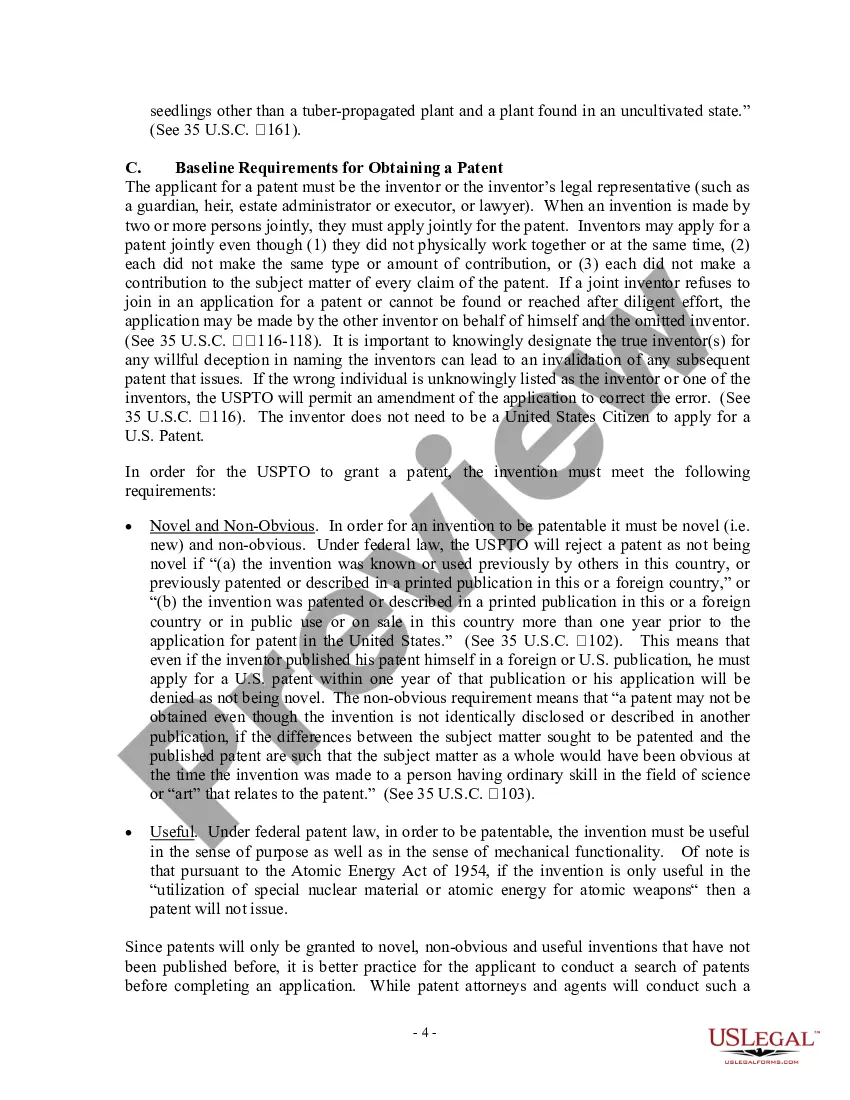
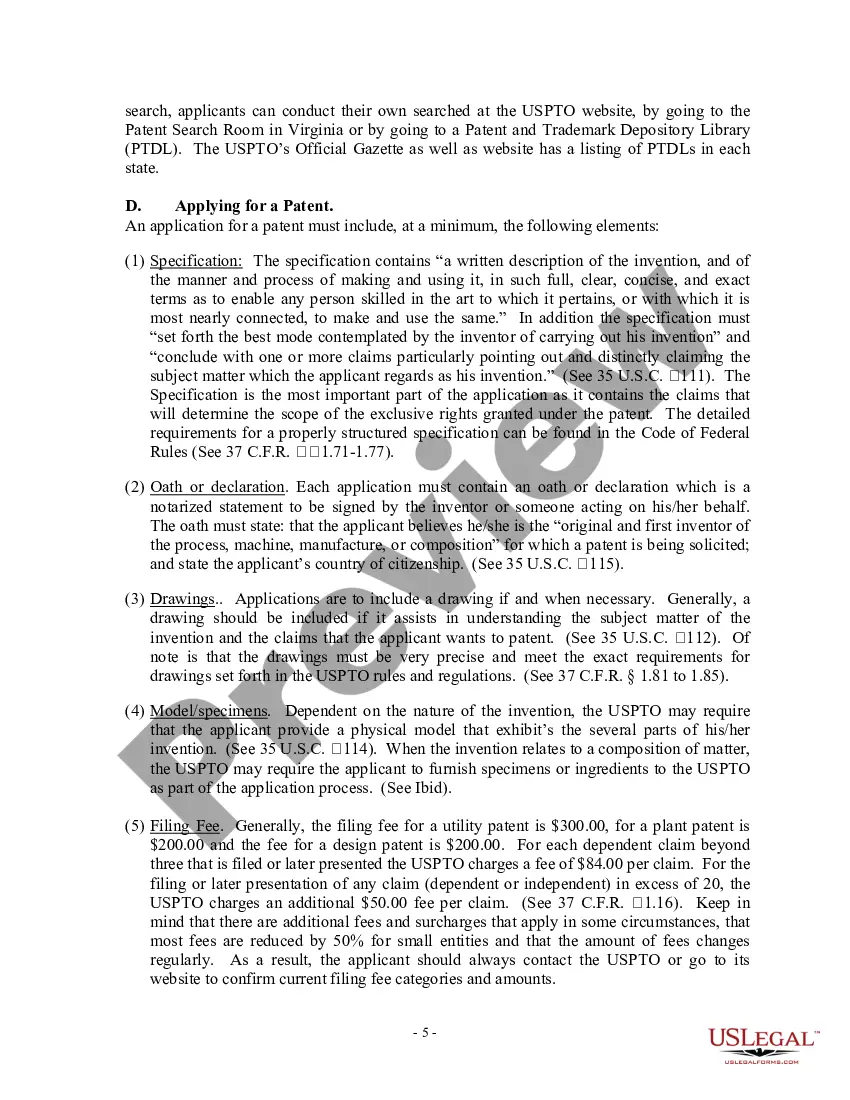
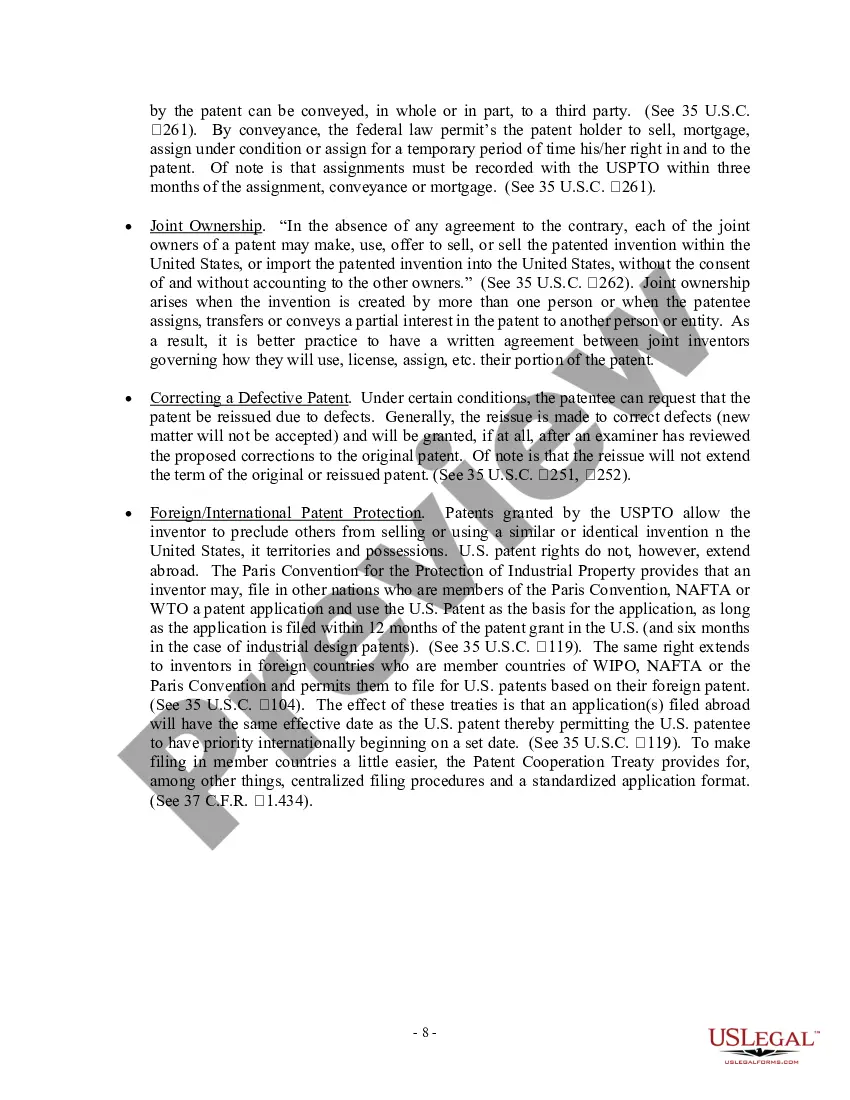
The five primary requirements for patentability are: (1) patentable subject matter; (2) utility; (3) novelty; (4) non-obviousness; and (5) enablement. Like trademarks, patents are territorial, meaning they are enforceable in a specific geographic area.
Under the “first to file” system, there exists no value in obtaining a Poor Man's Patent since it now only matters who filed for the patent first and not who came up with the idea first. Essentially, a Poor Man's Patent has about as much value today as the postage affixed to the envelope.
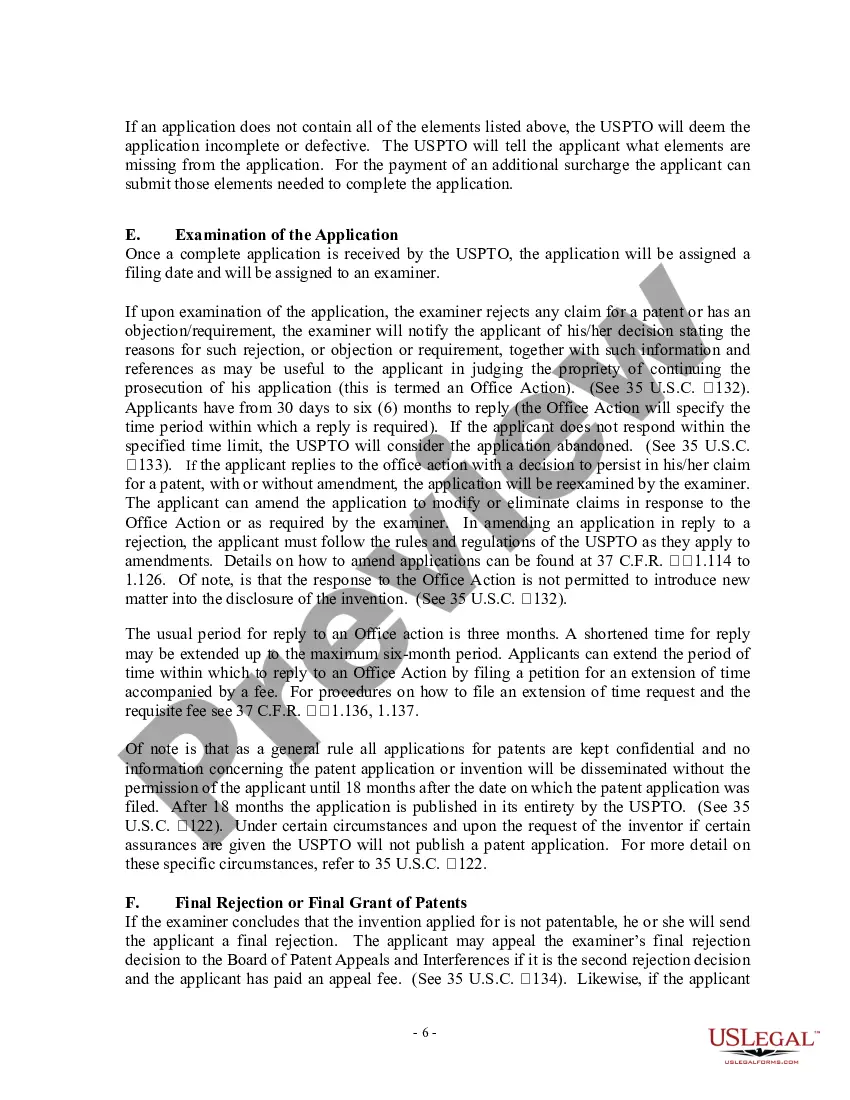
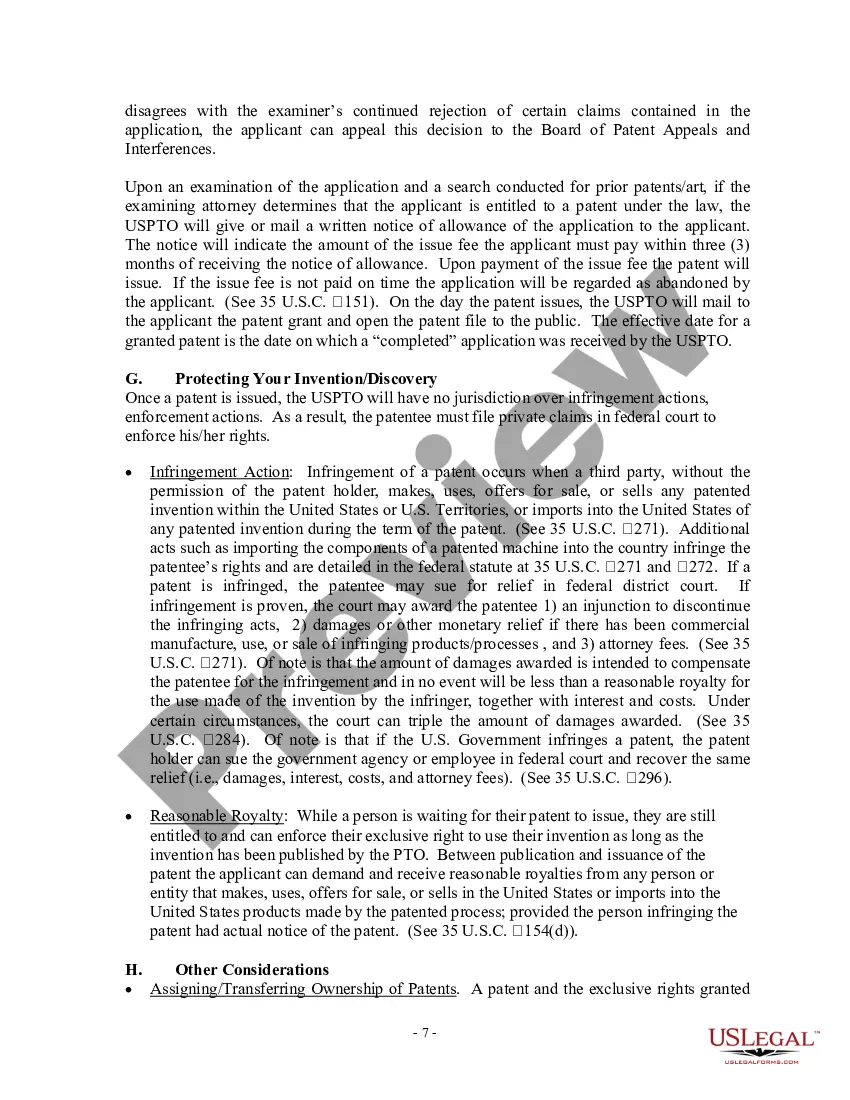
One can go to the USPTO official website and file a patent online. Publication: The Patent Office publishes the application on their official website after some time. Then, the application is ready to enter for the examination stage. Prosecution: During examination, the examiner may ask for a few clarifications.
Length of Protection: Patents are granted for a limited time (typically 20 years), while trademarks can last indefinitely if used continuously and maintained properly. Who They Protect: Patents protect the rights of inventors, while trademarks protect the reputation and goodwill of a business.
In many instances, the same design can be protected by trademark and design patent laws. Examples of well-known design trademarks which also have been the subject of design patents include the DUSTBUSTER® vacuum cleaner, the APPLE iPod® electronic music player, and the NIKE Air Max 1995® shoe upper.
Trademarks Online: Applications to file a Trademark or Service Mark registration can be submitted online through the California Secretary of State's bizfile California portal, in person at the Sacramento office, or through the mail.
A patent is the granting of a property right by a sovereign authority to an inventor. This grant provides the inventor exclusive rights to the patented process, design, or invention for a designated period in exchange for a comprehensive disclosure of the invention. They are a form of incorporeal right.
Key Differences of Patents and Trademarks Purpose: Patents protect inventions, while trademarks protect brand names, logos, and other identifying factors. Granting Authority: The government grants patents to inventors, while businesses use trademarks to identify and distinguish their goods or services.
