Patent Trademark Meaning In North Carolina
Description




Get your form ready online
Our built-in tools help you complete, sign, share, and store your documents in one place.
Make edits, fill in missing information, and update formatting in US Legal Forms—just like you would in MS Word.
Download a copy, print it, send it by email, or mail it via USPS—whatever works best for your next step.
Sign and collect signatures with our SignNow integration. Send to multiple recipients, set reminders, and more. Go Premium to unlock E-Sign.
If this form requires notarization, complete it online through a secure video call—no need to meet a notary in person or wait for an appointment.
We protect your documents and personal data by following strict security and privacy standards.

Make edits, fill in missing information, and update formatting in US Legal Forms—just like you would in MS Word.

Download a copy, print it, send it by email, or mail it via USPS—whatever works best for your next step.

Sign and collect signatures with our SignNow integration. Send to multiple recipients, set reminders, and more. Go Premium to unlock E-Sign.

If this form requires notarization, complete it online through a secure video call—no need to meet a notary in person or wait for an appointment.

We protect your documents and personal data by following strict security and privacy standards.
Looking for another form?


Form popularity
FAQ
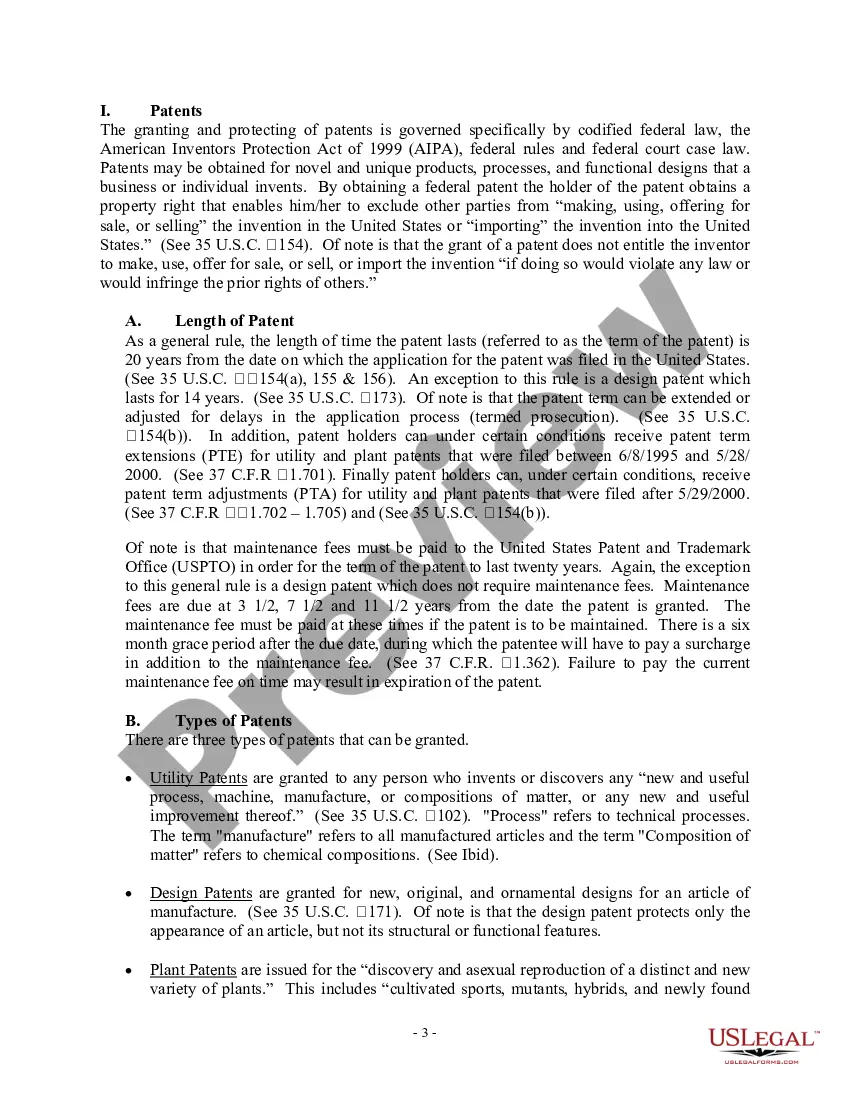
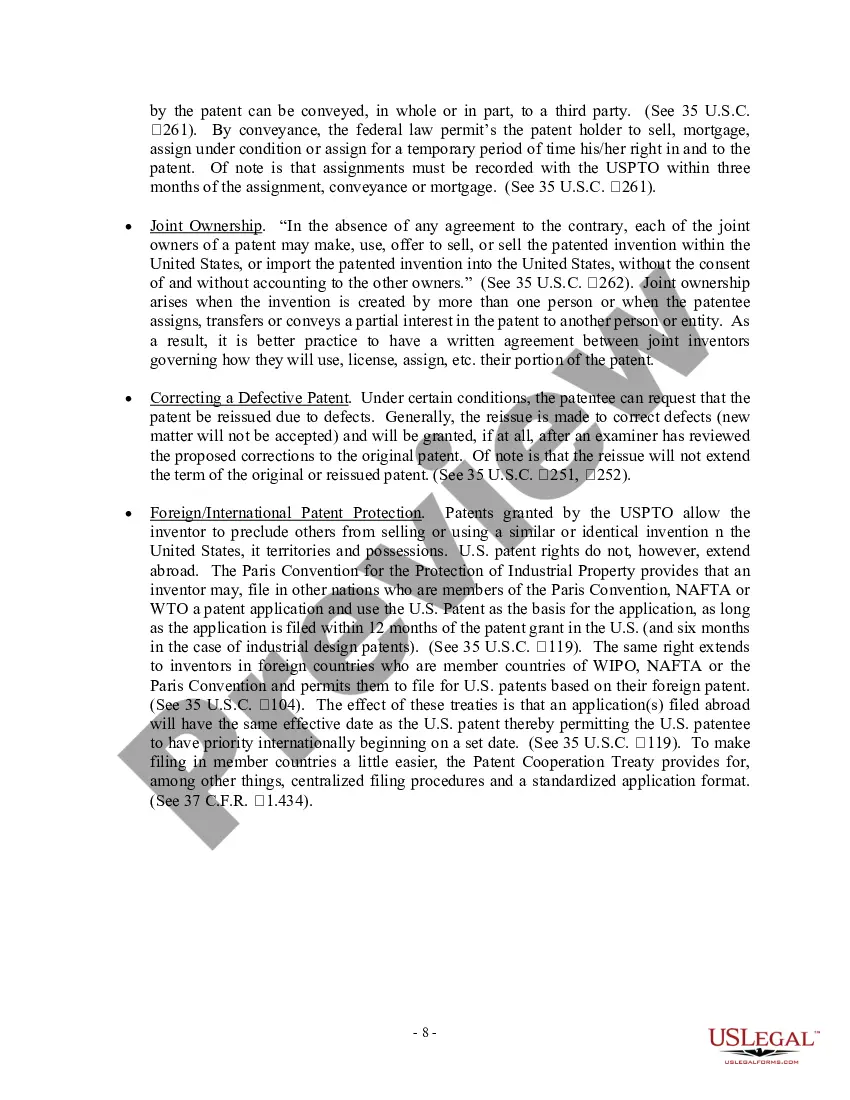
A copyright protects original works, such as art, literature, or other created work. A trademark protects names, short slogans, or logos. A patent protects new inventions, processes, and compositions of matter (such as medicines).
TM symbol meaning. TM stands for trademark. Trademarks are marks used with goods, such as cell phones, clothing, software, and juice. The letters TM mean that a name, word, logo, or phrase is an unregistered trademark, which means that it is not registered with the U.S. Patent and Trademark Office.
Patents are intended to protect inventions of a functional or design nature. Trademarks provide protection for indicators of the source of products and services used in commercial trade, such as words or logos. Copyrights provide protection for literary and artistic expressions.
How to File a Patent in North Carolina Do You Have an Idea or Invention? Every invention begins as an idea. Perform Market Research. Verify Patent Eligibility. Conduct a Patent Search. Determine Inventorship & Ownership. Choose the Type of Patent. Prepare the Patent Application. Submit the Patent Application.
A patent allows the creator of certain kinds of inventions that contain new ideas to keep others from making commercial use of those ideas without the creator's permission. Trademarks, on the other hand, are not concerned with how a new technology is used.
In other words, a trademark protects a name, logo or design that refers to a good or service's seller or manufacturer. A patent, on the other hand, provides an inventor with property rights to a product. This means another party can't use or sell the product they patented.
Right to prevent others from making, selling using, or importing the patented invention. Right to use the mark and to prevent others from using similar marks in a way that would cause a likelihood-of-confusion about the origin of the goods or services.
Key Differences of Patents and Trademarks Purpose: Patents protect inventions, while trademarks protect brand names, logos, and other identifying factors. Granting Authority: The government grants patents to inventors, while businesses use trademarks to identify and distinguish their goods or services.
The five primary requirements for patentability are: (1) patentable subject matter; (2) utility; (3) novelty; (4) non-obviousness; and (5) enablement. Like trademarks, patents are territorial, meaning they are enforceable in a specific geographic area.
The Poor Man's Patent Is Obsolete Being the first to invent will no longer save you is someone else filed first. So even if you did write out the idea for your invention and mailed it to yourself, that date would not matter.
