Patent Rights Examples In Miami-Dade
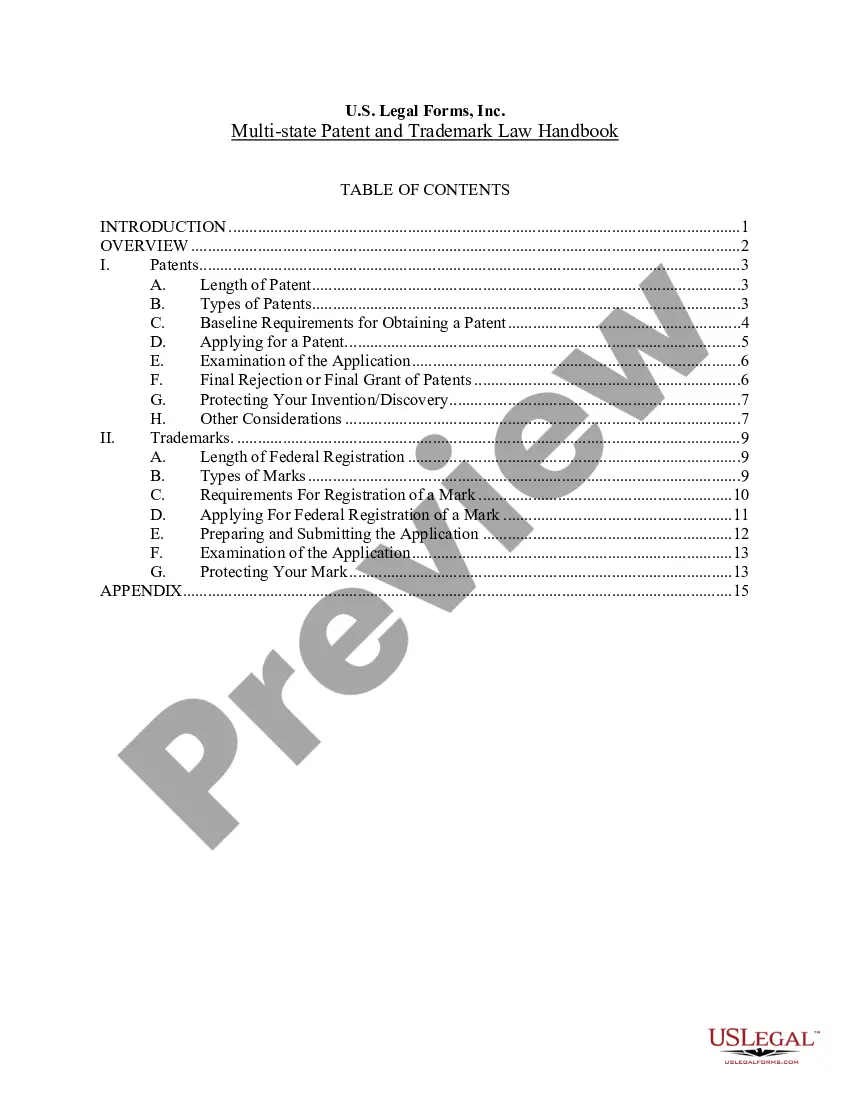
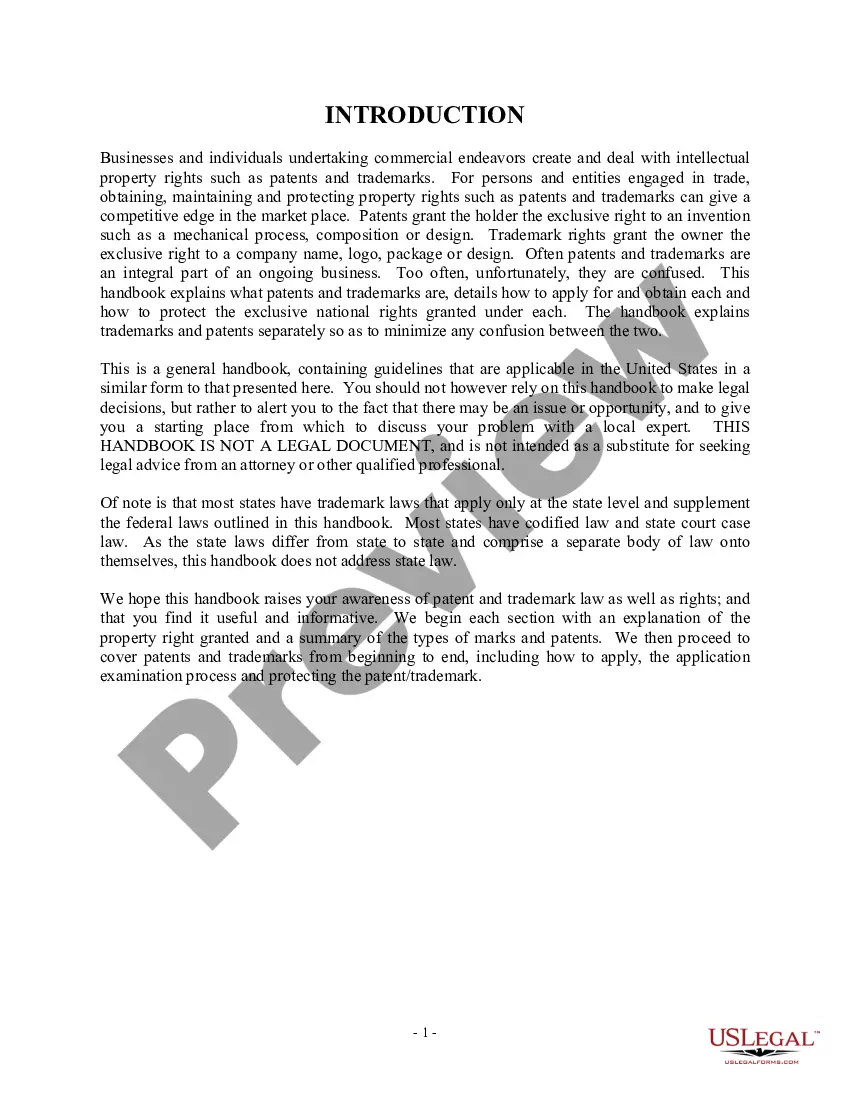
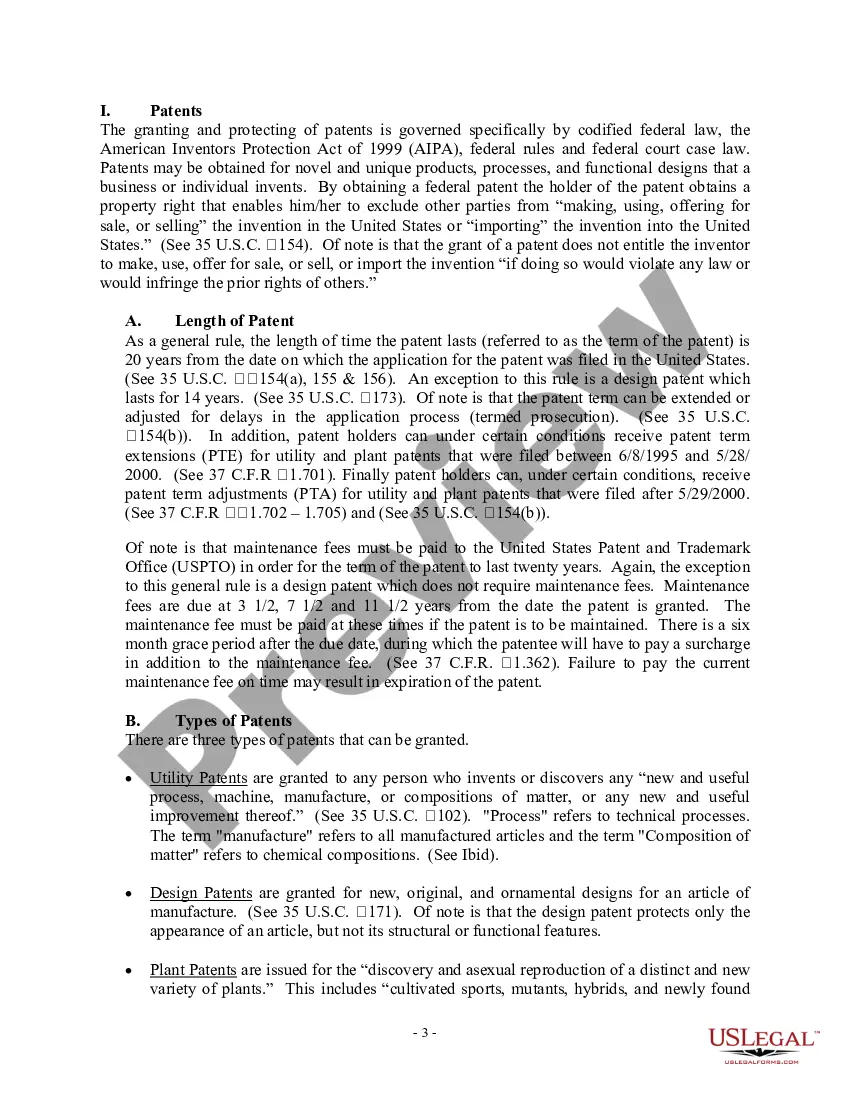
Description


Get your form ready online
Our built-in tools help you complete, sign, share, and store your documents in one place.
Make edits, fill in missing information, and update formatting in US Legal Forms—just like you would in MS Word.
Download a copy, print it, send it by email, or mail it via USPS—whatever works best for your next step.
Sign and collect signatures with our SignNow integration. Send to multiple recipients, set reminders, and more. Go Premium to unlock E-Sign.
If this form requires notarization, complete it online through a secure video call—no need to meet a notary in person or wait for an appointment.
We protect your documents and personal data by following strict security and privacy standards.

Make edits, fill in missing information, and update formatting in US Legal Forms—just like you would in MS Word.

Download a copy, print it, send it by email, or mail it via USPS—whatever works best for your next step.

Sign and collect signatures with our SignNow integration. Send to multiple recipients, set reminders, and more. Go Premium to unlock E-Sign.

If this form requires notarization, complete it online through a secure video call—no need to meet a notary in person or wait for an appointment.

We protect your documents and personal data by following strict security and privacy standards.
Looking for another form?









Form popularity
FAQ
Writing a basic patent claim Every claim has three sections—the preamble, the transitional phrase, and the body of the claim. The preamble is the first part of the claim. In the writing instrument claim above, the preamble is the phrase “A writing instrument for making a mark on a writing surface”.
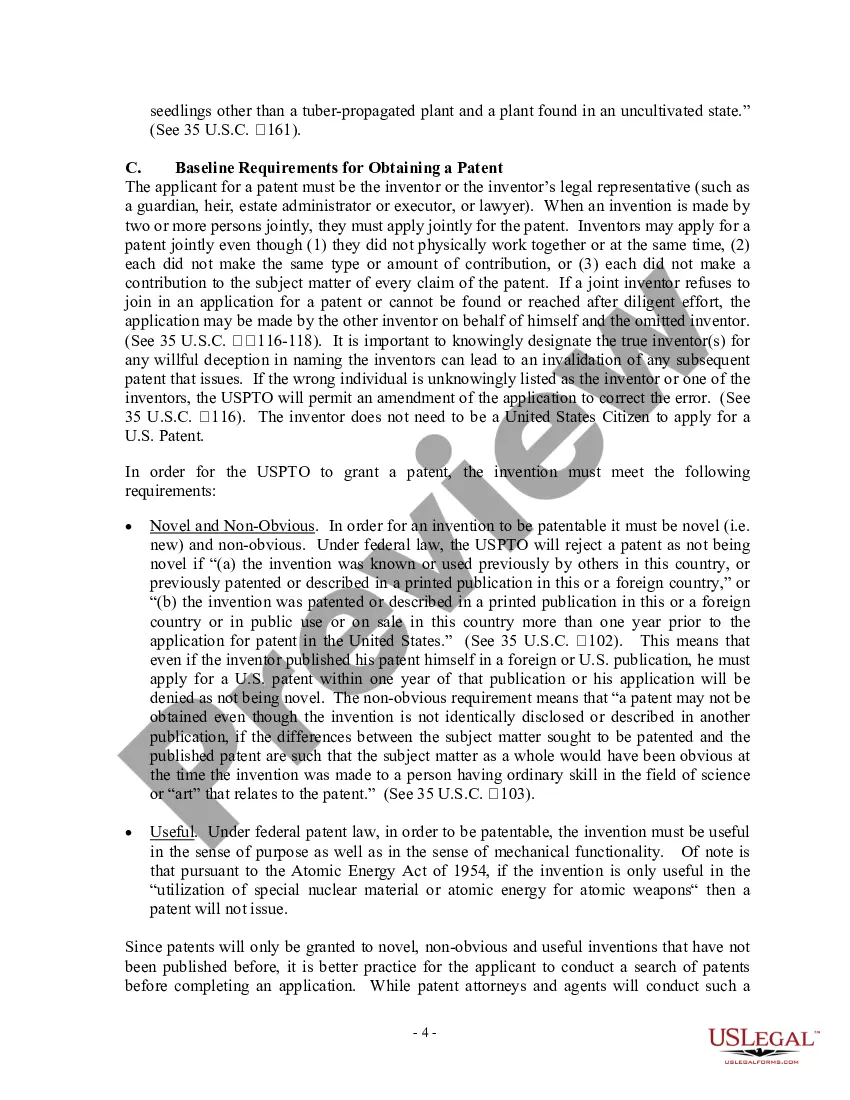
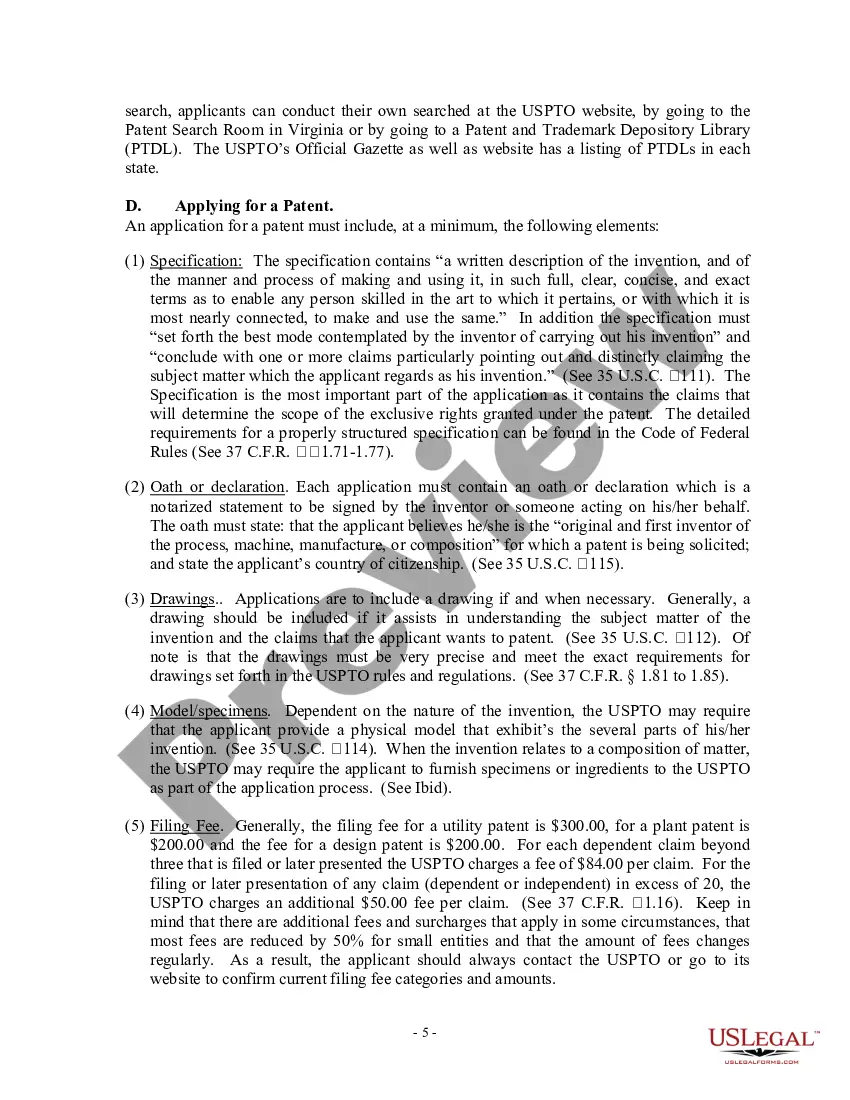
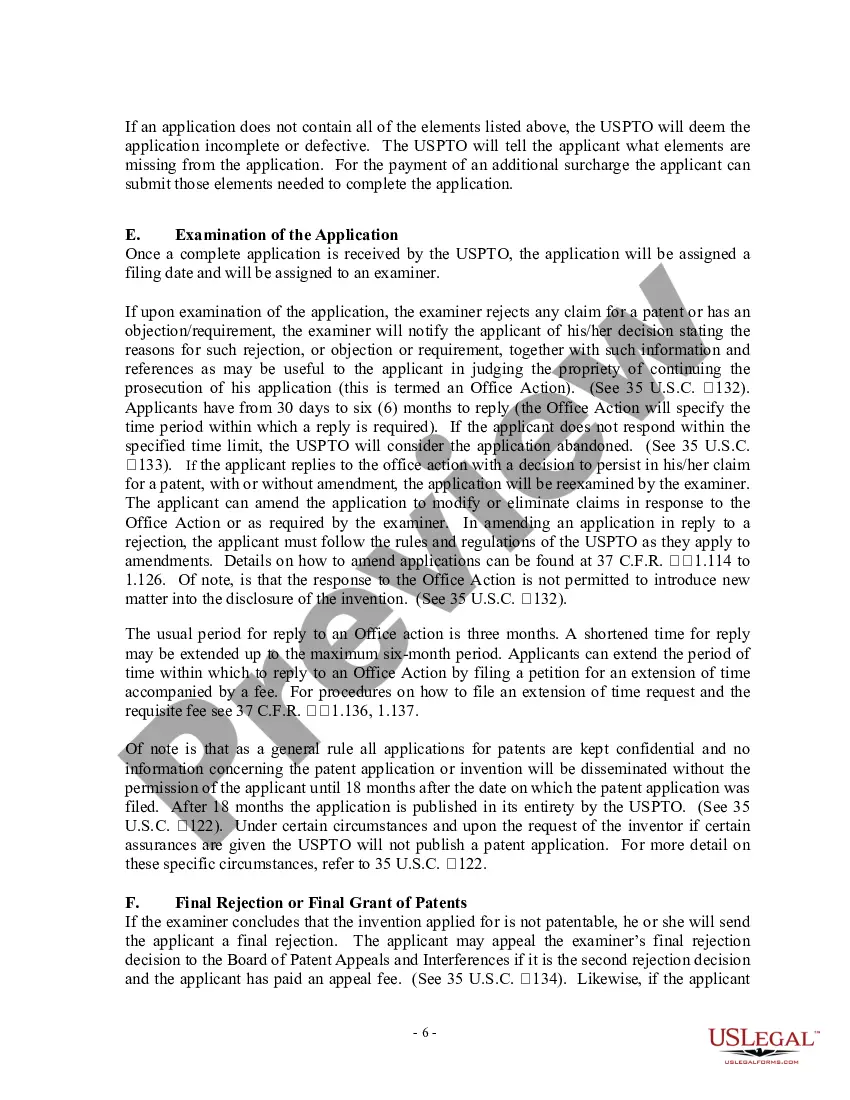
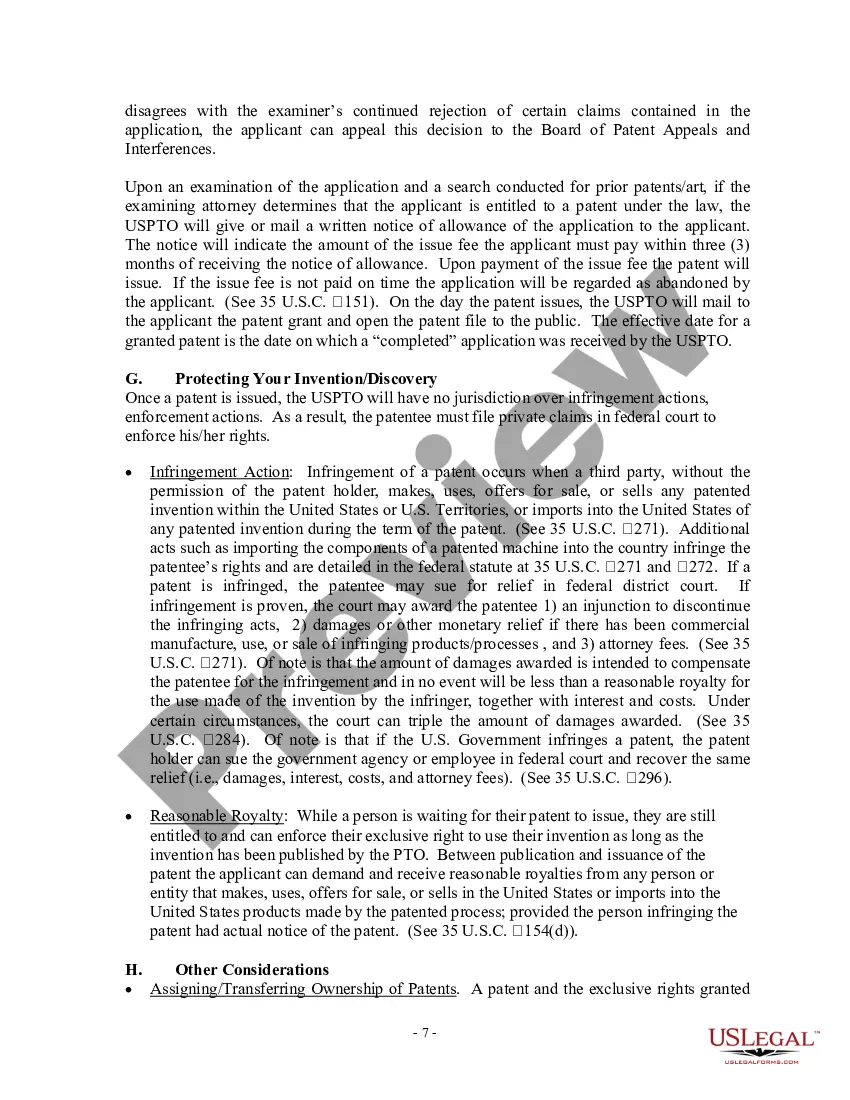
For a strong patent description: Ensure the title clearly defines the invention. Discuss the operation of the invention in detail. Refer to the drawings and specify their relevance to the description. Comply with the guidelines of the Patent Office regarding format and content.
Format of a Patent Application The Specification. The Title. The Description. The Claims. The Drawings. The Abstract. Sample Specifications. Minimum Requirements for a Filing Date.
Patents have been used in their modern definition since the 1500s to provide inventors the exclusive right to produce and sell their inventions. Some famous examples of products that have been patented include: The Telephone: Patented by Alexander Graham Bell in 1876. The Lightbulb: Patented in 1878 by Thomas Edison.
The five primary requirements for patentability are: (1) patentable subject matter; (2) utility; (3) novelty; (4) non-obviousness; and (5) enablement. Like trademarks, patents are territorial, meaning they are enforceable in a specific geographic area.
A provisional application is a quick, inexpensive way for you to establish a U.S. filing date for your invention that can be claimed in a later-filed U.S. nonprovisional, PCT, and/or foreign application. Provisional applications will not be examined and never lead to patents by themselves.
