Patent Trademark Law For Dummies In King
Description




Get your form ready online
Our built-in tools help you complete, sign, share, and store your documents in one place.
Make edits, fill in missing information, and update formatting in US Legal Forms—just like you would in MS Word.
Download a copy, print it, send it by email, or mail it via USPS—whatever works best for your next step.
Sign and collect signatures with our SignNow integration. Send to multiple recipients, set reminders, and more. Go Premium to unlock E-Sign.
If this form requires notarization, complete it online through a secure video call—no need to meet a notary in person or wait for an appointment.
We protect your documents and personal data by following strict security and privacy standards.

Make edits, fill in missing information, and update formatting in US Legal Forms—just like you would in MS Word.

Download a copy, print it, send it by email, or mail it via USPS—whatever works best for your next step.

Sign and collect signatures with our SignNow integration. Send to multiple recipients, set reminders, and more. Go Premium to unlock E-Sign.

If this form requires notarization, complete it online through a secure video call—no need to meet a notary in person or wait for an appointment.

We protect your documents and personal data by following strict security and privacy standards.
Looking for another form?







Form popularity
FAQ
Intellectual property is a category of intangible assets. They can't be held and don't necessarily have a physical presence. These assets are created using human intellect. Such property can take many forms and can include artwork, symbols, logos, brand names, and designs.
Intellectual property, or IP, refers to anything created by the human mind that is granted the same rights associated with tangible or personal property.
What is intellectual property? Intellectual property refers to any intellectual creation, such as literary works, artistic works, inventions, designs, symbols, names, images, computer code, etc. Intellectual property law exists in order to protect the creators and covers areas of copyright, trademark law, and patents.
Understanding the different types of intellectual property is an important knowledge that all in-house counsel should master. Patents, trademarks, copyrights, and trade secrets are valuable assets of the company and understanding how they work and how they are created is critical to knowing how to protect them.
While the law does not allow for a trademark on an individual book title, an author can trademark a series of books. This is because they serve as an identifiable brand. Common examples include the “For Dummies” series, “Chicken Soup for the Soul”, and the “Hardy Boys Adventures” series.
What is the definition of Intellectual Property? Intellectual property (IP) is the property of your mind or proprietary knowledge. It can be an invention, a trade mark, a design or the practical application of your idea.
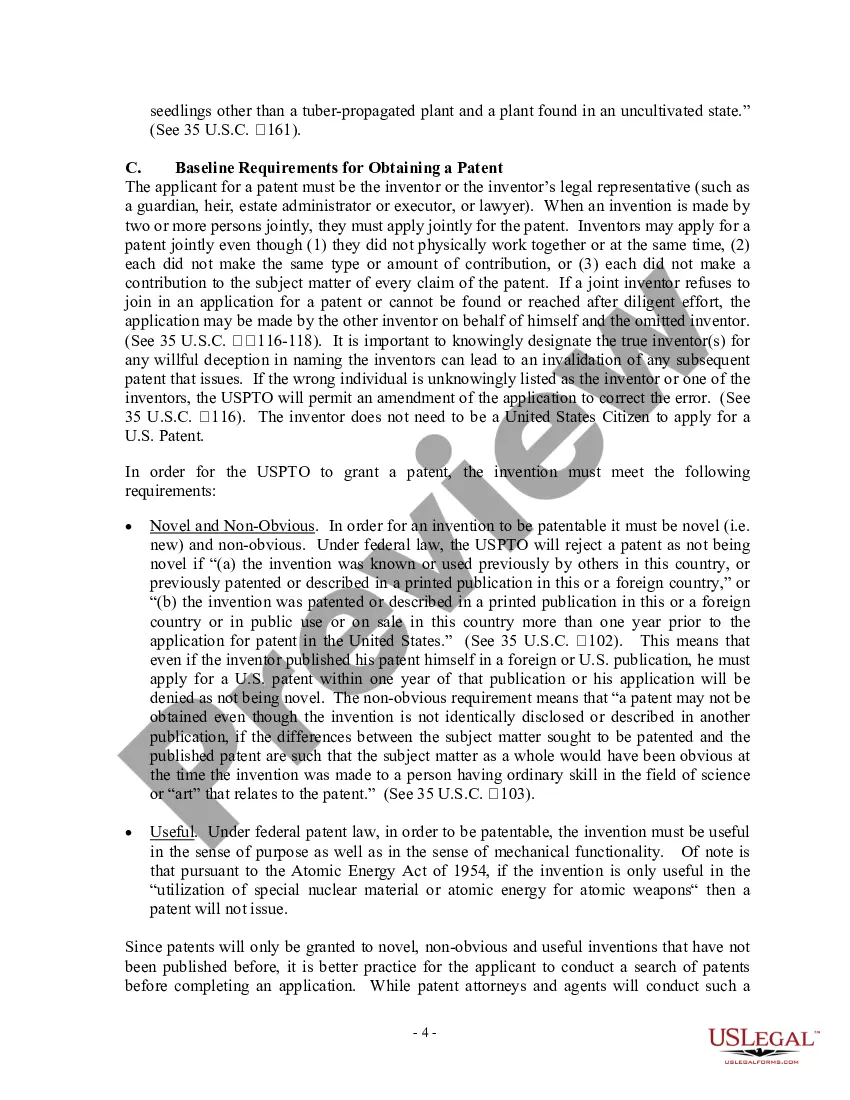
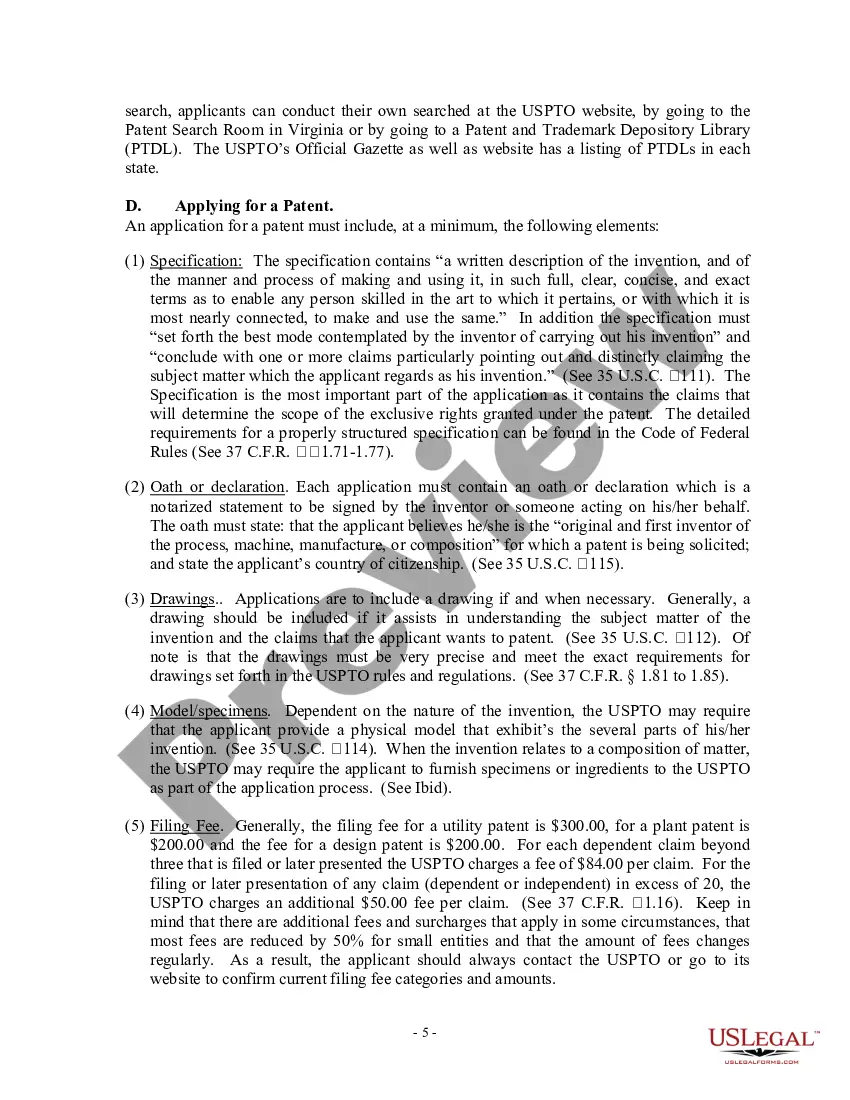
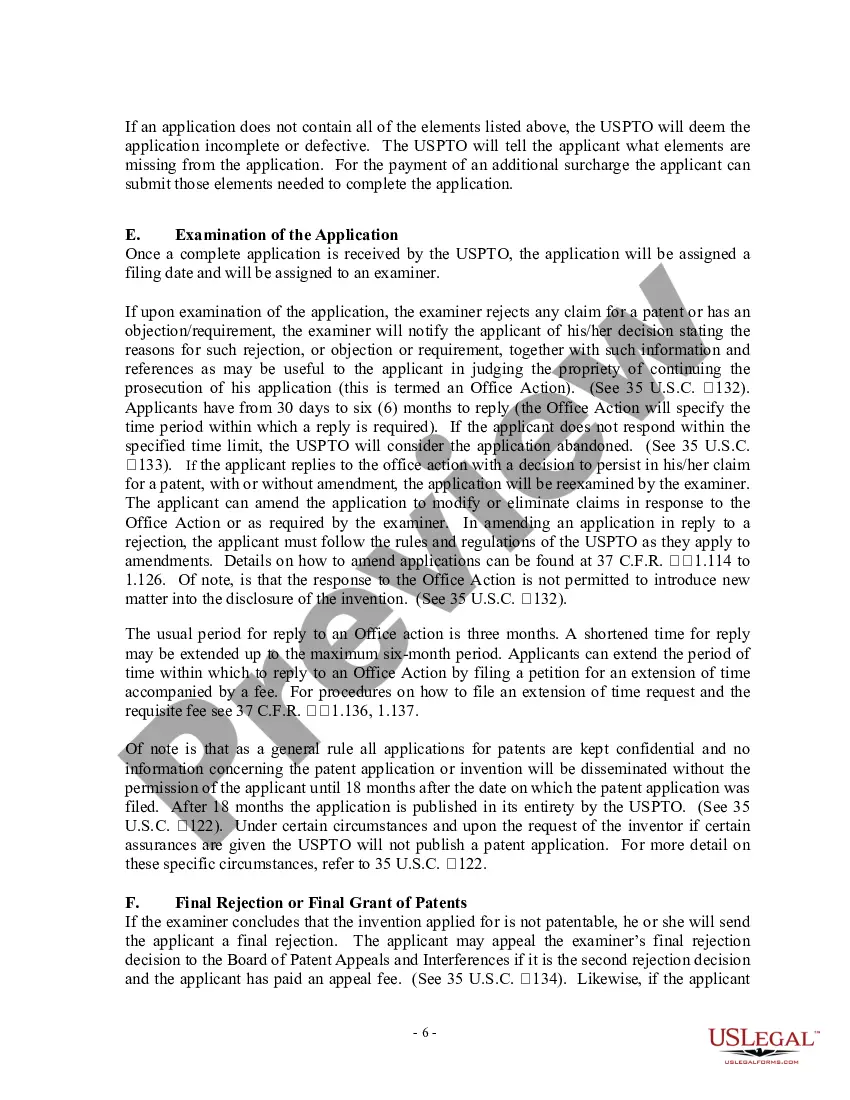
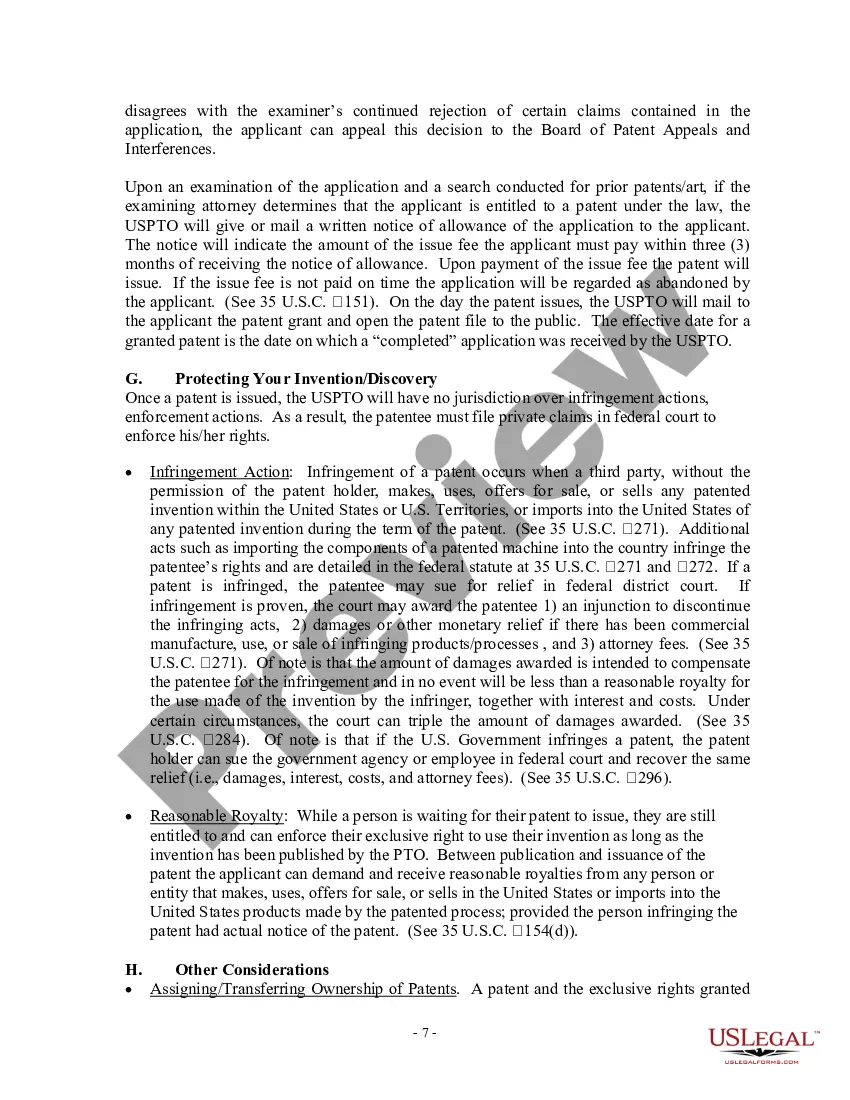
To obtain a patent in the U.S., the inventor must file a patent application with the United States Patent and Trademark Office (USPTO), which includes (1) a written document comprising a description and claims, (2) drawings when necessary, (3) an oath or declaration, and (4) filing, search, and examination fees.
Patents can protect the functional features of a process, machine, manufactured item, asexually reproduced plant, or composition of matter, for example. TRADEMARK LAW. Trademark law protects words, phrases, logos or symbols used to distinguish one product from another.
The Coca-Cola Corp owns the trademark to the name Coca-Cola, as well as the trademark on the bottle shape, and the graphic representation of their name. These are all things that help distinguish them from other cola brands and define their individual product. Coca-Cola also owns the patent on their formula.
Patents deal with inventions, while copyright deals with the creation of ideas and original works of the author, whether in literature, drama, music, art etc. Other differences have been explained in the article.
