Patent Application For Software In Hillsborough
Description




Get your form ready online
Our built-in tools help you complete, sign, share, and store your documents in one place.
Make edits, fill in missing information, and update formatting in US Legal Forms—just like you would in MS Word.
Download a copy, print it, send it by email, or mail it via USPS—whatever works best for your next step.
Sign and collect signatures with our SignNow integration. Send to multiple recipients, set reminders, and more. Go Premium to unlock E-Sign.
If this form requires notarization, complete it online through a secure video call—no need to meet a notary in person or wait for an appointment.
We protect your documents and personal data by following strict security and privacy standards.

Make edits, fill in missing information, and update formatting in US Legal Forms—just like you would in MS Word.

Download a copy, print it, send it by email, or mail it via USPS—whatever works best for your next step.

Sign and collect signatures with our SignNow integration. Send to multiple recipients, set reminders, and more. Go Premium to unlock E-Sign.

If this form requires notarization, complete it online through a secure video call—no need to meet a notary in person or wait for an appointment.

We protect your documents and personal data by following strict security and privacy standards.
Looking for another form?









Form popularity
FAQ
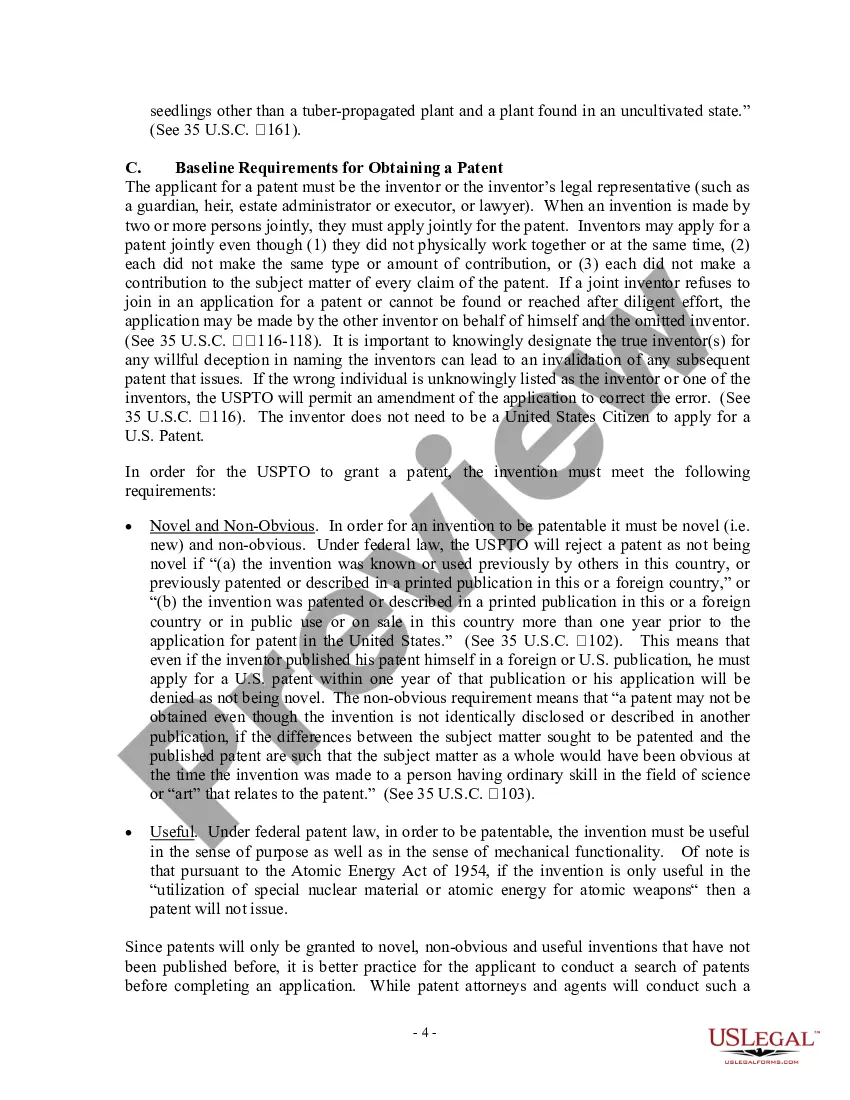
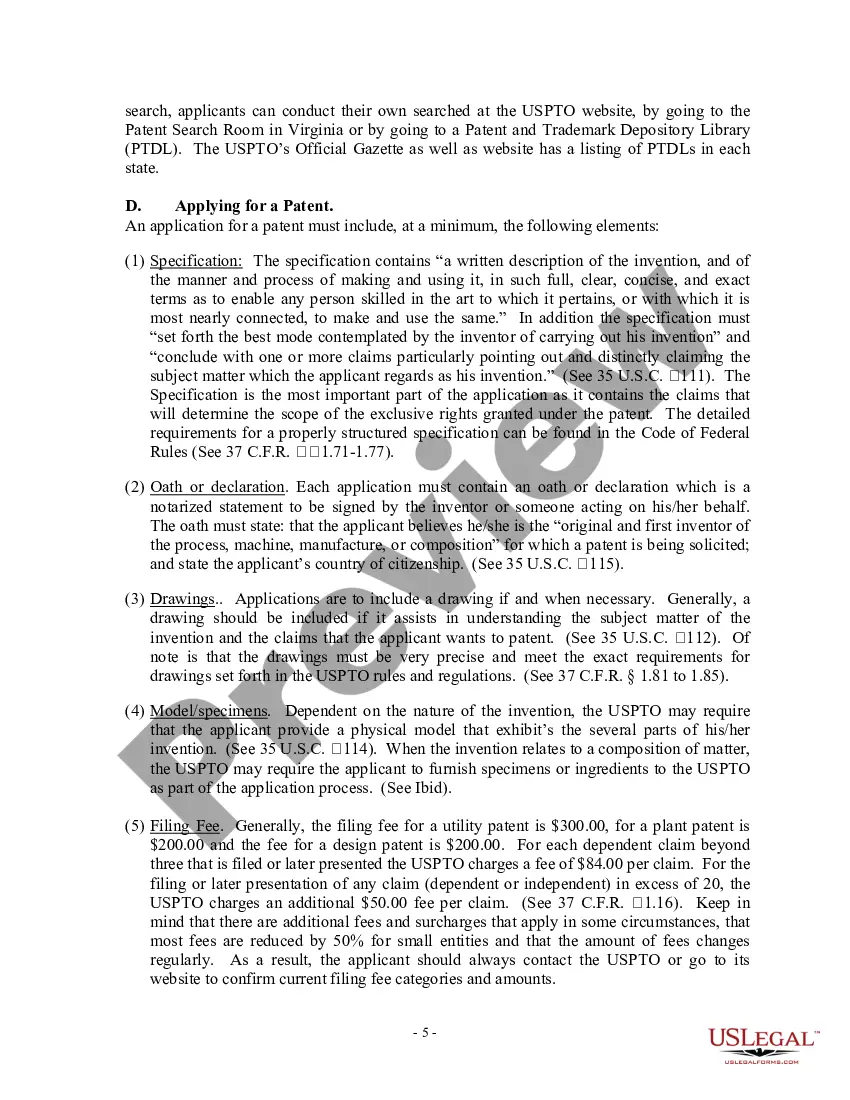
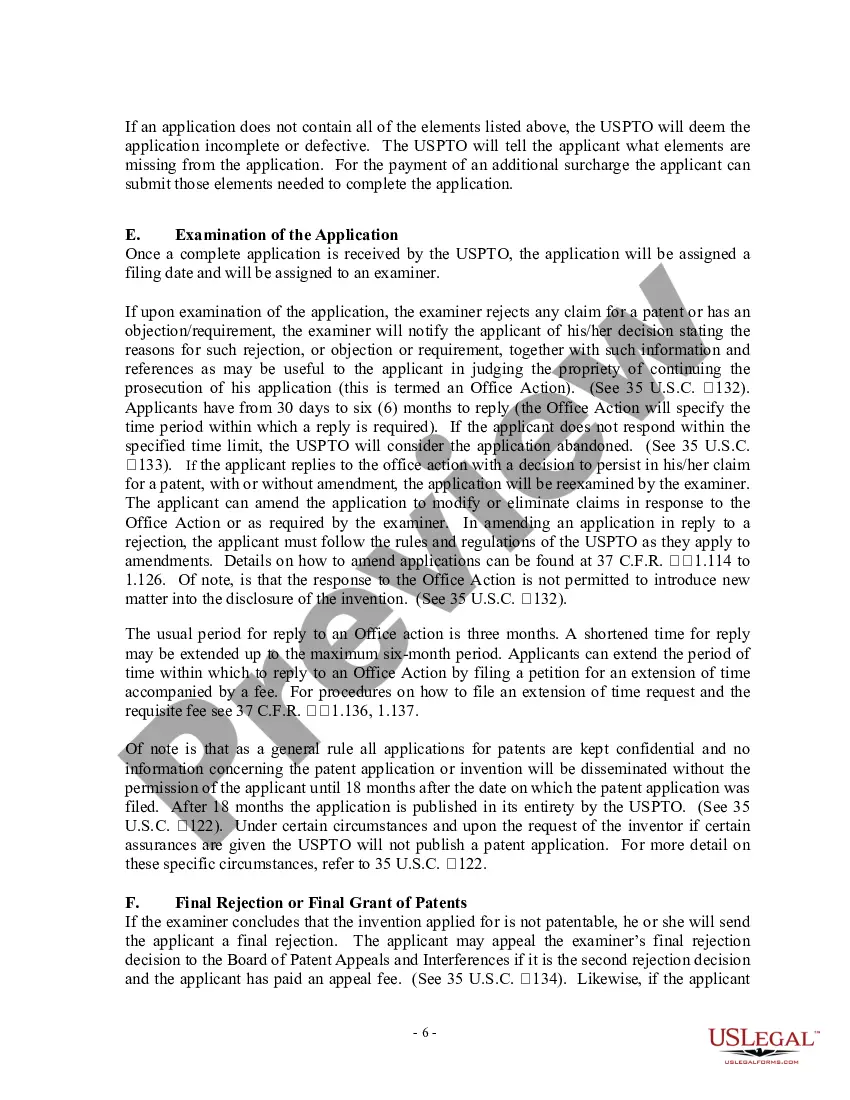
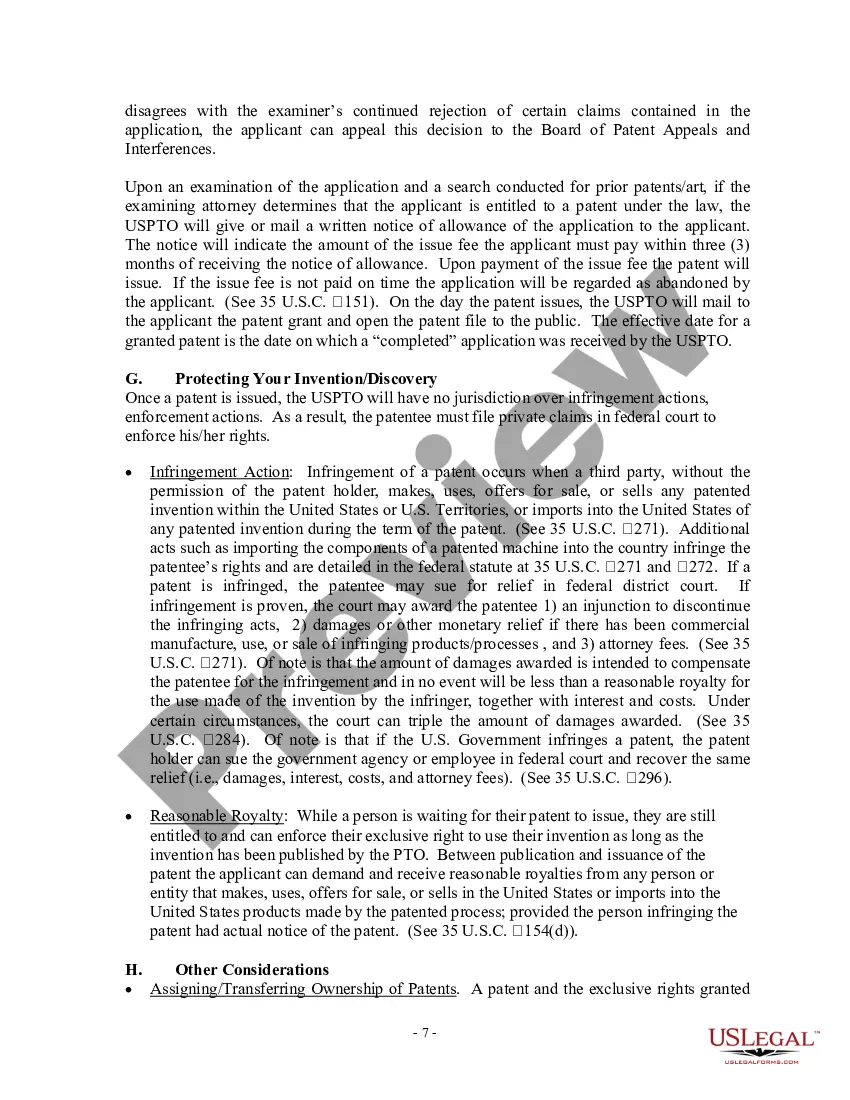
If you want to protect your software through the patent system, you must submit a patent application. Your application must describe your invention in detail (the specification), should include drawings, and must truthfully name the inventors of the invention.
The simple answer is yes, you can patent software. However, there are strict rules to follow as to what software or software-related inventions can be patented. Let's begin by taking a brief look at what the requirements for obtaining patents in general are before applying these rules to software.
Only software with a technical purpose can be granted a patent. For example software to control a driverless car could have a patent, while a chess playing app could not. If your invention is software, you may need professional advice whether it can be patented (for example, from a patent attorney).
A software invention, for example, could be protected under copyrights (how human expression authored computer-readable code), patents (a useful, novel, and non-obvious method, device, or system), or both.
One thing that makes the patent application process complex is that describing software technology and innovations is often difficult. This is because they entail abstract ideas, making it difficult to understand and establish whether the innovation should enjoy copyright protection.
The specification should be in conformity with the requirements of the Patents Act 1992 and Patents Rules 1992, typed or printed on single sided A4 pages with margins of 2 to 3 centimeters. These margins should be blank, and each page should be numbered. Two copies of the specification must be submitted.
A technology patent requires explicit documentation of the methods and research that goes in to developing the outcome you are seeking to patent. As you develop your invention, you should keep careful notes and evidence of your methods and processes for creating the final outcome.
Software-related inventions are patentable. To qualify as an invention, however, there must be "a creation of technical ideas utilizing a law of nature" although this requirement is typically met by "concretely realising the information processing performed by the software by using hardware resources".
To file a patent in Brazil, it must be processed in The Brazilian entity of patents is the National Institute of Industrial Property (INPI). This is the official government body responsible for Industrial Property rights in Brazil being a federal autarchy of the Ministry of Industry, Foreign Trade and Services.
