Patent Application With Priority Date In Harris
Description



Get your form ready online
Our built-in tools help you complete, sign, share, and store your documents in one place.
Make edits, fill in missing information, and update formatting in US Legal Forms—just like you would in MS Word.
Download a copy, print it, send it by email, or mail it via USPS—whatever works best for your next step.
Sign and collect signatures with our SignNow integration. Send to multiple recipients, set reminders, and more. Go Premium to unlock E-Sign.
If this form requires notarization, complete it online through a secure video call—no need to meet a notary in person or wait for an appointment.
We protect your documents and personal data by following strict security and privacy standards.

Make edits, fill in missing information, and update formatting in US Legal Forms—just like you would in MS Word.

Download a copy, print it, send it by email, or mail it via USPS—whatever works best for your next step.

Sign and collect signatures with our SignNow integration. Send to multiple recipients, set reminders, and more. Go Premium to unlock E-Sign.

If this form requires notarization, complete it online through a secure video call—no need to meet a notary in person or wait for an appointment.

We protect your documents and personal data by following strict security and privacy standards.
Looking for another form?








Form popularity
FAQ
A PCT application can claim priority to an earlier application, and multiple applications can claim priority to the first application within the 12-month priority period. A priority claim is only valid for subject-matter (e.g. features of the invention) that were disclosed, for the first time, in the first application.
A priority date is the date that USCIS considers an individual to have officially declared their intent to apply for permanent residency. Priority dates determine one's place in line for a green card, and can be found on either the I-130 or I-140 receipt notice.
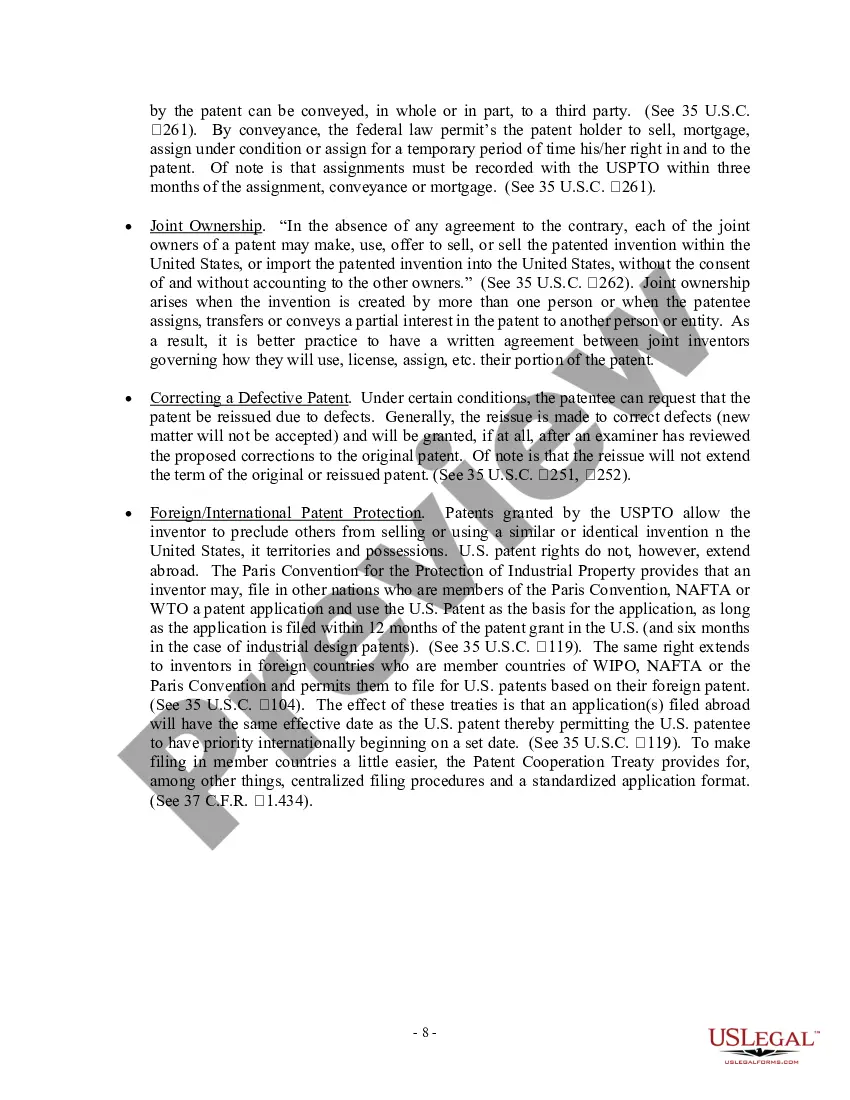
Priority date refers to the earliest filing date in a family of patent applications. If the earliest-filed patent application for a particular invention was a provisional application, then the filing date of the provisional is your priority date.
Priority dates of claims of a complete specification and the claim is fairly based on the matter disclosed in the specification referred to in clause (a) or clause (b), the priority date of that claim shall be the date of the filing of the relevant specification.
The priority date for an immigrant petition that is based on employment is either the date the petition was filed with USCIS, or the date the labor certification application was accepted for processing by the Department of Labor.
What is a priority date and why does it is matter? A. Priority date refers to the earliest filing date in a family of patent applications. If the earliest-filed patent application for a particular invention was a provisional application, then the filing date of the provisional is your priority date.
(3) PRIORITY. —Priority under section 119, 365(a), 365(b), 386(a), or 386(b) shall not be taken into account in determining the term of a patent.
For family-sponsored immigrants, the priority date is the date that the Form I-130, Petition for Alien Relative, or in certain instances the Form I-360, Petition for Amerasian, Widow(er), or Special Immigrant, is properly filed with USCIS.
Your priority date is generally the date when your relative or employer properly filed the immigrant visa petition on your behalf with USCIS.
In the context of PERM, the Priority Date for a PERM Labor Certification technically refers to the date when the PERM is filed with the DOL. In practice, the Priority Date for the PERM gets locked in once the Form I-140 petition is approved.
