Trademark Rules For Logo In Georgia
Description



Get your form ready online
Our built-in tools help you complete, sign, share, and store your documents in one place.
Make edits, fill in missing information, and update formatting in US Legal Forms—just like you would in MS Word.
Download a copy, print it, send it by email, or mail it via USPS—whatever works best for your next step.
Sign and collect signatures with our SignNow integration. Send to multiple recipients, set reminders, and more. Go Premium to unlock E-Sign.
If this form requires notarization, complete it online through a secure video call—no need to meet a notary in person or wait for an appointment.
We protect your documents and personal data by following strict security and privacy standards.

Make edits, fill in missing information, and update formatting in US Legal Forms—just like you would in MS Word.

Download a copy, print it, send it by email, or mail it via USPS—whatever works best for your next step.

Sign and collect signatures with our SignNow integration. Send to multiple recipients, set reminders, and more. Go Premium to unlock E-Sign.

If this form requires notarization, complete it online through a secure video call—no need to meet a notary in person or wait for an appointment.

We protect your documents and personal data by following strict security and privacy standards.
Looking for another form?










Form popularity
FAQ
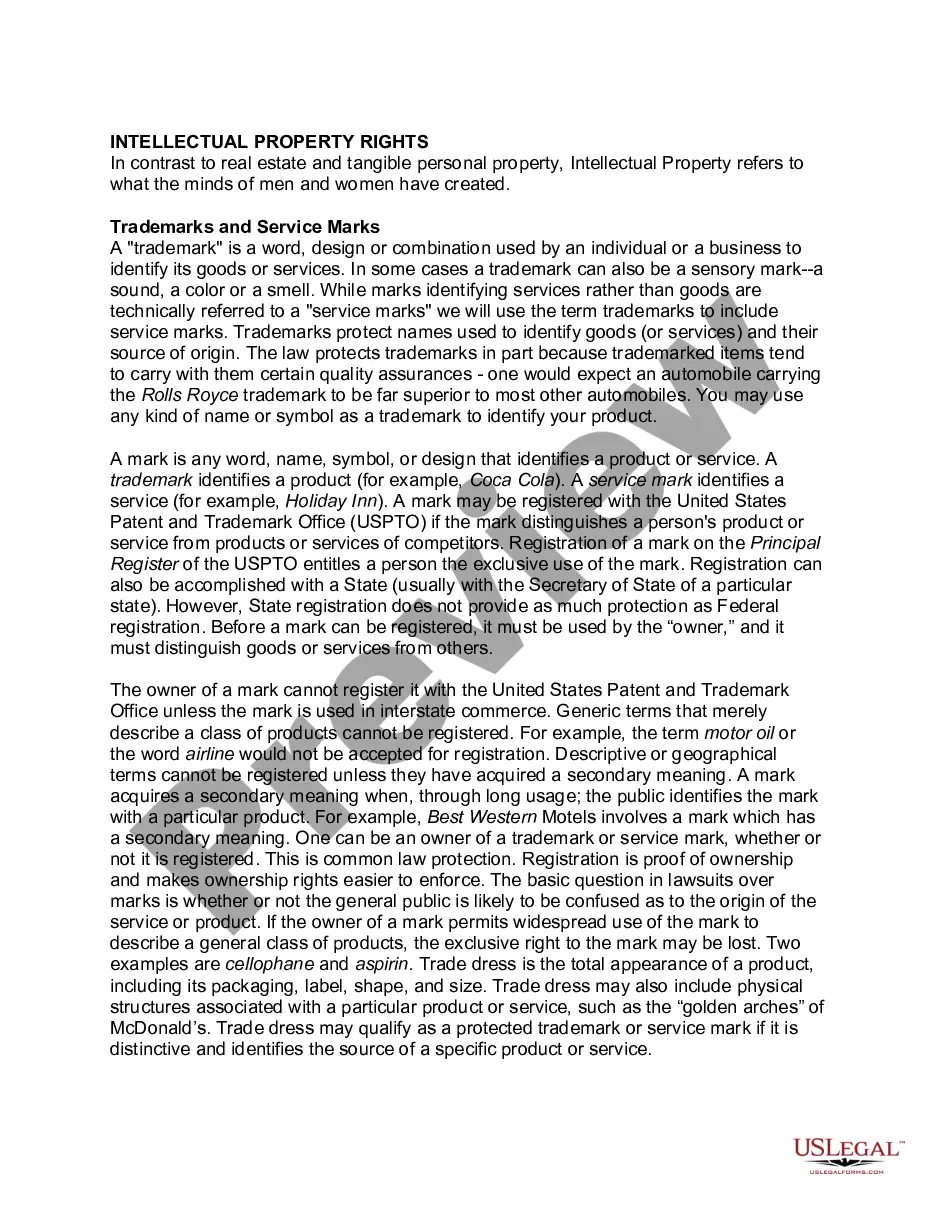
You can have a brand, but decide not to protect that brand by registering it as a trademark. If you choose not to register your brand as a trademark, however, anyone could misuse your brand or create a brand so similar to yours that people can't tell the difference between them.
To obtain trademark protection in the United States, you must register your company's logo with the U.S. Patent and Trademark Office (USPTO).
If you design your own logo, you automatically own the trademark rights. Alternatively, when you hire a designer to create a logo for you, the trademark is transferred to you upon purchasing it from them. Typically, a Transfer Agreement is signed by both parties to formalize the transfer.
Any person who uses a trademark or service mark in Georgia may file an application for registration of that mark with the Office of the Secretary of State. If the statutory requirements are met, then the Secretary of State will issue a certificate of registration.
Registered trademarks increase the value of your business If you are not looking to eventually sell your company but want to build your business, having a registered trademark allows you to use the ® symbol, which adds legitimacy to your business.
By simply having a logo, you have what's known as a common law trademark for your logo. That means that, without doing anything paperwork-wise, you have the sole legal right to use and amend that logo as you see fit. But without an officially registered trademark, that right isn't as secure as it could be.
It is better to form an LLC before filing a trademark application. So, before you submit a trademark application, you should create an LLC or other business entity. A business should form an LLC before applying for a trademark because the LLC will own the trademark.
To register a trademark with the U.S. Patent and Trademark Office (USPTO), you will need to fill out and submit a trademark application. You can do this online, through the USPTO Trademark Center, an online trademark filing service, an attorney, or by submitting a paper application.
Likelihood of confusion is a common reason for refusal of a trademark application. The USPTO will review your application and compare your mark to any existing trademark applications or registered trademarks.