Patent And Paper In Florida
Description

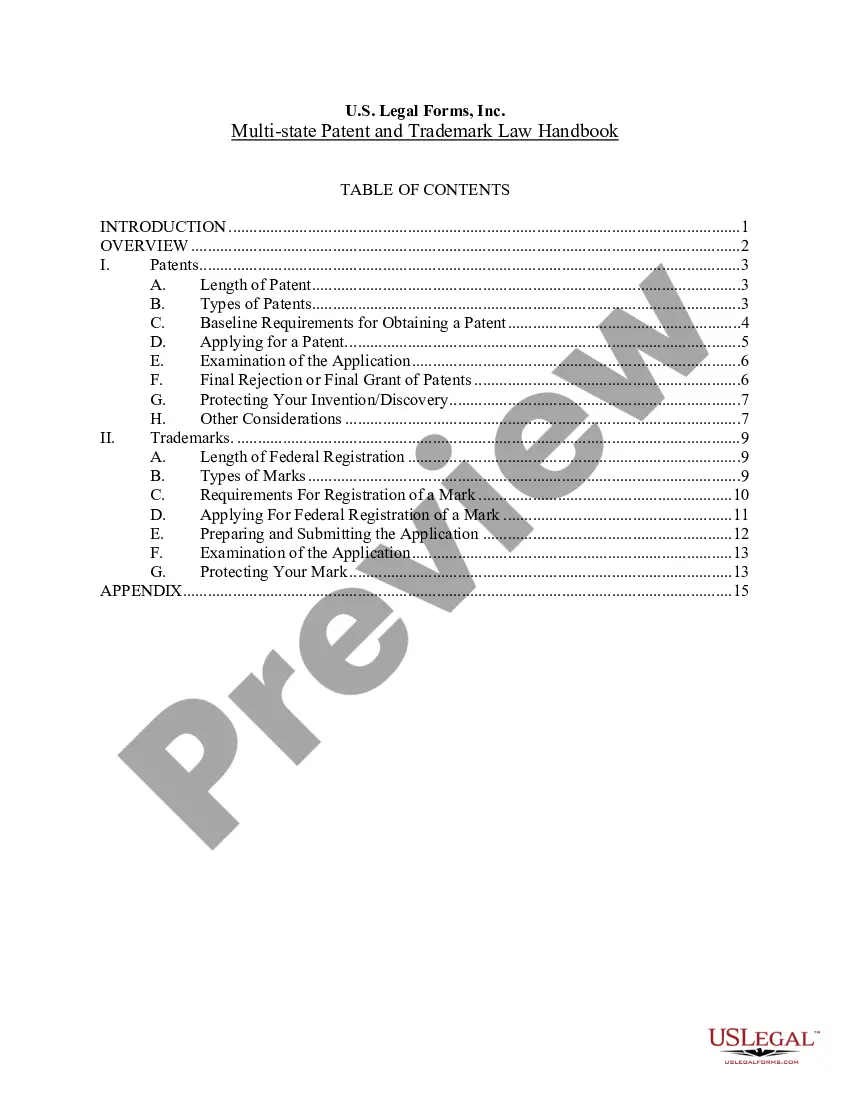
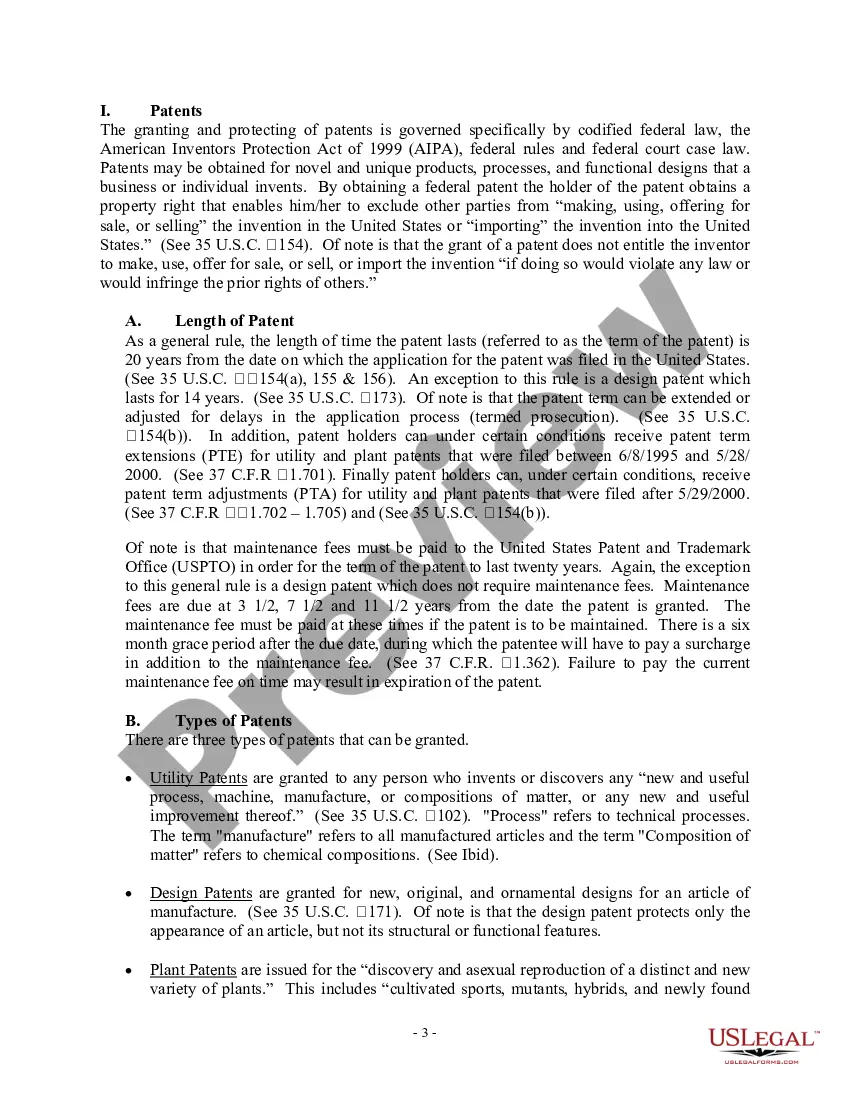



Get your form ready online
Our built-in tools help you complete, sign, share, and store your documents in one place.
Make edits, fill in missing information, and update formatting in US Legal Forms—just like you would in MS Word.
Download a copy, print it, send it by email, or mail it via USPS—whatever works best for your next step.
Sign and collect signatures with our SignNow integration. Send to multiple recipients, set reminders, and more. Go Premium to unlock E-Sign.
If this form requires notarization, complete it online through a secure video call—no need to meet a notary in person or wait for an appointment.
We protect your documents and personal data by following strict security and privacy standards.

Make edits, fill in missing information, and update formatting in US Legal Forms—just like you would in MS Word.

Download a copy, print it, send it by email, or mail it via USPS—whatever works best for your next step.

Sign and collect signatures with our SignNow integration. Send to multiple recipients, set reminders, and more. Go Premium to unlock E-Sign.

If this form requires notarization, complete it online through a secure video call—no need to meet a notary in person or wait for an appointment.

We protect your documents and personal data by following strict security and privacy standards.
Looking for another form?










Form popularity
FAQ
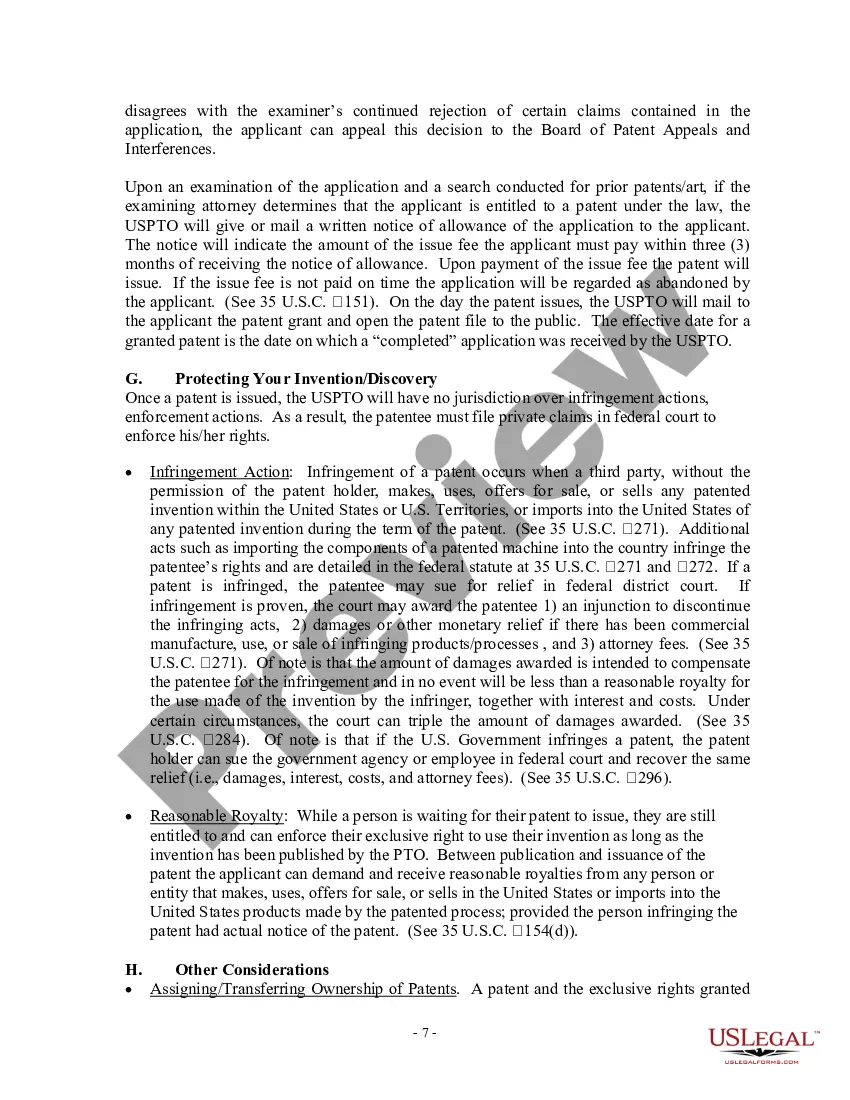
Once the invention becomes public, competitors may find ways to improve the invention and file a patent based on those improvements! Therefore, scientists must ensure they file a patent application first and then publish it in an academic journal.
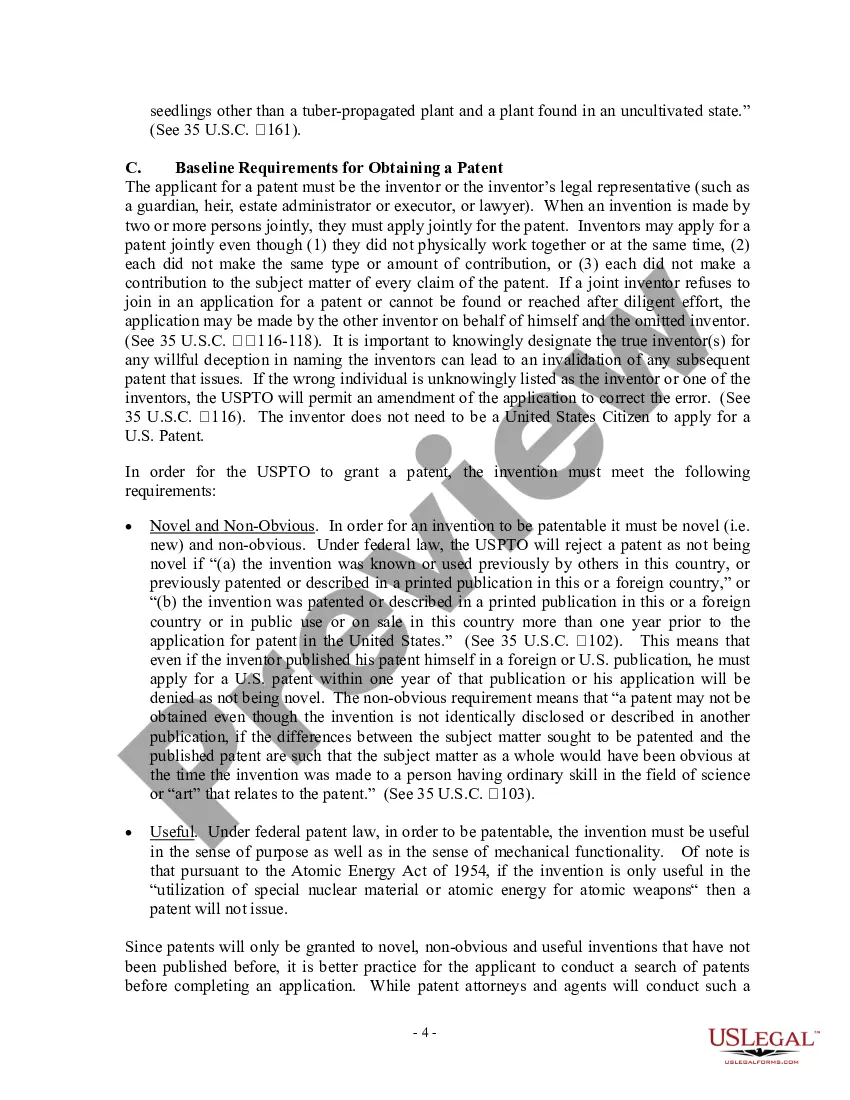
Patent applications: the three criteria Novelty. This means that your invention must not have been made public – not even by yourself – before the date of the application. Inventive step. This means that your product or process must be an inventive solution. Industrial applicability.
Generally, an invention which has been either published or publicly displayed cannot be patented as such publication or public display leads to lack of novelty.
: a patent for an invention never put into manufacture or commercial use.
Papers and Patents have Different Evaluation Points. In a paper, the emphasis is on how new it is compared to existing knowledge (common sense), or in other words, on originality (uniqueness). In the case of patents, originality is also necessary, but more important is business potential.
Key Differences: Purpose: Whitepapers aim to inform and persuade, often showcasing a company's approach to solving problems. Patents protect inventions and grant exclusive rights to the inventor. Content: Whitepapers provide detailed explanations and solutions without revealing confidential information.
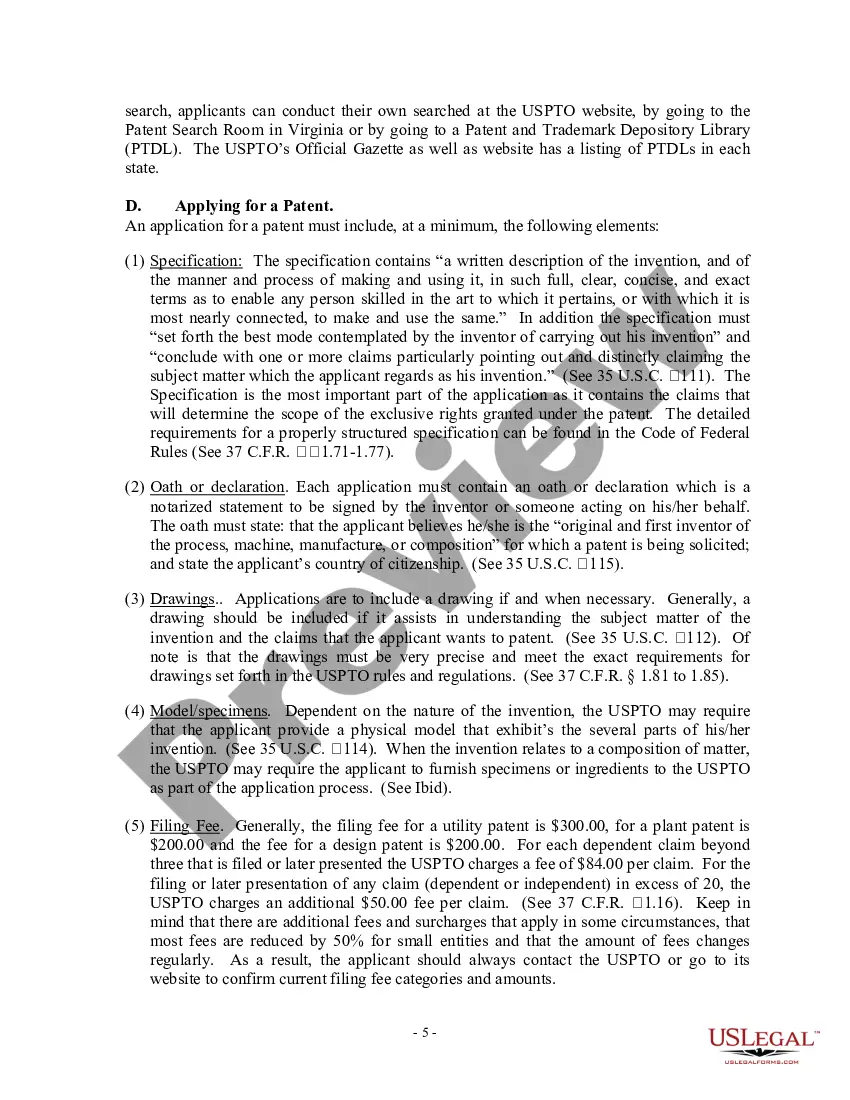
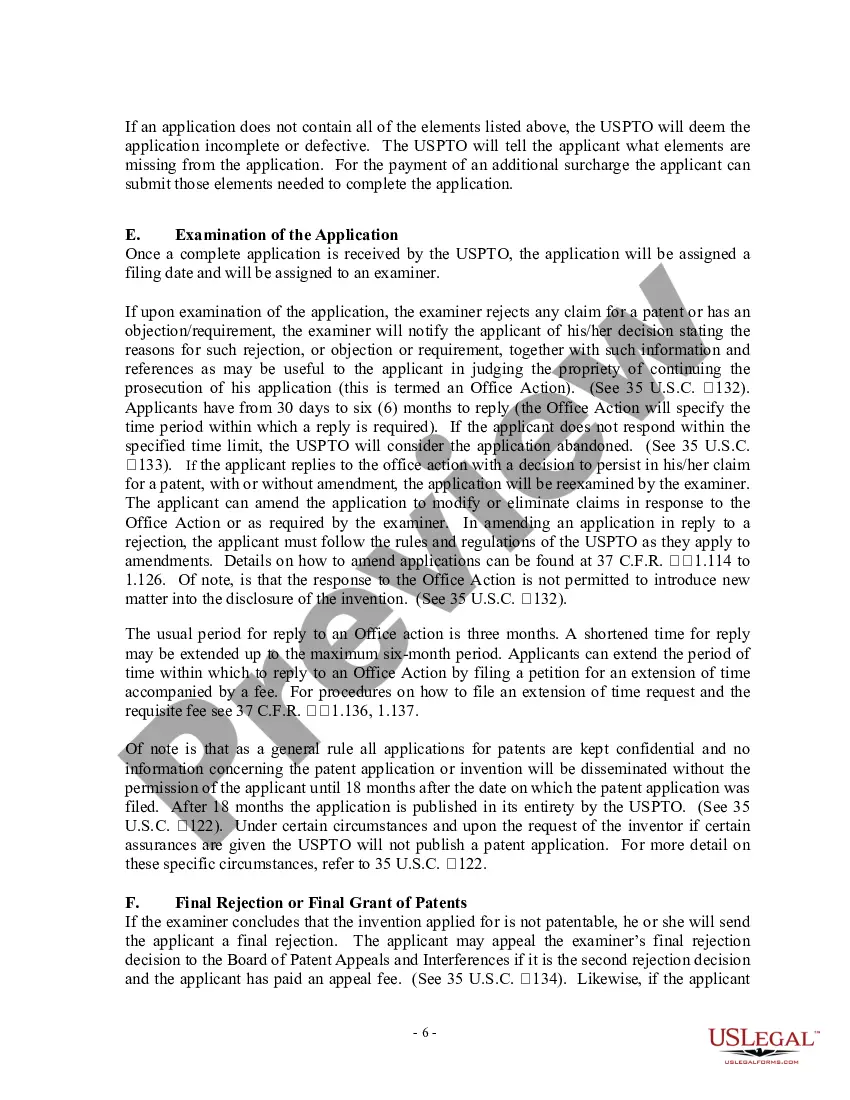
How to File a Patent in Florida Do You Have an Idea or Invention? Every invention begins as an idea. Perform Market Research. Verify Patent Eligibility. Conduct a Patent Search. Determine Inventorship & Ownership. Choose the Type of Patent. Prepare the Patent Application. Submit the Patent Application.
The five primary requirements for patentability are: (1) patentable subject matter; (2) utility; (3) novelty; (4) non-obviousness; and (5) enablement. Like trademarks, patents are territorial, meaning they are enforceable in a specific geographic area.
The Poor Man's Patent Is Obsolete Being the first to invent will no longer save you is someone else filed first. So even if you did write out the idea for your invention and mailed it to yourself, that date would not matter.
Format of a Patent Application The Specification. The Title. The Description. The Claims. The Drawings. The Abstract. Sample Specifications. Minimum Requirements for a Filing Date.
