Patent Trademark Law For Dummies In Collin
Description




Get your form ready online
Our built-in tools help you complete, sign, share, and store your documents in one place.
Make edits, fill in missing information, and update formatting in US Legal Forms—just like you would in MS Word.
Download a copy, print it, send it by email, or mail it via USPS—whatever works best for your next step.
Sign and collect signatures with our SignNow integration. Send to multiple recipients, set reminders, and more. Go Premium to unlock E-Sign.
If this form requires notarization, complete it online through a secure video call—no need to meet a notary in person or wait for an appointment.
We protect your documents and personal data by following strict security and privacy standards.

Make edits, fill in missing information, and update formatting in US Legal Forms—just like you would in MS Word.

Download a copy, print it, send it by email, or mail it via USPS—whatever works best for your next step.

Sign and collect signatures with our SignNow integration. Send to multiple recipients, set reminders, and more. Go Premium to unlock E-Sign.

If this form requires notarization, complete it online through a secure video call—no need to meet a notary in person or wait for an appointment.

We protect your documents and personal data by following strict security and privacy standards.
Looking for another form?




Form popularity
FAQ
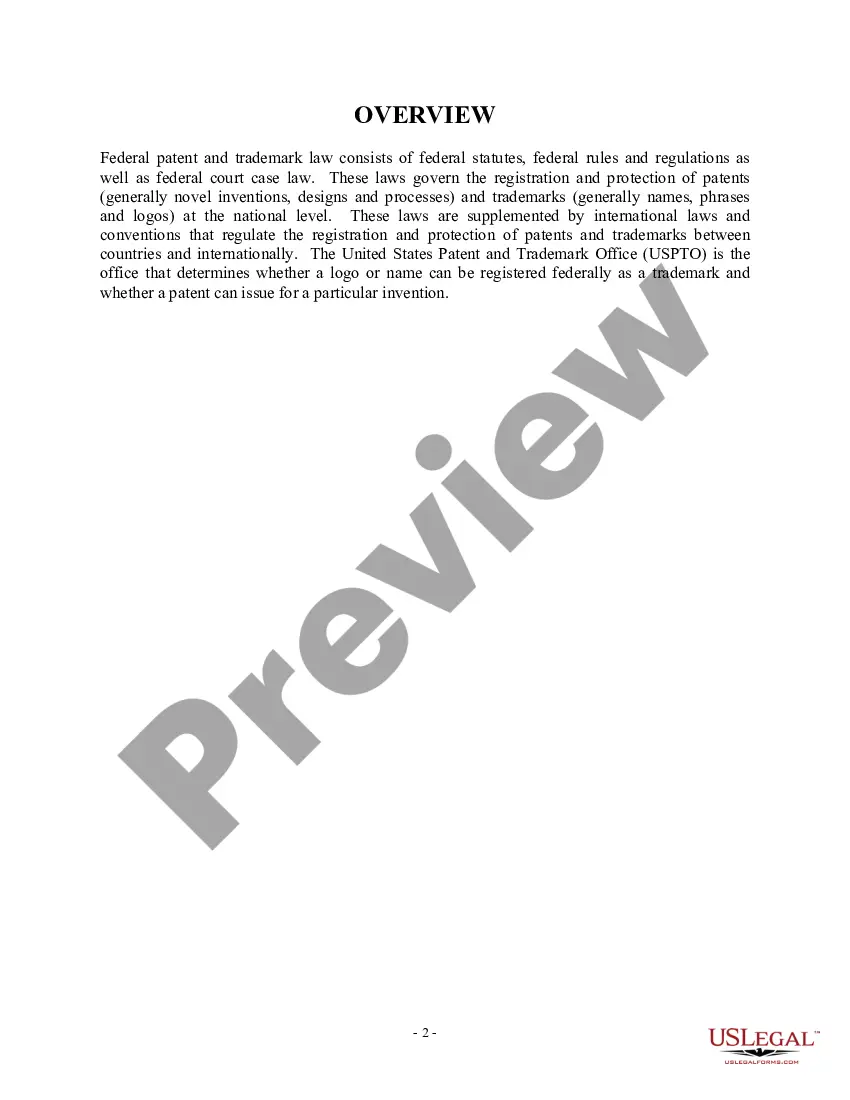
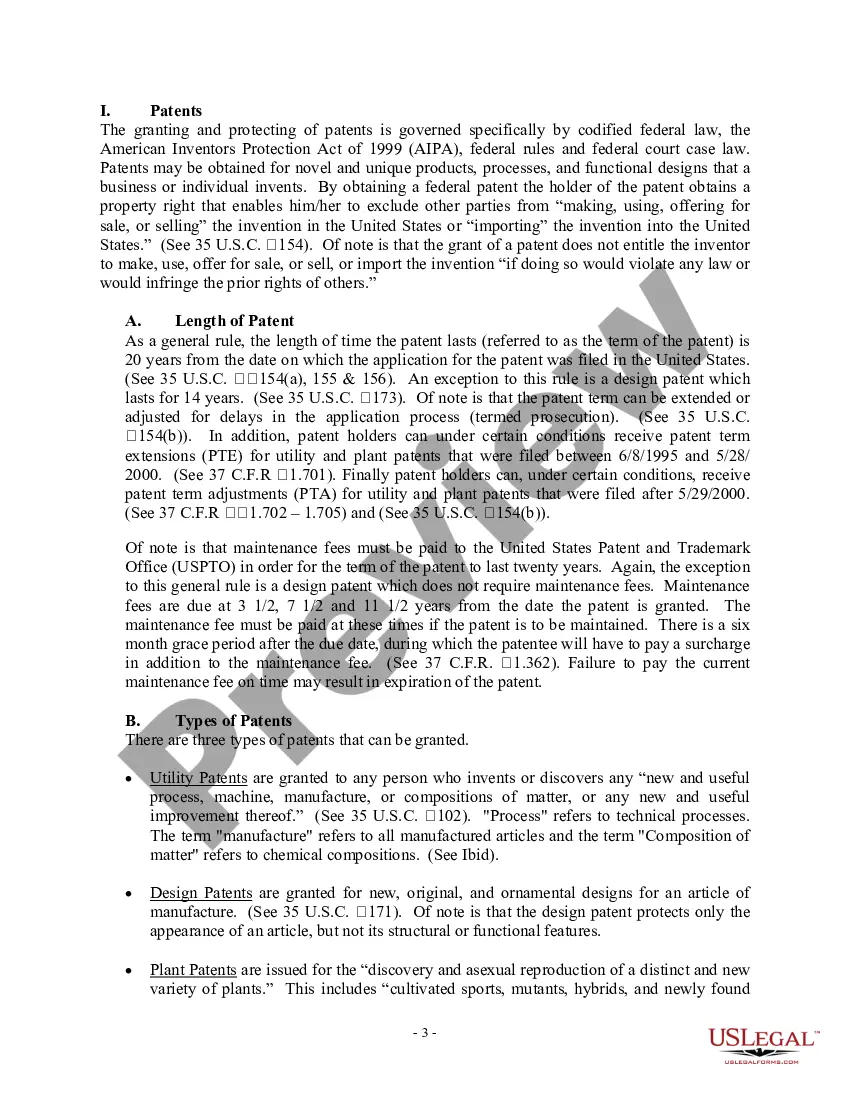
The patent law provides for the granting of design patents to whomever invents any new, original and ornamental design for an article of manufacture. A copy of these laws and rules is included at the end of this guide.
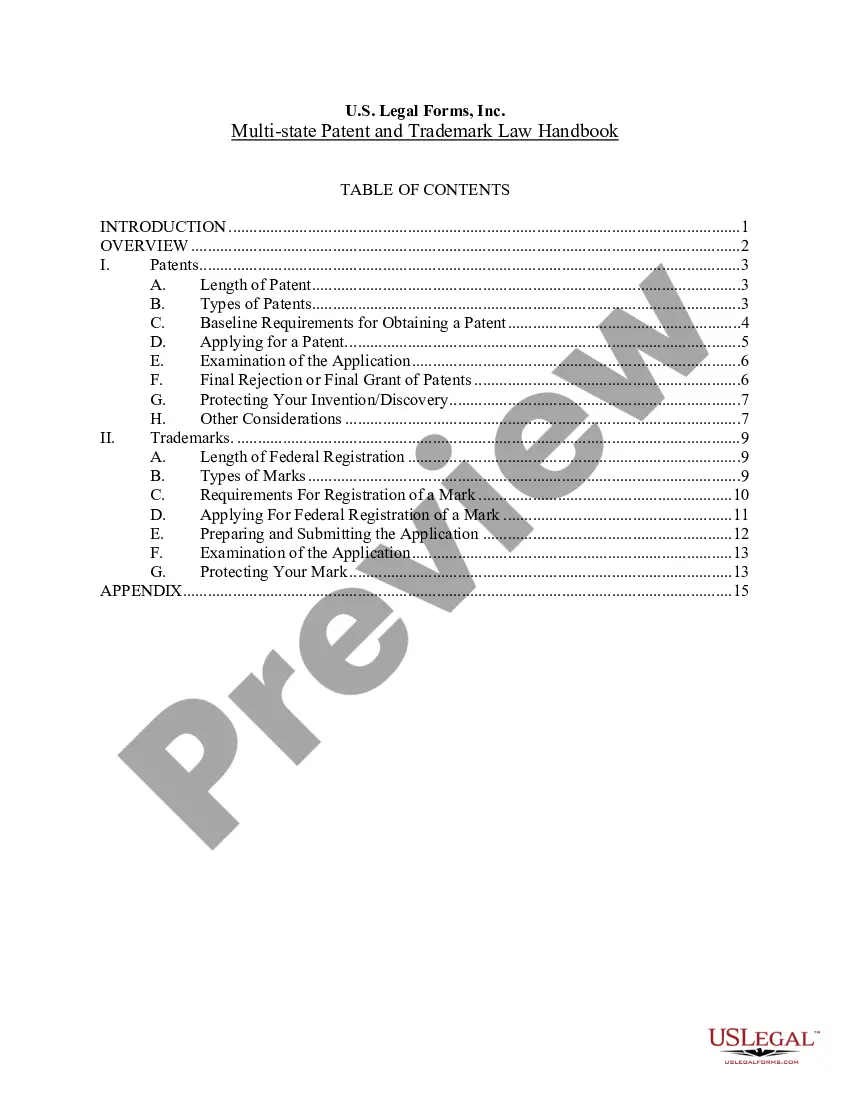
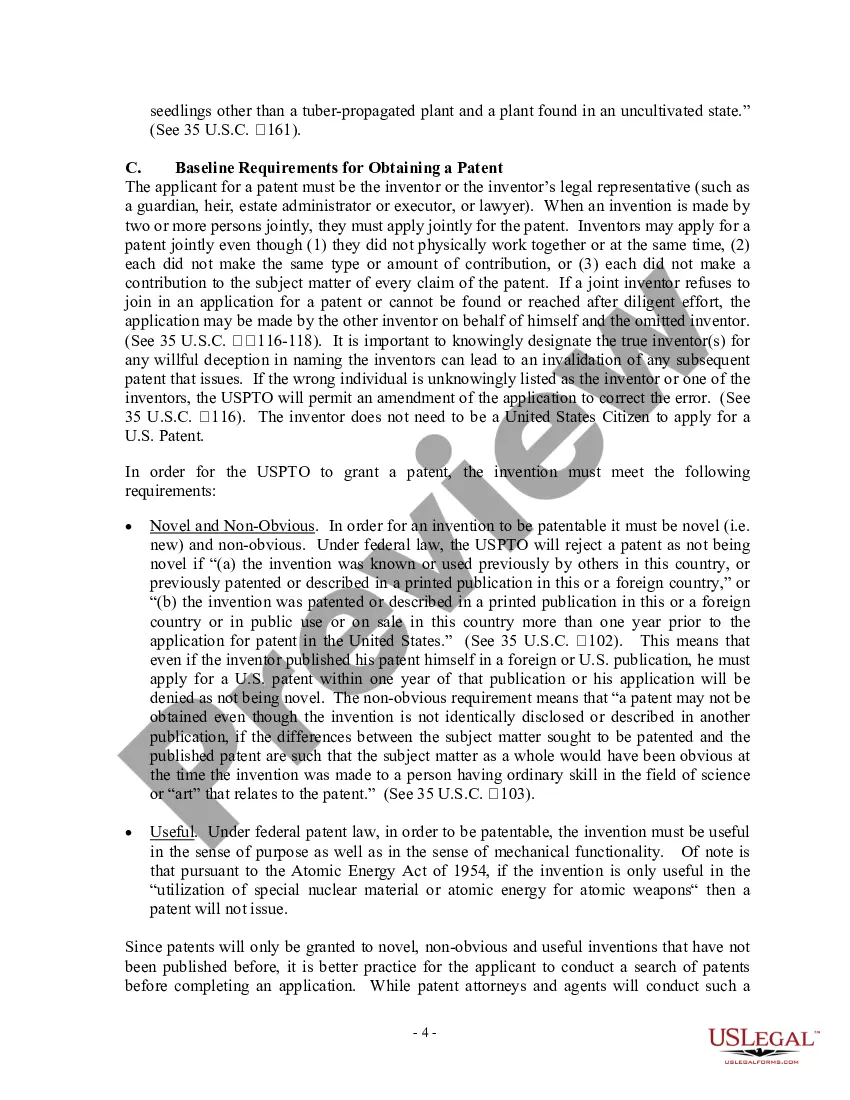
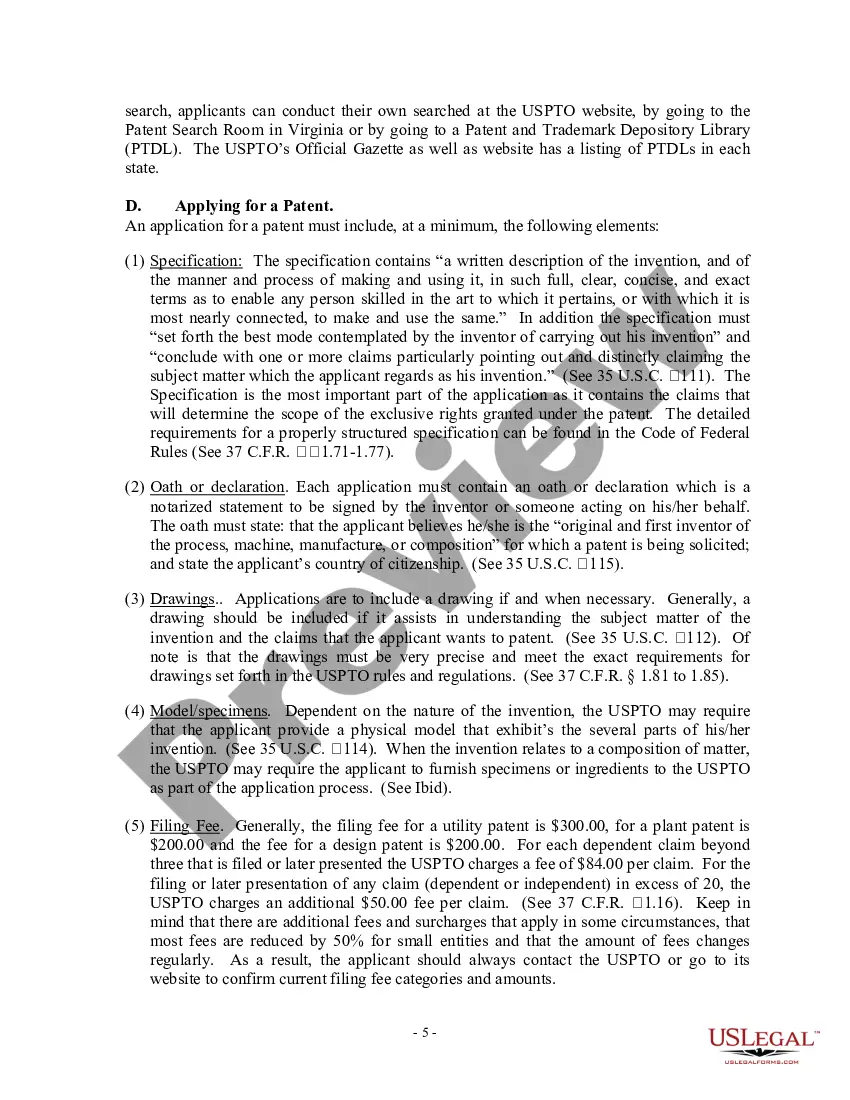
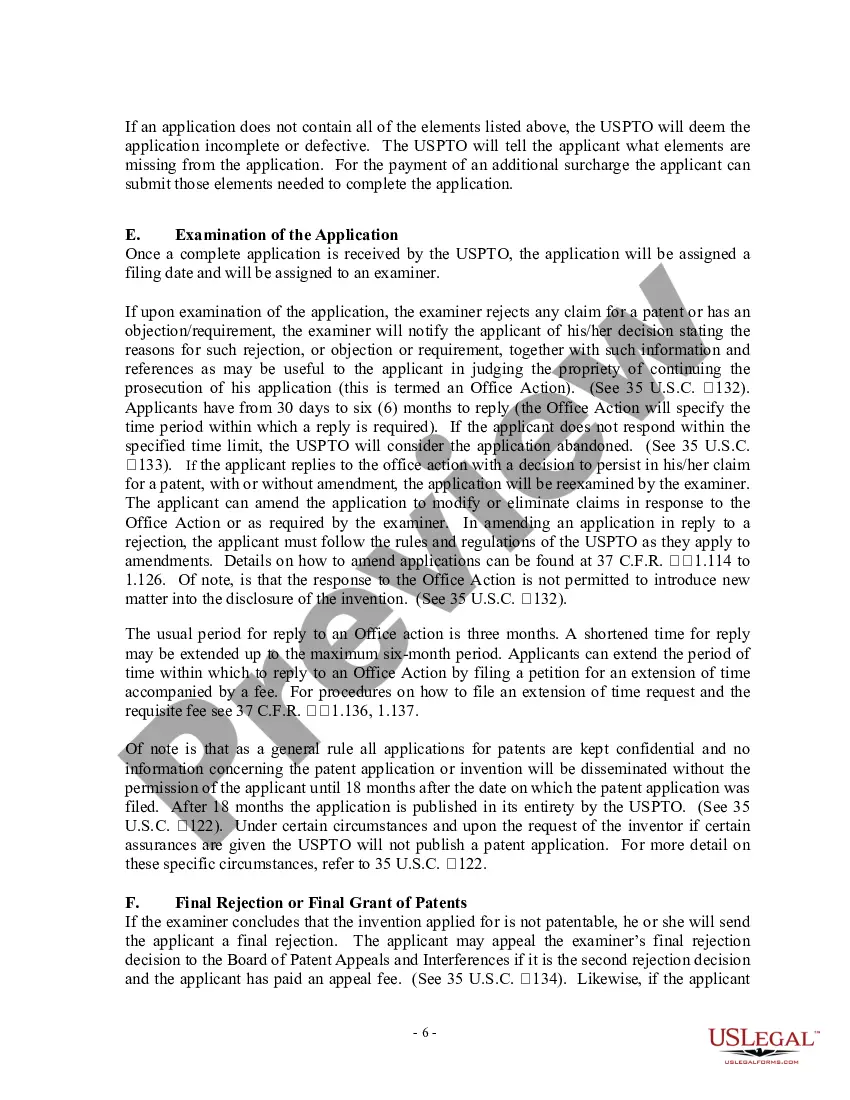
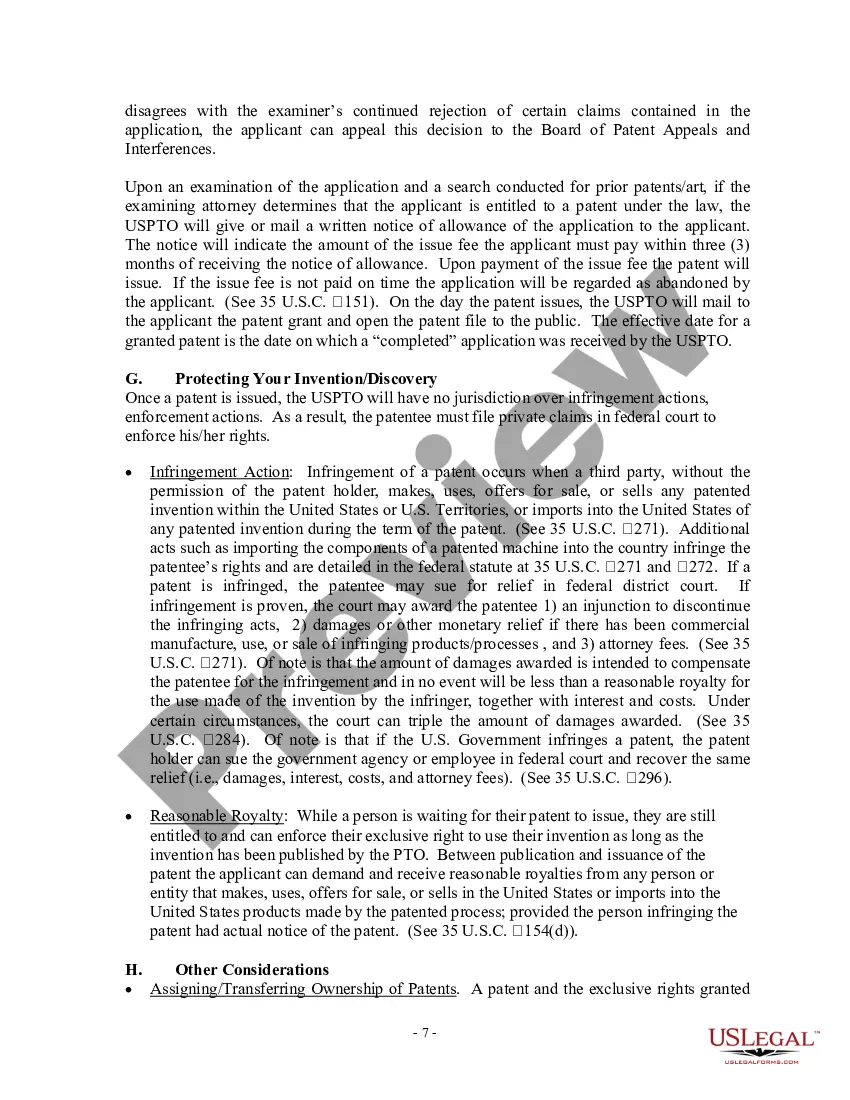
These five steps will help you plan out the patent process as you seek to protect your invention. Understand your invention. The first step in how to get a patent is to understand your invention. Research your invention. Choose the type of protection. Draft your patent application. Wait for a formal response.
The Patent Process Determine the type of intellectual property you need. Determine if your invention is patentable. Determine what kind of patent you need. Get ready to apply. Submit your application. Work with your examiner. Receive your approval. Maintain your patent.
The Patent Process Determine the type of intellectual property you need. Determine if your invention is patentable. Determine what kind of patent you need. Get ready to apply. Submit your application. Work with your examiner. Receive your approval. Maintain your patent.
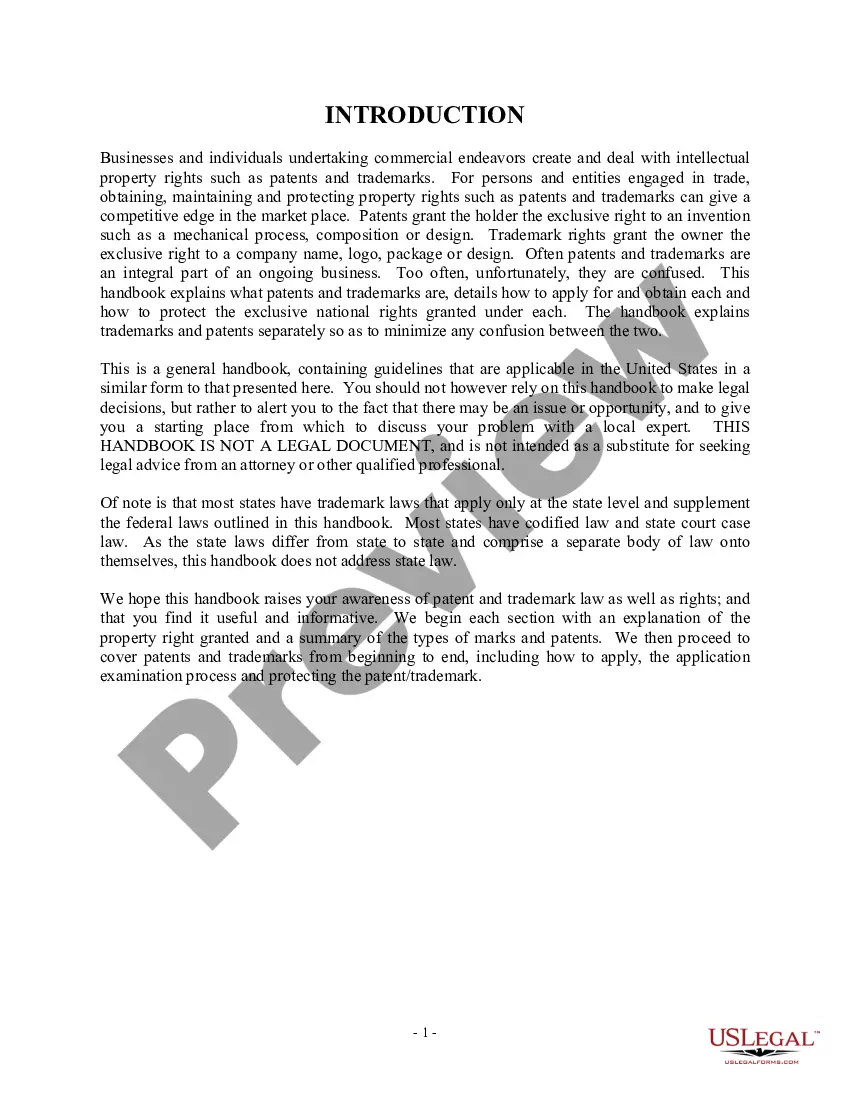
The five primary requirements for patentability are: (1) patentable subject matter; (2) utility; (3) novelty; (4) non-obviousness; and (5) enablement. Like trademarks, patents are territorial, meaning they are enforceable in a specific geographic area.
Intellectual Property rights provide protection for creations and inventions, to enable creators and inventors to earn recognition and financial benefit from their work. recordings, movies, books, articles, diagrams, photos, website content and software applications.
Types of IP rights patents, which protect inventions and new processes. trade marks, which protect logos, words and other branding. copyright, which protects art, writing, music, film, and computer programs. registered designs, which protect the visual design of a product.
Intellectual Property law deals with laws to protect and enforce rights of the creators and owners of inventions, writing, music, designs and other works, known as the "intellectual property." There are several areas of intellectual property including copyright, trademarks, patents, and trade secrets.
Identify what IP rights may exist If you are only at the ideas stage, you will not be able to obtain any legal protection. That idea must be represented in a physical form, be that a product, an image, a logo, a poem etc. before you can enjoy the benefits of legal protection.
How to Patent a Phrase. Patents protect novel inventions. Thus, it is not possible to patent a phrase, saying, quote or term. Instead, trademark protection would apply.
