Patent Application For Prosecution In Collin
Description

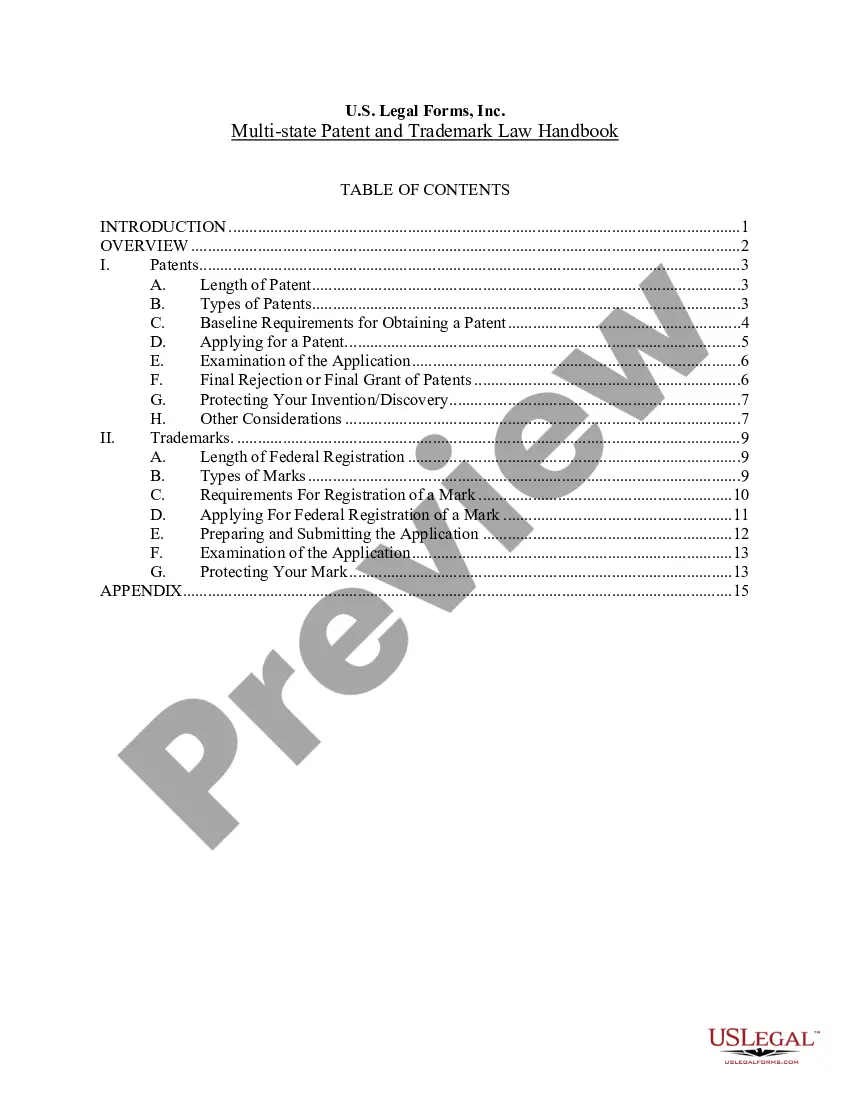
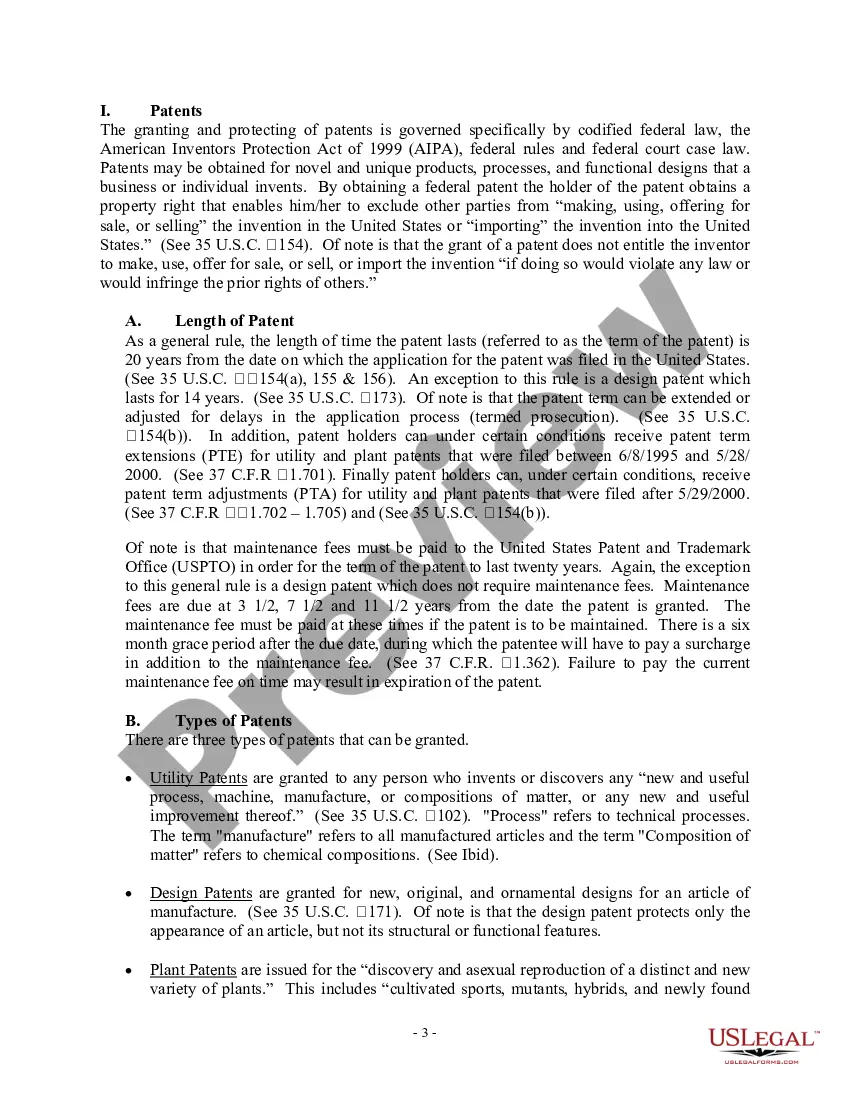



Get your form ready online
Our built-in tools help you complete, sign, share, and store your documents in one place.
Make edits, fill in missing information, and update formatting in US Legal Forms—just like you would in MS Word.
Download a copy, print it, send it by email, or mail it via USPS—whatever works best for your next step.
Sign and collect signatures with our SignNow integration. Send to multiple recipients, set reminders, and more. Go Premium to unlock E-Sign.
If this form requires notarization, complete it online through a secure video call—no need to meet a notary in person or wait for an appointment.
We protect your documents and personal data by following strict security and privacy standards.

Make edits, fill in missing information, and update formatting in US Legal Forms—just like you would in MS Word.

Download a copy, print it, send it by email, or mail it via USPS—whatever works best for your next step.

Sign and collect signatures with our SignNow integration. Send to multiple recipients, set reminders, and more. Go Premium to unlock E-Sign.

If this form requires notarization, complete it online through a secure video call—no need to meet a notary in person or wait for an appointment.

We protect your documents and personal data by following strict security and privacy standards.
Looking for another form?









Form popularity
FAQ
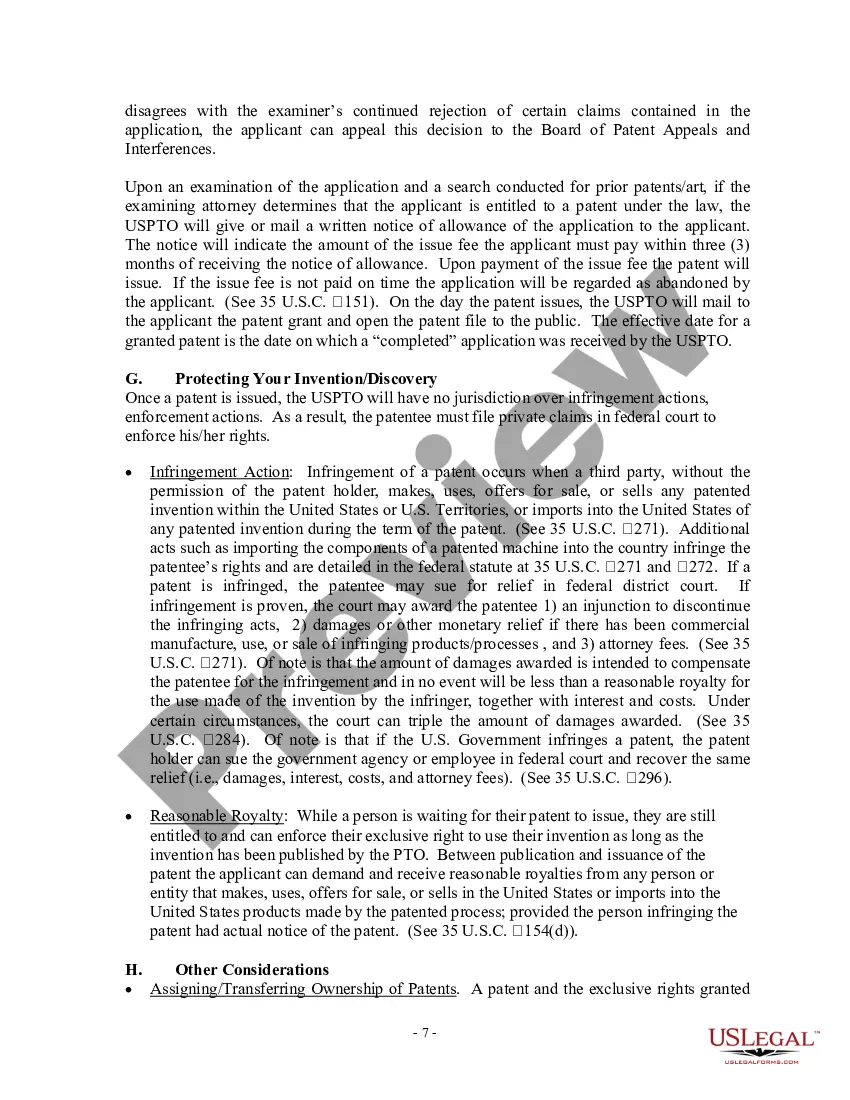
Unless a patent is granted, infringement cannot occur.
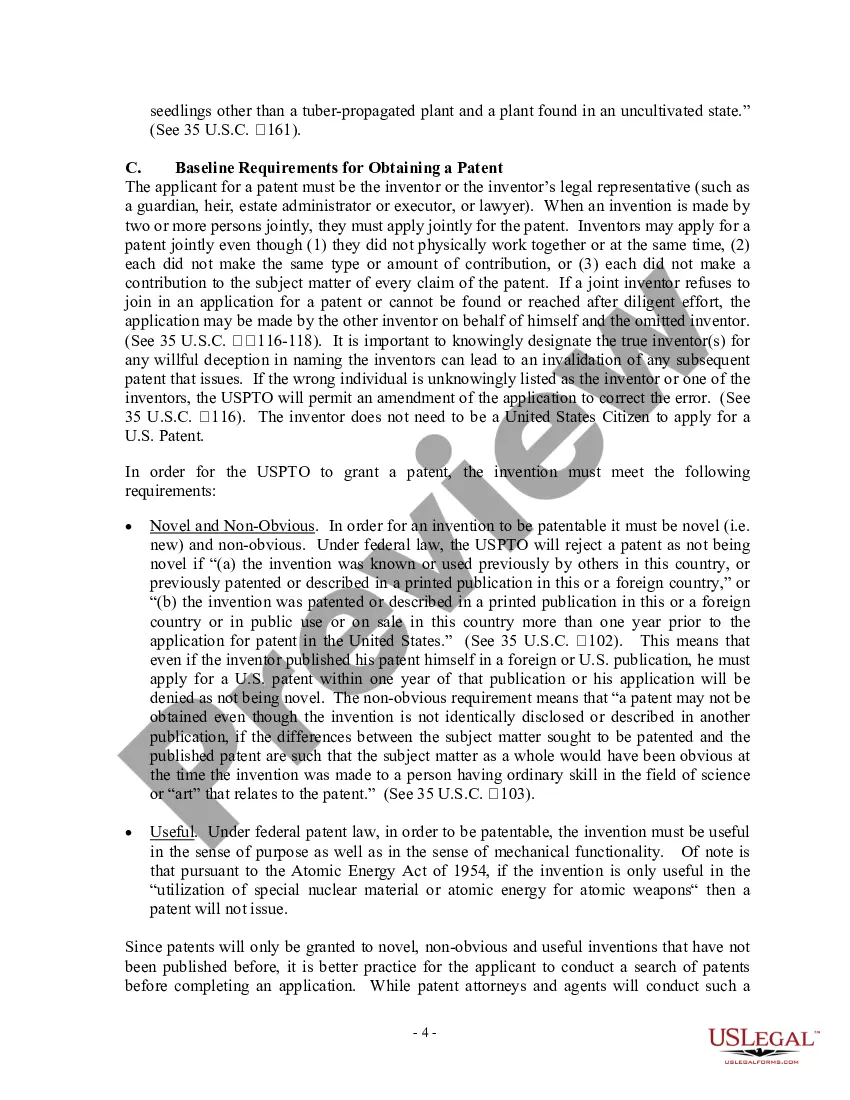
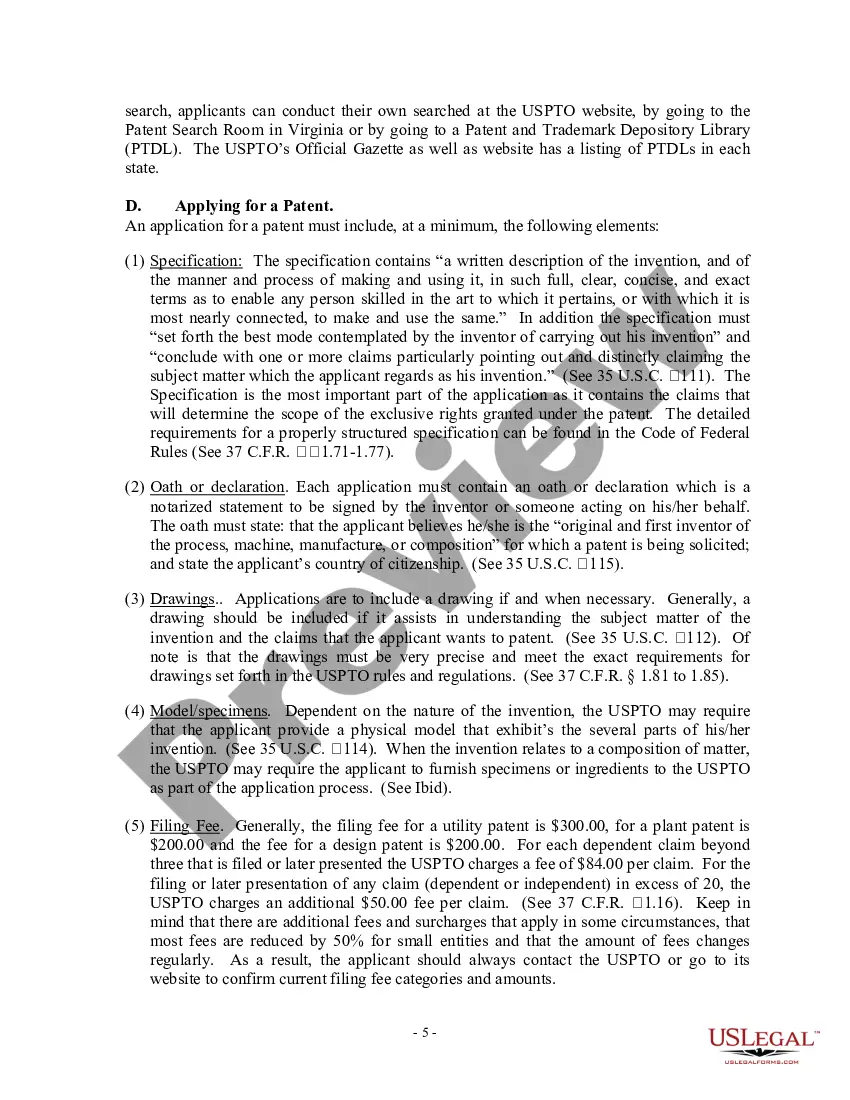
In the patent world, the term “prosecution” refers to the entire patent process, from the drafting of the patent application until it is allowed and issued, or finally rejected, by the USPTO.
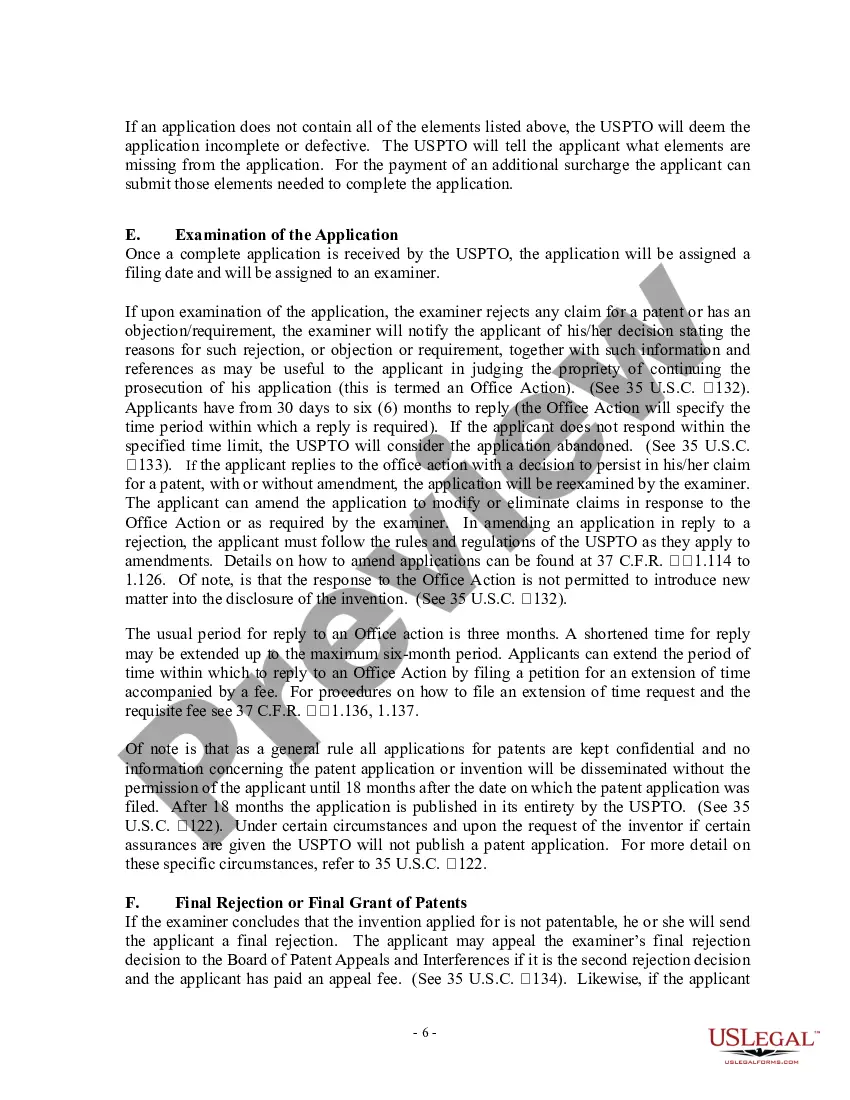
What Happens after a Regular (“Utility”) U.S. Patent Application is Filed? Utility patents are examined in the patent office to determine whether the application is patentable. After about 18 months or longer after the utility application is filed, the Patent Office issues an Office Action.
The prosecution process is broadly divided into two phases: pre-grant and post-grant prosecution. Pre-grant prosecution includes the drafting and filing of patent applications, responding to patent office actions, and navigating the examination process to meet all legal requirements for patentability.
Where can you find the prosecution history of a patent application? You can find the prosecution history in the Patent Center. After you enter the application, click on “Documents & Transactions” on the left-hand side.
Key Differences Between Patent Prosecution and Litigation Focus: Patent prosecution focuses on obtaining patent rights from the patent office, while patent litigation is adversarial involving the enforcement, validity, or defense of rights in court or before an administrative board.
A provision in a contract, party agreement, or court order or rules that seeks to mitigate the risk that a person receiving access to another person's highly confidential information might intentionally or inadvertently use or compromise that information while applying for and pursuing (prosecuting) patents at the US ...
“Patent prosecution” is defined as the progress of the application from filing, through the search and examination procedures, and on through publication to eventual grant or refusal.
General format: Inventor1, Inventor2, et al, inventors; Name of assignee, assignee. Title of Patent. patent number (include country code, the word "patent," and number with retained commas). Date of publication.