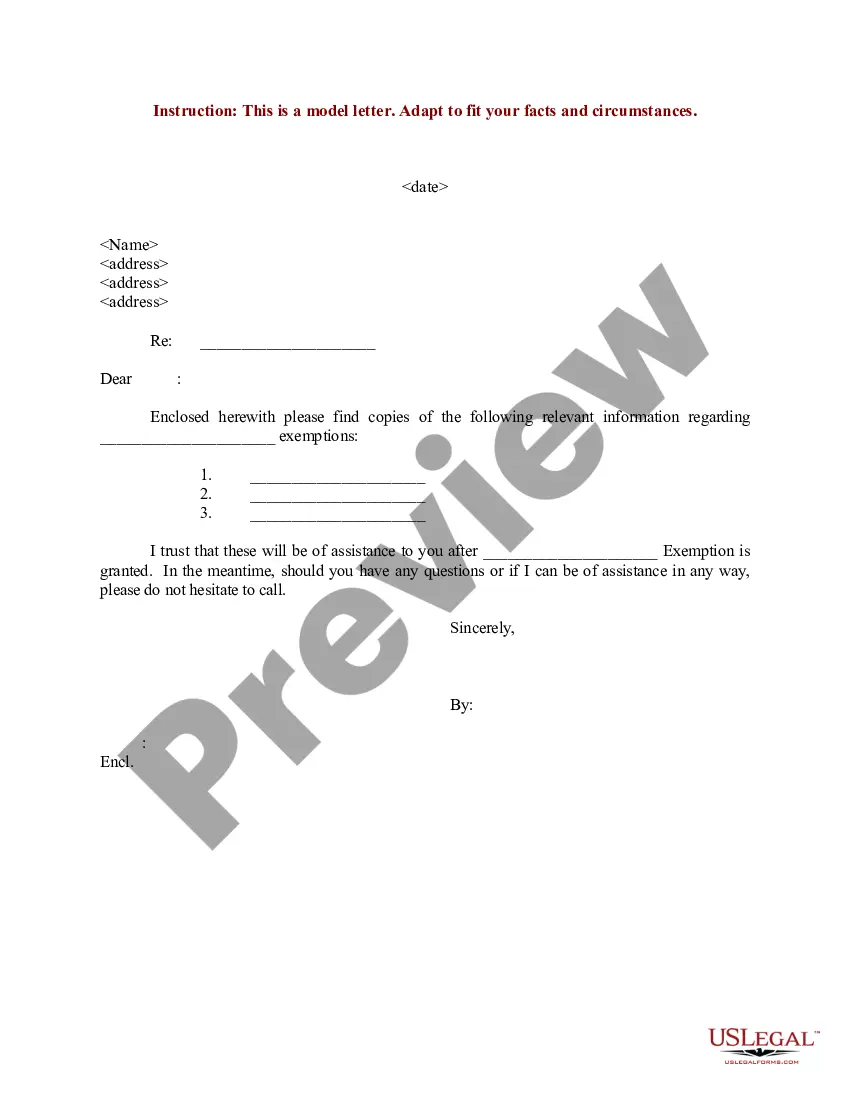
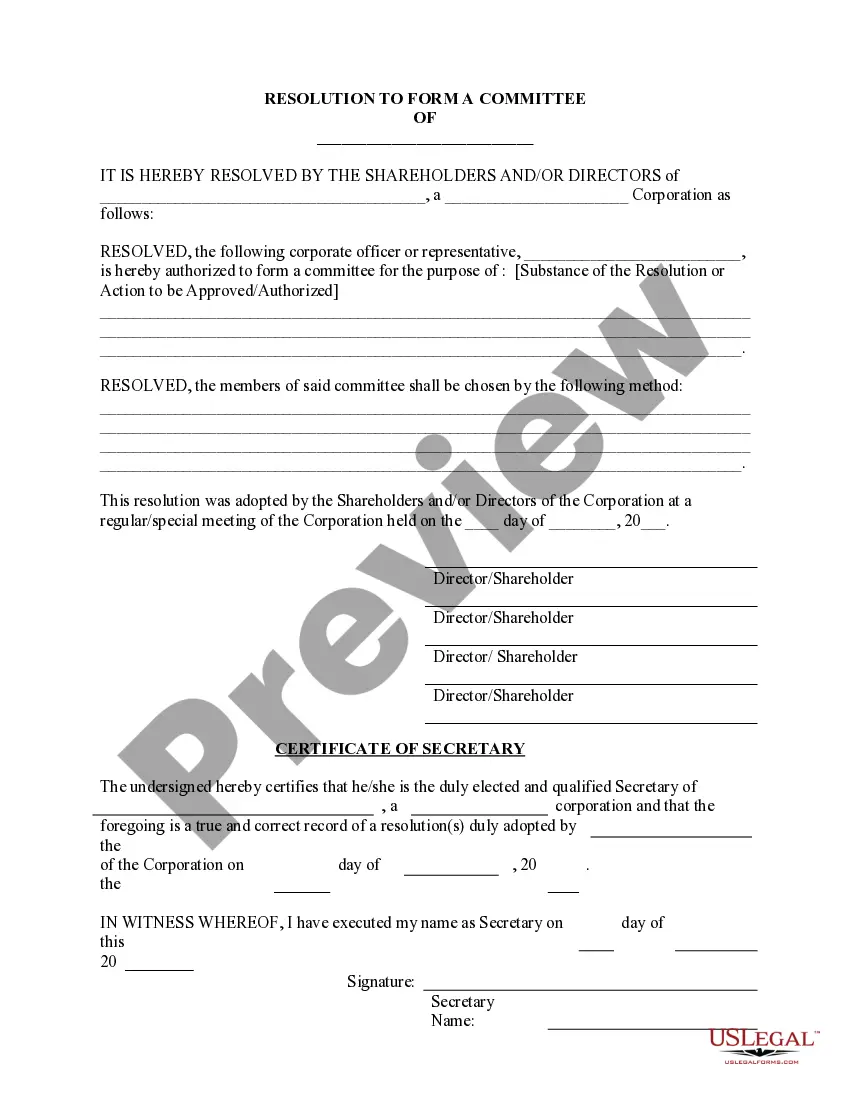
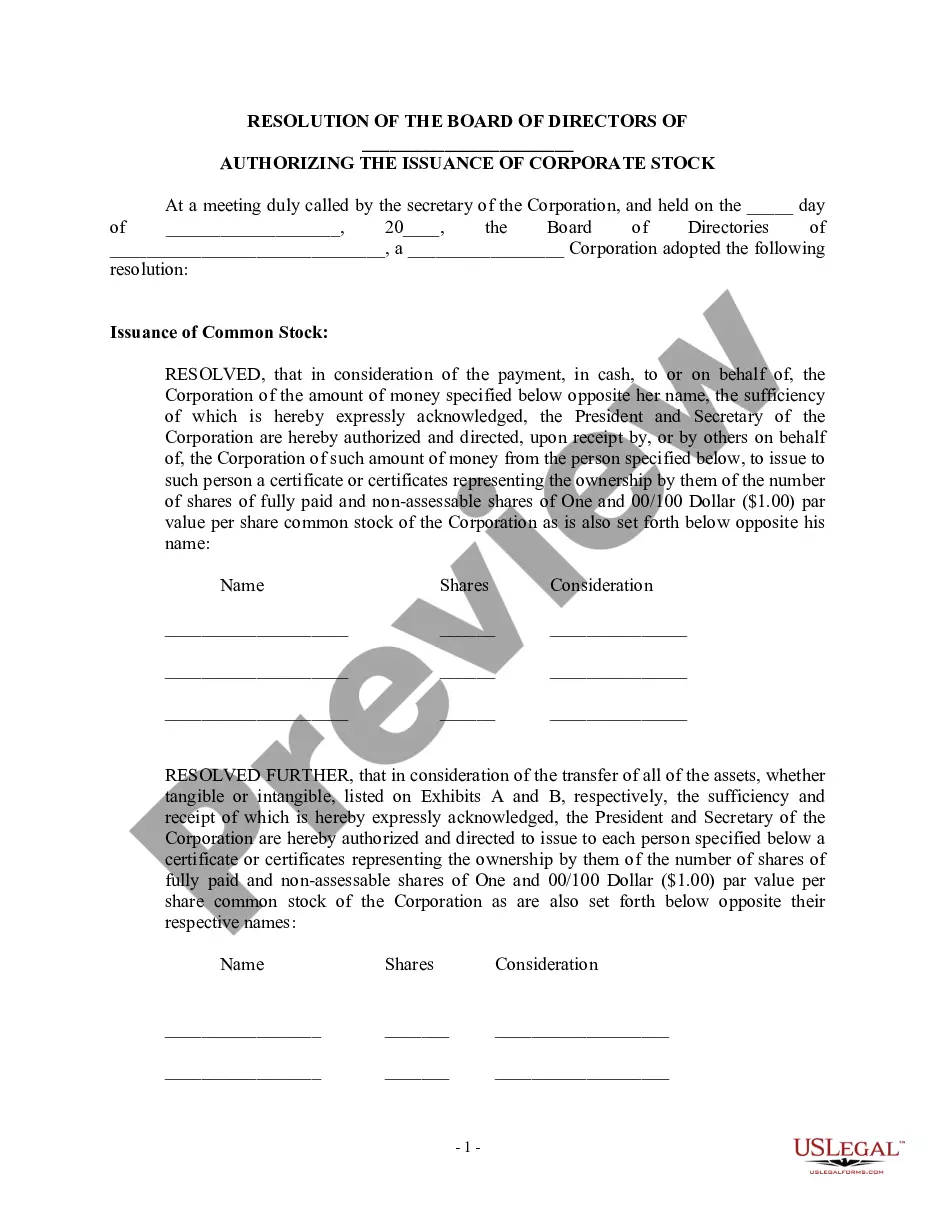
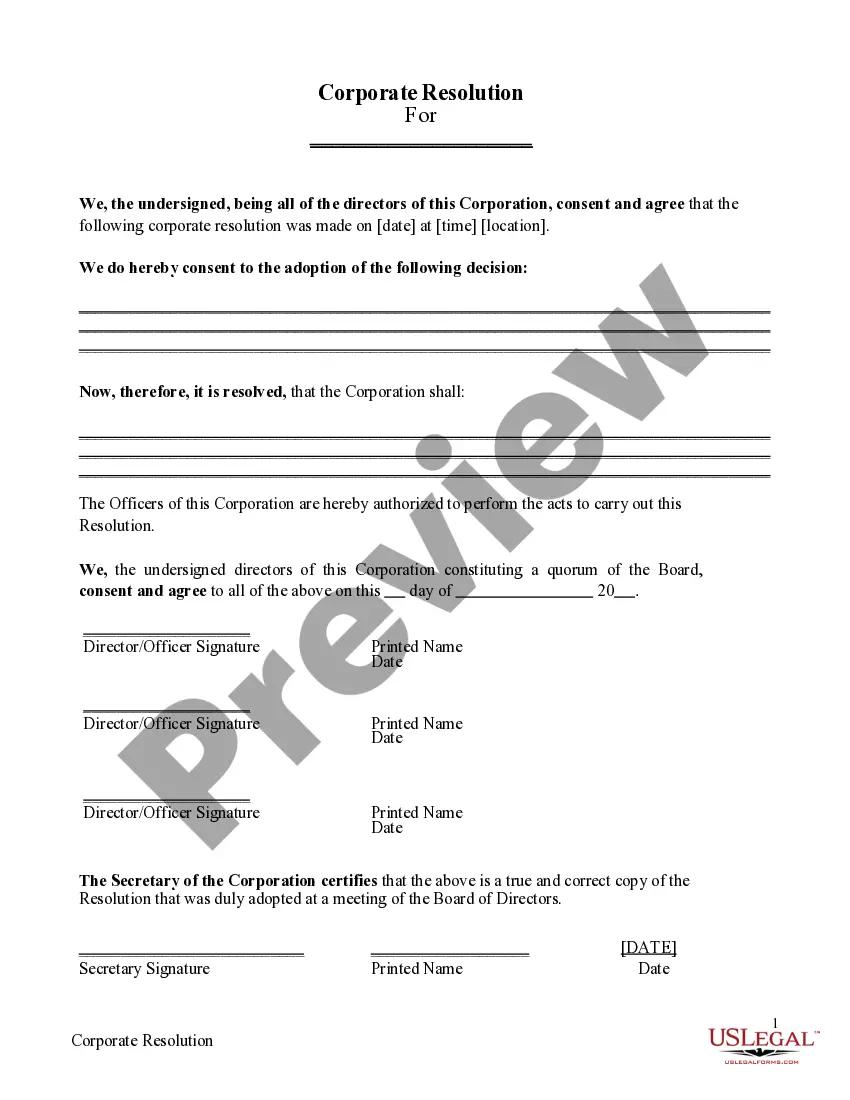
Resolution Format For Society In Maricopa
Description



Get your form ready online
Our built-in tools help you complete, sign, share, and store your documents in one place.
Make edits, fill in missing information, and update formatting in US Legal Forms—just like you would in MS Word.
Download a copy, print it, send it by email, or mail it via USPS—whatever works best for your next step.
Sign and collect signatures with our SignNow integration. Send to multiple recipients, set reminders, and more. Go Premium to unlock E-Sign.
If this form requires notarization, complete it online through a secure video call—no need to meet a notary in person or wait for an appointment.
We protect your documents and personal data by following strict security and privacy standards.

Make edits, fill in missing information, and update formatting in US Legal Forms—just like you would in MS Word.

Download a copy, print it, send it by email, or mail it via USPS—whatever works best for your next step.

Sign and collect signatures with our SignNow integration. Send to multiple recipients, set reminders, and more. Go Premium to unlock E-Sign.

If this form requires notarization, complete it online through a secure video call—no need to meet a notary in person or wait for an appointment.

We protect your documents and personal data by following strict security and privacy standards.
Looking for another form?








Form popularity
FAQ
A Resolution Statement is a detailed description of the position. a party proposes to resolve all the issues in a Family Law case. The Resolution Statement is one part of the fact sharing process required by Rule 49 of the Arizona Rules of Family Law Procedure.
The parties and the court will decide what will happen after a case management conference in Arizona. Typically, both parties will be required to disclose the information and documentation needed to prepare for a trial. This can include exchanging disclosure statements, attending mediation, and preparing for trial.
Potential Outcomes. Settlement Agreement: If both parties reach an agreement, the court may formalize the settlement and issue an order reflecting the terms. Continued Litigation: If a settlement is not achieved, the court will provide guidance on the next steps and continue to manage the case towards trial.
If you're doing it on your own, however, you may contact your court clerk for information on how to do this. The motion has to state what your ex-spouse isn't doing, what areas he or she is in violation of. It must clarify why he or she ought to be held in contempt of the divorce decree. You must prove your case.
Rule 76 - Resolution Management Conference (a)Purpose and Setting. The purpose of a resolution management conference ("RMC") is to facilitate agreements between the parties. The court may, and on a party's request must, set an RMC.
An FRC is a hearing at which the parties, their attorneys, and a judicial officer work together to develop a plan for managing the case and resolving issues as quickly, fairly, and efficiently as possible. When both parties are self-represented litigants (SRL), the court will set a Case Status Conference (CSC).