Official Resolution Form For S Corporation In Allegheny
Description



Get your form ready online
Our built-in tools help you complete, sign, share, and store your documents in one place.
Make edits, fill in missing information, and update formatting in US Legal Forms—just like you would in MS Word.
Download a copy, print it, send it by email, or mail it via USPS—whatever works best for your next step.
Sign and collect signatures with our SignNow integration. Send to multiple recipients, set reminders, and more. Go Premium to unlock E-Sign.
If this form requires notarization, complete it online through a secure video call—no need to meet a notary in person or wait for an appointment.
We protect your documents and personal data by following strict security and privacy standards.

Make edits, fill in missing information, and update formatting in US Legal Forms—just like you would in MS Word.

Download a copy, print it, send it by email, or mail it via USPS—whatever works best for your next step.

Sign and collect signatures with our SignNow integration. Send to multiple recipients, set reminders, and more. Go Premium to unlock E-Sign.

If this form requires notarization, complete it online through a secure video call—no need to meet a notary in person or wait for an appointment.

We protect your documents and personal data by following strict security and privacy standards.
Looking for another form?






Form popularity
FAQ
Review Corporate Bylaws and Contracts For instance, a company might have in its bylaws that an officer can be removed if two-thirds of the board of directors votes in favor of the removal. Alternatively, the officer's contract might stipulate specific circumstances under which they can be terminated.
Officers are appointed by the board of directors during incorporation. The company documents the officers' positions and responsibilities in the corporation's articles, bylaws, or resolutions. It is possible for one employee to fill all positions, providing a range of services to the organization.
Changing officers of a corporation involves filing the articles of incorporation while adhering to Pennsylvania state codes. Directors add officers formally at an annual directors meeting but can do so at any time within the scope of the bylaws.
Changing officers of a corporation involves filing the articles of incorporation while adhering to Pennsylvania state codes. Directors add officers formally at an annual directors meeting but can do so at any time within the scope of the bylaws.
In California you may add any officer authorized by your bylaws by board action, i.e., the Board should adopt a resolution, recorded in Minutes or a written consent of the Board. No filing is required at the time. Your next annual report to The California Secretary of State should report the added officer.
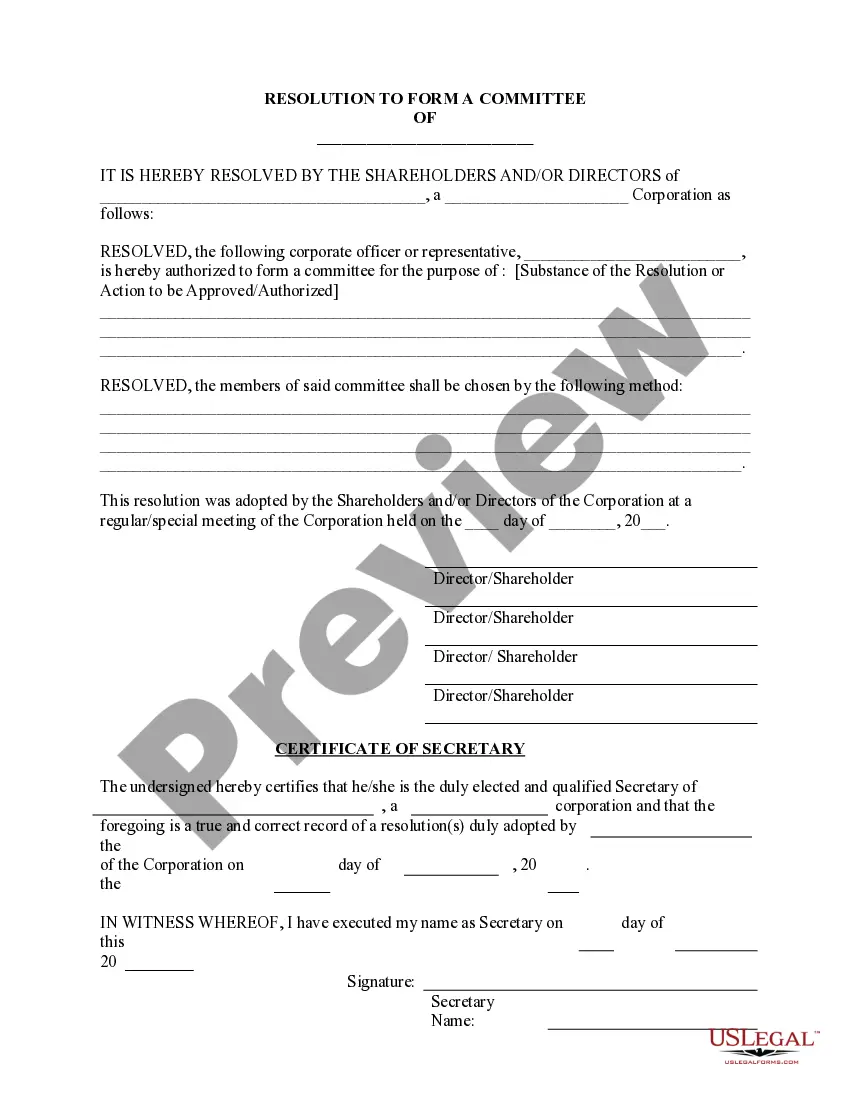
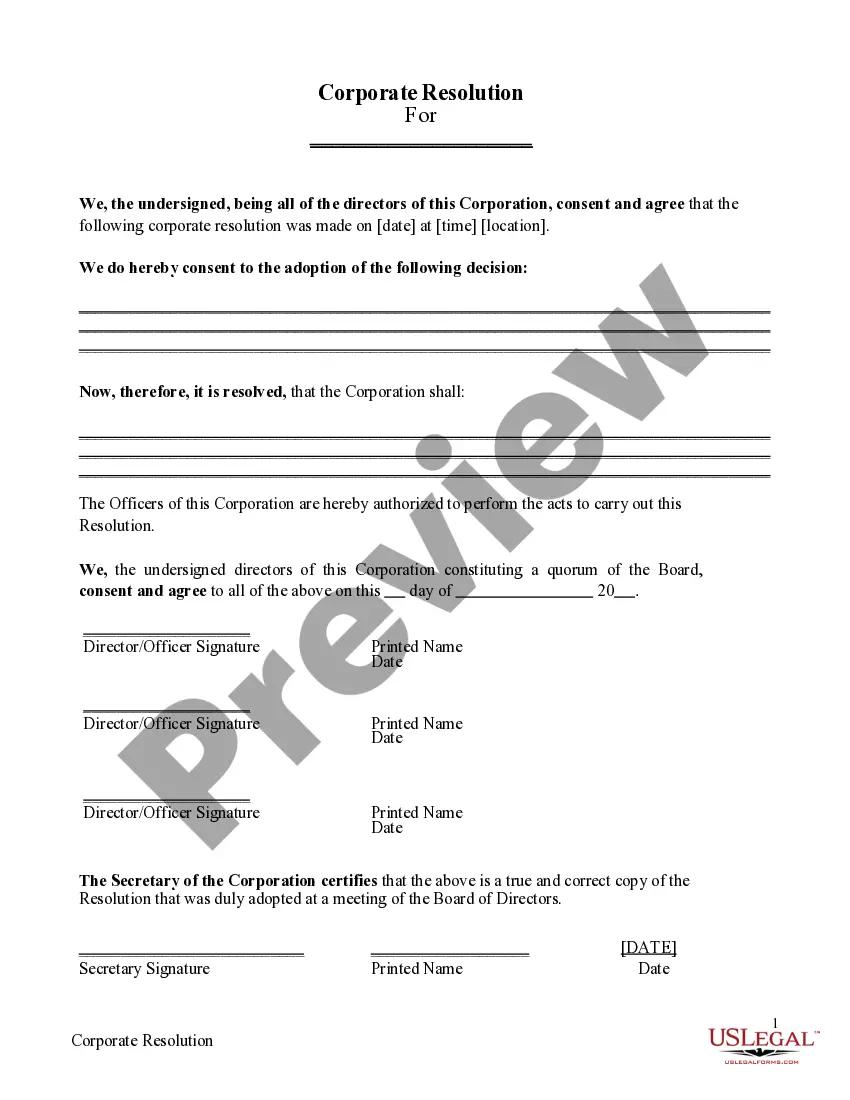
Resolutions begin with "Whereas" statements, which provides the basic facts and reasons for the resolution, and conclude with "Resolved" statements which, identifies the specific proposal for the requestor's course of action.
Start an S corp in Pennsylvania Step 1 – Choose a name. Step 2 – Designate a Pennsylvania registered office. Step 3 – File Pennsylvania Certificate of Organization. Step 4 – Create an operating agreement. Step 5 – Apply for an EIN. Step 6 – Apply for S Corp status with IRS Form 2553.
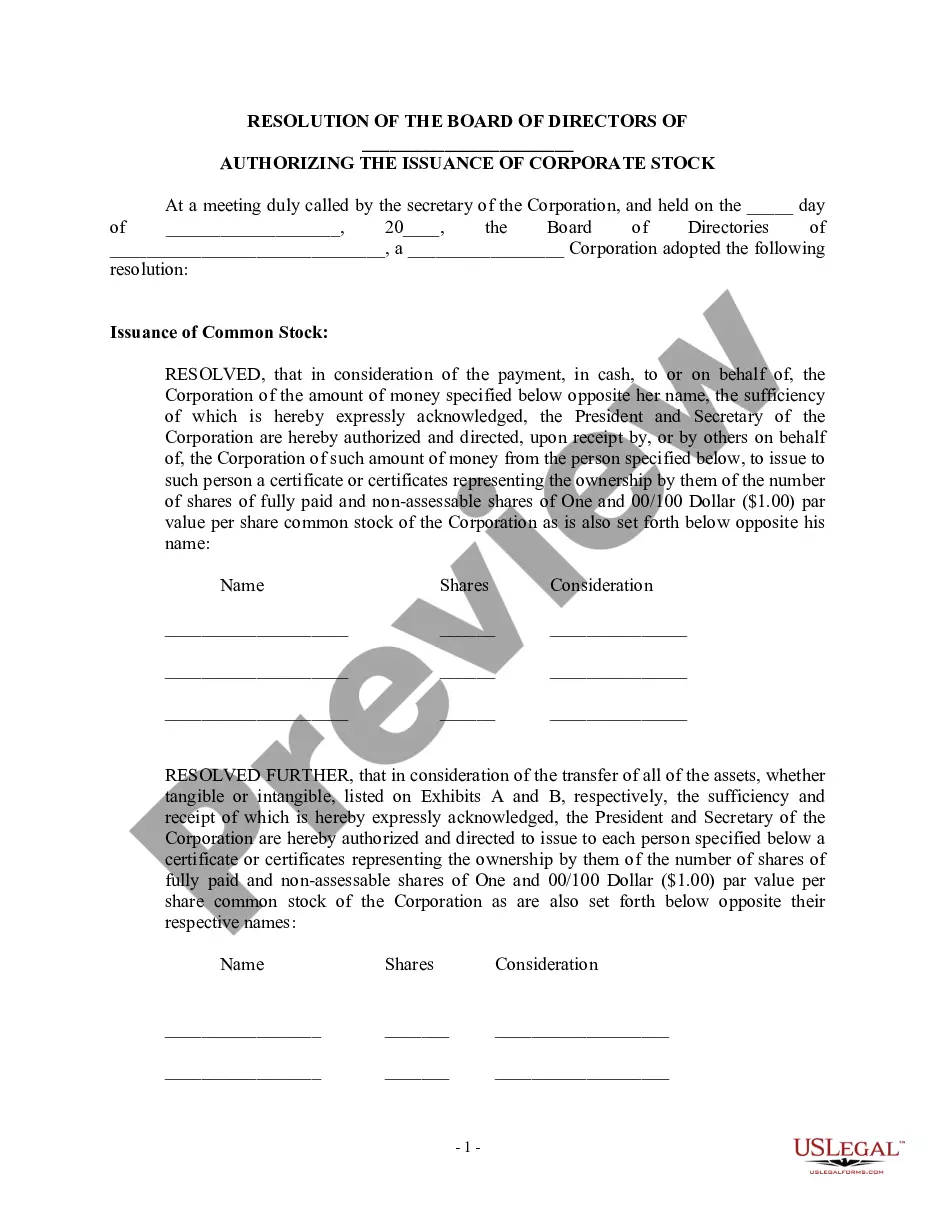
Examples of corporate resolutions include the adoption of new bylaws, the approval of changes in the board members, determining what board members have access to certain finances, such as bank accounts, deciding upon mergers and acquisitions, and deciding executive compensation.
What should corporate resolutions include? Your corporation's name. Date, time and location of meeting. Statement of unanimous approval of resolution. Confirmation that the resolution was adopted at a regularly called meeting. Resolution. Statement authorizing officers to carry out the resolution.
How to Transfer Ownership of a Corporation Consult your Articles of Incorporation and corporate bylaws. Contact the board of directors or shareholders. Find a buyer. Transfer ownership of stock. Inform the Secretary of State.
