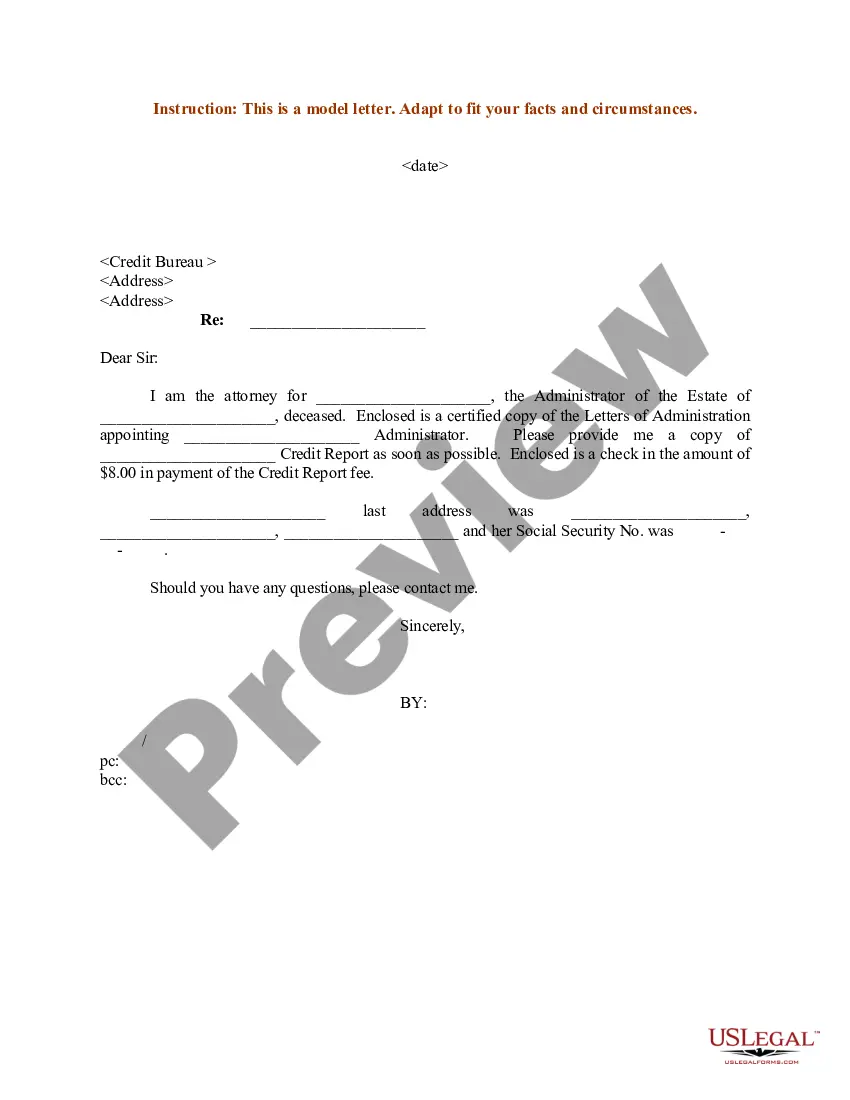
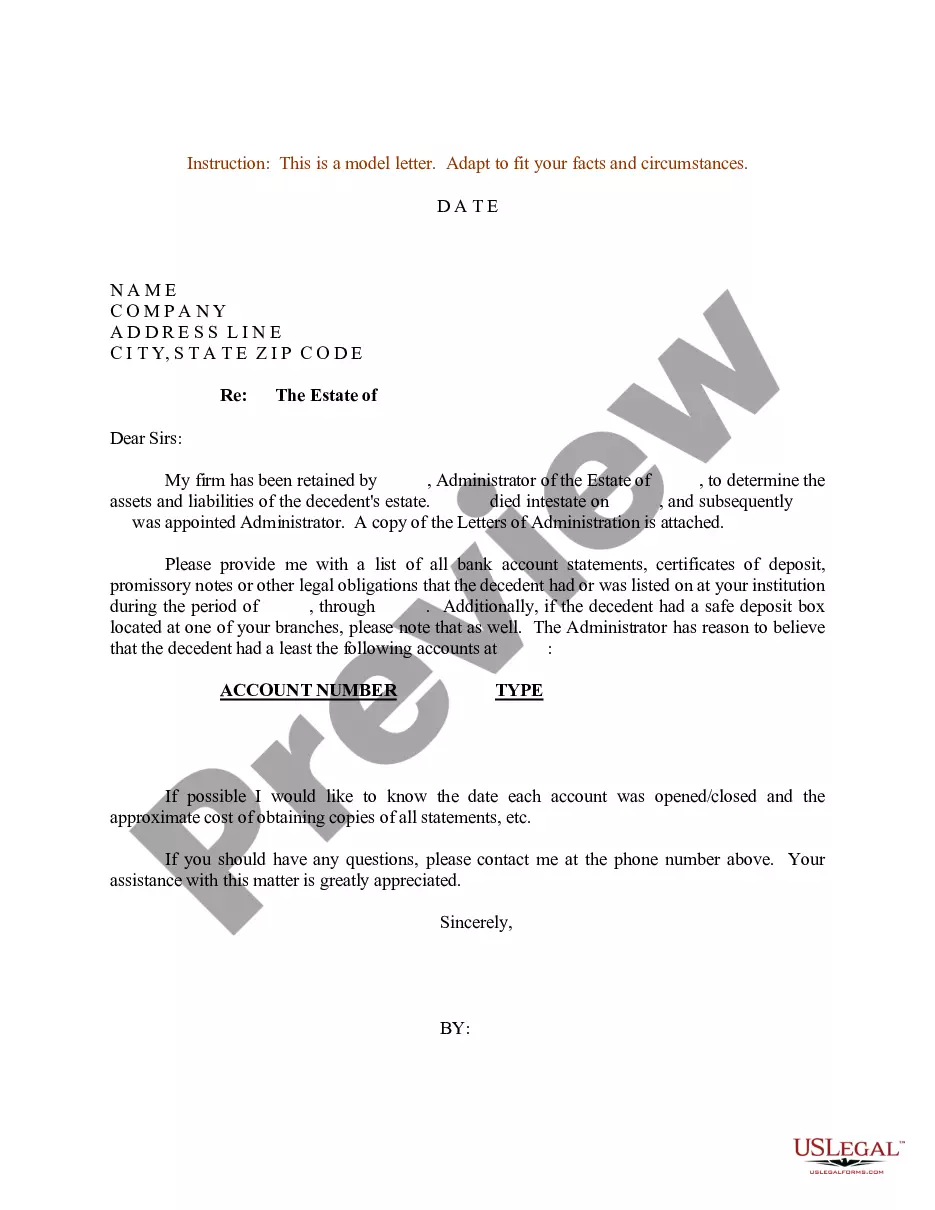
Sample Letter To Close Trust Account For Deceased Person In Tarrant
Description



Get your form ready online
Our built-in tools help you complete, sign, share, and store your documents in one place.
Make edits, fill in missing information, and update formatting in US Legal Forms—just like you would in MS Word.
Download a copy, print it, send it by email, or mail it via USPS—whatever works best for your next step.
Sign and collect signatures with our SignNow integration. Send to multiple recipients, set reminders, and more. Go Premium to unlock E-Sign.
If this form requires notarization, complete it online through a secure video call—no need to meet a notary in person or wait for an appointment.
We protect your documents and personal data by following strict security and privacy standards.

Make edits, fill in missing information, and update formatting in US Legal Forms—just like you would in MS Word.

Download a copy, print it, send it by email, or mail it via USPS—whatever works best for your next step.

Sign and collect signatures with our SignNow integration. Send to multiple recipients, set reminders, and more. Go Premium to unlock E-Sign.

If this form requires notarization, complete it online through a secure video call—no need to meet a notary in person or wait for an appointment.

We protect your documents and personal data by following strict security and privacy standards.
Looking for another form?





Form popularity
FAQ
A final distribution of estate letter is a document that marks the end of probate. This letter officially communicates to beneficiaries about how the deceased person's property has been shared among them. The executor or personal representative usually drafts and hands out this letter.
In terms of content, an Estate distribution letter should include: the deceased's personal details; a detailed and complete list of all assets and liabilities; the Beneficiary names and the details of their respective inheritances; any details on debt settlement and creditor communication;
A good letter of instruction should contain the following information: A complete list of all assets. The whereabouts of any tangible assets that are not readily accessible. Necessary information about all liquid assets, including bank, brokerage, retirement, and investment accounts.
Collect together the name and address for your debtor, the amount due, the dates involved with your claim such as starting date of debt, and your supporting documentation usually your invoices and your statement. Use these facts to write a clear statement explaining the monies owed to you.
Below, we have broken the process down into manageable steps. Step 1: Start with a Proper Salutation. Step 2: Introduce Yourself and Your Relationship to the Deceased. Step 3: Clearly State the Purpose of the Letter. Step 4: Provide Detailed Information about the Inheritance.
In terms of content, an Estate distribution letter should include: the deceased's personal details; a detailed and complete list of all assets and liabilities; the Beneficiary names and the details of their respective inheritances; any details on debt settlement and creditor communication;
Step-by-Step Guide to Writing an Inheritance Letter Step 1: Start with a Proper Salutation. Step 2: Introduce Yourself and Your Relationship to the Deceased. Step 3: Clearly State the Purpose of the Letter. Step 4: Provide Detailed Information about the Inheritance. Step 5: Explain Any Special Instructions or Wishes.
Can I file an Affidavit of Heirship with the Probate courts? No, these documents should be filed in the County Clerk Official Public Records Office located in room B20 at 100 W. Weatherford, Fort Worth, Texas.
The Typical Probate Timeline in Texas StepActionEstimated Timeline 1. Locating the Original Will 1-2 weeks 2. Initiation 1-2 weeks 3. Notification 2-4 weeks 4. Hearing Arrangement 3-5 weeks13 more rows •
Some of the documents that are required for probate include: The deceased's will. Death certificate. Inventory of assets and liabilities. Bank statements and financial records. Tax returns. Proof of debts and expenses.
