Sample Letter To Close Trust Account With The Same Email In Palm Beach
Description




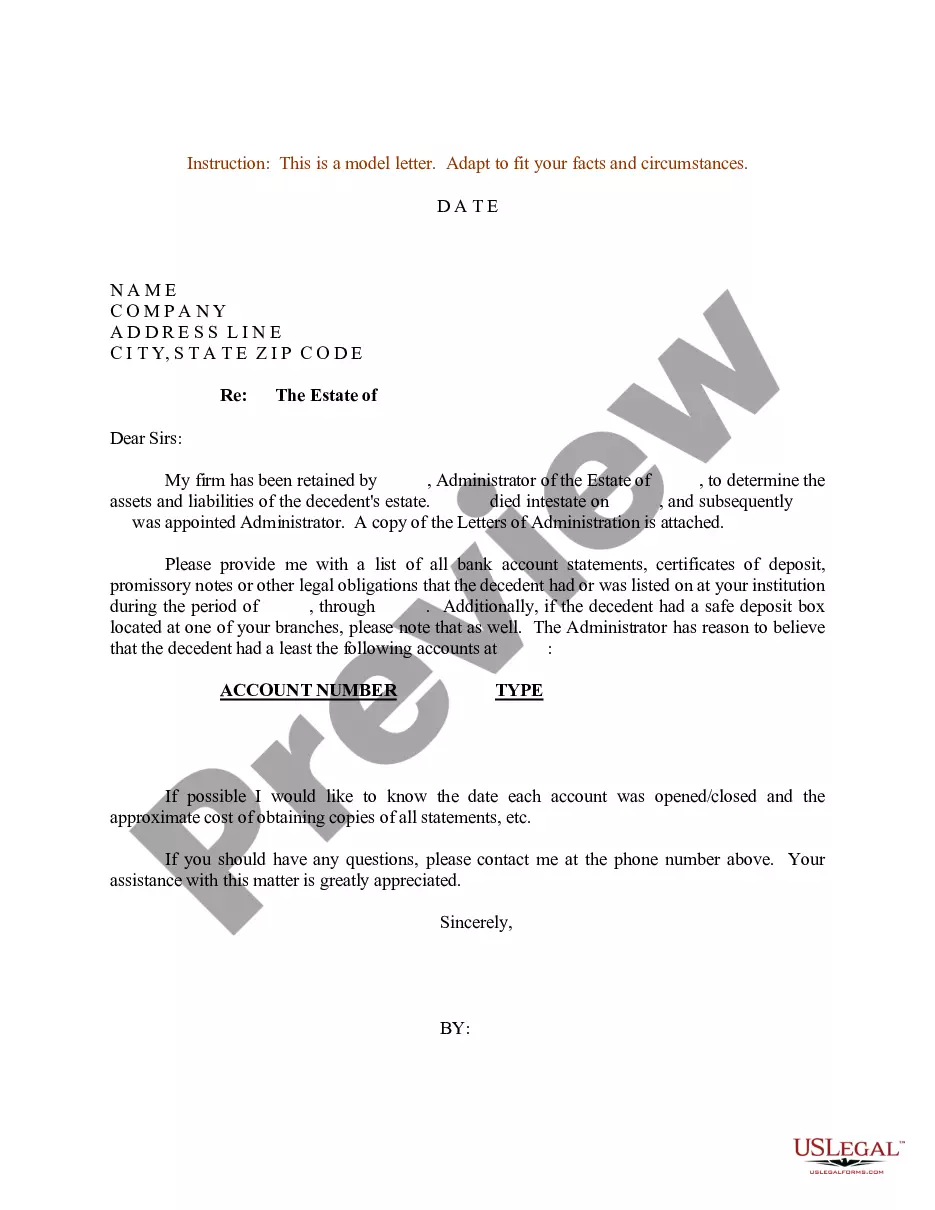
Get your form ready online
Our built-in tools help you complete, sign, share, and store your documents in one place.
Make edits, fill in missing information, and update formatting in US Legal Forms—just like you would in MS Word.
Download a copy, print it, send it by email, or mail it via USPS—whatever works best for your next step.
Sign and collect signatures with our SignNow integration. Send to multiple recipients, set reminders, and more. Go Premium to unlock E-Sign.
If this form requires notarization, complete it online through a secure video call—no need to meet a notary in person or wait for an appointment.
We protect your documents and personal data by following strict security and privacy standards.

Make edits, fill in missing information, and update formatting in US Legal Forms—just like you would in MS Word.

Download a copy, print it, send it by email, or mail it via USPS—whatever works best for your next step.

Sign and collect signatures with our SignNow integration. Send to multiple recipients, set reminders, and more. Go Premium to unlock E-Sign.

If this form requires notarization, complete it online through a secure video call—no need to meet a notary in person or wait for an appointment.

We protect your documents and personal data by following strict security and privacy standards.
Looking for another form?
Form popularity
FAQ
An owner of a trust account is the person who has the powers to modify or revoke the terms of the trust, referred to as the trustor/grantor/settlor within the trust.
4264. A power of attorney may not be construed to grant authority to an attorney-in-fact to perform any of the following acts unless expressly authorized in the power of attorney: (a) Create, modify, or revoke a trust.
A trust account works like any bank account does: funds can be deposited into it and payments made from it. However, unlike most bank accounts, it is not held or owned by an individual or a business.
While a POA agent can make decisions on the principal's finances and health care, their role essentially dies with the death of the principal. A trustee, however, is responsible for the assets held within a trust and their administration following the trustor's death or guidelines of the trust document.
