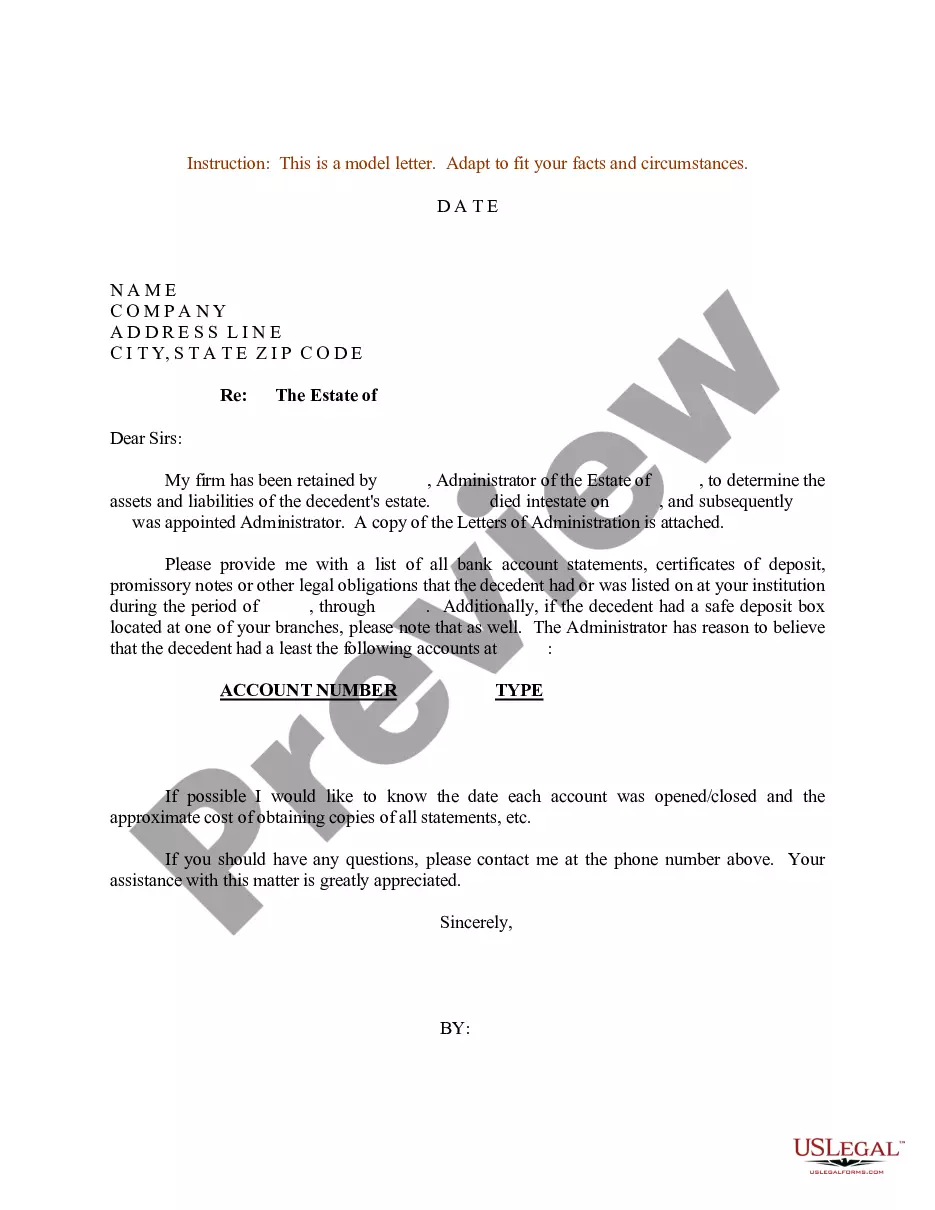
Sample Letter To Close Trust Account For Deceased Person In Orange
Description




Get your form ready online
Our built-in tools help you complete, sign, share, and store your documents in one place.
Make edits, fill in missing information, and update formatting in US Legal Forms—just like you would in MS Word.
Download a copy, print it, send it by email, or mail it via USPS—whatever works best for your next step.
Sign and collect signatures with our SignNow integration. Send to multiple recipients, set reminders, and more. Go Premium to unlock E-Sign.
If this form requires notarization, complete it online through a secure video call—no need to meet a notary in person or wait for an appointment.
We protect your documents and personal data by following strict security and privacy standards.

Make edits, fill in missing information, and update formatting in US Legal Forms—just like you would in MS Word.

Download a copy, print it, send it by email, or mail it via USPS—whatever works best for your next step.

Sign and collect signatures with our SignNow integration. Send to multiple recipients, set reminders, and more. Go Premium to unlock E-Sign.

If this form requires notarization, complete it online through a secure video call—no need to meet a notary in person or wait for an appointment.

We protect your documents and personal data by following strict security and privacy standards.
Looking for another form?







Form popularity
FAQ
To close a trust after death, the successor trustee must settle and terminate the trust by diligently distributing its assets as per the trust's terms. This involves inventorying assets, paying debts, and ensuring beneficiaries receive their rightful shares, effectively bringing the trust to a timely conclusion.
Steps to Closing Out a Trust After Death Step 1: Notify Beneficiaries and Creditors. The first task for the successor trustee is to notify both the beneficiaries and creditors. Step 2: Inventory and Value Assets. Step 3: Settle Debts and Taxes. Step 4: Distribute Assets to Beneficiaries. Step 5: Dissolve the Trust.
If there's no will, the bank could ask for evidence of your relationship to the deceased. You'll also need the death certificate. When you've registered the death, you will be issued with a death certificate. This will act as formal notification for the bank to begin closing the account.
