Shares Authorized Vs Issued In Virginia
Description


Get your form ready online
Our built-in tools help you complete, sign, share, and store your documents in one place.
Make edits, fill in missing information, and update formatting in US Legal Forms—just like you would in MS Word.
Download a copy, print it, send it by email, or mail it via USPS—whatever works best for your next step.
Sign and collect signatures with our SignNow integration. Send to multiple recipients, set reminders, and more. Go Premium to unlock E-Sign.
If this form requires notarization, complete it online through a secure video call—no need to meet a notary in person or wait for an appointment.
We protect your documents and personal data by following strict security and privacy standards.

Make edits, fill in missing information, and update formatting in US Legal Forms—just like you would in MS Word.

Download a copy, print it, send it by email, or mail it via USPS—whatever works best for your next step.

Sign and collect signatures with our SignNow integration. Send to multiple recipients, set reminders, and more. Go Premium to unlock E-Sign.

If this form requires notarization, complete it online through a secure video call—no need to meet a notary in person or wait for an appointment.

We protect your documents and personal data by following strict security and privacy standards.
Looking for another form?









Form popularity
FAQ
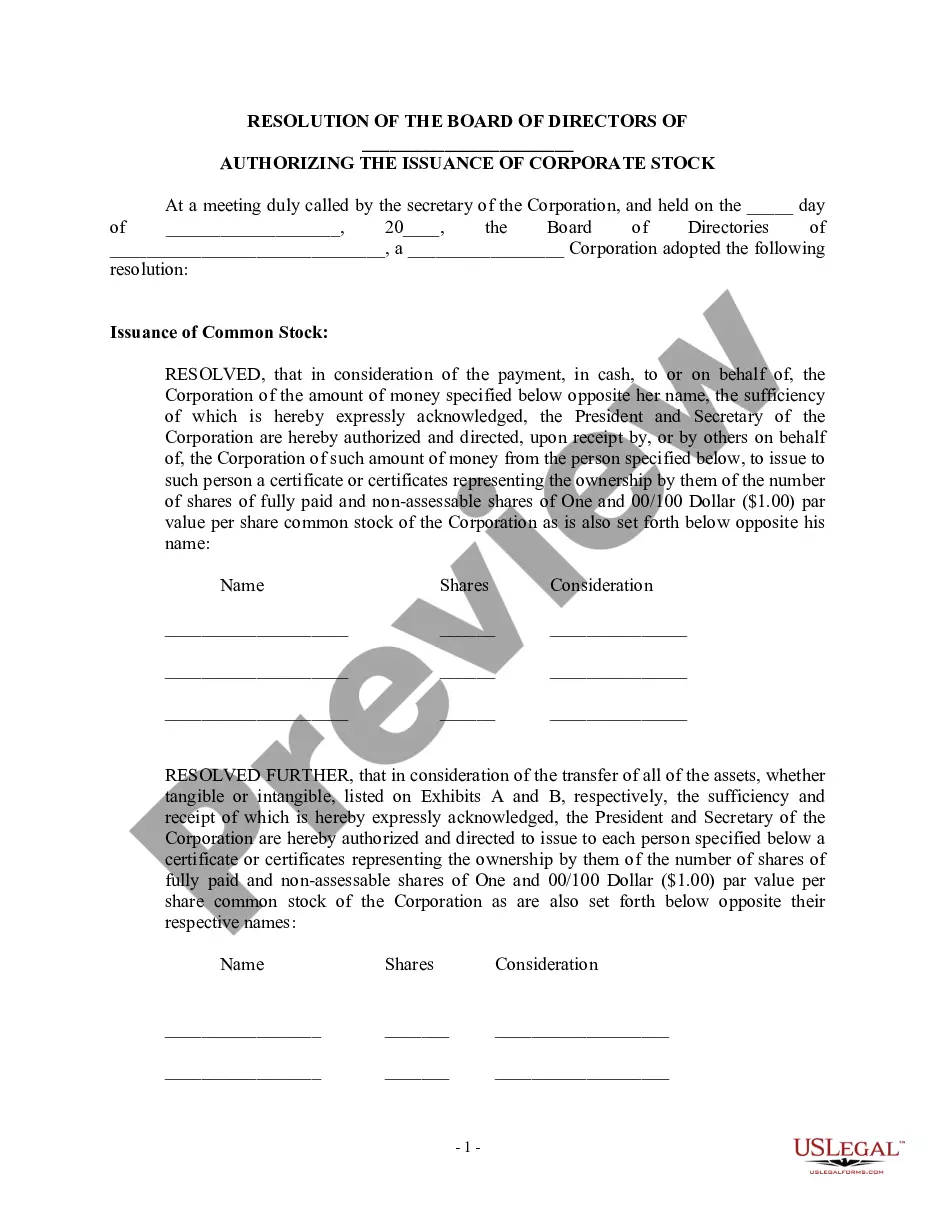
Authorized shares are the total number of shares a company can legally issue, while issued shares are the number the company has issued to date. The number of authorized and issued shares may be the same or different, in which case there would be more authorized than issued shares.
Authorized shares, or authorized stock, are simply a legally allowed maximum number of shares that a company can issue to investors. The number of authorized shares is specified in the company's articles of incorporation. You can also see the number in the capital accounts section on the balance sheet.
At this point, you may wonder what happens when a company has attempted to issue more shares than it has authorized. Make sure this doesn't happen! If it does occur, a company has breached any agreement with those investors, employees or other parties that have been “issued” the excess shares.
They are “authorized” because they fall within the maximum number of shares a company can sell ing to its corporate charter. They are “issued” because they have been sold. They are “outstanding” because they have been sold to the public (not to the owners or managers of the company).
“Authorized shares” refers to the number of shares the corporation is allowed to issue under its certificate or articles of incorporation. 10 to 15 million is a commonly used range (we set 10 million as default for the Cooley GO Docs Incorporation Package).
Authorized shares that have not yet been issued may be set aside as reserved shares. Reserved shares can be used by the company as part of future stock option plans. These reserve shares may not be issued unless it's done under the stock option plan.
