Shareholder Resolution Example In North Carolina
Description

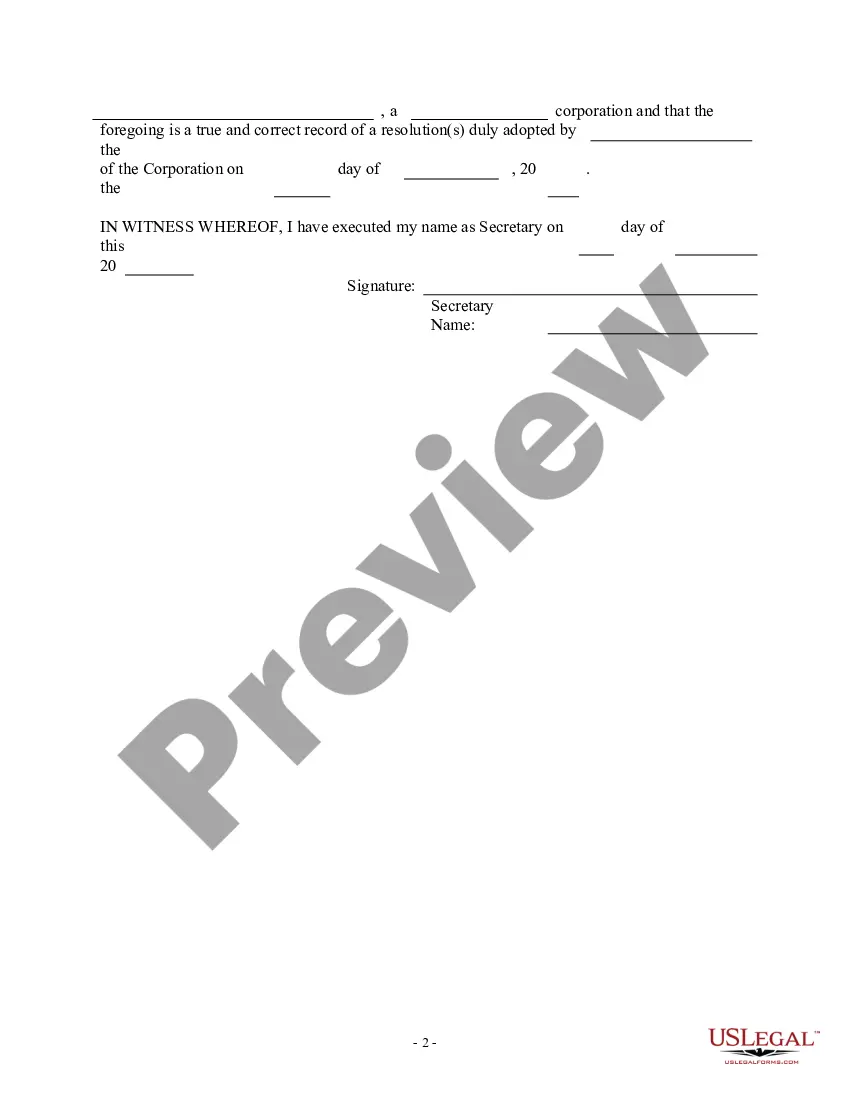

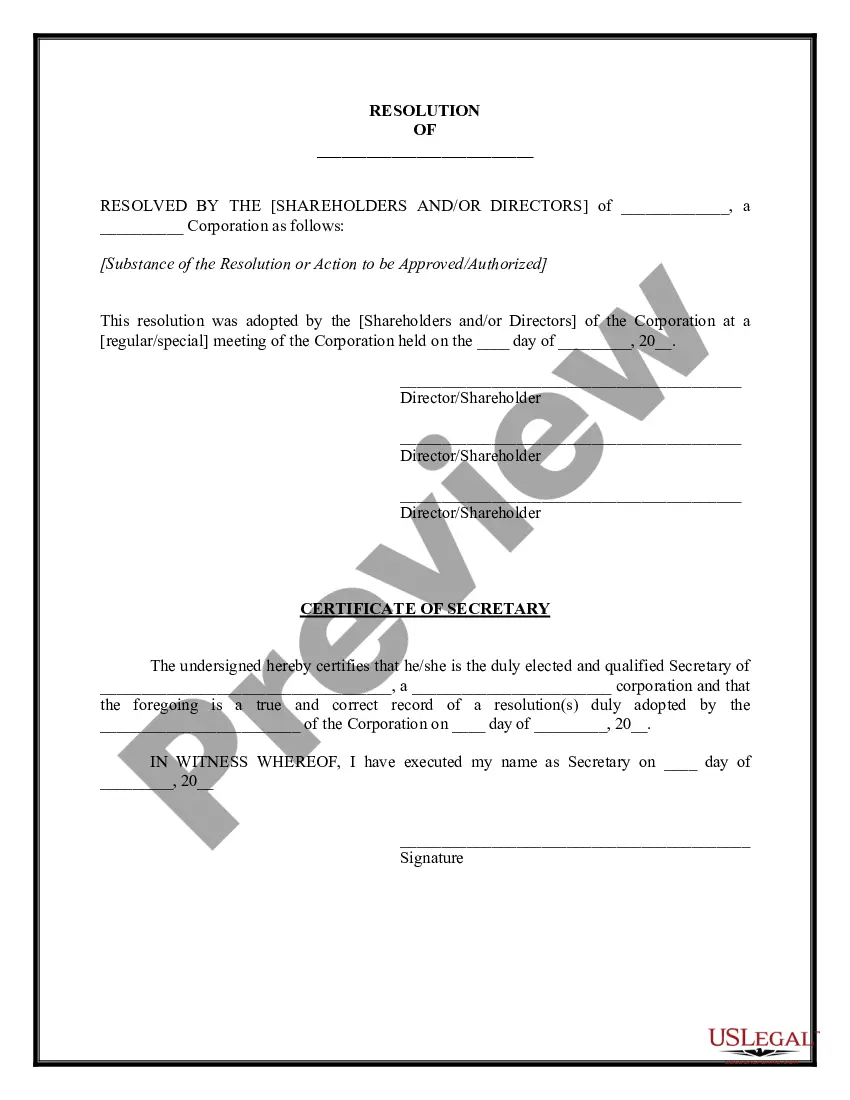
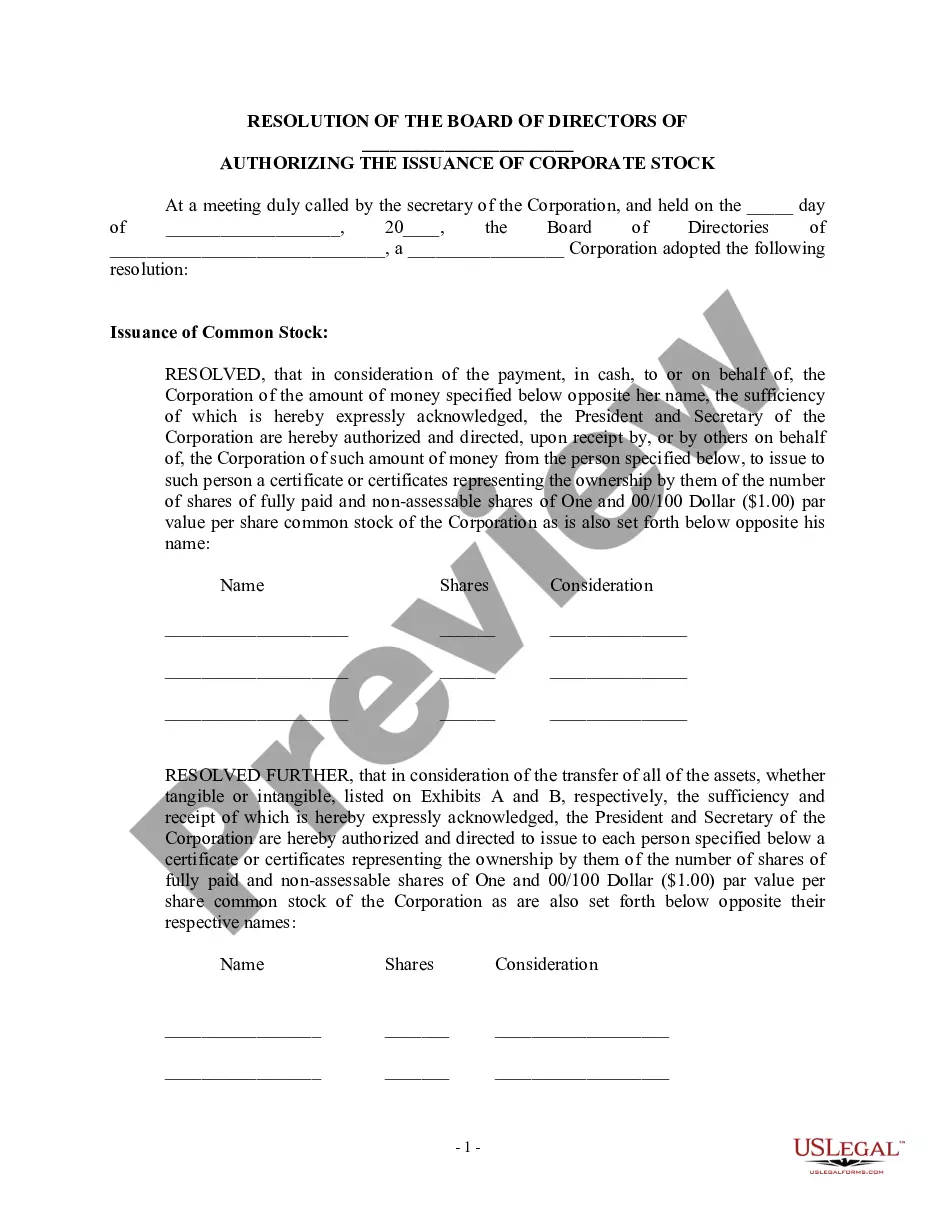
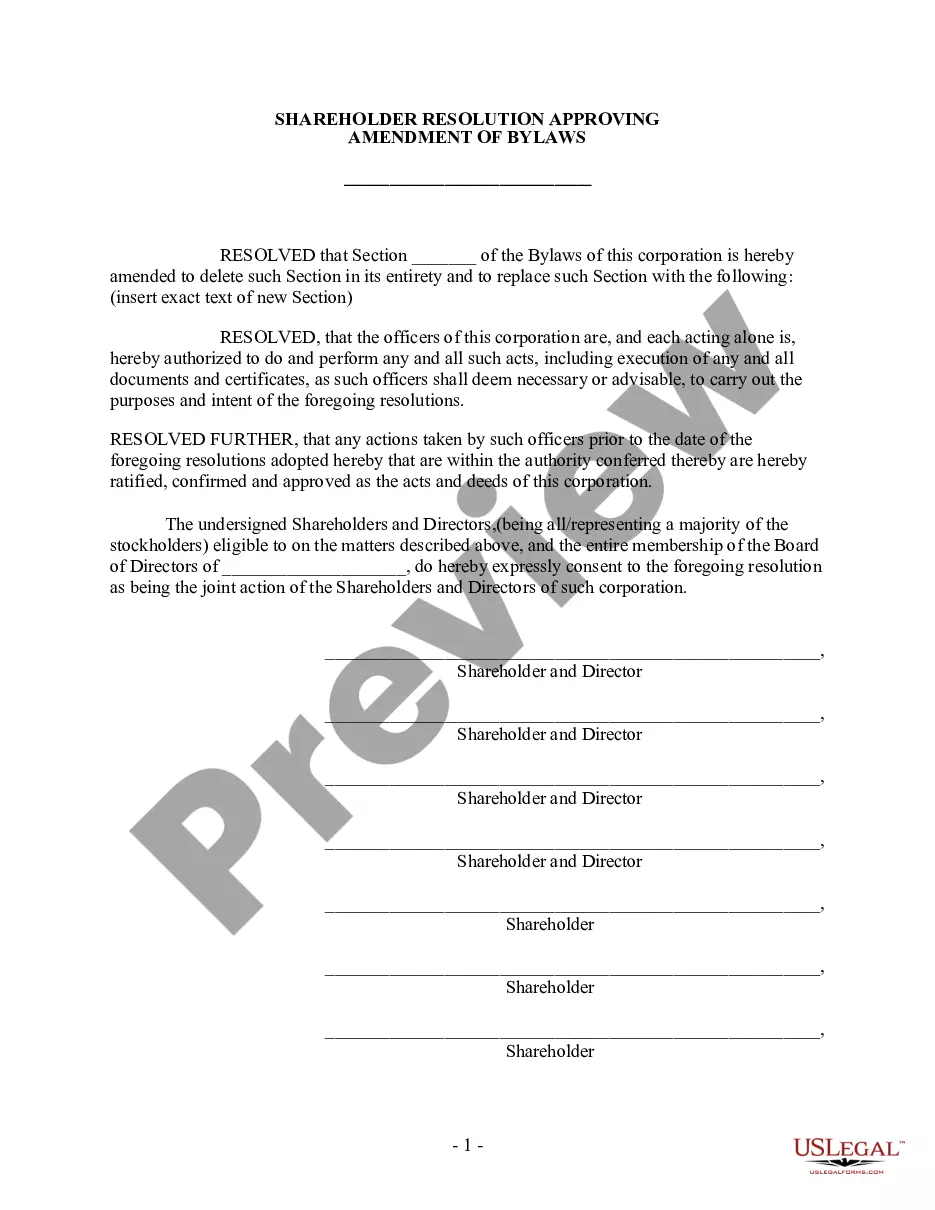
Get your form ready online
Our built-in tools help you complete, sign, share, and store your documents in one place.
Make edits, fill in missing information, and update formatting in US Legal Forms—just like you would in MS Word.
Download a copy, print it, send it by email, or mail it via USPS—whatever works best for your next step.
Sign and collect signatures with our SignNow integration. Send to multiple recipients, set reminders, and more. Go Premium to unlock E-Sign.
If this form requires notarization, complete it online through a secure video call—no need to meet a notary in person or wait for an appointment.
We protect your documents and personal data by following strict security and privacy standards.

Make edits, fill in missing information, and update formatting in US Legal Forms—just like you would in MS Word.

Download a copy, print it, send it by email, or mail it via USPS—whatever works best for your next step.

Sign and collect signatures with our SignNow integration. Send to multiple recipients, set reminders, and more. Go Premium to unlock E-Sign.

If this form requires notarization, complete it online through a secure video call—no need to meet a notary in person or wait for an appointment.

We protect your documents and personal data by following strict security and privacy standards.
Looking for another form?
Form popularity
FAQ
Examples: Shareholder resolutions can cover a broad spectrum of topics, such as appointing independent auditors, approving major transactions, amending the company's articles of association, or advocating for environmental and social responsibility initiatives.
Board resolutions deal with operational and management decisions, while shareholder resolutions address more significant, often strategic, matters affecting the company.
General Meetings The general rule is that companies must pass shareholder resolutions at shareholder meetings. These meetings, commonly called general meetings, require shareholders to be physically present to vote. Alternatively, a shareholder can appoint a proxy to vote on their behalf.
These resolutions may pertain to company policies and procedures, corporate governance or issues of social or environmental concern. Shareholder resolutions are a meaningful way for shareholders to encourage corporate responsibility and discourage company practices that are unsustainable or unethical.
What should shareholder resolutions include? Your corporation's name. Date, time and location of meeting. Statement that all shareholders agree to the resolution. Confirmation of the necessary quorum for business to be conducted. Names of shareholders present or voting by proxy. Number of shares for each voting shareholder.
Typically, decisions that must made by ordinary resolution of the shareholders include: Paying dividends. Appointing and removing directors. Approving directors' service contracts. Approving directors' loans. Allotting new shares.
Some of the matters that require a special resolution are:- – Amendment of the Articles of Association. Issue of sweat equity shares. Change in the registered office of the company. Reduction of share capital.
Purpose and Role: Shareholder resolutions involve decisions made by the company's shareholders. These resolutions are generally focused on broader company issues, such as amendments to the company's constitution, approving mergers or acquisitions and appointing or removing directors.
A written resolution is an alternative way for shareholders to vote on a resolution that requires their approval to become effective. Importantly, the company does not need to convene a general meeting. This saves considerable time and expense.
There are two main types of shareholders' resolution: 'ordinary' and 'special'. An ordinary resolution is passed by a simple majority of members, while a special resolution requires not less than 75% of the total voting rights of eligible members.
