Shares Resolutions With Ai In Los Angeles
Description

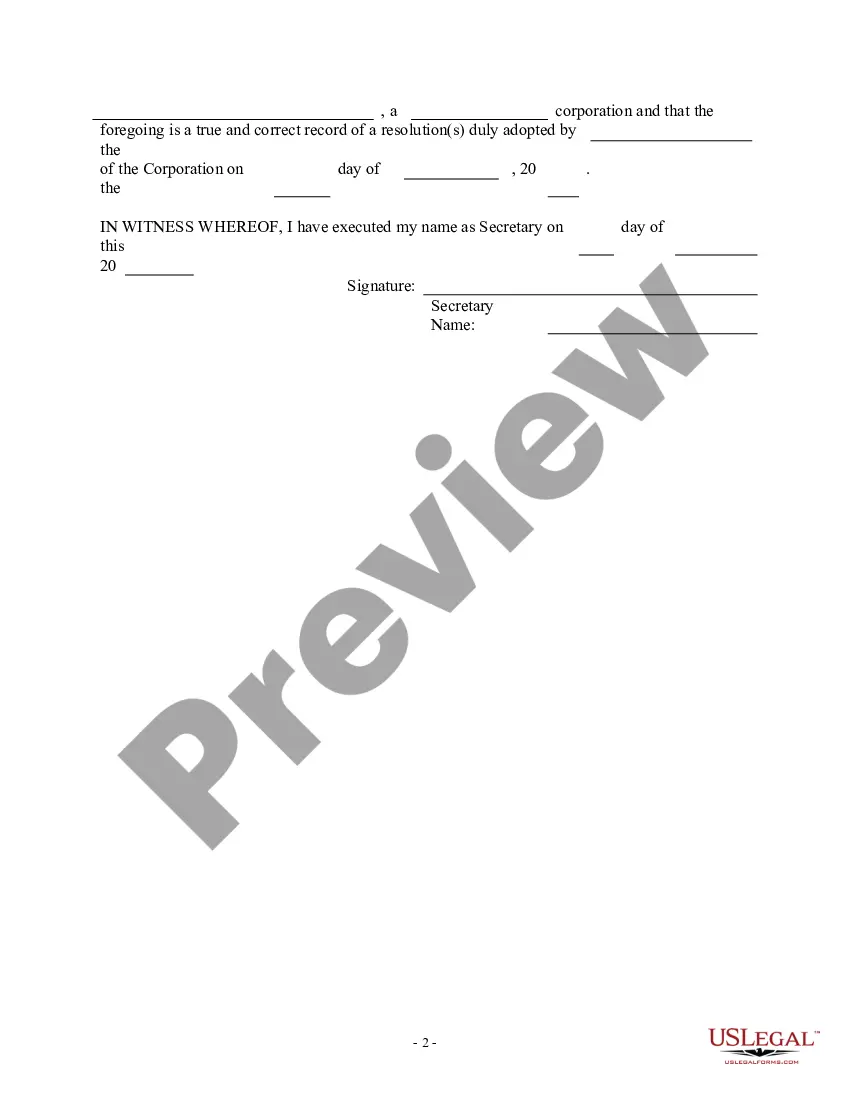



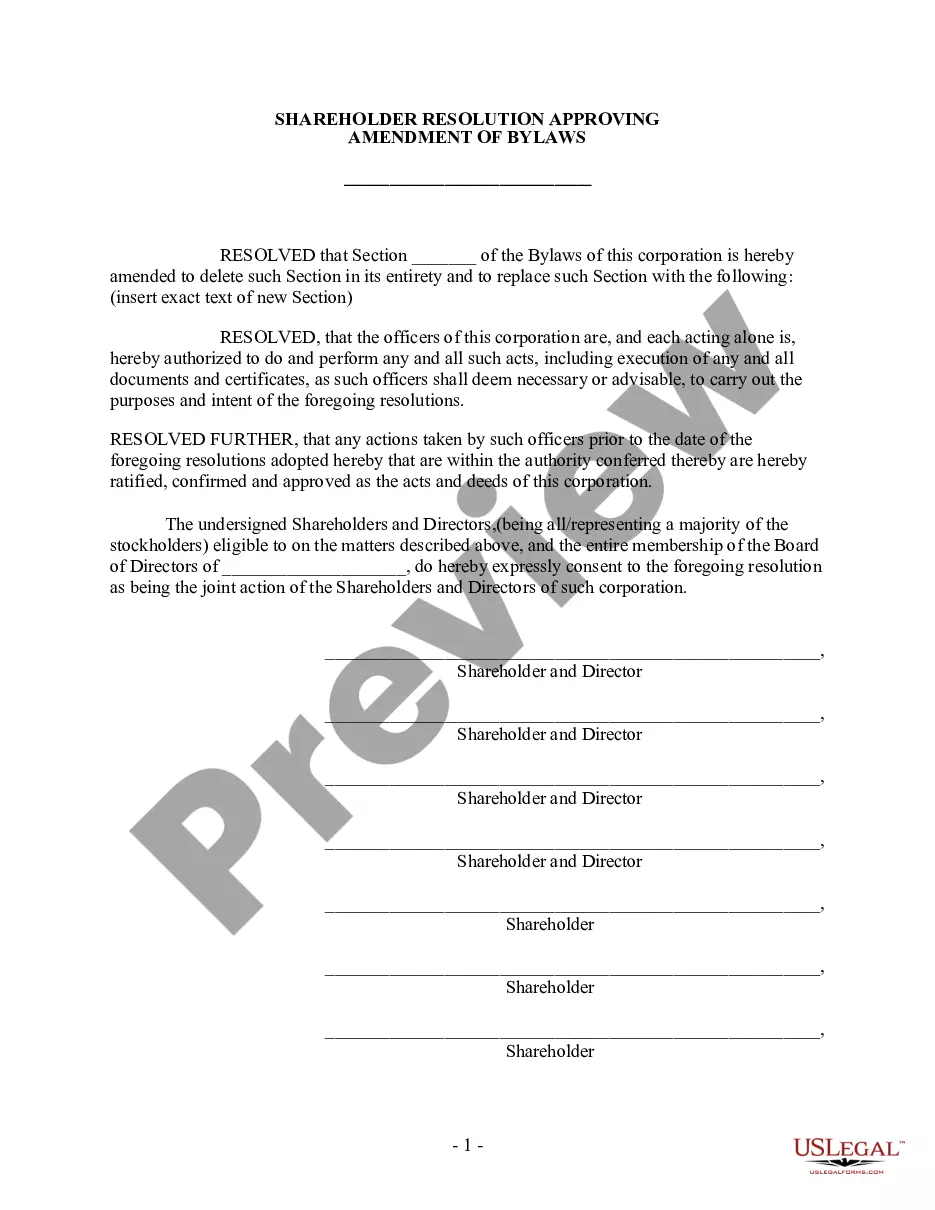
Get your form ready online
Our built-in tools help you complete, sign, share, and store your documents in one place.
Make edits, fill in missing information, and update formatting in US Legal Forms—just like you would in MS Word.
Download a copy, print it, send it by email, or mail it via USPS—whatever works best for your next step.
Sign and collect signatures with our SignNow integration. Send to multiple recipients, set reminders, and more. Go Premium to unlock E-Sign.
If this form requires notarization, complete it online through a secure video call—no need to meet a notary in person or wait for an appointment.
We protect your documents and personal data by following strict security and privacy standards.

Make edits, fill in missing information, and update formatting in US Legal Forms—just like you would in MS Word.

Download a copy, print it, send it by email, or mail it via USPS—whatever works best for your next step.

Sign and collect signatures with our SignNow integration. Send to multiple recipients, set reminders, and more. Go Premium to unlock E-Sign.

If this form requires notarization, complete it online through a secure video call—no need to meet a notary in person or wait for an appointment.

We protect your documents and personal data by following strict security and privacy standards.
Looking for another form?










Form popularity
FAQ
The law offers a way to address the longstanding issues of bias and data misuse in AI by requiring full disclosure of the datasets used to train these models. Artists and writers, for example, may finally get clarity on whether their copyrighted work has been co-opted as training fodder without their permission.
Regulation of AI is imperative. The United Nations (UN) General Assembly recently adopted the first resolution on artificial intelligence, A/78/L. 49. The resolution focuses on the role that the United Nations system can play to reach global consensus on safe, secure and trustworthy AI systems.
AB 2013: Artificial Intelligence Training Data Transparency. At the core of AB 2013 is a disclosure obligation: From January 1, 2026, developers of AI systems must publicly post on their websites certain information about the data used to train those systems.
Read on to learn more about the four main types of AI—reactive machines, limited memory machines, theory of mind, and self-awareness—and their functions in everyday life.
Super resolution is basically the process through which the overall quality of your images is enhanced beyond its original size or resolution. This improvement in image super resolution includes increasing its pixel density in order to enhance its sharpness.
The resolution urges member states and other stakeholders to integrate ethical considerations in the design, development, deployment, and use of AI to safeguard human rights and fundamental freedoms, including the right to life, privacy, and freedom of expression.
Twenty-seven percent of English teachers and social studies teachers use AI tools in their work. By comparison, 19 percent of teachers in STEM disciplines said they use AI, and 11 percent of elementary education teachers reported doing so.
That is, AI Quality is the set of observable attributes of an AI system that allows you to assess, over time, the system's real world success. It is evaluated across four key categories: model performance, societal impact, operational compatibility, and data quality. Explainability is a key enabling technology.
The US invests the most in AI, with $328,548 million spent in the last five years – $67,911 million in 2023 alone, a 65.94% increase from that of 2019. China places second with $132,665 million spent on AI between 2019 to 2023, around 60% less than the United States.
AI and the Entertainment Industry AB-2602 requires studios to obtain permission from actors before creating AI-generated replicas of their voice or likeness. AB-1836 extends similar protections to deceased performers, requiring studios to secure consent from the performers' estates before creating digital replicas.
