Best Application Letter For Job Vacancy In Riverside
Description



Get your form ready online
Our built-in tools help you complete, sign, share, and store your documents in one place.
Make edits, fill in missing information, and update formatting in US Legal Forms—just like you would in MS Word.
Download a copy, print it, send it by email, or mail it via USPS—whatever works best for your next step.
Sign and collect signatures with our SignNow integration. Send to multiple recipients, set reminders, and more. Go Premium to unlock E-Sign.
If this form requires notarization, complete it online through a secure video call—no need to meet a notary in person or wait for an appointment.
We protect your documents and personal data by following strict security and privacy standards.

Make edits, fill in missing information, and update formatting in US Legal Forms—just like you would in MS Word.

Download a copy, print it, send it by email, or mail it via USPS—whatever works best for your next step.

Sign and collect signatures with our SignNow integration. Send to multiple recipients, set reminders, and more. Go Premium to unlock E-Sign.

If this form requires notarization, complete it online through a secure video call—no need to meet a notary in person or wait for an appointment.

We protect your documents and personal data by following strict security and privacy standards.
Looking for another form?







Form popularity
FAQ
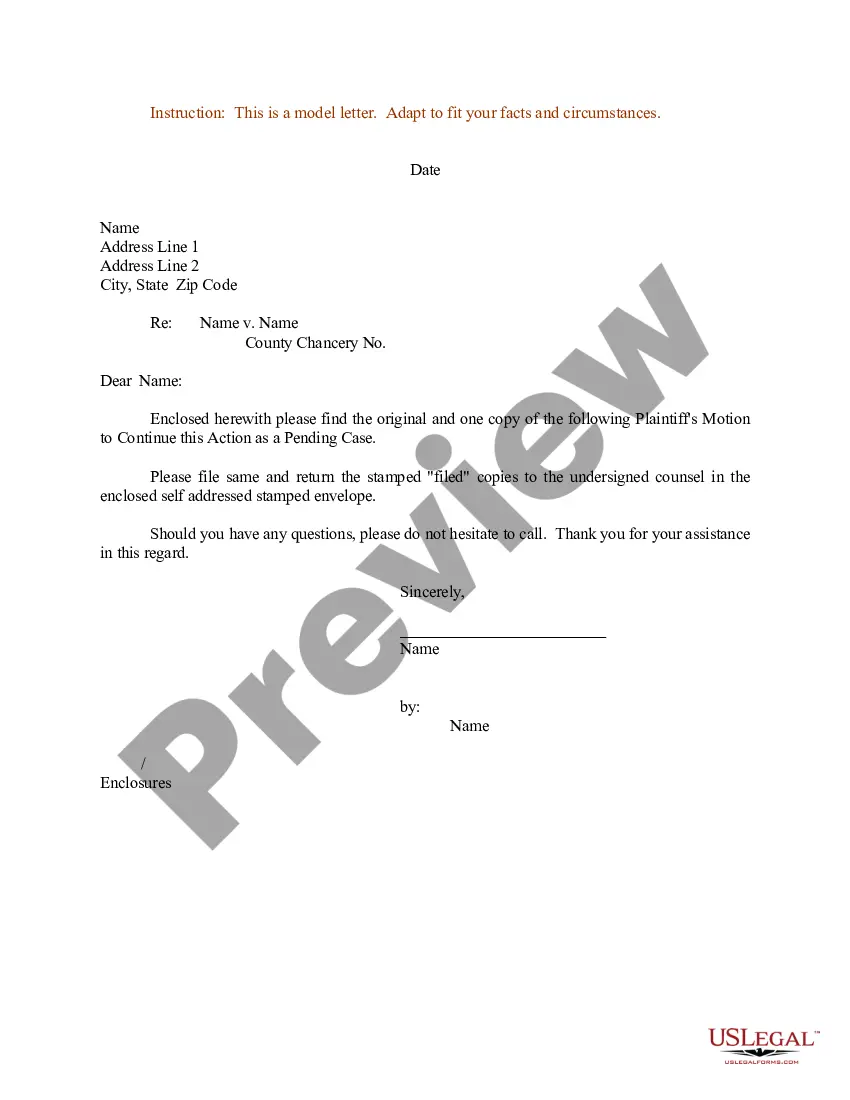
When you don't know if the company is hiring Do your research. Include a traditional header. Use a professional greeting. Recognize the cold call. Write an attention-getting introduction. Explain why you like the company. Describe your strengths. Add a call to action.
Four Paragraphs Minimum—Your letter should have at least an introductory paragraph, an education paragraph, an employment paragraph, and a concluding paragraph. Complimentary Close—These are some standard phrases: Sincerely, Sincerely yours, Yours sincerely, Yours very truly, and Very truly yours.
How to Write a Letter of Application (With Examples) Put your contact information in your header. Address the hiring manager. Grab attention with your introduction. Quantify skills in body paragraphs. Use action verbs. Close with a call to action. Format properly.
Here are the most important parts that must be there: Your personal information. Date of admission. Contact person's name, title, and university department. Salutation. Your introductory paragraph. Information about your skills. Additional specifics. Contact information and closure.
Begin with a statement of purpose. Name the position to which you are applying and how or where you learned of the position or organization. Indicate why you are interested in that specific position. Explain why you are interested in working for this employer and specify your reasons.
Begin with a statement of purpose. Name the position to which you are applying and how or where you learned of the position or organization. Indicate why you are interested in that specific position. Explain why you are interested in working for this employer and specify your reasons.
Cover letters typically take the following structure: Introduction (1st paragraph) State clearly in your opening sentence the purpose for your letter and a brief professional introduction. Body (2-3 paragraphs) ... Closing (last paragraph)
Here's a general structure: Paragraph one: introduce yourself and explain what's motivated you to apply for this role. Explain why you want to work for the employer and why you want that specific role. Paragraph two/three: explain why you are suited to the role. Final paragraph: conclusion.
Understanding these aspects will guide your tone and content. 2 Start With a Proper Format: Formal letters have a specific layout that includes the sender's address, date, recipient's address, salutation, body, close, and signature.
Four Paragraphs Minimum—Your letter should have at least an introductory paragraph, an education paragraph, an employment paragraph, and a concluding paragraph. Complimentary Close—These are some standard phrases: Sincerely, Sincerely yours, Yours sincerely, Yours very truly, and Very truly yours.

