Motion Time Form With 2 Points In Orange
Description


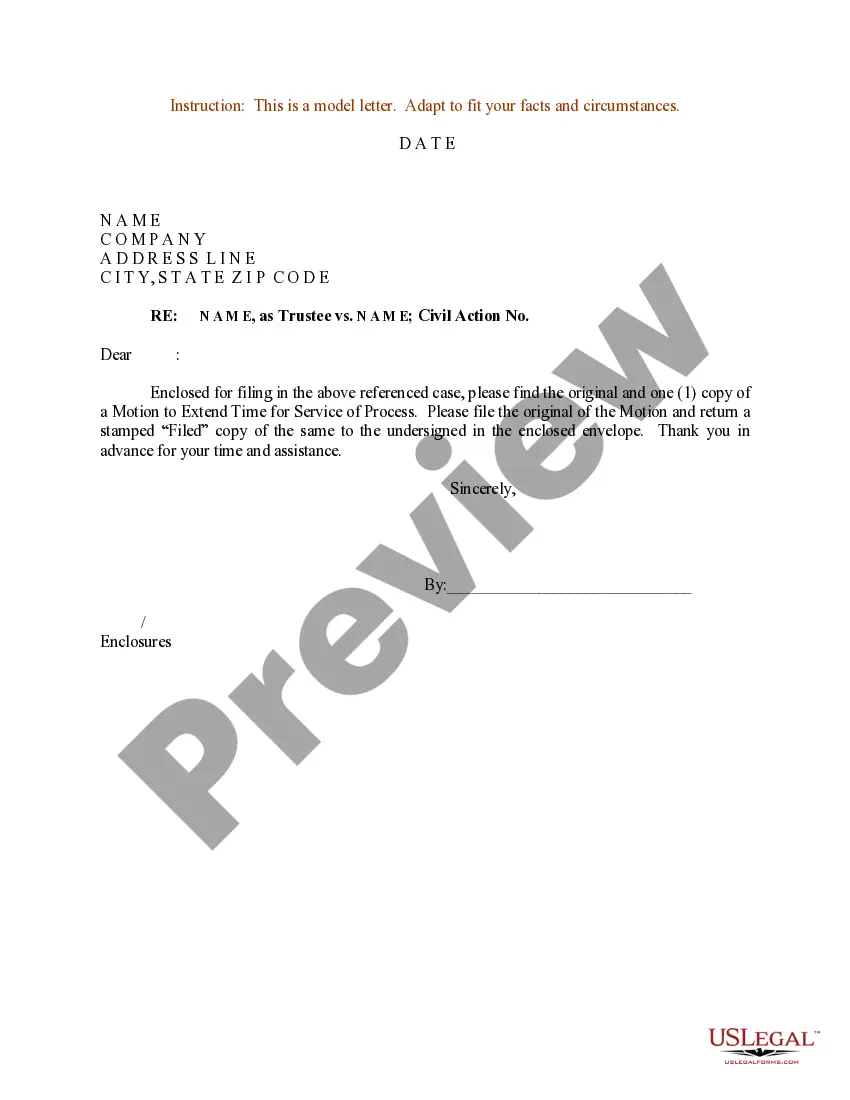

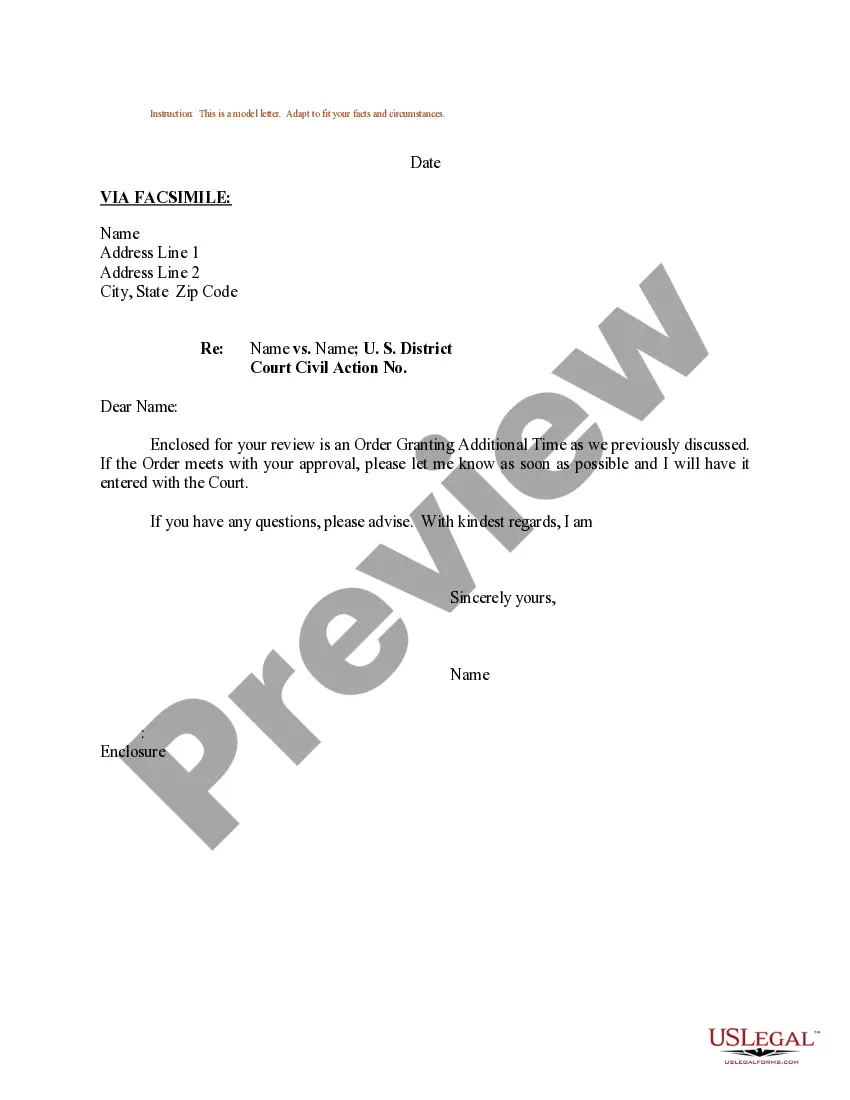
Get your form ready online
Our built-in tools help you complete, sign, share, and store your documents in one place.
Make edits, fill in missing information, and update formatting in US Legal Forms—just like you would in MS Word.
Download a copy, print it, send it by email, or mail it via USPS—whatever works best for your next step.
Sign and collect signatures with our SignNow integration. Send to multiple recipients, set reminders, and more. Go Premium to unlock E-Sign.
If this form requires notarization, complete it online through a secure video call—no need to meet a notary in person or wait for an appointment.
We protect your documents and personal data by following strict security and privacy standards.

Make edits, fill in missing information, and update formatting in US Legal Forms—just like you would in MS Word.

Download a copy, print it, send it by email, or mail it via USPS—whatever works best for your next step.

Sign and collect signatures with our SignNow integration. Send to multiple recipients, set reminders, and more. Go Premium to unlock E-Sign.

If this form requires notarization, complete it online through a secure video call—no need to meet a notary in person or wait for an appointment.

We protect your documents and personal data by following strict security and privacy standards.
Looking for another form?









Form popularity
FAQ
To compute the equation of the line passing through points (x1, y1) and (x2, y2): Compute the slope as a = (y2-y1) / (x2-x1). Compute the intercept as b = y1 - a × x1. The equation you need reads y = a × x + b, with a an b computed as above.
It. Positive over 6 which equals uh divide you'll have a -4/3. So now we know m. Equal a -4/3. SoMoreIt. Positive over 6 which equals uh divide you'll have a -4/3. So now we know m. Equal a -4/3. So when writing my equation using my point slope form I'm going to now put -4/3 in for M.
Given two points on a line, we can write an equation for that line by finding the slope between those points, then solving for the y-intercept in the slope-intercept equation y=mx+b.
It. Positive over 6 which equals uh divide you'll have a -4/3. So now we know m. Equal a -4/3. SoMoreIt. Positive over 6 which equals uh divide you'll have a -4/3. So now we know m. Equal a -4/3. So when writing my equation using my point slope form I'm going to now put -4/3 in for M.
If given two points, first find the slope (m) of the line that contains the points. Then write an equation in slope-intercept form (y=mx+b) and substitute in the x and y values for one of the points to find the y-intercept (b). Then convert to standard form (Ax+By=C) by subtracting the (mx) term from each side.
How to Find the Equation of a Line from Two Points Find the slope using the slope formula. Use the slope and one of the points to solve for the y-intercept (b). Once you know the value for m and the value for b, you can plug these into the slope-intercept form of a line (y = mx + b) to get the equation for the line.
To write equation of a line in two-point form, simply substitute the coordinates of the given two points in the equation ( y − y 2 ) = y 2 − y 1 x 2 − x 1 ( x − x 2 ) . Example: Find the equation of a line passing through the points and . Substitute the values in ( y − y 2 ) = y 2 − y 1 x 2 − x 1 ( x − x 2 ) .
If given two points, first find the slope (m) of the line that contains the points. Then write an equation in slope-intercept form (y=mx+b) and substitute in the x and y values for one of the points to find the y-intercept (b). Then convert to standard form (Ax+By=C) by subtracting the (mx) term from each side.
What is the Formula for Finding Slope From Two Points? For finding slope from two points of a line (x₁, y₁) and (x₂, y₂), we use the formula (y₂ - y₁) / (x₂ - x₁). i.e., it is the ratio of difference of y-coordinates to the difference of x-coordinates such that the differences are calculated in the same order.
To write equation of a line in two-point form, simply substitute the coordinates of the given two points in the equation ( y − y 2 ) = y 2 − y 1 x 2 − x 1 ( x − x 2 ) . Example: Find the equation of a line passing through the points and . Substitute the values in ( y − y 2 ) = y 2 − y 1 x 2 − x 1 ( x − x 2 ) .

