1031 Exchange Agreement Form For Uk In Virginia
Description

Get your form ready online
Our built-in tools help you complete, sign, share, and store your documents in one place.
Make edits, fill in missing information, and update formatting in US Legal Forms—just like you would in MS Word.
Download a copy, print it, send it by email, or mail it via USPS—whatever works best for your next step.
Sign and collect signatures with our SignNow integration. Send to multiple recipients, set reminders, and more. Go Premium to unlock E-Sign.
If this form requires notarization, complete it online through a secure video call—no need to meet a notary in person or wait for an appointment.
We protect your documents and personal data by following strict security and privacy standards.

Make edits, fill in missing information, and update formatting in US Legal Forms—just like you would in MS Word.

Download a copy, print it, send it by email, or mail it via USPS—whatever works best for your next step.

Sign and collect signatures with our SignNow integration. Send to multiple recipients, set reminders, and more. Go Premium to unlock E-Sign.

If this form requires notarization, complete it online through a secure video call—no need to meet a notary in person or wait for an appointment.

We protect your documents and personal data by following strict security and privacy standards.
Looking for another form?








Form popularity
FAQ
You can perform a 1031 exchange with foreign properties, so long as your relinquished and replacement properties are both located outside the United States.
Steps Involved in a Reverse 1031 Exchange Qualified Intermediary or Exchange Accommodator Titleholder Agreement. Buy The Property. EAT Takes Possession of Title To The New Property. Exchanger Identifies the Relinquished Property. Choose a Qualified Intermediary. Sell The Relinquished Property.
A primary residence usually does not qualify for an exchange because it is not used in trade or business or investment. That said, that portion of the primary residence that is used in a trade or business or for investment may qualify for a 1031 Exchange.
Real property located in the United States and real property located outside the United States are not property of a like kind. This means that you cannot perform a 1031 exchange between a U.S. property and a non-U.S. property.
Key Steps in the 1031 Exchange Process Determine if a 1031 Exchange is Right for You. Develop a Tax-Deferred Transition Strategy. Inform Your Advisors & Attorney About your 1031 Exchange. Enter into a Contract to Sell Your Existing Investment Property. Select a Qualified Intermediary and Open an Exchange.
While the IRS doesn't set a strict holding period for a 1031 exchange, many tax experts or legal advisors recommend holding the property for at least one year, with two years being the solid, safer length of time. This timeframe aligns with the tax treatment of capital gains and helps establish a clearer intent.
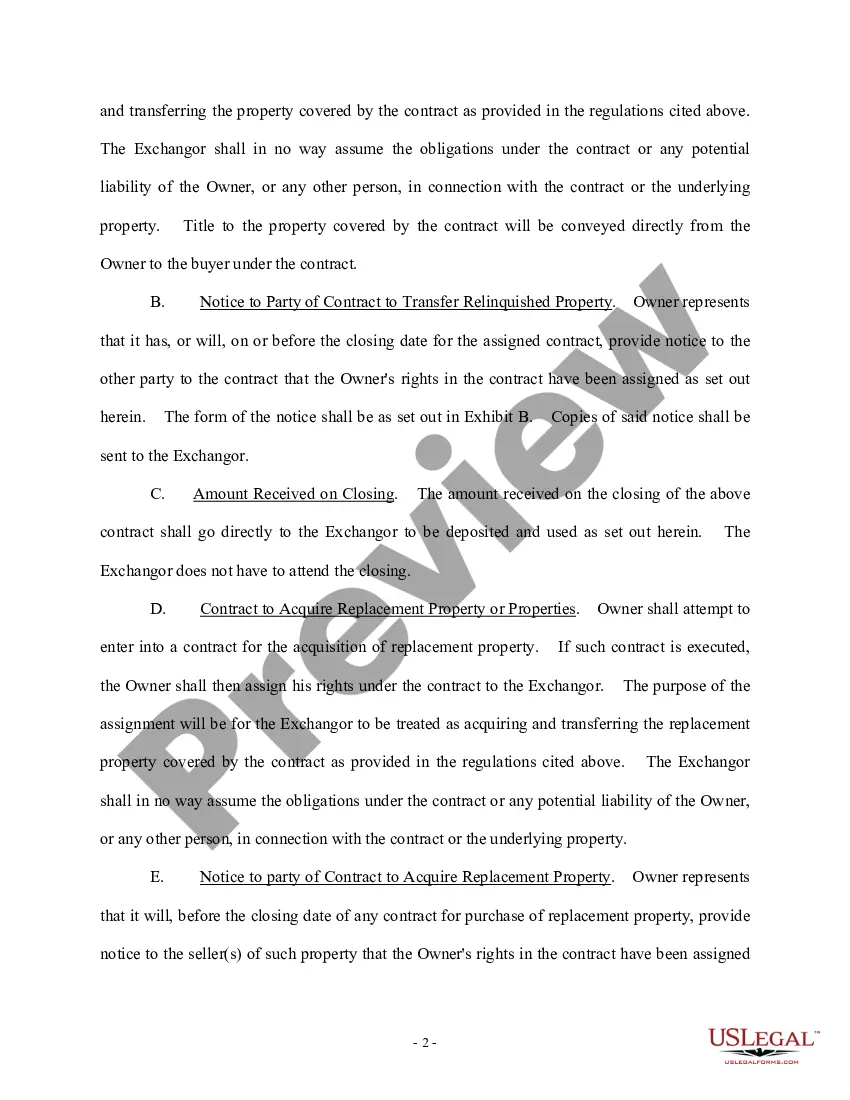
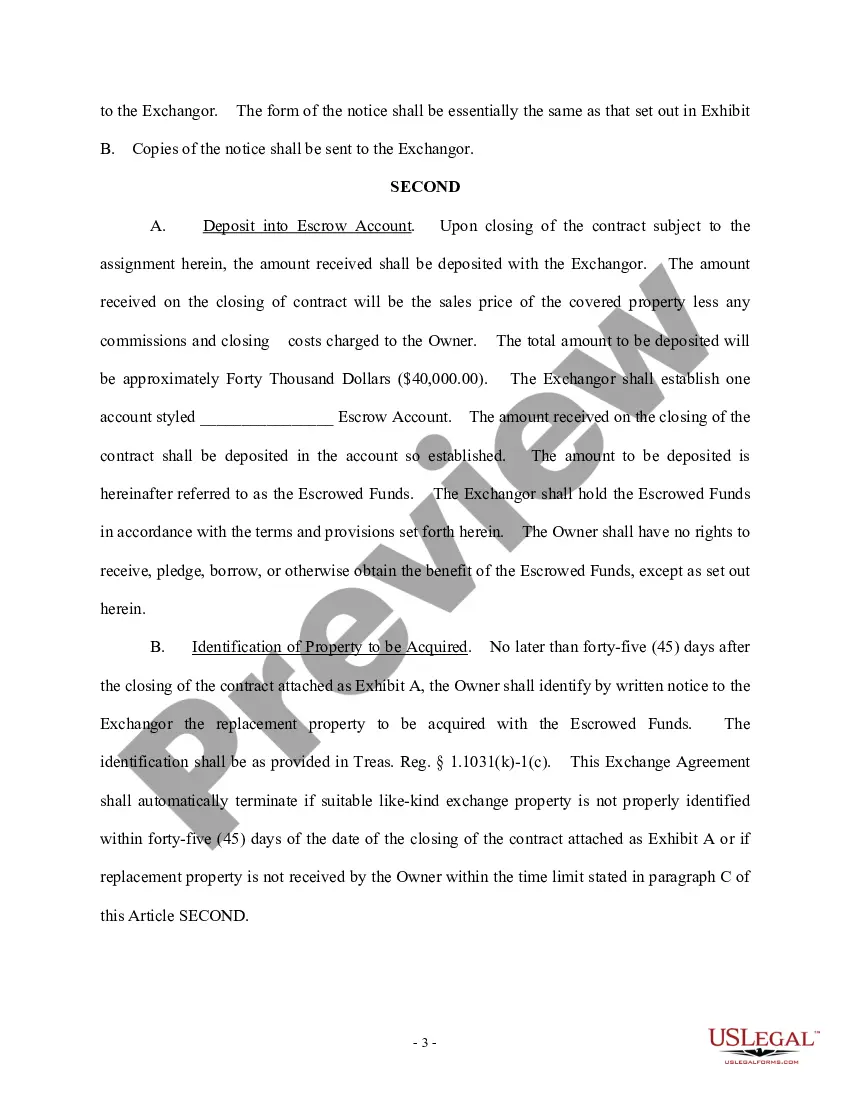
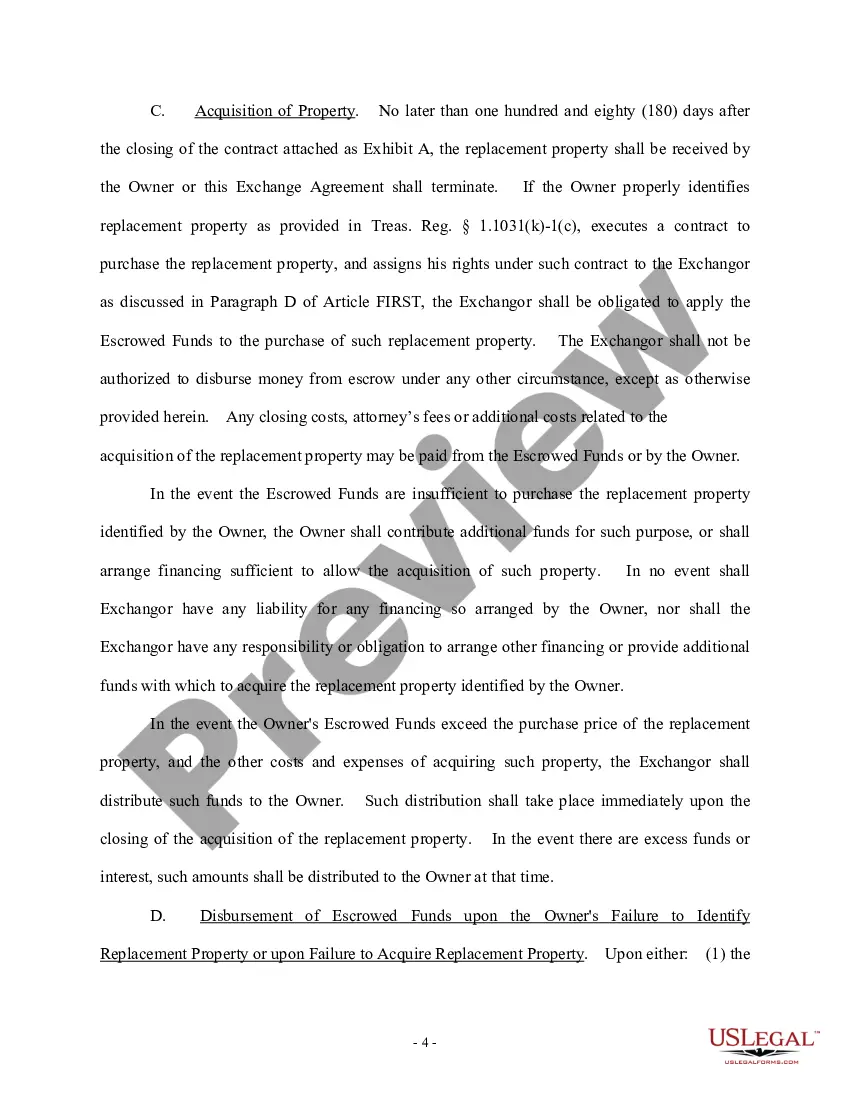
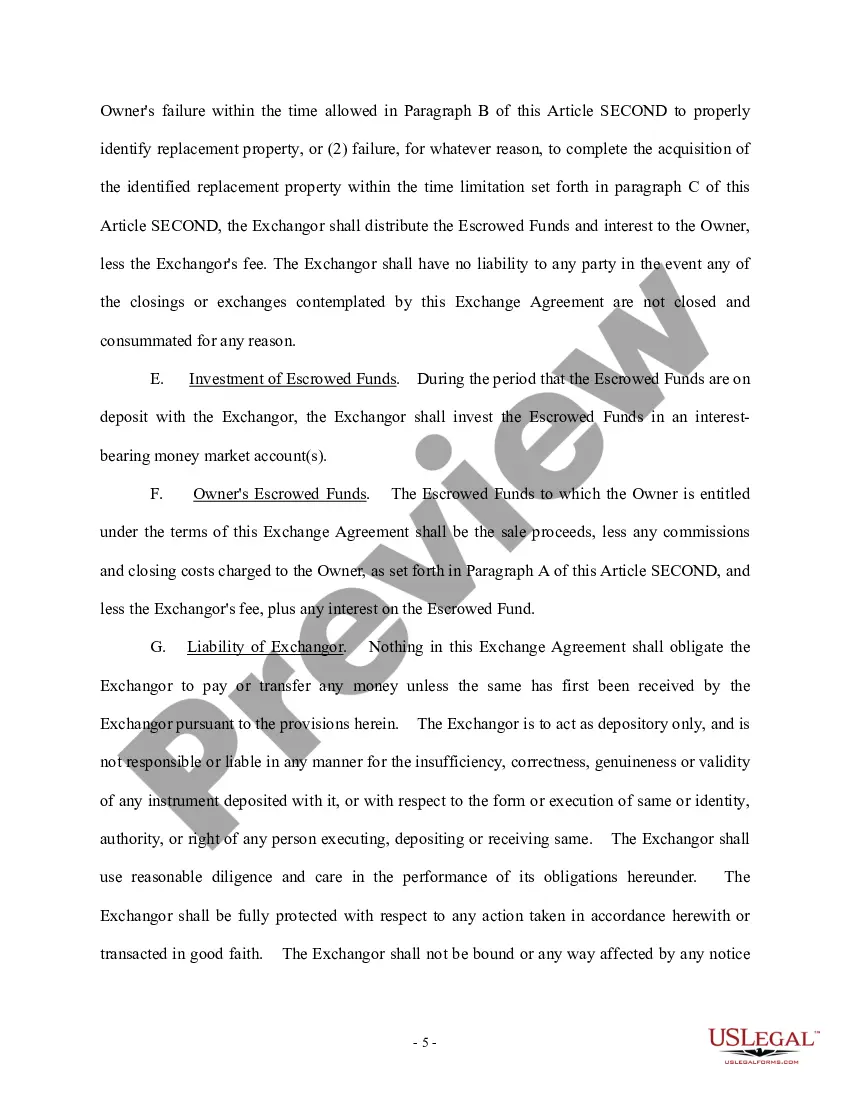
TIMELINE REQUIREMENTS Measured from when the relinquished property closes, the Exchangor has 45 days to nominate (identify) potential replacement properties and 180 days to acquire the replacement property. The exchange is completed in 180 days, not 45 days plus 180 days.
Section 1031 is part of federal law, so it applies to federal taxes, which are the same no matter what state you're in. You can perform a 1031 exchange between business or investment properties located anywhere in the United States, so long as they meet all other 1031 requirements.
1031 Exchange UK Equivalent Although the 1031 Exchange is a US-specific tax deferral strategy, the UK offers similar tax relief through Business Asset Rollover Relief.
