Exchange Agreement With In Maryland
Description

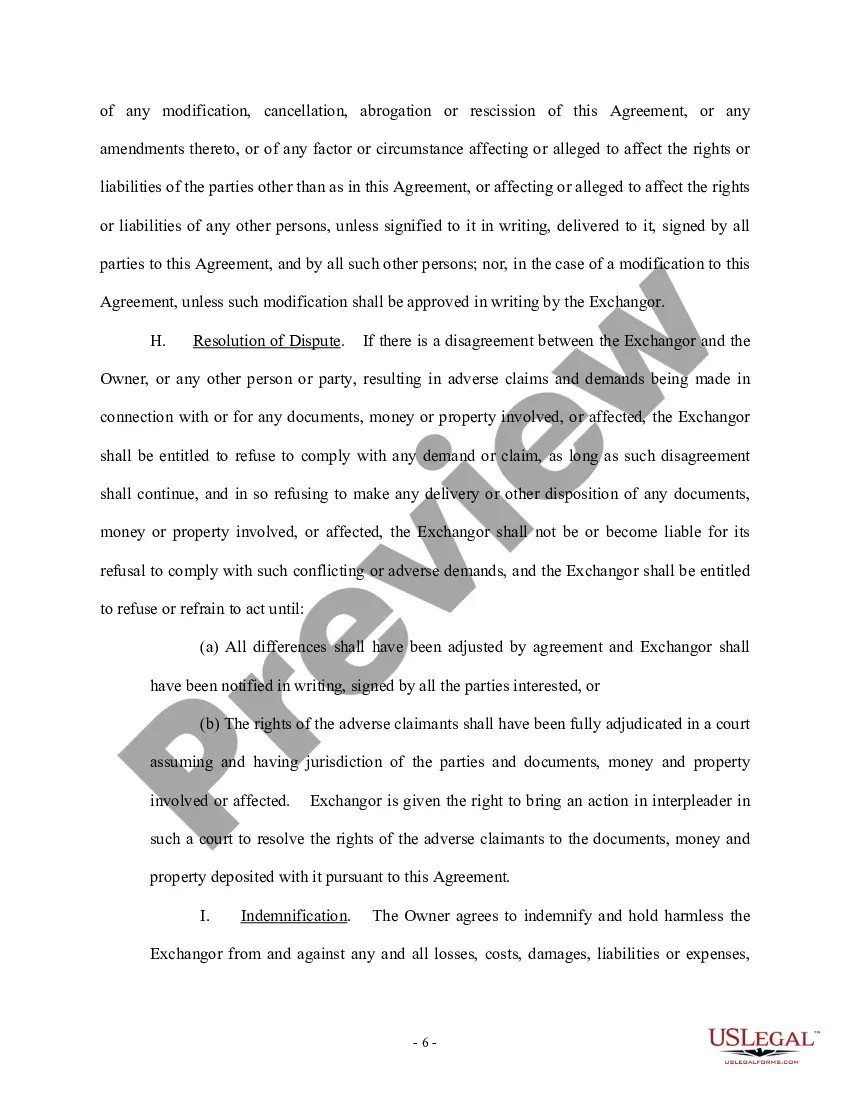
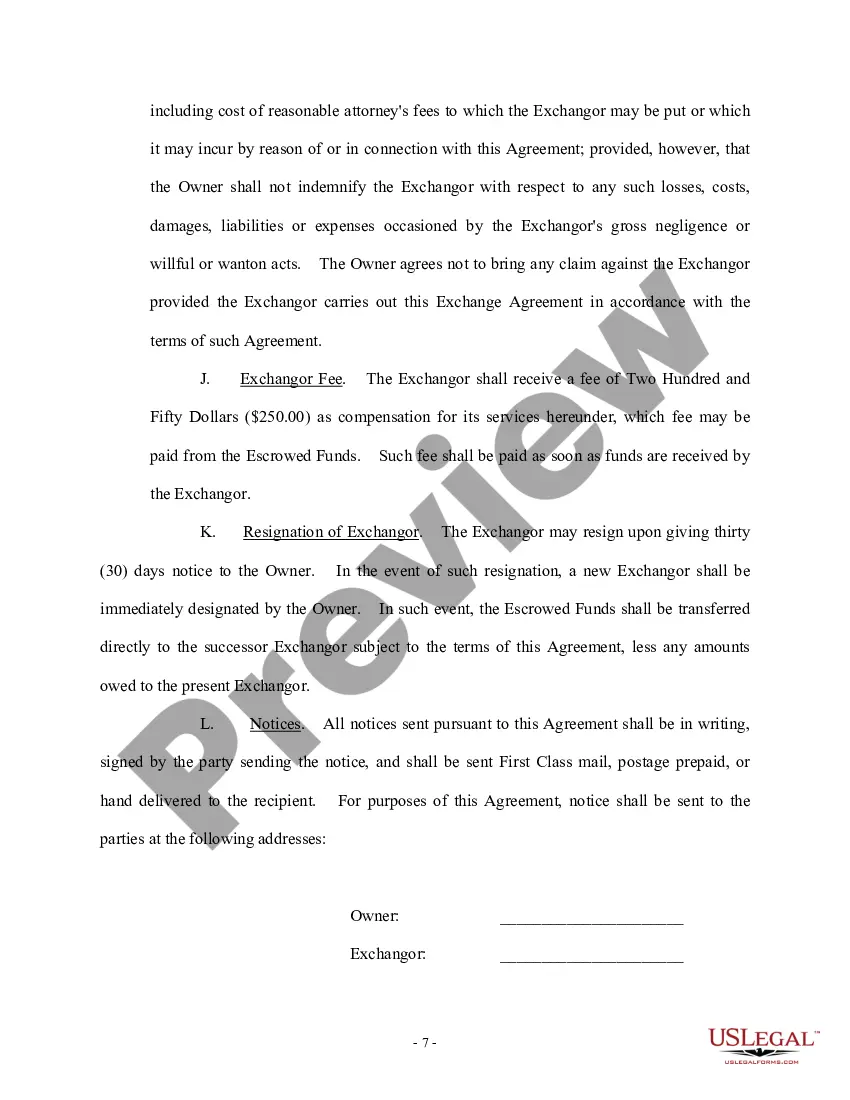
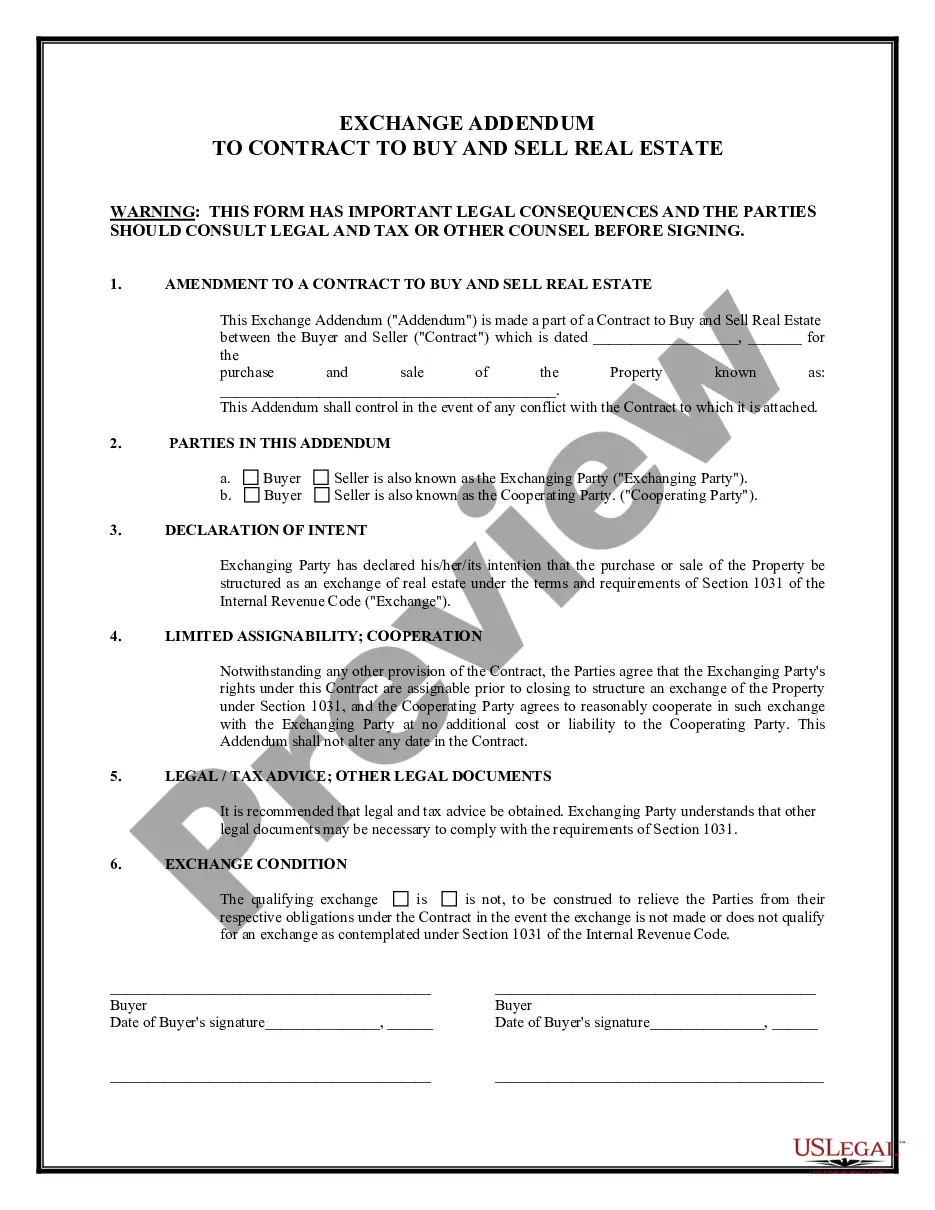
Get your form ready online
Our built-in tools help you complete, sign, share, and store your documents in one place.
Make edits, fill in missing information, and update formatting in US Legal Forms—just like you would in MS Word.
Download a copy, print it, send it by email, or mail it via USPS—whatever works best for your next step.
Sign and collect signatures with our SignNow integration. Send to multiple recipients, set reminders, and more. Go Premium to unlock E-Sign.
If this form requires notarization, complete it online through a secure video call—no need to meet a notary in person or wait for an appointment.
We protect your documents and personal data by following strict security and privacy standards.

Make edits, fill in missing information, and update formatting in US Legal Forms—just like you would in MS Word.

Download a copy, print it, send it by email, or mail it via USPS—whatever works best for your next step.

Sign and collect signatures with our SignNow integration. Send to multiple recipients, set reminders, and more. Go Premium to unlock E-Sign.

If this form requires notarization, complete it online through a secure video call—no need to meet a notary in person or wait for an appointment.

We protect your documents and personal data by following strict security and privacy standards.
Looking for another form?







Form popularity
FAQ
The basic elements required for the agreement to be a legally enforceable contract are: mutual assent , expressed by a valid offer and acceptance ; adequate consideration ; capacity ; and legality . In some states , elements of consideration can be satisfied by a valid substitute.
No contract is valid unless it contains three essential elements: (1) the names of the "parties," (2) the "subject matter," and (3) "consideration." Each of these terms is defined below. Term: The "term" is the length of time over which the contract will be valid.
For a contract to be valid and recognized by the common law, it must include certain elements-- offer, acceptance, consideration, intention to create legal relations, authority and capacity, and certainty. Without these elements, a contract is not legally binding and may not be enforced by the courts.
A contract consists of a legally binding agreement or promise between parties. The agreement must be voluntary and made by competent parties. The promise or agreement must be supported by an exchange of something of value (e.g., goods or services). This exchange must be legal.
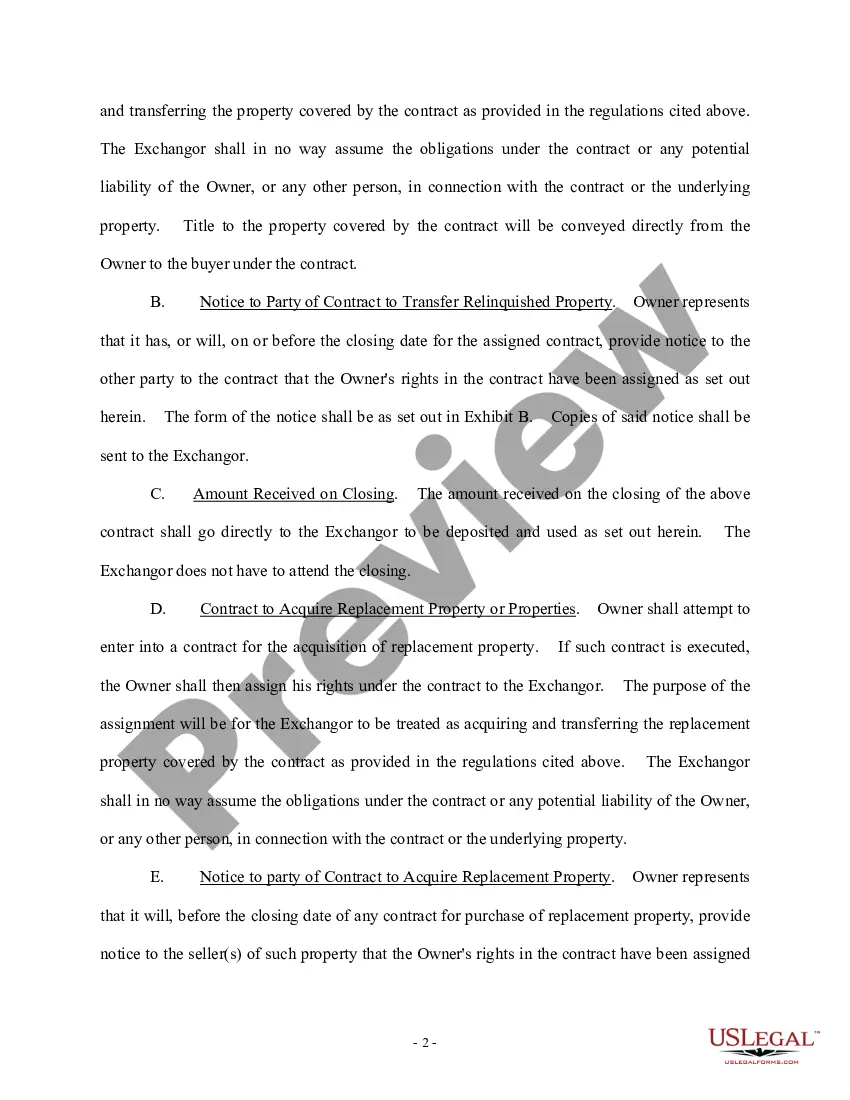
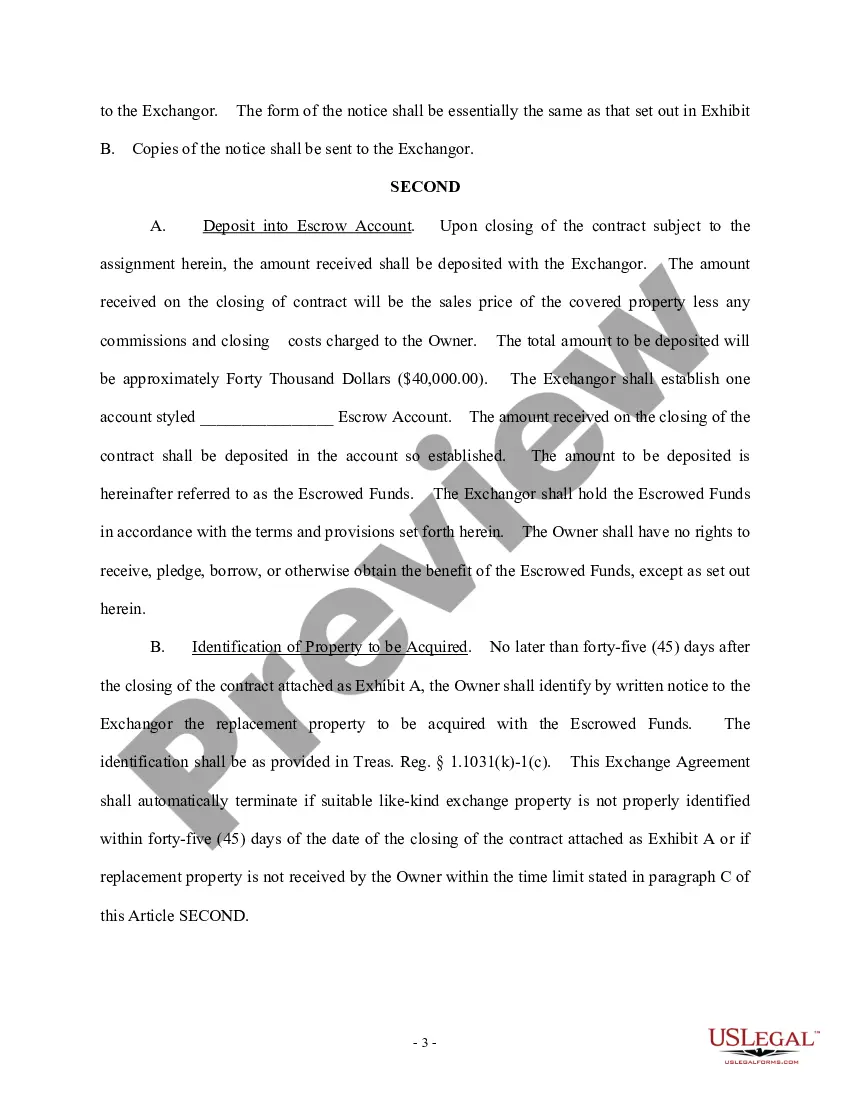
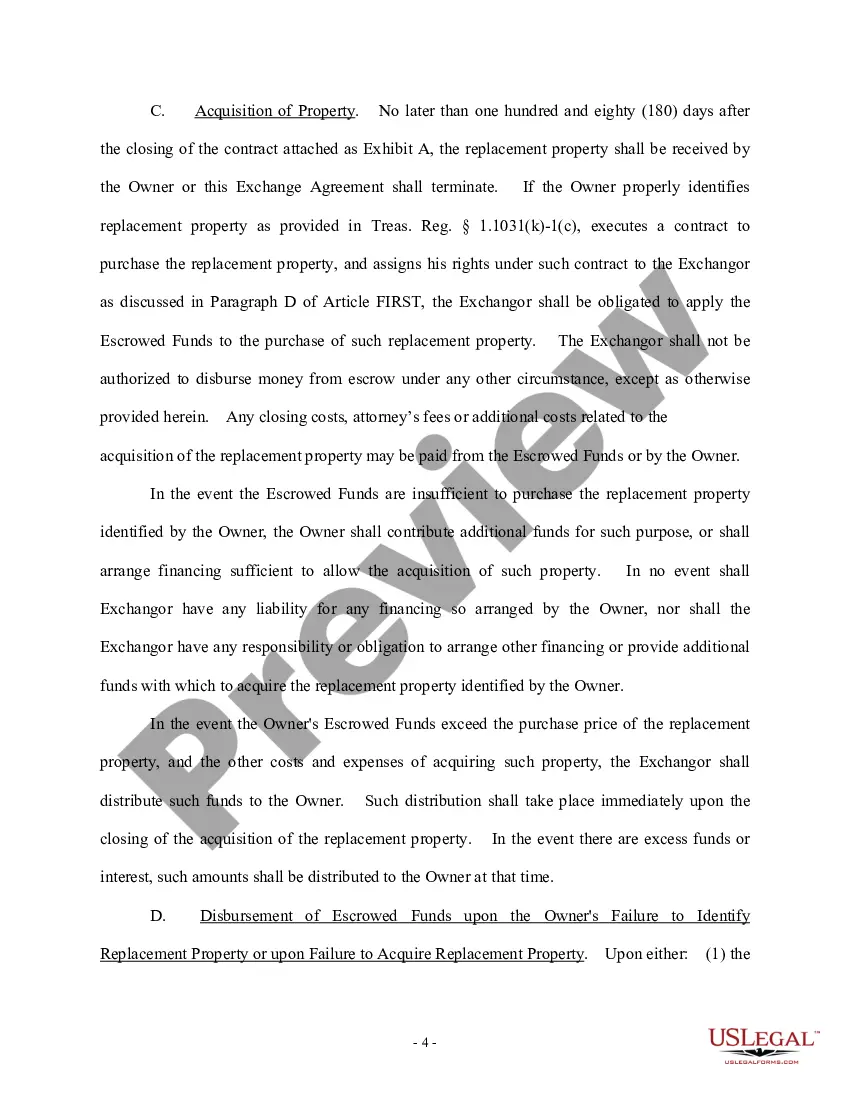
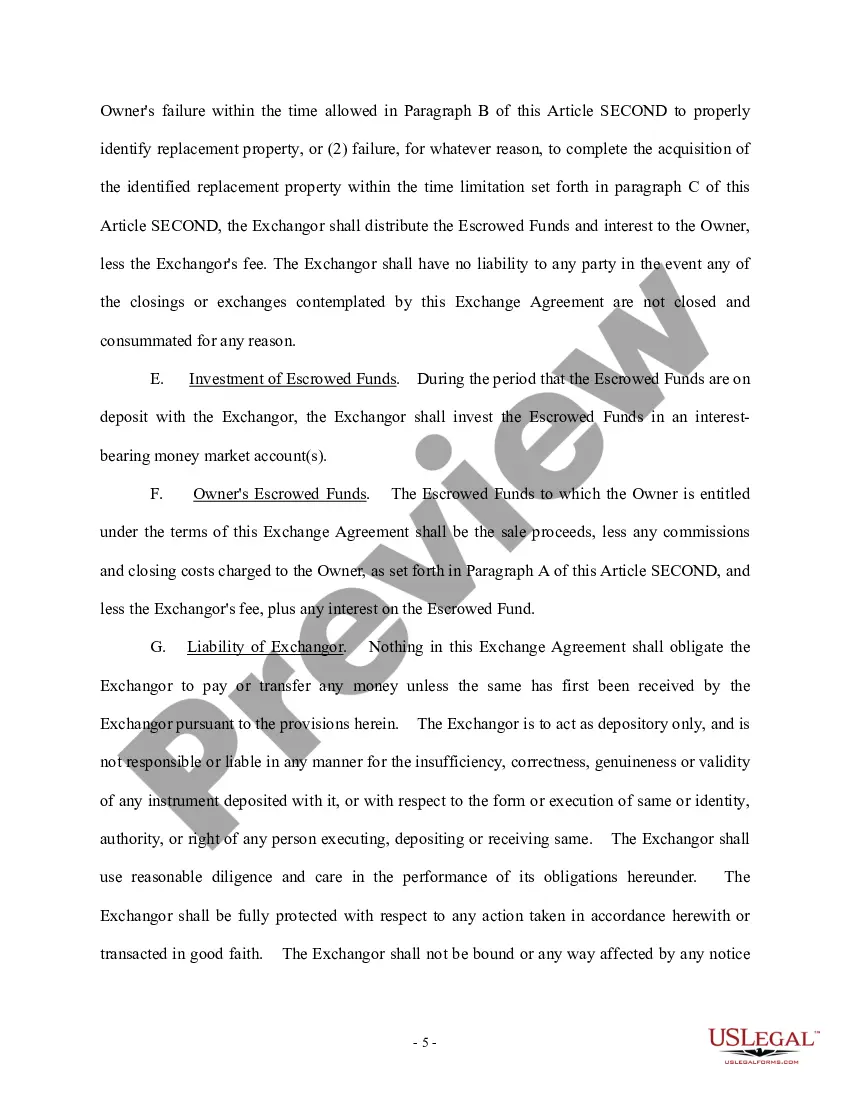
A 1031 exchange agreement is a tax deferral strategy that allows individuals or businesses to sell an investment property and reinvest the proceeds into a like-kind property, without incurring immediate capital gains taxes.
No. Many consumers mistakenly believe all contracts allow a 3-day cooling-off period to cancel. Generally, there's no cooling-off period after you sign a contract. (In Maryland, only a few types of transactions, such as door-to-door sales contracts, allow you a certain number of days to cancel.)
Cooling-off Rule is a rule that allows you to cancel a contract within a few days (usually three days) after signing it. As explained by the Federal Trade Commission (FTC), the federal cooling-off rules gives the consumer three days to cancel certain sales for a full refund.
Quick general answer: Maryland law generally does not provide a cooling-off period for buyers to change their minds, ing to the state attorney general's website, .marylandattorneygeneral. State law sets out a few exceptions.
A buyer can cancel a home solicitation contract without giving a reason or showing any legal cause, and, without penalty or obligation, by giving the seller written notice of cancellation within three business days after the buyer signs the contract.
If a contract is “complete and unambiguous, parol evidence is inadmissible as a matter of substantive law to vary, alter or contradict it in the absence of fraud, accident or mutual mistake.” McLain v. Pernell, 255 Md.
