1031 Exchange Agreement Form In Florida
Description

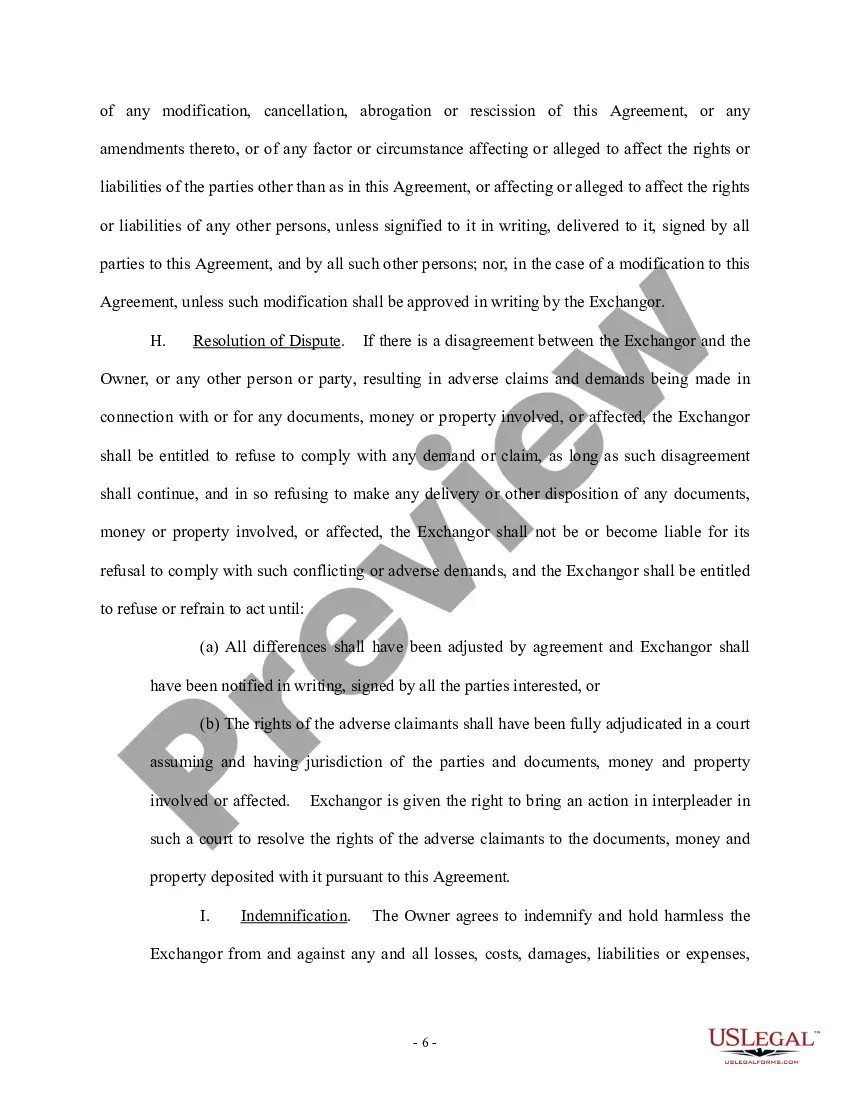
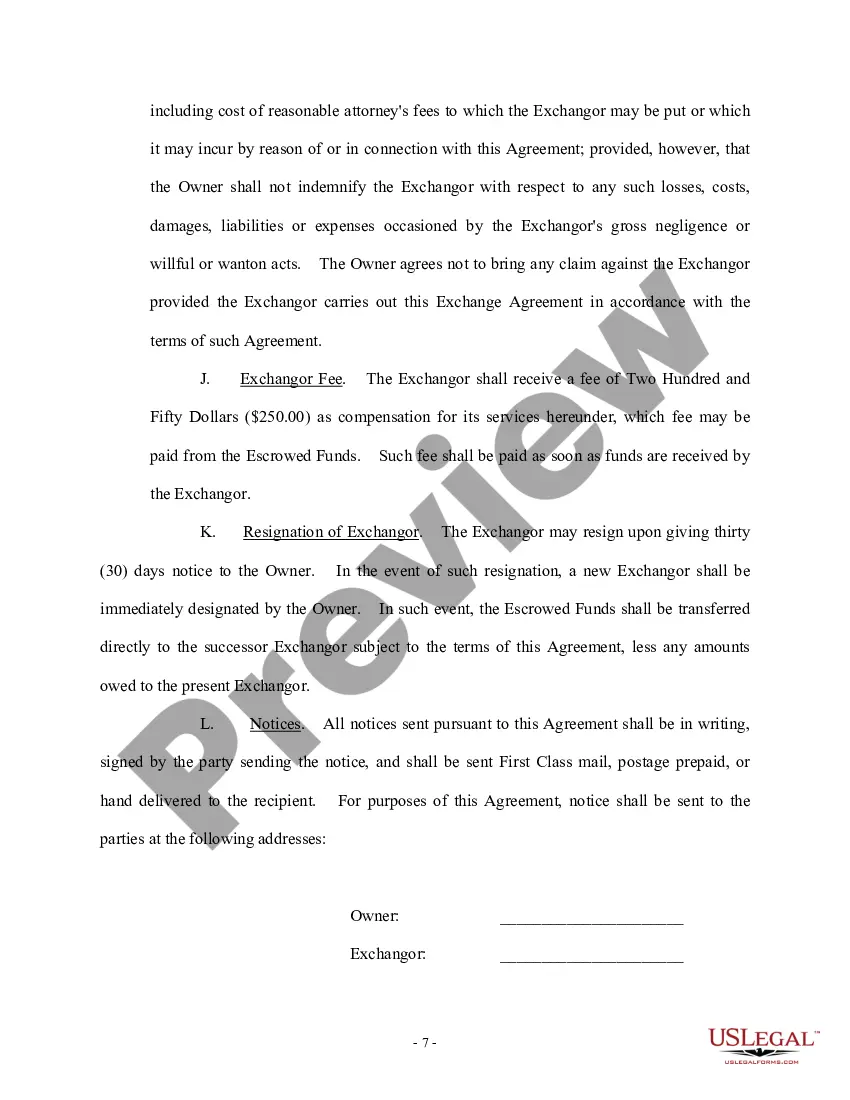
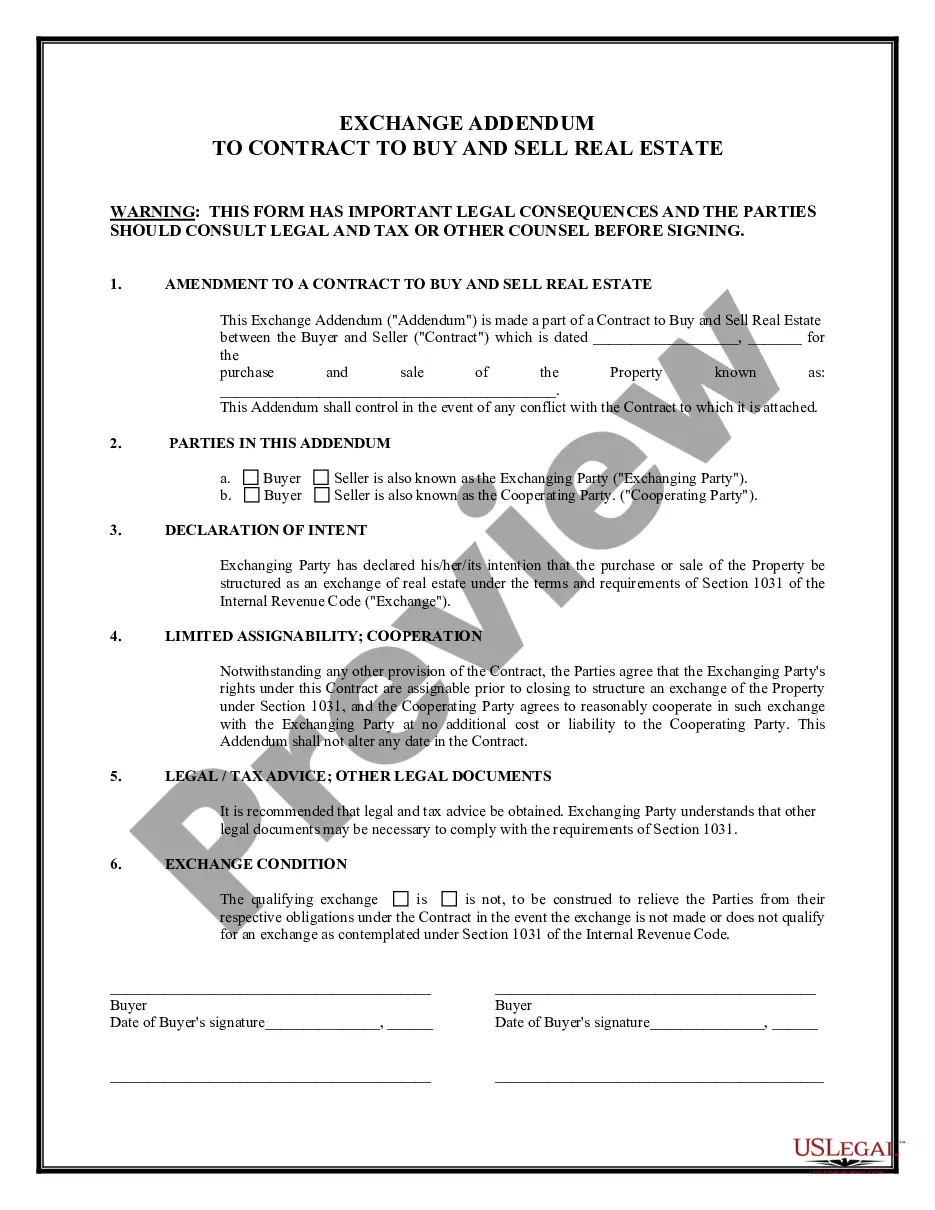
Get your form ready online
Our built-in tools help you complete, sign, share, and store your documents in one place.
Make edits, fill in missing information, and update formatting in US Legal Forms—just like you would in MS Word.
Download a copy, print it, send it by email, or mail it via USPS—whatever works best for your next step.
Sign and collect signatures with our SignNow integration. Send to multiple recipients, set reminders, and more. Go Premium to unlock E-Sign.
If this form requires notarization, complete it online through a secure video call—no need to meet a notary in person or wait for an appointment.
We protect your documents and personal data by following strict security and privacy standards.

Make edits, fill in missing information, and update formatting in US Legal Forms—just like you would in MS Word.

Download a copy, print it, send it by email, or mail it via USPS—whatever works best for your next step.

Sign and collect signatures with our SignNow integration. Send to multiple recipients, set reminders, and more. Go Premium to unlock E-Sign.

If this form requires notarization, complete it online through a secure video call—no need to meet a notary in person or wait for an appointment.

We protect your documents and personal data by following strict security and privacy standards.
Looking for another form?









Form popularity
FAQ
Your 1031 exchange must be reported by completing Form 8824 and filing it along with your federal income tax return. If you completed more than one exchange, a different form must be completed for each exchange. For line-by-line instructions on how to complete form, download the instructions here.
While an investor can choose which property to sell (exchange) and identify replacement properties, the investor/taxpayer may not control or have access to the funds in between those two events. For that reason, the use of a qualified intermediary is necessary.
A 1031 exchange does not obviate the need for a realtor. Quite to the contrary, in most cases an Exchanger has an even greater need for a realtor due to the time constraints placed on Exchangers.
Lack of Liquidity- Exchanging properties continually can tie up funds in real estate, making it hard for an investor to access liquid capital if required. While real estate can be a profitable investment, it's not as liquid as some other assets.
Navigating the 1031 Exchange Process in Florida Step 1: Plan and Consult. Before selling your property, assess your investment objectives. Step 2: Sale of Relinquished Property. Step 3: Identify Replacement Property. Step 4: Buy the Replacement Property. Step 5: Reporting and Compliance.
Section 1031(f) provides that if a Taxpayer exchanges with a related party then the party who acquired the property in the exchange must hold it for 2 years or the exchange will be disallowed.
A Qualified Intermediary, or QI, is an independent third party to the transaction whose function is to prepare the documents necessary to create the exchange, as well as to act as the independent escrow agent for the exchange funds.
