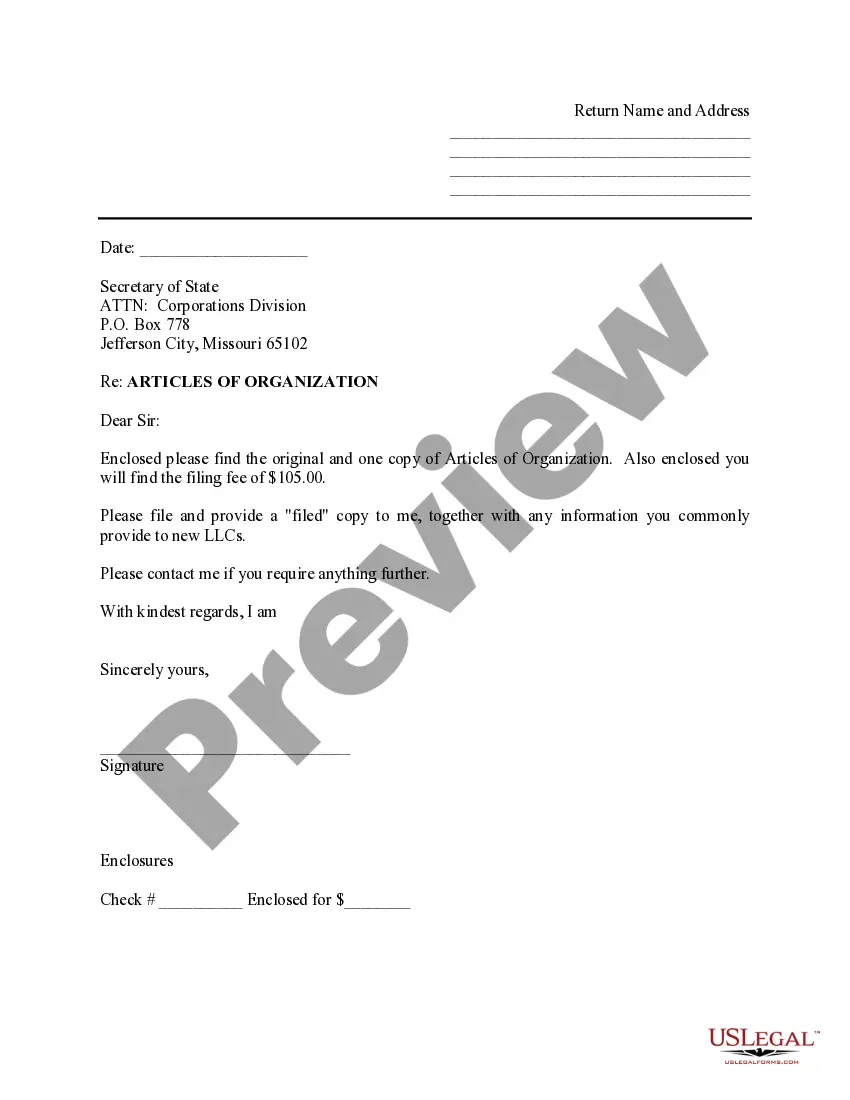
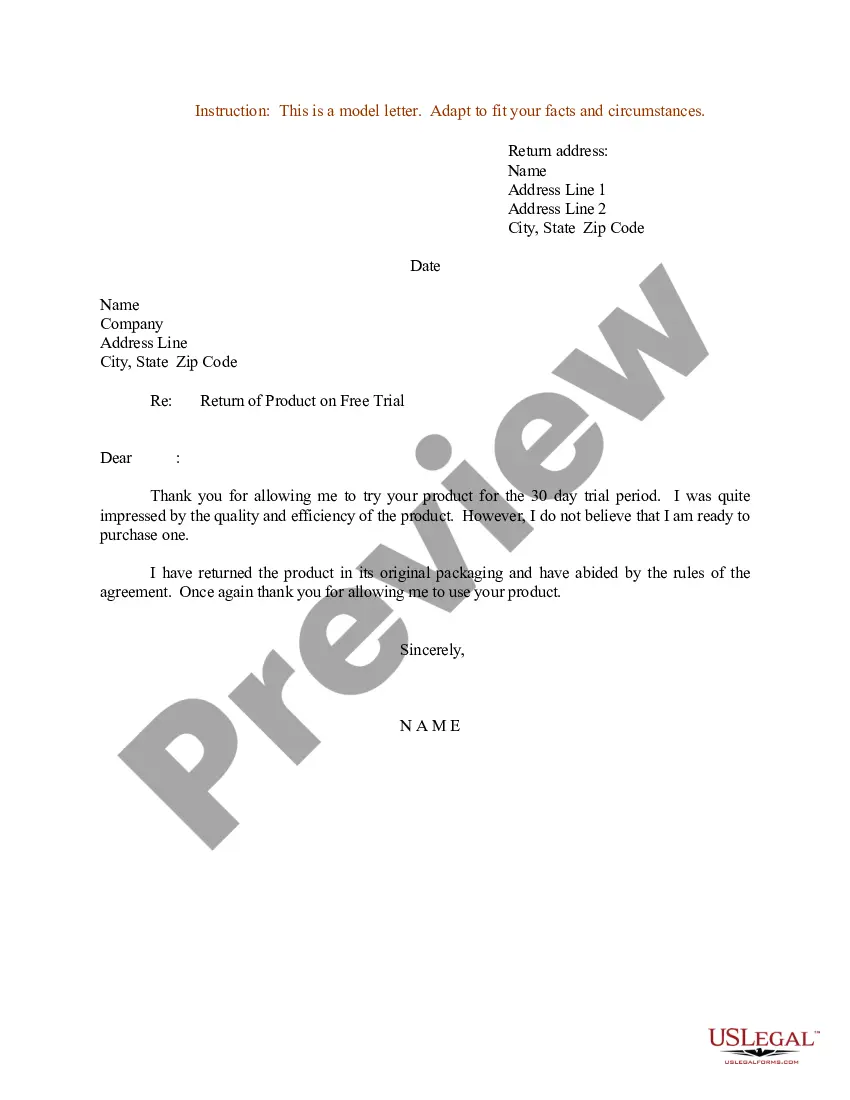
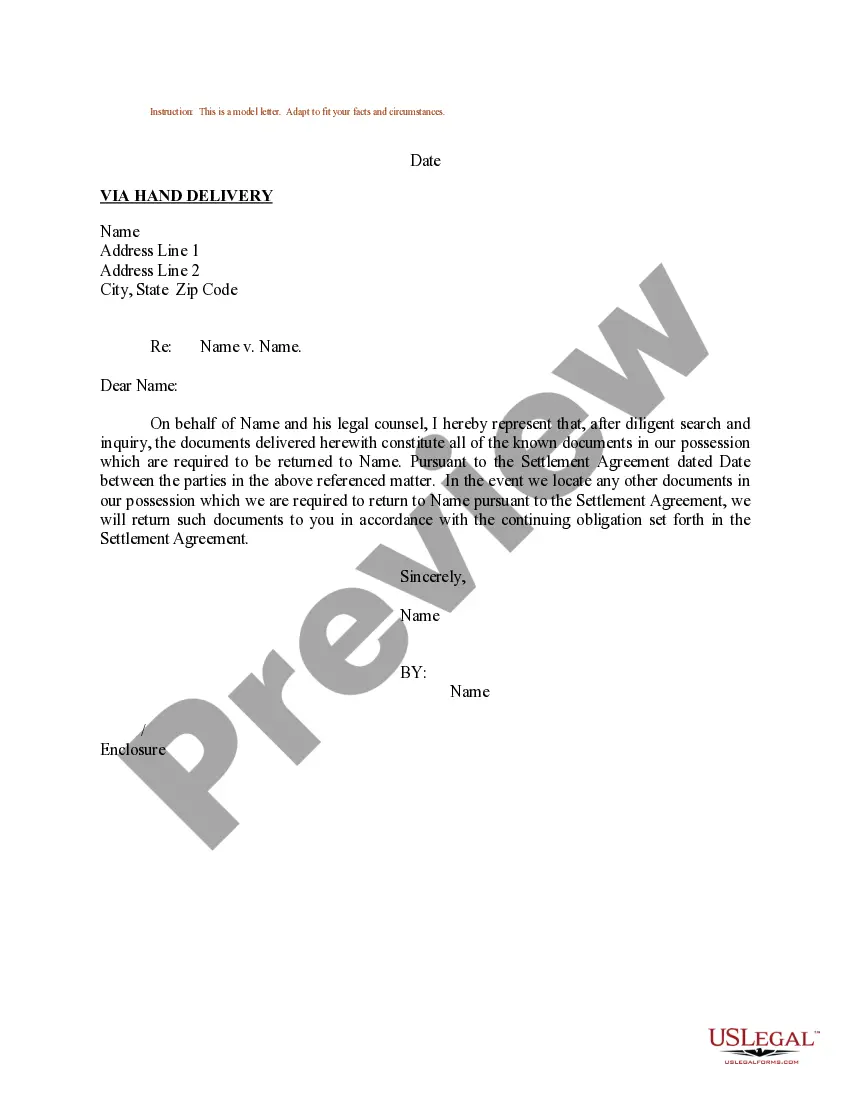
Letter Instruction Sample With Enclosure In North Carolina
Description

Get your form ready online
Our built-in tools help you complete, sign, share, and store your documents in one place.
Make edits, fill in missing information, and update formatting in US Legal Forms—just like you would in MS Word.
Download a copy, print it, send it by email, or mail it via USPS—whatever works best for your next step.
Sign and collect signatures with our SignNow integration. Send to multiple recipients, set reminders, and more. Go Premium to unlock E-Sign.
If this form requires notarization, complete it online through a secure video call—no need to meet a notary in person or wait for an appointment.
We protect your documents and personal data by following strict security and privacy standards.

Make edits, fill in missing information, and update formatting in US Legal Forms—just like you would in MS Word.

Download a copy, print it, send it by email, or mail it via USPS—whatever works best for your next step.

Sign and collect signatures with our SignNow integration. Send to multiple recipients, set reminders, and more. Go Premium to unlock E-Sign.

If this form requires notarization, complete it online through a secure video call—no need to meet a notary in person or wait for an appointment.

We protect your documents and personal data by following strict security and privacy standards.
Looking for another form?









Form popularity
FAQ
Intestate letters are called “Letters of Administration” and are granted to an Administrator. How do I begin the estate administration process and apply for letters? To formally begin the estate administration process, you will need to visit the clerk of court in the appropriate county.
Often this requires providing evidence such as birth certificates or marriage documents. What's more, you may need to provide proof that no will exists, which could take quite some time if all family members cannot be located quickly or if relatives disagree over who should apply for the letters.
Intestate letters are called “Letters of Administration” and are granted to an Administrator. How do I begin the estate administration process and apply for letters? To formally begin the estate administration process, you will need to visit the clerk of court in the appropriate county.
Section 28A-19-1 - Manner of presentation of claims (a) A claim against a decedent's estate must be in writing and state the amount or item claimed, or other relief sought, the basis for the claim, and the name and address of the claimant; and must be presented by one of the following methods: (1) By delivery in person ...
Note the enclosure underneath your signature You can write out the word "enclosure" entirely, or you can use abbreviations like "Enc." or "Encl." You can choose which abbreviation you want to use, but try to remain consistent if you regularly send letters with enclosures to one organization.
If something is enclosed with a letter, the notation “Enclosure” is typed a double-space below the writer's initials and/or typist's initials. If more than one item is enclosed, the word is made plural and followed by the number of items (e.g., “Enclosures 2”).
Enclosures. If you have enclosed any documents along with the letter, such as a resume, you indicate this simply by typing Enclosures below the closing. As an option, you may list the name of each document you are including in the envelope.
Under your name at the end of the letter, skip two lines. On the third line, write "Enclosure:" or "Enclosures:" if there are multiple documents. Skip a line after "Enclosures:" and then begin your list of enclosures. Put each enclosed document title on its own line.
If you need to note enclosures in a letter, leave a double space under your signature and salutation, then write “Enclosure.” To signify that your letter has more than 1 document enclosed, use the plural, “Enclosures” followed by a colon and the number of documents.
For colons and periods, place two spaces between the punctuation and the text that immediately follows it.