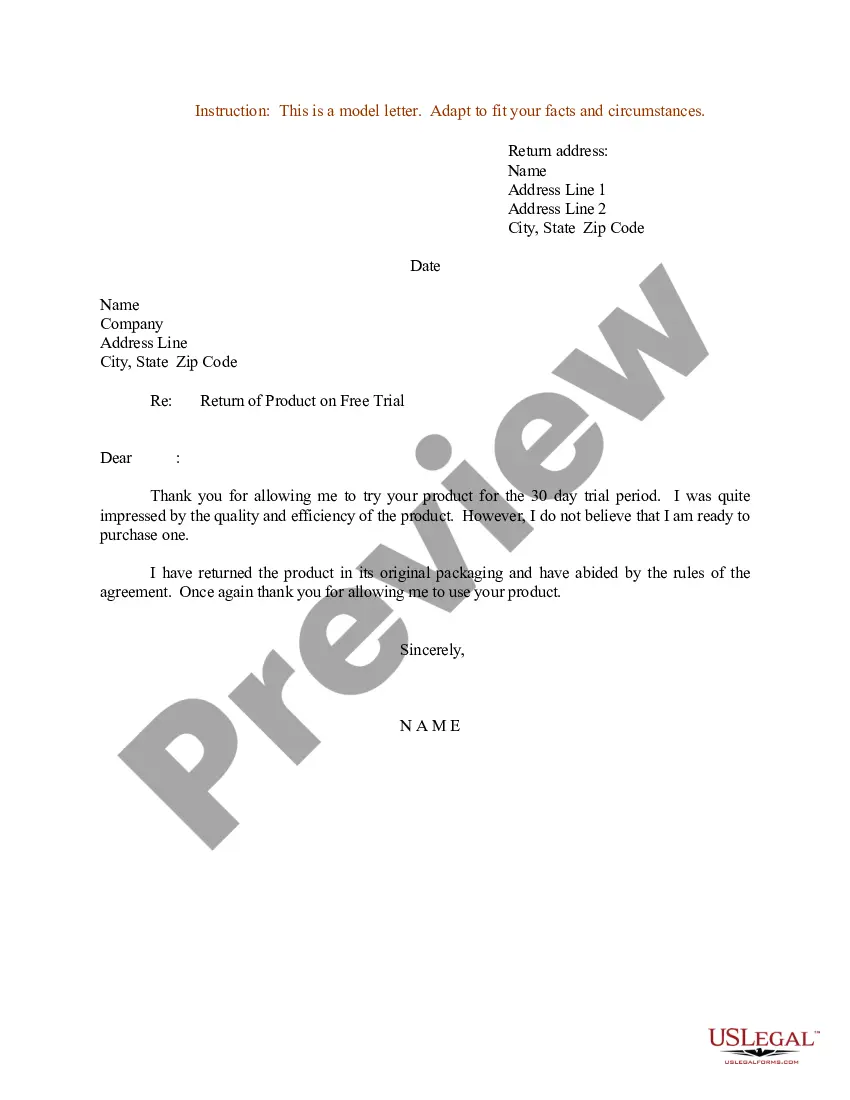
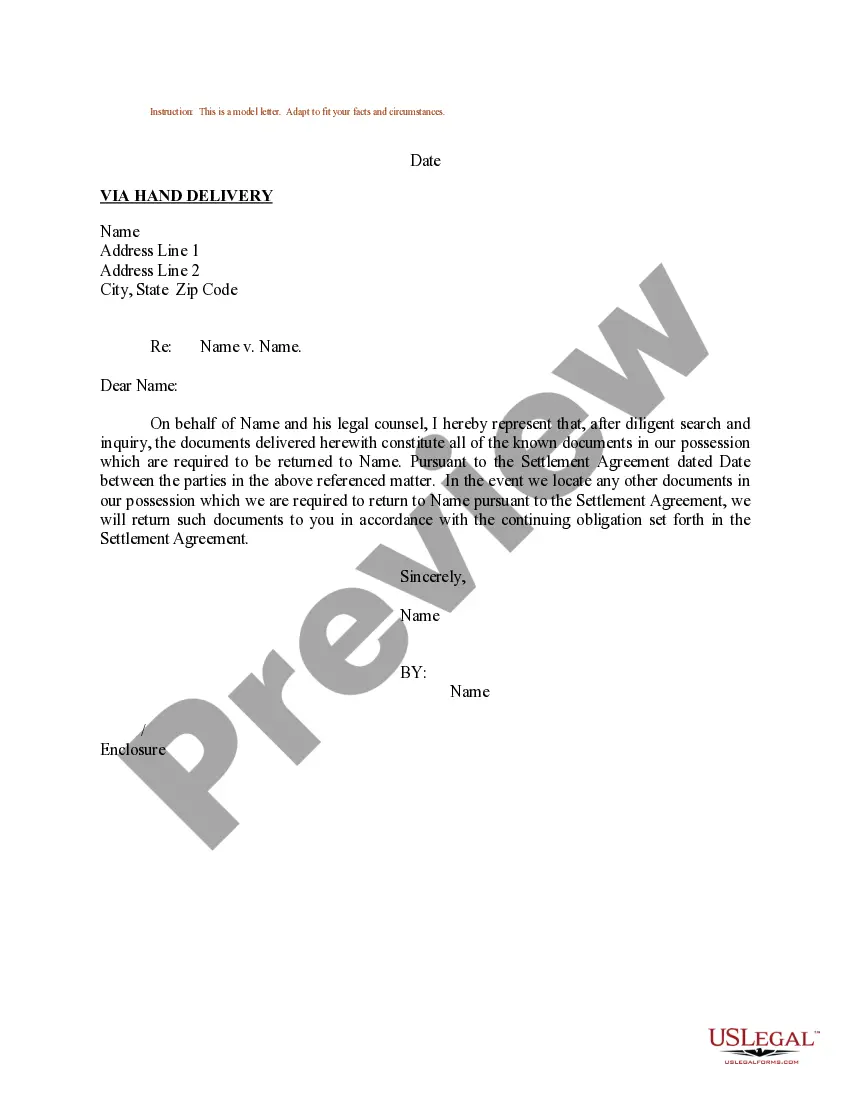
Letter Instruction Sample With Attachment In Nevada
Description

Get your form ready online
Our built-in tools help you complete, sign, share, and store your documents in one place.
Make edits, fill in missing information, and update formatting in US Legal Forms—just like you would in MS Word.
Download a copy, print it, send it by email, or mail it via USPS—whatever works best for your next step.
Sign and collect signatures with our SignNow integration. Send to multiple recipients, set reminders, and more. Go Premium to unlock E-Sign.
If this form requires notarization, complete it online through a secure video call—no need to meet a notary in person or wait for an appointment.
We protect your documents and personal data by following strict security and privacy standards.

Make edits, fill in missing information, and update formatting in US Legal Forms—just like you would in MS Word.

Download a copy, print it, send it by email, or mail it via USPS—whatever works best for your next step.

Sign and collect signatures with our SignNow integration. Send to multiple recipients, set reminders, and more. Go Premium to unlock E-Sign.

If this form requires notarization, complete it online through a secure video call—no need to meet a notary in person or wait for an appointment.

We protect your documents and personal data by following strict security and privacy standards.
Looking for another form?








Form popularity
FAQ
If your mailing address and/or business phone number changes, you can: Change this information online at My Nevada Tax. Complete the Nevada Business Registration Form - Download. Return the form by mail. Return the form in person. Call the Department's Call Center at (866) 962-3707 and speak with a Tax Examiner.
Within 14 days after the service of the motion, the opposing party shall serve and file a written opposition thereto, together with a memorandum of points and authorities and supporting affidavits, if any, stating facts showing why the motion should be denied.
For inquiries of all other sections of Secretary of State, call (775) 684-5708 or email SOSmail@sos.nv.
If the two of you cannot reach an agreement, you can file an “opposition” to the other party's motion. An “opposition” is a written statement that says why the judge should not give the other party what they asked for, and what you would like instead.
The Court grants summary judgment when there is no material issue of fact and it is required to enter judgment as a matter of law. A genuine issue of material fact exists when facts related to the specific legal claim are in dispute or when undisputed facts support different outcomes on an issue.
Once the summary judgement is granted, the case ends there, and neither party will have to deal with the stresses of a full trial. At times, the winning party can ask for an award of costs or attorney fees from the other party unless those terms were already established in the summary judgment.
The odds of winning a summary judgment, known as the grant rate, vary widely by case type. The most common grant of summary judgment is in Title VII and employment cases. These are granted in whole in 49.2% of cases, in part in 23.3% of cases, and denied in 27.5% of cases.
If you are looking for more information on representing yourself, visit the District of Nevada's Pro Se page at Self Help - District of Nevada (uscourts). Regular Motions: You have only 14 days to respond to a regular motion. The time to respond runs from the date the motion was filed.
Summary judgment procedure is a method for promptly disposing of actions in which there is no genuine issue as to any material fact.
A court will grant a summary judgment motion only if it finds (1) that there are no genuine issues of material facts to be resolved at trial and (2) that, when the law is applied to the undisputed facts, one party is clearly entitled to judgment.
