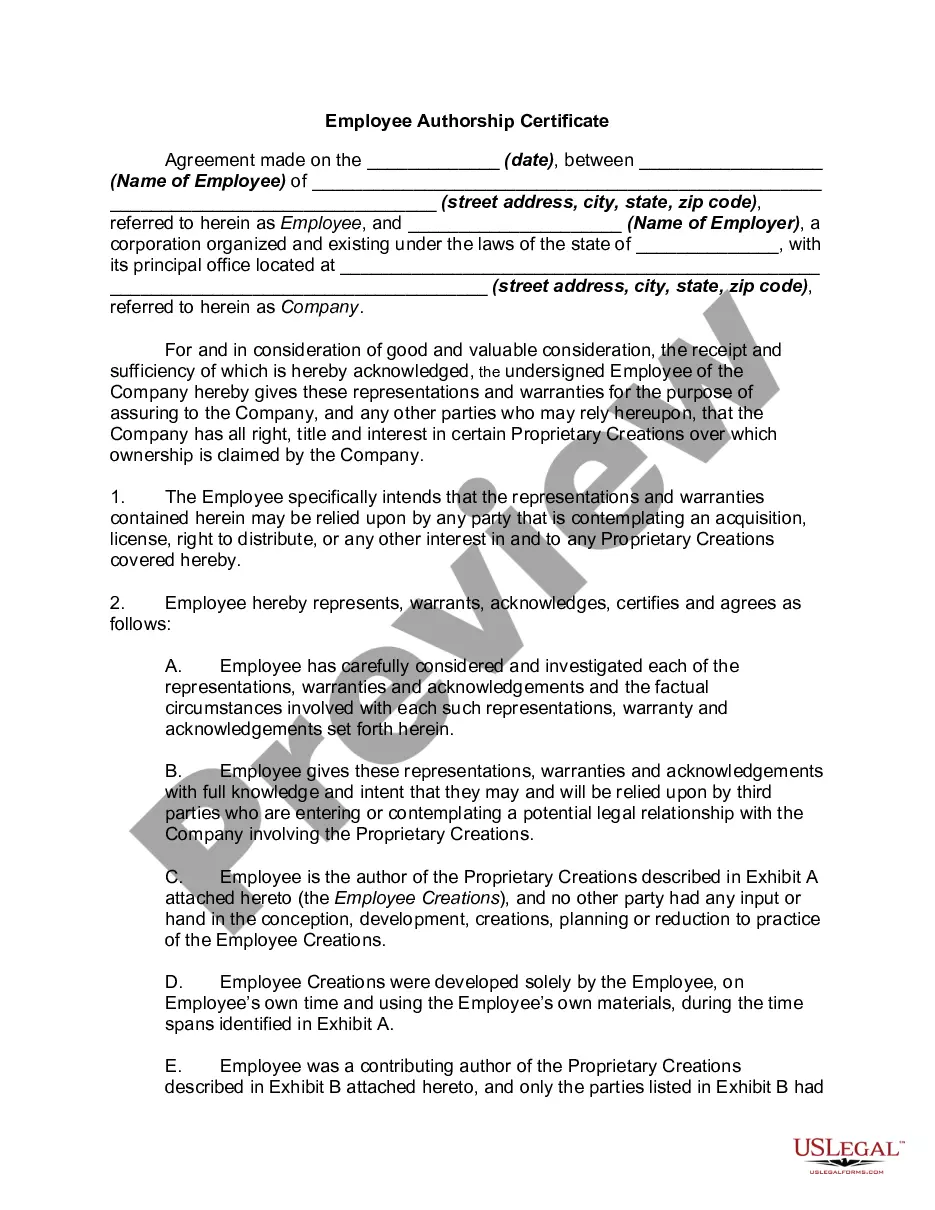
Notice Of Removal Template For Work In Phoenix
Description
Get your form ready online
Our built-in tools help you complete, sign, share, and store your documents in one place.
Make edits, fill in missing information, and update formatting in US Legal Forms—just like you would in MS Word.
Download a copy, print it, send it by email, or mail it via USPS—whatever works best for your next step.
Sign and collect signatures with our SignNow integration. Send to multiple recipients, set reminders, and more. Go Premium to unlock E-Sign.
If this form requires notarization, complete it online through a secure video call—no need to meet a notary in person or wait for an appointment.
We protect your documents and personal data by following strict security and privacy standards.

Make edits, fill in missing information, and update formatting in US Legal Forms—just like you would in MS Word.

Download a copy, print it, send it by email, or mail it via USPS—whatever works best for your next step.

Sign and collect signatures with our SignNow integration. Send to multiple recipients, set reminders, and more. Go Premium to unlock E-Sign.

If this form requires notarization, complete it online through a secure video call—no need to meet a notary in person or wait for an appointment.

We protect your documents and personal data by following strict security and privacy standards.
Looking for another form?








Form popularity
FAQ
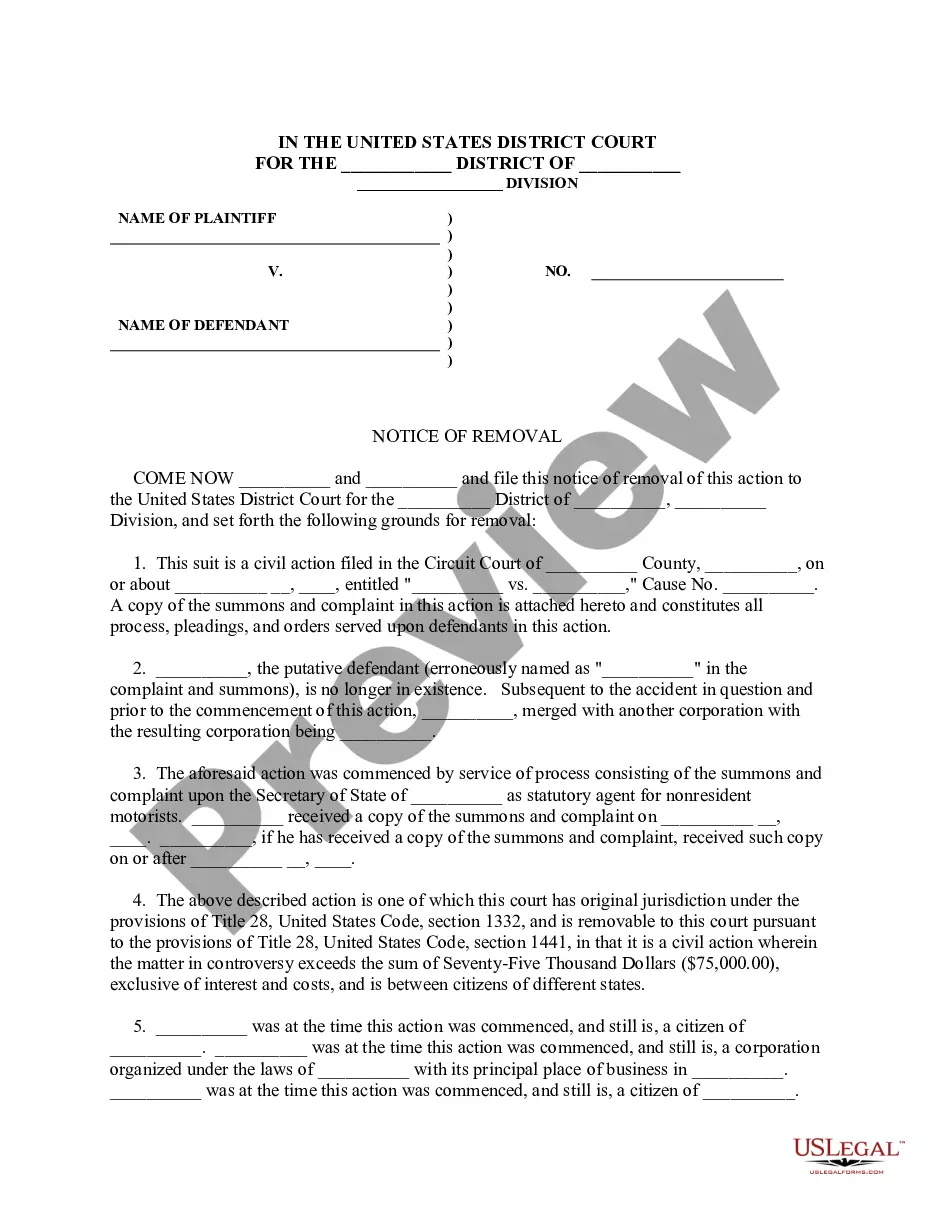
A defendant can remove a case from state to federal court by filing a notice of removal in federal court and then notifying the state court and the other parties. They might need the agreement or joinder of any other defendants, or they might be able to remove a case on their own.
28 U.S.C. § 1448 governs the requirements of process after removal, providing that when defendants are not completely or perfectly served prior to removal, plaintiffs may complete such process or service, or new process may be issued in the same manner as in cases originally filed in the district court.
Generally, removal jurisdiction exists only if, at the time plaintiff filed the action in state court, the federal court had a basis for exercising subject-matter jurisdiction over the action, such as diversity of citizenship of the parties or where plaintiff's action involves a claim under federal law.
The notice of removal of a civil action or proceeding shall be filed within 30 days after the receipt by the defendant, through service or otherwise, of a copy of the initial pleading setting forth the claim for relief upon which such action or proceeding is based, or within 30 days after the service of summons upon ...
A notice of removal is a legal document filed by a defendant to move a case from a state court to a federal court. The notice must be filed in the federal district court where the case is pending and must include a brief statement explaining the reasons for the removal.
Each defendant shall have 30 days after receipt by or service on that defendant of the initial pleading or summons described in paragraph (1) to file the notice of removal.
A defendant or defendants desiring to remove any civil action from a State court shall file in the district court of the United States for the district and division within which such action is pending a notice of removal signed pursuant to Rule 11 of the Federal Rules of Civil Procedure and containing a short and plain ...
If the precise manner in which service has actually been made is not so noted, it will be presumed that the document was served by mail. This presumption will only apply if service in some form has actually been made.
Arizona: The United States District Court of Arizona has enacted Local Rule 5.6, entitled “Sealing of Court Records in Unsealed Civil Actions.” Local Rule 5.6 provides that: “No document may be filed under seal in an unsealed case except pursuant to an order by the Court as set forth in subpart (b) of this Rule.” ...
Under the new version of Rule 68(g), the sanctions against a party who fails to obtain a more favorable judgment than the offer is “twenty percent of the difference between the amount of the offer and the amount of the final judgment.” This change applies to offers of judgment served on or after January 1, 2022.